Led vs Neon Signs: Clear Comparison for Cost, Look & Efficiency
Choosing between led vs neon signs comes down to balancing cost, appearance, and energy efficiency. LED signs usually cost less upfront and consume up to 80% less energy, making them cheaper to run. Neon signs offer a classic glow that some still prefer, but they tend to be pricier and less efficient. Start with LED signs if long-term savings and durability matter most, especially for large or outdoor displays.
Key Takeaways
- LED signs cost about 10% less than neon signs to buy and install for most business applications.
- LED neon signs consume roughly 65-80% less energy than traditional neon, greatly reducing electric bills.
- LED signs last 30,000 to 50,000 hours, typically 2-4 times longer than neon’s 8,000 to 15,000 hours.
- Operating costs for LED signs average $80 per year, compared to around $228 annually for neon.
- Neon signs require more maintenance and careful handling due to fragile glass tubes and gases inside.
- LED neon flex offers easier installation and better durability for most commercial indoor and outdoor uses.
What Are LED and Traditional Neon Signs?
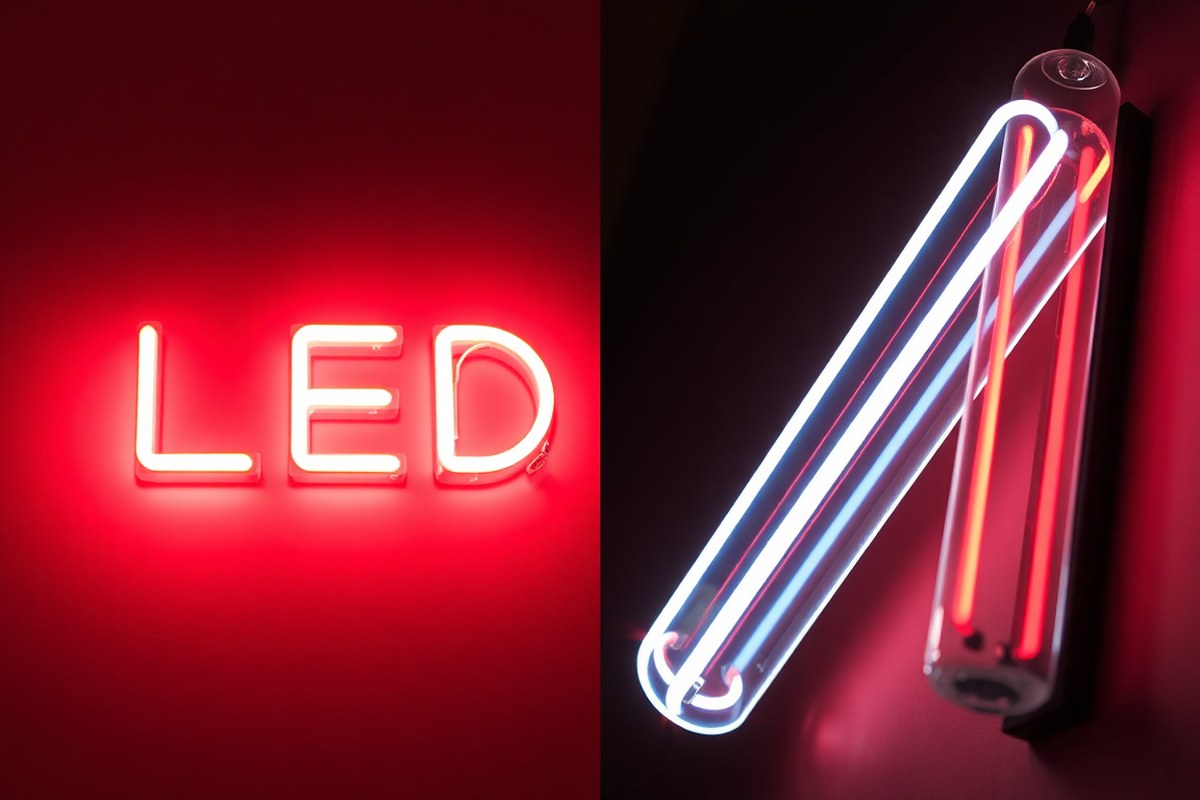
LED signs and traditional neon signs differ primarily in how they create light and the materials used. Traditional neon signs rely on glass tubes filled with neon or argon gas. When a high voltage, typically between 3,000 and 15,000 volts, passes through the tube, it excites the gas atoms, causing them to emit a colorful glow. The glass used is delicate and must be manually shaped by experts into the desired forms, making customization a skilled and somewhat limited process.
LED neon signs use light-emitting diodes (LEDs), which are tiny semiconductor devices housed in flexible plastic or silicone tubing instead of glass. LEDs produce light through electroluminescence when an electric current passes through them at a low voltage, often around 12 volts. The flexible casing allows for easier shaping and a wider range of colors compared to traditional neon glass tubes. This flexibility also reduces the risk of breakage, making LED signs more durable.
The basic technology behind LEDs involves semiconductors that emit light when energized, without the need for gas or high voltage. That means LED signs use much less power, around 1 to 3 watts per foot, compared to traditional neon signs that typically consume 15 to 20 watts per foot. LED neon signs run cooler and give off minimal heat, while glass neon tubes generate a noticeable amount of heat during operation.
LED neon products can last anywhere from 50,000 to 100,000 hours, significantly outlasting traditional neon signs, which average between 10,000 and 25,000 hours. The longer lifespan reduces replacement and maintenance costs over time. LED signs also tend to be easier to install due to their lower weight and flexible materials.
Cost differences start with the initial materials. Glass tubes for neon signs require manual shaping by skilled technicians, which adds to production time and expense. In contrast, LED neon signs often come pre-fabricated and are simpler to customize, with prices roughly 10% lower than glass neon signs for similar sizes. LED signs’ energy savings further contribute to lower operating costs in the long run.
Despite similarities in appearance, LED and traditional neon do not produce light in the same way. Neon signs emit light due to electrical excitation of gas inside glass tubes, whereas LED signs generate light via solid-state electronics inside flexible plastic casings. While LEDs produce a slightly cooler and less intense glow to some viewers, advances in LED neon technology have made these differences less noticeable, especially from a distance.
How Do LED Neon Signs Differ Technically from Traditional Neon?
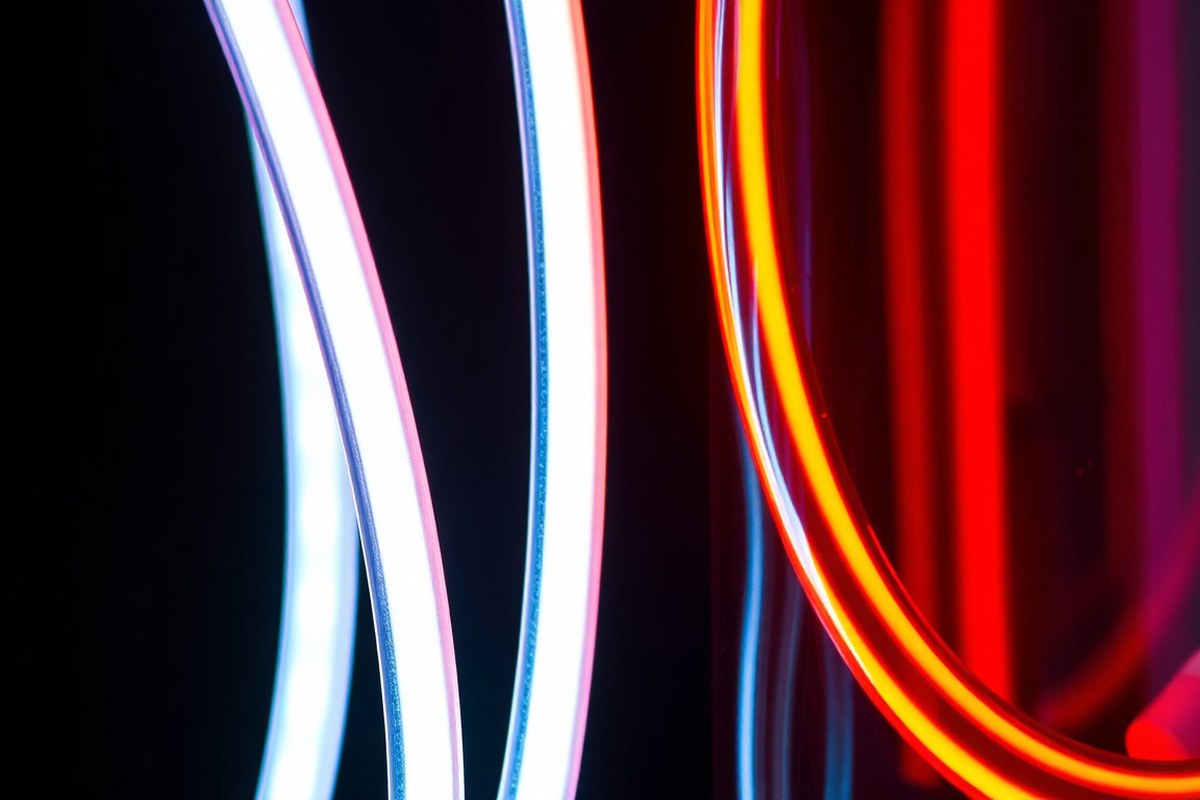
LED neon signs differ technically from traditional neon signs primarily in how they produce light, the materials used, power requirements, and brightness. LED signs use low-voltage diodes enclosed in flexible tubing, while traditional neon relies on high-voltage gas-filled glass tubes. These differences affect energy consumption, maintenance, and design options.
Power and Voltage Differences
Traditional neon signs require high-voltage transformers, typically ranging from 3,000 to 15,000 volts, to excite gases inside the glass tubes and produce light. In contrast, LED neon signs operate on a safe, low voltage direct current (DC) supply, usually between 12 and 24 volts. This lower voltage makes LED neon safer to install and maintain while consuming significantly less energy.
The energy draw differs greatly between the two. A white neon sign can use about 68 watts per linear foot, whereas an LED neon equivalent will use roughly 1.5 to 3 watts per linear foot. Over 12 hours daily operation, this translates to annual energy savings of around 210 kilowatt-hours per sign with an LED. This efficiency often means lower electricity bills and reduced cooling requirements for businesses.
Materials and Construction
Traditional neon signs consist of hand-bent glass tubes filled with noble gases such as neon or argon. These gases glow when energized by high voltage, producing the characteristic continuous glow of neon lighting. The glass is fragile and requires skilled labor for bending, sealing, and gas filling.
LED neon signs use semiconductor light-emitting diodes housed in flexible silicone or PVC tubing. This tubing mimics the look of glass tubes but is much more durable and flexible, allowing for easier installation and more versatile designs. The LEDs emit light at individual points inside the tube, creating a similar overall effect but with slightly different light distribution.
Brightness and Light Quality
Neon gas tubes typically deliver brightness levels between 400 and 800 lumens per meter, producing a continuous, smooth glow along the tube length. LED neon signs outperform neon in brightness, offering between 1,000 and 2,000 lumens per meter, depending on the model and color.
The quality of light differs as well. Neon tubes emit light uniformly along the tube surface, creating a classic, even glow. LED neon signs consist of multiple diodes inside the tubing, so light comes from distinct points. Advanced LED designs use diffusion materials in the tube to deliver a similar smooth appearance, but some close inspection may reveal this slight variation.
Lifespan and Durability Factors
Traditional neon signs have a typical lifespan of 8 to 15 years under favorable conditions, including maintenance of gas levels and occasional transformer replacements. These signs are fragile due to their glass construction, making them prone to breakage and vibration damage.
Commercial-grade LED neon signs offer much longer lifespans, commonly rated for 50,000 to 100,000 hours of operation, which can be two to four times longer than neon. Their rugged PVC or silicone tubing is shatter-resistant and weatherproof, reducing the chances of damage during installation and daily use. Maintenance is minimal, usually involving simple modular replacements instead of specialist repairs or gas refills.
Choose LED neon signs for outdoor or high-traffic locations to minimize breakage risks and cut down on costly repairs associated with fragile glass tubes.
How Do Costs Compare: Upfront Price and Long-Term Operation?
The total cost of ownership for LED versus neon signs favors LED signs in most cases. LEDs are generally cheaper to buy and install, use significantly less energy, and cost less to maintain. The upfront price difference narrows when factoring in installation, but the long-term savings on electricity and repair make LED signs more cost-effective, especially for larger or more complex designs.
Initial Purchase and Installation Costs
LED signs typically have a lower upfront cost compared to traditional glass neon signs. While LED materials might cost around 26% more than neon materials, the labor costs for neon manufacturing and installation are higher. Neon manufacturing labor averages 20% more, with installation labor approximately 25% higher than LEDs. This combination results in the total initial cost for LEDs being less, especially since LEDs do not require the same specialized installation precautions.
Neon signs involve fragile glass tubes that require careful handling and professional installation. This adds to the labor cost and may increase installation time and risk. LED signs are easier to install due to flexible tubing and lighter materials, reducing installation expenses and downtime for your business.
Energy Consumption and Utility Costs
LED signs consume significantly less electricity. A typical LED sign operates at about 1, 5 watts per foot compared to 3, 20 watts per foot for neon signs, depending on size and complexity. This results in LED energy use being roughly 5 to 10 times lower. For example, a standard LED sign might cost around $80 annually to run, while a neon sign of comparable size could cost about $228 per year.
This energy efficiency means LED signs can reduce utility bills substantially over time. For business owners running multiple signs or 24/7 display lighting, the savings compound quickly, making LEDs the more economically sound choice. The reduced power consumption also aligns better with modern energy codes and sustainability goals.
Maintenance and Repair Expenses
Maintenance costs for neon signs are higher due to the fragility of glass tubes and the complexity of repairs. Neon can require specialist repairs when glass cracks or transformers fail, which are costly and may cause extended downtime. The lifespan of neon also tends to be shorter without regular upkeep and replacement of gas or electrodes.
LED signs rarely need repairs; their solid-state design makes them far more durable. Routine cleaning and occasional replacements of power supplies are the main expenses. This lower maintenance requirement leads to fewer service interruptions and reduced labor costs over the sign’s lifespan.
Cost Efficiency over Time: Example Calculation
The table below summarizes typical costs and annual energy consumption for a standard 10-foot sign. This comparison helps you evaluate the total cost of ownership over five years, accounting for purchase, installation, energy, and maintenance.
| Cost/Metric | LED Sign | Neon Sign |
|---|---|---|
| Material Cost | 26% higher than neon material | Base cost |
| Labor & Installation | 25% less than neon installation | Higher: traditional glass tubes require specialized handling |
| Energy Use (watts per foot) | 1, 5 watts | 3, 20 watts |
| Estimated Annual Energy Cost | $80 | $228 |
| Typical Maintenance & Repair Cost (5 years) | Low: minor repairs, power supply replacement | High: specialist repairs for glass tubes and transformers |
| Total 5-Year Ownership Cost | Lowest cost option overall | Several times higher than LED |
For a 10-foot channel letter sign with moderate complexity, choosing LED reduces your upfront costs and cuts annual electricity bills by roughly 65%. Factor in fewer repairs and longer lifespan, and LED signs become far more affordable over five years. Larger or more intricate designs increase neon costs disproportionately due to labor and energy demands, making LED a better financial decision as scale grows.
What Durability and Maintenance Differences Should You Expect?
Neon signs are more fragile due to their glass tubing, which can easily break or crack under impact or vibration. The glass tubes contain gases such as neon or argon, sealed under low pressure, making them sensitive to shock and sudden temperature changes. In contrast, LED signs consist of solid-state components housed in durable plastic or silicone casings, making them resistant to vibration, weather, and accidental knocks. This robustness means LED signs generally last longer outdoors without damage.
Neon signs need routine maintenance and occasional repairs. Their glass tubes may require replacement every 8 to 15 years depending on use and environment. Also, high-voltage transformers must be checked regularly, as failure can cause sections of the sign to go dark. Neon tubes are prone to gas leakage or electrical shorts, so spotting dim or flickering lights early helps avoid total failure. Cleaning to remove dust, dirt, and moisture build-up on glass should happen every 6 months, as these contaminants reduce brightness.
LED neon signs require very little upkeep. The LED strips are designed for continuous operation with typical lifespans exceeding 50,000 hours, around 6 years of nonstop use. They don’t rely on glass or gas, so no risk of breakage or leaks. For outdoor installations, ensure the LED neon flex is rated for outdoor use to resist UV rays and moisture. Cleaning every year with a soft cloth and gentle detergent keeps the sign bright without risk of damage.
Environmental conditions affect neon signs more strongly. Glass can crack in freezing temperatures or sudden temperature swings, so outdoor neon signs in cold climates often need winter protection. Excessive heat or humidity risk shortening transformer life and gas stability. LED signs handle a wider temperature range, often -20°F to 120°F, with little variation in performance. Rain, snow, and sun exposure cause minimal wear when LEDs are properly sealed and rated for outdoor use.
- Inspect neon glass tubes annually for chips, cracks, or gas dimming
- Test and replace neon transformers every 5, 10 years or at first sign of flicker
- Clean neon glass tubes biannually with a damp cloth; avoid harsh chemicals
- Choose outdoor-rated LED neon flex for weather resistance and UV protection
- Wipe LED signs yearly with a soft, nonabrasive cloth and mild soap
- Protect outdoor neon from extreme freezing by covering or relocating sign in cold months
Common repairs for neon signs include replacing broken glass tubes, refilling tubes with gas, and swapping faulty transformers or wiring. These repairs need a skilled technician due to the high voltage involved and the delicate glass work. For LED signs, repairs might mean replacing sections of LED flex if individual diodes fail, but this happens rarely and usually under physical damage.
Investing time into proper maintenance extends the functional life of both neon and LED signs. Neon demands more hands-on service and vulnerability to environmental damage, increasing costs and downtime. LEDs offer a durable, low-maintenance choice, especially for outdoor or high-traffic business settings where sign reliability is critical to visibility and branding. You should weigh fragility, climate, and maintenance willingness when choosing between neon and LED for your signage needs.
How Do LED and Neon Signs Compare Aesthetically?
LED signs and traditional neon signs offer distinct aesthetic qualities that affect how they perform visually for business and decorative purposes. Traditional neon emits a soft, warm glow with rich color saturation, creating an unmistakable vintage charm. This comes from the gas-filled glass tubes, which diffuse light evenly along the length of the tube, giving the colors a smooth, continuous presence. Such diffusion improve the classic neon look, especially in darker settings, where neon’s subtle glow can cut through fog and haze better than LED illumination. For projects focused on capturing authentic vintage aesthetics, traditional neon remains preferable because the curved glass tubes and the natural light dispersion are difficult for LEDs to replicate exactly.
LED neon signs use flexible plastic tubing and closely spaced LED strips to mimic neon’s classic shapes and vibrant colors. Because LEDs are much smaller and can be arranged on bendable polymer tubing, manufacturers can replicate complex brand logos or fine details more precisely than traditional neon tubes allow. This flexibility means you can create sharply defined fonts and intricate designs without the restrictions of bending glass. LED signs tend to deliver brighter, cleaner, and more uniform brightness, making them highly visible in daylight and urban environments with ambient light. Colors appear more vivid and saturated, but the light diffusion differs, LEDs emit more directional light with sharper edges rather than the soft glow of neon. This modern look does not always translate well for those wanting an exact vintage feel.
The color range of LED signs is generally broader due to RGB LEDs capable of producing millions of shades and dynamic effects. Traditional neon relies on specific gases and coatings for colors, so its palette is smaller and colors are warmer but not as customizable. For business owners, brighter LEDs make signs more noticeable from a distance and under varied lighting, which is an advantage for promoting brand visibility. However, the sharper light edges of LEDs can make the signage appear less soft and inviting than neon, especially indoors or in intimate venues.
To closely mimic vintage neon aesthetics using LEDs, choose designs that use diffused tubing and warm white or amber LEDs to soften the light output. Using a wide variety of font styles and carefully designed bends can help you approach the nostalgic look. However, be aware that even the best LED neon flex shines with a more uniform brightness compared to the subtle, warm flicker of glass neon. For a truly authentic appearance, craftsmanship with real glass tubes filled with neon gas still offers an advantage, though installation and maintenance are more complex.
Practical tip: Avoid overly thin or sharply bent LED neon tubing, as LED strips can struggle to maintain consistent brightness and color uniformity in tight curves compared to traditional neon glass tubes.
What Safety and Environmental Factors Matter Between LED and Neon?
LED signs generally offer better safety and environmental profiles than traditional neon signs. They run on lower voltage, emit less heat, avoid hazardous gases, and consume significantly less energy. Understanding these differences helps you choose signage that fits your safety requirements and sustainability goals.
Electrical Safety and Voltage Risks
LED signs operate at much lower voltages than neon signs, which typically require high voltage to ionize neon gas inside glass tubing. Neon signs often use transformers that can output between 3,000 and 15,000 volts, creating a risk of electric shock during installation or maintenance if not handled properly. The glass tubes are fragile, and a break can expose users to high voltage or sharp shards, requiring careful handling and professional servicing.
LED neon signs use standard low-voltage DC power supplies, often 12 or 24 volts. This makes them safer to install and maintain for business owners or staff with basic training. The absence of glass tubes also eliminates the risk of cuts or electrical hazards related to shattered components. When setting up LED signs, ensure you use power adapters with built-in short-circuit protection and follow manufacturer wiring instructions to prevent electrical risks.
Heat Emission and Fire Risk
Neon signs produce noticeable heat because the gas inside the glass tubes glows when energized, and the transformers generate excess heat as well. Operating temperatures of neon signs can range from 100 to 160 degrees Fahrenheit on the glass surface, which poses a fire hazard in flammable or constrained environments. This heat also accelerates wear on mounting surfaces and components, increasing maintenance needs.
In contrast, LED signs generate minimal heat since LEDs convert most electrical energy to light instead of heat. The surface temperature of LED neon flex or strips rarely exceeds 90 degrees Fahrenheit under typical operating conditions. This reduces fire risk and allows for mounting on more sensitive materials like wood, plastic, or fabric without special insulation. For locations with strict fire codes, LED signs often meet safety standards more easily than neon.
Environmental and Toxicity Considerations
Traditional neon signs contain inert neon or argon gases, sometimes mixed with mercury vapor in other gas-discharge signs, which is toxic if released. The glass tubes are fragile and, if broken, require careful disposal to avoid environmental contamination. Recycling options exist but can be complicated and costly. Neon gas itself is non-toxic, but other gases and coatings used in glass tubes sometimes contain hazardous substances.
LED neon signs do not use glass tubes, mercury, or any gases, eliminating the risk of toxic gas exposure or hazardous waste if damaged. They are more environmentally friendly in both manufacture and disposal. However, LED signs contain electronic components and semiconductors that should be recycled properly to avoid heavy metal pollution. Overall, LED options reduce environmental hazards related to disposal and breakage.
Energy Efficiency and Carbon Footprint
LED signs consume about 80% to 90% less energy than neon signs. For example, a typical neon sign might use 100 watts for a given size, whereas an LED equivalent uses around 10 to 20 watts. The lower energy draw directly translates to a smaller carbon footprint over the sign’s lifespan. This also reduces electricity costs for your business.
Energy savings depend on use patterns. Signs lit 12 to 16 hours daily show the most noticeable benefits in electricity bills. In locations with renewable energy or peak pricing, LED signs help lower operational and environmental costs more effectively. While neon signs can last 15 years before gas replacement, their higher power consumption results in greater overall emissions.
Where Are LED and Neon Signs Best Suited by Use and Location?
LED signs work well both indoors and outdoors, making them a versatile choice for many business types. They hold up well to cycling on and off, which helps save energy if you only want your sign lit during business hours. This flexibility suits retail stores, restaurants, and event venues that may change hours or promotional displays frequently. Because LED signs are usually lighter and easier to install, you can place them on walls or in windows inside your business without needing a professional electrician. Their brightness is adequate for most indoor settings, especially in dimmer rooms or at night.
Traditional neon signs, on the other hand, produce more lumens per watt and have a brighter glow, which can stand out better in very bright environments or direct sunlight. This is why businesses in locations with strong daylight, such as outdoor storefronts or busy streets, often choose neon. Their iconic look also fits well in themed spaces, bars, or artistic installations where the vintage style complements the décor. Neon signs last longer overall but require more careful installation and maintenance, which is worth the cost for businesses that prefer a classic aesthetic and a strong visual impact in bright outdoor conditions.
When deciding which sign to choose, consider how bright your environment is. If your business has a brightly lit storefront or is exposed to direct sun, neon may grab more attention from passersby. For indoor use or softer lighting conditions, LED offers an efficient, cost-effective option with acceptable brightness. Both types can handle outdoor use, but LED’s lower heat output and durability make it easier to maintain, especially in areas with extreme temperatures or frequent power cycling.
Size and shape flexibility is another point to consider. LED signs come in more customizable shapes and sizes since they use flexible tubing and can be cut or joined easily. This suits businesses looking for unique logos or messages that don’t fit standard sign frames. Neon signs are limited by the hand-bent glass tubes, so intricate or very large designs cost more and take longer to produce. For shops that want a bold, custom appearance without a large upfront investment, LED is often the smarter choice.
Businesses in hospitality or entertainment may favor the ambiance of neon whether they display signs inside or outside, while retail stores, offices, and home-based businesses typically benefit more from LED’s ease of handling and modern look. The safest approach is to match the sign type with your location’s lighting and desired atmosphere. For example, a dim bar with low ambient light can use neon effectively indoors, but a bright coffee shop window would be better served by a flexible LED sign that resists fading and handles power cycling smoothly.
How to Choose Between LED Neon Flex and Glass Neon Signs?
LED neon flex and glass neon signs differ significantly in structure and performance, affecting design choices and installation. LED neon flex uses flexible plastic tubing embedded with LED lights. This makes it lightweight and easier to mount on various surfaces. Glass neon signs use glass tubes filled with inert gases, producing a warm, continuous handcrafted glow that many find visually appealing but heavier and more fragile.
The choice between them depends largely on design preferences, budget, and installation environment. Glass neon works best if you want an authentic, warm light with artistic detail and are willing to invest in specialist installation and possible repairs. LED neon flex suits projects requiring easier customization, lower weight, and a cooler installation surface, usually with simpler and faster setup.
| Feature | LED Neon Flex | Glass Neon |
|---|---|---|
| Material | Flexible plastic tubing with embedded LEDs | Handcrafted glass tubes filled with gas |
| Weight & Mounting | Lightweight, easy to mount on most surfaces | Heavy, requires secure, specialized mounting |
| Light Quality | Even glow, cool to the touch | Warm, continuous handcrafted glow |
| Customization | Easier for intricate logos and shapes | Customization limited by glass bending skill |
| Durability & Maintenance | Allows sectional LED replacement, easier repair | Fragile glass prone to breakage, requires specialist repair |
| Installation Complexity | Simple and quick installation, minimal tools | Requires trained installer and more time |
Installing LED neon flex involves securing the tubing with clips or channels, which you can usually do yourself or with a general contractor. Its lightweight and cooler operation reduce concerns about heat damage or weight support. Glass neon installation demands a trained professional who can handle fragile tubes and connect high-voltage transformers safely. The higher upfront effort and risk of breakage make it less practical for DIY or quick changes.
Choose glass neon only if the warm, handcrafted glow is important and you’re ready for specialist installation and occasional repairs.
For business owners balancing budget and design, LED neon flex offers simpler, faster customization, especially for detailed logos or multi-color designs. It also suits locations where weight limits or mounting surfaces are a concern. Glass neon signs might be worth the extra cost for upscale venues wanting a vintage or artisanal look where signage is a focal point.
Step-by-Step Action Plan for Choosing Your Sign
Follow these steps to pick the right sign for your business based on cost, durability, look, energy use, and installation.
- Before you start: Assess your business location and signage needs. Check the available power options and signage regulations to make sure your choice fits local rules and space.
- Day 1: Compare upfront costs by getting quotes for both LED and traditional neon signs with your preferred design. More than price, ask about warranties and installation services.
- Week 1: Review energy consumption estimates and calculate long-term electricity expenses. Choose LED signs if you want lower operating costs or neon for a classic aesthetic despite higher energy use.
- Week 2: Consider durability based on your environment. Pick LED if exposure to vibration, weather, or frequent moving is likely. Choose glass neon for controlled indoor settings where longevity depends on care.
- Week 3: Evaluate appearance options by viewing samples or photos under your typical lighting conditions. LED offers versatility and brightness control; neon provides unique glow and depth.
- Week 4: Plan installation logistics. LED signs tend to be lighter and easier to mount. Ensure your installers are experienced with the sign type you select.
- After 1 month: Set a maintenance schedule based on your choice. LED signs usually require less upkeep; neon requires checking gas fill and tube conditions periodically.
Frequently Asked Questions
Can LED Neon Signs Be Repaired If Damaged?
Yes, LED neon signs can often be repaired by replacing sections or LED strips, while traditional neon requires glass tube repairs, which can be more costly and delicate. Maintenance skills or professional help may be needed depending on the damage.
How Does Brightness Compare Between LED and Neon Signs?
LED signs usually match or exceed neon brightness and can be adjusted for better visibility, making them versatile for day or night use. Neon signs have a fixed glow that works well in low-light settings.
Are LED Neon Signs Suitable for Custom or Intricate Designs?
LED neon signs handle complex shapes and custom designs better due to their flexible material and easy installation. Traditional neon requires shaped glass tubing, which is more limited and expensive for detailed work.
Do LED Neon Signs Flicker Like Traditional Neon?
LED neon signs rarely flicker if properly installed, unlike traditional neon, which can flicker due to aging tubes or power supply issues. Flicker can affect visibility and appeal.
What Is the Typical Lifespan Difference Between LED and Neon Signs?
LED neon signs last around 50,000 to 100,000 hours, much longer than traditional neon’s 10,000 to 15,000 hours, lowering replacement frequency and maintenance costs.
Are LED Neon Signs Easier to Install Than Traditional Neon?
Yes, LED neon signs often weigh less and run on low voltage, making them simpler and safer to install compared to heavy glass neon requiring high voltage and specialized mounting.
The Bottom Line
Choosing between LED and neon signs depends on balancing budget, style, energy use, and site conditions. LED signs are cost-effective and low-maintenance with flexible design, while neon signs offer timeless brightness and charm at higher cost and care. Start by narrowing your priorities and getting professional input to ensure the sign you pick supports your business goals effectively.