Led vs Fluorescent Sign Lighting: A Complete Comparison and Cost Savings Guide
Choosing between led vs fluorescent sign lighting means balancing energy costs, brightness, and maintenance. LED lighting generally offers lower energy use and longer lifespan, leading to significant savings over time. Start by comparing your current energy bills and considering LED upgrades for faster payback and better reliability.
Key Takeaways
- LED sign lighting uses 50, 60% less energy than comparable fluorescent options.
- An LED light can operate for as long as 50,000 hours, which is approximately 3.5 times the lifespan of fluorescent bulbs.
- LEDs convert approximately 95% of energy into light, producing less heat than fluorescents.
- Fluorescent signs may require more frequent replacements, increasing maintenance and labor costs.
- Payback on LED upgrades often occurs within 1, 3 years, sometimes sooner with rebates.
- LED lights turn on instantly and perform better in cold conditions than fluorescent tubes.
LED vs Fluorescent Sign Lighting: Key Differences Explained
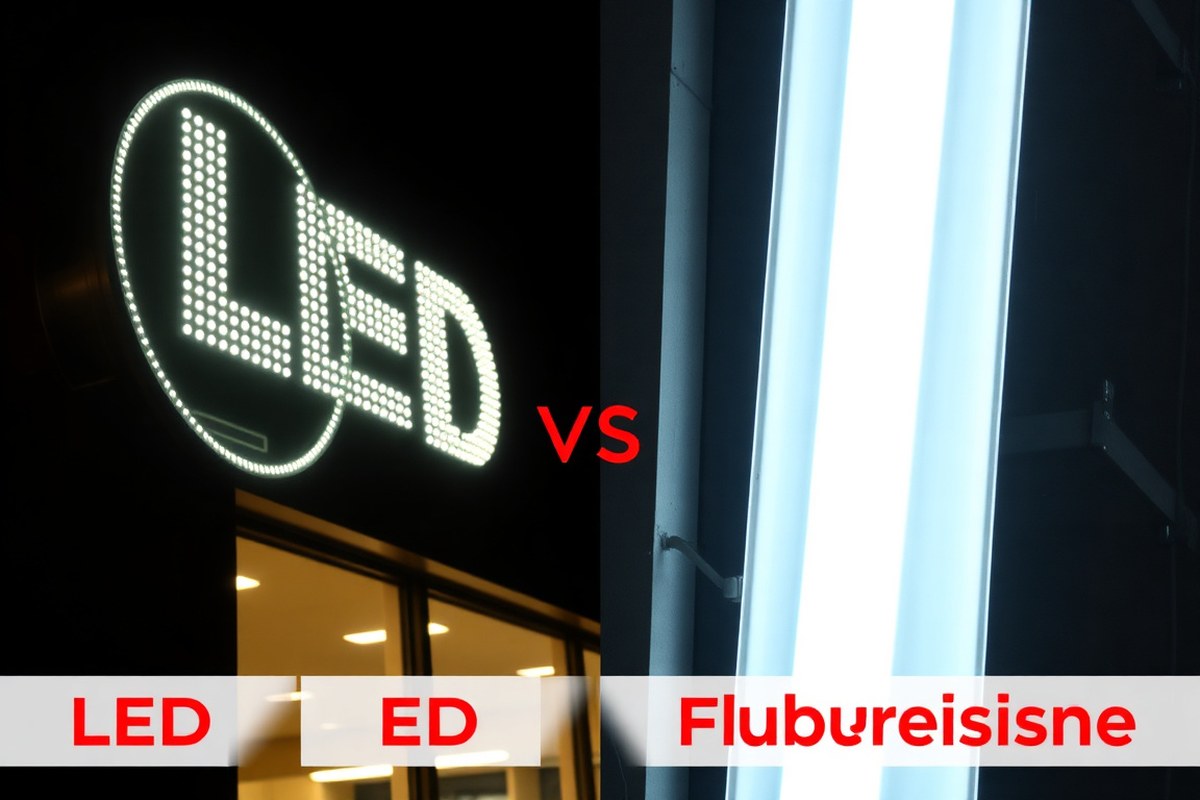
LED sign lighting uses light-emitting diodes to produce illumination by running an electric current through a semiconductor. This process generates visible light directly and very efficiently, converting up to 95% of the electricity into light. The design allows LEDs to produce bright, clear white light without emitting ultraviolet rays or excessive heat. Many LED units are modular and emit focused light, making them ideal for sharp sign lighting where visibility and color accuracy matter.
Fluorescent sign lighting works differently. It sends an electric current through mercury vapor inside a glass tube, which generates ultraviolet light. This UV light then excites a phosphor coating on the tube’s inside surface, causing it to emit visible light. Fluorescent lights usually produce a softer, more diffuse glow with a yellowish tint, which can reduce the sharpness of a sign’s appearance. Because they rely on this gas discharge and phosphor conversion, fluorescent tubes contain mercury and generate more heat compared to LED lights.
The fundamental difference between LED and fluorescent technologies comes down to how they produce light: LEDs emit light directly through a solid-state process, while fluorescent lamps depend on gas discharge and phosphor energy conversion. This means LEDs convert more energy into usable light with less waste heat. It also leads to longer lifespan and more consistent brightness for LED signs. Fluorescent lamps typically last 7,000 to 15,000 hours, whereas LEDs range from 50,000 to 100,000 hours of effective illumination.
For a business owner or sign maker deciding between these options, the choice affects not only light quality but also maintenance schedules and energy costs. Installing an LED sign light involves setting up the diode arrays and power supply modules, often designed for simple replacement or retrofitting in existing fixtures. Fluorescent signs require tube holders, ballasts to regulate the current, and proper disposal procedures due to mercury content.
Because LEDs emit focused light without flicker or UV emissions, they are better suited for illuminated signs exposed to close viewing or outdoor environments with variable weather. Fluorescent lights can dim or flicker over time because their gas discharge is less stable and more sensitive to temperature changes. Maintenance on fluorescent signs generally means replacing tubes and ballasts every few years, while LED lights last much longer with routine cleaning.
Understanding these technological distinctions helps you evaluate what fits best for your sign lighting needs. LED signs deliver more efficient, cleaner, and longer-lasting light directly from solid-state diodes, reducing operational challenges. Fluorescent signs convert electricity to visible light via a more complex chemical and physical process that results in softer light but shorter service life and higher energy consumption.
Energy Efficiency and Long-Term Cost Comparison
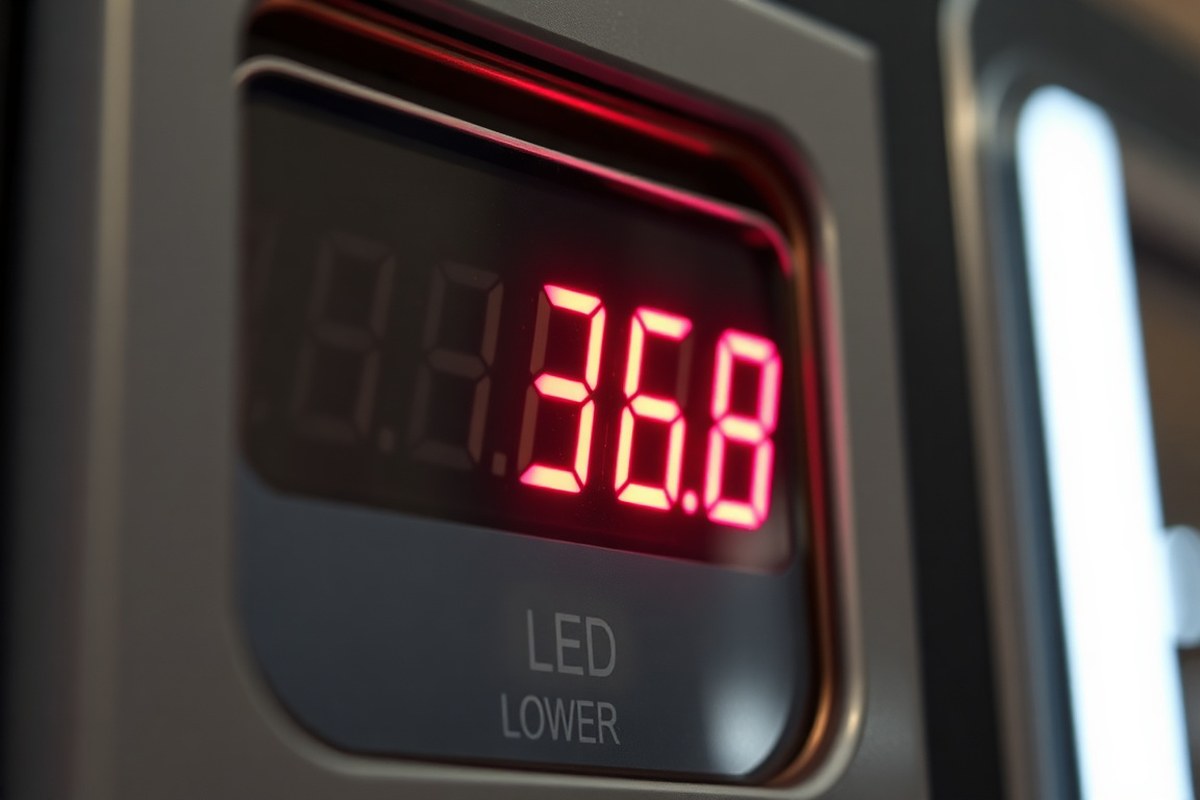
LED signs consume about half the energy of fluorescent signs while delivering comparable or better brightness. A common 4-foot fluorescent tube uses roughly 36 watts, whereas an LED tube of similar brightness typically uses 18 watts. This difference can translate into energy savings of 30% to 70% when switching to LED fixtures.
Though LED signs generally have a higher initial cost than fluorescent ones, the operational cost savings tend to outweigh this difference within 1 to 3 years. The longer lifespan of LEDs, around 50,000 hours compared to 10,000 to 15,000 hours for fluorescents, plus reduced maintenance needs contribute to lower total cost of ownership. Maintenance savings come from fewer replacements and the elimination of ballast servicing required for fluorescent lighting.
| Factor | Fluorescent | LED |
|---|---|---|
| Initial Cost | Lower | Slightly Higher |
| Typical Wattage (4ft tube) | 36W | 18W |
| Energy Efficiency (lm/W) | 70, 90 | 110, 140 |
| Typical Lifespan | 10,000, 15,000 hours | 50,000+ hours |
| Maintenance Frequency | More frequent | Minimal |
| Payback Period* | N/A | 1, 3 years |
*Payback period represents the time for energy and maintenance savings to offset higher LED upfront cost. Performing a simple cost comparison highlights the benefit. Suppose your business uses 10 fluorescent tubes running 12 hours daily. The energy consumption is 36 W × 10 × 12 hrs = 4,320 watt-hours or 4.32 kWh daily. Switching to LED reduces wattage to 18 W per tube, cutting daily consumption to 2.16 kWh. Over a year (365 days), the savings are approximately 795 kWh. At $0.12 per kWh, the annual cost reduction is $95.40.
With LEDs costing about $15 more per tube, the extra upfront cost totals $150 for 10 tubes. Dividing this by annual energy savings yields a payback of roughly 1.57 years, not counting reduced maintenance and replacement costs, which would further shorten payback time.
Check local electricity rates and operating hours before calculating payback; these significantly impact savings and should guide your investment decision.
The total cost of ownership depends on several factors beyond energy use: LED fixtures reduce labor costs by requiring fewer replacements. In contrast, fluorescent systems might demand periodic ballast replacements and disposal expenses related to mercury content in bulbs. Your choice also depends on how long you plan to keep the signage and how critical continuous, even lighting is for your brand visibility.
To maximize energy savings, select LEDs with high efficacy (lumens per watt) and ensure your sign’s power supply is compatible with LED drivers. Avoid cheap LEDs that may consume more energy or fail sooner. Maintaining your sign’s components clean and well-installed also helps achieve the best returns over time.
Lifespan, Maintenance Needs, and Reliability in Signage
LED lights generally last significantly longer and require less maintenance than fluorescent lights when used in signage. This translates into fewer replacements, lower maintenance costs, and more consistent performance, especially in commercial environments where signs run many hours daily.
Typical Lifespan Ranges
LEDs used for commercial sign lighting often have a lifespan from 50,000 to 100,000 hours, providing long-term operation. These LEDs usually last two to five times longer than fluorescent tubes, which generally run for about 10,000 to 15,000 hours. Frequent replacements become necessary with fluorescent tubes, especially in settings with heavy usage.
The extended lifespan of LEDs reduces both downtime and labour costs associated with bulb changes. For example, an LED fixture might last the equivalent usage of 3, 5 fluorescent tubes, which saves money on parts and reduces maintenance visits especially in hard-to-reach signage installations.
Maintenance Frequency and Costs
Fluorescent signs typically require bulb replacement two to three times annually under normal commercial use. In contrast, LED sign lights need drastically fewer replacements, often lasting several years without maintenance. Cost savings on replacements and labour add up, particularly when accounting for the downtime of a non-illuminated sign.
- Fluorescent tubes need regular changing every 10,000 to 15,000 hours
- LED fixtures can run 50,000 to 100,000 hours before replacement
- LED systems reduce labour and replacement parts cost substantially
- LEDs offer better lumen maintenance over time, maintaining brightness longer
- Maintenance access challenges are less frequent with LEDs due to lower replacements
- Typical fluorescent sign maintenance may disrupt business more often
- Budgeting for sign upkeep favors LED in the long run despite higher upfront cost
High-maintenance frequency for fluorescent tubes, especially in hard-to-access commercial signs, can impact your operation and add up over time. LEDs reduce this burden because their long life reduces how often maintenance teams must service your signs.
Impact of Switching and Usage Patterns
Frequent switching can shorten the lifespan of fluorescent tubes because their ballasts and filament systems are sensitive to on/off cycles. This effect is less pronounced in LEDs, which handle switching without significant degradation. Therefore, signs that turn on and off often benefit from LED technology to avoid premature failure.
Some fluorescent lamp systems may experience degraded lamp life depending on how often they are switched and the type of ballast used. LEDs perform well even in signs that operate on timers or motion sensors. This reliability under varied operating cycles makes LEDs suitable for many signage environments.
Environmental Durability and Reliability
LEDs are more durable than fluorescent lights when exposed to outdoor and varying environmental conditions common in commercial signage. Fluorescent tubes are more fragile and sensitive to temperature swings, which can affect performance and lifespan. LED signs remain reliable in heat, cold, and frequent vibration or movement.
This resistance to harsh conditions ensures your sign’s message stays visible and consistent. LEDs also generate less heat, reducing the risk of component damage or failure in enclosed sign cabinets. For outdoor business signs or locations with high vibration, LED lighting outperforms fluorescent solutions in reliability and continuous visibility.
Light Quality, Brightness, and Visibility Differences
LED sign lighting generally offers brighter, more consistent illumination than fluorescent options, making it better for visibility. LED fixtures typically produce between 80 and 150 lumens per watt, with premium models reaching the higher end, while linear fluorescent tubes range from 80 to 100 lumens per watt. Compact fluorescent lamps (CFLs) fall behind with 50 to 70 lumens per watt. This higher luminous efficacy in LEDs translates to sharper, more visible signs, especially important for nighttime viewing or locations with ambient light pollution.
Color rendering is another key difference. LED lighting has a Color Rendering Index (CRI) ranging from 80 to over 95, meaning it reproduces colors quite accurately under its light. Fluorescent lighting commonly scores between 75 and 85, with older tubes sometimes as low as 62. Because signage often relies on strong color contrast to catch attention and convey brand identity, LEDs provide a clearer and more vibrant display that supports better brand recognition and engagement.
Flicker and noise can affect viewer comfort and the perceived quality of a sign. Fluorescent tubes frequently flicker at 50 to 100 Hertz, especially as they age, which can cause eye strain and headaches. Their warm-up times vary from a few seconds (for T8/T5 tubes) to up to three minutes for CFLs, often producing uneven brightness during this period. LEDs reach full brightness instantly and maintain steady light output without flicker. This stability improves viewer comfort and keeps your sign looking consistently professional in all conditions. Table comparing LED and fluorescent sign characteristics:
| Specification | LED | Linear Fluorescent (T8/T5) | CFL |
|---|---|---|---|
| Luminous Efficacy (lm/W) | 80, 150 | 80, 100 | 50, 70 |
| Rated Lifespan (hours) | 25,000, 50,000 (premium to 100,000) | 20,000, 36,000 | 8,000, 15,000 |
| Color Rendering Index (CRI) | 80, 95+ | 75, 85 (older ~62) | 62, 82 |
| Warm-up to Full Brightness | Instant | A few seconds | Up to 1, 3 minutes (slower when cold) |
| Cold Weather Start | Reliable | Struggles below ~0 °C | Struggles below ~0 °C |
Lighting quality directly affects signage visibility, especially in retail or commercial environments where drawing customer attention is critical. LED illumination ensures bright, consistent colors and optimal contrast, making signs stand out day and night. Fluorescent signs, with slower warm-up and lower CRI, often lack this vibrancy and uniformity. This difference can hurt brand presence in dim or variable lighting conditions.
Switching to LEDs also supports signage effectiveness by eliminating flicker and providing immediate, stable brightness. Poor flicker performance, common in aging fluorescent tubes, reduces viewer comfort and can discourage lingering near the sign. In contrast, LEDs maintain steady light without noise or visual disturbance, which helps maintain a professional appearance and encourages engagement with your signage.
Environmental and Safety Considerations for Sign Lighting
Fluorescent sign lighting contains mercury, a toxic heavy metal that presents significant environmental and health risks. When fluorescent bulbs break or are discarded improperly, they can release mercury vapors or contaminate soil and water. This hazardous material requires specific disposal methods regulated by local and federal agencies, often involving recycling programs or hazardous waste facilities. Failure to follow these protocols can lead to costly cleanup efforts and liability for businesses. These disposal and recycling requirements add time and expense to maintaining fluorescent signs, especially for business owners managing multiple fixtures.
On the other hand, LED sign lighting is free of mercury and other toxic substances, making disposal safer and simpler. LEDs use semiconductor technology that eliminates the need for hazardous elements. This advantage reduces environmental concerns at the end of the product’s life and lowers risk during handling and replacement. LEDs also emit very little heat compared to fluorescent lights, which can reach surface temperatures high enough to pose burn or fire hazards. Lower heat output from LEDs means less strain on building cooling systems, particularly beneficial in warmer climates or tightly enclosed sign installations.
In addition to hazardous materials, ultraviolet (UV) emission is a safety consideration. Fluorescent lighting produces UV rays, which can degrade sign materials over time and potentially cause eye discomfort or skin irritation for people working close to the signs. LEDs emit negligible UV radiation, improving worker comfort and protecting sign integrity. Their durable solid-state design also reduces the chance of breakage during installation or maintenance, further improving safety.
Environmental impact goes beyond hazardous materials. Fluorescent lights’ higher heat output increases energy costs by adding cooling demand, negatively affecting sustainability goals. LED signs offer a more eco-friendly profile by consuming less power and producing minimal heat, aligning well with energy codes and green building certifications. Choosing LED lighting helps businesses reduce their carbon footprint and avoids complications related to mercury disposal laws, which continue to grow stricter in many states.
For businesses weighing safety and environmental concerns in sign lighting, a clear checklist is helpful: First, identify if your current or planned lighting contains mercury and develop a proper disposal plan to comply with regulations. Second, assess the installation environment: warmer locations or enclosed signs benefit from LEDs’ low heat output. Third, verify the presence of UV emissions if signage is near employees to avoid health issues or material damage. Finally, consider your facility’s recycling options and total lifecycle costs of the lighting choice, including disposal fees.
Always handle and recycle fluorescent bulbs through certified hazardous waste programs to prevent mercury contamination and avoid fines or health hazards.
Common Types of LED and Fluorescent Lighting in Signs
Common types of LED and fluorescent lighting used in signs include LED strips, modules, and tube lights on the LED side, and T8, T5, and T12 fluorescent tubes. Each type has its typical applications and affects installation and performance differently. Understanding these options helps you choose the right lighting for your sign’s visibility, energy use, and maintenance needs.
LED Strip, Modules, and Tubes
LED strips are flexible and come with an adhesive backing, making them excellent for accent lighting and custom signage designs. They are easy to cut to length and install inside letters or around the sign’s edges for even illumination. LED modules provide focused light in small areas and are often used for channel letter signs due to their compact size and brightness.
LED tube lights are designed to replace fluorescent tubes directly. They come in ballast-compatible versions or direct-wire types that bypass the ballast. These tubes reduce energy consumption by up to 50% compared to fluorescents and produce brighter, more consistent light. Although LED tube lights usually cost more up front, often $20 to $40 per tube compared to $5 to $10 for fluorescent tubes, the energy savings and longer lifespan offset this.
Fluorescent Tubes: T8, T5, T12
T8 tubes are the most common fluorescent tubes used in commercial signage due to their balance of efficiency, brightness, and cost. T5 tubes are slimmer and more energy-efficient but require different fixture sizes. T12 tubes are older, larger, and less efficient, still found in some existing installations but less recommended for upgrades.
Typical wattages for these tubes range from 15 to 40 watts. Performance-wise, a 36W T8 fluorescent tube can often be replaced by an 18W LED tube offering the same or higher brightness. Fluorescent tubes need a ballast to regulate current, which adds complexity to installation and maintenance. If the ballast fails, the entire fixture may need repair or replacement.
Retrofit vs New Installation Options
Choosing between retrofitting existing fixtures and installing new lighting depends on your budget, timing, and sign condition. Retrofitting with LED tubes is a common, cost-effective upgrade that uses your current fluorescent fixtures. This can involve installing LED tubes compatible with existing ballasts or rewiring fixtures to run LED tubes directly, removing the ballast.
A new installation might involve adding LED strips or modules inside custom signage or replacing older fixtures completely. New LED fixtures can offer better integration with controls such as dimming or color changing, but the upfront cost is higher than retrofitting. Typical retrofit kits range from $15 to $50 per tube depending on compatibility and quality.
- Ballast-compatible LED tubes allow simple swap without rewiring
- Direct-wire LED tubes require fixture rewiring but improve reliability
- Retrofitting saves labor compared to replacing entire fixtures
- New installations may provide smarter lighting controls
- Consider fixture condition before choosing retrofit vs new
- LED retrofits reduce energy usage immediately
Properly performed retrofits reduce overall downtime and improve energy efficiency, making them suitable for facilities with multiple signs or tight operational schedules.
Specialty Lighting for Signs
Beyond standard tubes and strips, specialty lighting options address unique requirements in signage. For example, LED pin lamps offer precise spot illumination inside channel letters or lightboxes, helping create sharp edges and vibrant colors. They are often used where space is limited or specific effects are desired.
Some signs require weatherproof or outdoor-rated LED fixtures designed to withstand temperature swings and moisture. These fixtures provide consistent light output in extreme environments and often include advanced optics for better light distribution. For fluorescent systems, specialized tubes with different color temperatures or coatings can improve daylight simulation or reduce glare, but these options usually come with higher maintenance needs.
Retrofitting Fluorescent Signs to LED: Process and Benefits
Retrofitting fluorescent signs to LED involves replacing old fluorescent tubes with LED tubes or modules, either by using LED products compatible with existing ballasts or by removing ballasts and rewiring fixtures for direct-wire LED tubes. Understanding the steps, benefits, and compatibility considerations helps you avoid common pitfalls and achieve better performance and cost savings from your signage lighting.
Retrofitting Steps Overview
Start by identifying the type of fluorescent fixture and tubes in your sign. Choose the appropriate LED replacement, either plug-and-play LED tubes that work with the existing fluorescent ballast or direct-wire LED tubes that require ballast removal. The general retrofit process includes safely turning off power, removing fluorescent tubes, inspecting or removing ballasts if needed, installing LED tubes or modules, and restoring power to test the new lights.
After powering off your sign’s circuit, remove the fluorescent tubes and check the ballast type. Using Type A plug-and-play LED tubes means you just install the LEDs into the existing sockets. For direct-wire LEDs, remove or bypass the ballast by rewiring the fixture’s sockets to connect directly to the power supply. Reinstall diffuser panels or covers, then switch the power back on to test the installation.
Ballast Compatibility and Removal
Fluorescent fixtures require ballasts to regulate current, but ballasts are a frequent cause of maintenance issues like flickering or fixture failure. Some LED tubes, known as Type A or plug-and-play, are designed to operate with existing fluorescent ballasts, making installation faster and simpler. However, compatibility depends on the ballast brand and model, so verify that your specific ballast is compatible with the LED tubes before buying.
When ballasts are incompatible, removing them and switching to direct-wire LED tubes offers better reliability and energy efficiency by eliminating ballast power losses. Ballast removal involves disconnecting the power, opening the fixture to access wiring, and rewiring the fixture according to manufacturer instructions or with a qualified electrician’s help. This is more labor-intensive but reduces future maintenance needs.
Benefits of Switching to LED Signs
Switching from fluorescent to LED lighting reduces energy consumption by around 40% to 60%, which cuts electrical costs noticeably over time. LED tubes generally last 25,000 to 50,000 hours, about twice or more the lifespan of typical fluorescent tubes, meaning fewer replacements and less maintenance. LEDs also provide more consistent brightness without flicker or warm-up times.
In addition to lower energy and maintenance costs, LEDs produce less heat inside sign enclosures, which protects internal components and can reduce cooling needs. The improved durability and reliability of LEDs reduce downtime for business signs that need to stay lit and visible. Lastly, choosing LED lighting supports sustainability goals by cutting mercury hazards and electrical waste.
- Lower energy bills due to higher efficiency
- Longer lifespan minimizes replacements
- Reduced heat output extends fixture life
- Improved light quality and no flicker
- Elimination of mercury from lighting components
- Decreased maintenance and downtime
For short-term leases or temporary signage, a plug-and-play solution might offer a lower upfront cost, while direct-wire retrofits provide longer-term savings and reliability.
Common Retrofit Mistakes to Avoid
A frequent error is assuming all LED tubes fit every fluorescent fixture or ballast. Installing incompatible LED tubes can cause flickering, reduced brightness, or damage to the LED product. Always match LED tubes to your existing ballast or be prepared to bypass the ballast if necessary. Consulting compatibility charts provided by LED manufacturers prevents these issues.
Another mistake is neglecting to turn off power during the retrofit, which risks electrical shock or damage to components. Use a voltage tester before starting work and follow safety protocols closely. Avoid mixing LED and fluorescent tubes within the same fixture, as it can cause inconsistent light output and potential fixture stress.
Lastly, improper ballast removal and rewiring can cause short circuits or void warranties. Unsure about safe electrical procedures? Hire a licensed electrician to handle the retrofit. Taking shortcuts with wiring or ignoring manufacturer instructions leads to wasted materials, extra costs, and safety hazards.
Performance of LED and Fluorescent Signs in Various Conditions
LED sign lights perform more reliably than fluorescent signs across a wide range of temperatures and environmental conditions. LEDs handle cold environments well, maintaining brightness and starting instantly even below 10°C (50°F). Fluorescent tubes, on the other hand, often struggle to start and reach full brightness in temperatures below this threshold, which can lead to dim or flickering signs. For outdoor signage exposed to winter conditions or air-conditioned spaces, LEDs provide consistent performance without delays.
High temperatures can also influence lighting technology. LEDs generally tolerate heat better, but extreme heat above 40°C (104°F) may reduce LED life if proper heat dissipation is not designed into the fixture. Fluorescent lights can suffer from reduced lifespan and unstable output when exposed to high temperatures and humidity, especially in poorly ventilated enclosures. Both technologies benefit from well-ventilated housing to manage heat and moisture, but LEDs require less maintenance over time.
The presence of weather elements like rain, snow, dust, and vibration favors LED technology. Their solid-state construction makes LEDs more strong and less prone to damage from vibration or mechanical shock. Fluorescent lamps are more fragile due to their glass tubes and internal components, increasing the chance of failure in unstable or outdoor environments. LEDs also draw less current when switching on and are more compatible with frequent dimming and switching operations, which is critical for signage that adjusts brightness based on ambient light or business hours.
For outdoor or harsh indoor environments, check for manufacturer ratings such as IP (Ingress Protection) for dust and water resistance, and UL or ETL listings for outdoor use. A high IP rating (like IP65 or above) is essential for signs exposed to rain or heavy dust. Some LED signs come with temperature-specific warranties, covering performance down to -40°C (-40°F). Fluorescent lights rarely come with warranties addressing extreme environmental conditions. Prioritize LED fixtures designed and rated for your specific climate to improve reliability and reduce replacements. When planning signage lighting in variable or harsh environments, ask these questions to decide between LED and fluorescent:
Does the location experience temperatures below 10°C? LEDs are better if yes.
Is the sign exposed to outdoor elements like rain or dust? Choose LED fixtures with IP65 or higher.
Is frequent switching or dimming required? LEDs handle this more reliably.
Can the fixture dissipate heat adequately in hot climates? Both need good ventilation, but LEDs last longer. Does the project budget allow investing in slightly higher upfront costs for LEDs to reduce maintenance and failure downtime?
Choose LED lighting with proper environmental ratings for outdoor signs to avoid premature failure and ensure consistent performance in cold, heat, or wet conditions.
Your First Steps to Choosing and Installing Sign Lighting
Start your sign lighting upgrade or installation with a clear plan to ensure you get the right technology and results.
- Before you start: Assess your current sign’s lighting and electrical setup. Check for compatibility issues and note energy usage to compare future savings.
- Week 1: Research LED and fluorescent options from reputable suppliers. Request product specifications and warranties to judge quality and lifespan.
- Week 2: Calculate total cost of ownership, including purchase price, installation, maintenance, and energy costs. Confirm which option fits your budget and goals.
- Week 3: Schedule a professional consultation or site visit to plan installation or retrofit. A licensed electrician can verify safety and compliance.
- Week 4: Begin installation or retrofit. Monitor initial light quality and brightness to ensure it matches your visibility needs.
- After 1 month: Review your energy bills and maintenance frequency to confirm expected savings and reliability.
- Quarterly: Inspect your sign lighting for any degradation or issues, addressing them early to extend lifespan.
Frequently Asked Questions
Is LED Sign Lighting More Cost-Effective over Time Than Fluorescent Lighting?
Yes, LED sign lighting is more cost-effective over time due to its lower energy consumption and longer lifespan, leading to reduced maintenance and utility expenses in commercial settings.
Can Fluorescent Sign Lighting Be Safely Used Outdoors?
Fluorescent lighting can be used outdoors but may suffer from shorter lifespans and performance issues in extreme temperatures compared to LED lights.
Do LED Signs Require Special Dimming Controls Compared to Fluorescent Signs?
LED signs often require compatible dimming controls, whereas fluorescent lights need ballast-compatible dimmers, making LED controls generally simpler and more efficient.
How Do LEDs Perform in Cold Weather Compared to Fluorescent Tubes in Signs?
LEDs perform better in cold weather than fluorescent tubes, offering consistent brightness and reliable starts without warm-up time.
Are There Differences in Color Options Between LED and Fluorescent Sign Lighting?
LEDs offer a wider range of color options and customizable lighting effects, while fluorescent signs typically have fixed, limited color outputs.
What Impact Do LED and Fluorescent Lighting Have on Brand Visibility at Night?
LED signs provide brighter, sharper light that improves brand visibility at night more effectively than the softer glow of fluorescent lighting.
Final Thoughts
LED lighting generally provides superior energy efficiency, longer lifespan, and better reliability for sign lighting compared to fluorescent. Choosing LED can reduce operational costs and maintenance hassles. Start by evaluating your signage’s current setup and contact a licensed professional to explore LED retrofit options tailored to your specific needs.