How to Start a Sign Shop: A Complete Guide for Fast, Profitable Launches
Starting a sign shop requires planning your niche, securing the right equipment, and managing costs effectively. Focus on either a home-based or commercial setup based on your budget and growth goals. Begin with essential permits and software to ensure smooth operations and quick launch.
Key Takeaways
- Invest $40,000, $50,000 in core print-capable equipment for a professional sign shop setup.
- Starting small with vinyl decals and banners can cost between $10,000 and $20,000.
- Choose between home-based or commercial spaces depending on your production scale and budget.
- Obtain local permits and business licenses before opening your shop to avoid legal setbacks.
- Include graphic design and sign-making software, budgeting $200 to over $5,000 for licenses.
- Expect to break even within 4 to 12 months with proper financial management.
What Are the Essential Steps to Starting a Sign Shop?

Starting a sign shop involves clear planning, legal setup, selecting your product range, and securing adequate funding. Each step lays the foundation for a smooth launch and sustainable growth. Proper planning aligns your goals and resources, legal registration ensures compliance, and a solid business plan guides daily operations and marketing. Funding covers initial expenses like equipment, workspace, and materials. Expect your launch timeline to range from two to eight weeks depending on your approach and local requirements. Follow these essential steps to start your sign shop:
- Develop a detailed business plan. Outline your services, target market, pricing, and sales goals. Identify the equipment each service requires to avoid costly adjustments later. Map your workflow from design to installation to pinpoint management needs. Include marketing strategies and projections of income and expenses, accounting for an estimated startup cost range starting near $40,000 for a print-capable shop’s equipment and supplies.
- Choose your legal structure and register your business. Most sign shops register as an LLC or similar entity to protect personal assets and simplify taxes. Obtain a general business license in your city or county. Check with your local government office or website to ensure you meet all regulations related to signage, workplace safety, and occupational licensing. Secure an Employer Identification Number (EIN) from the IRS for tax and banking purposes.
- Select your services and equipment carefully. Decide whether to focus on vehicle wraps, banners, indoor signs, or a mix. This choice affects your personnel needs, workspace, and capital expenses. Choose management software and workflows before your first jobs to keep projects on track. Understand the pros and cons of leasing versus purchasing expensive equipment to match your startup budget.
- Secure funding tailored to your startup scale. Explore options like small business loans, personal savings, or investor partnerships. Calculate your needs to cover equipment costs, workspace rent, permits, insurance, and initial inventory. Some startups start small with basic vinyl cutters and expand as revenue grows, keeping initial investment lean. Keep work capital for at least three months of operating expenses to manage delays in sales.
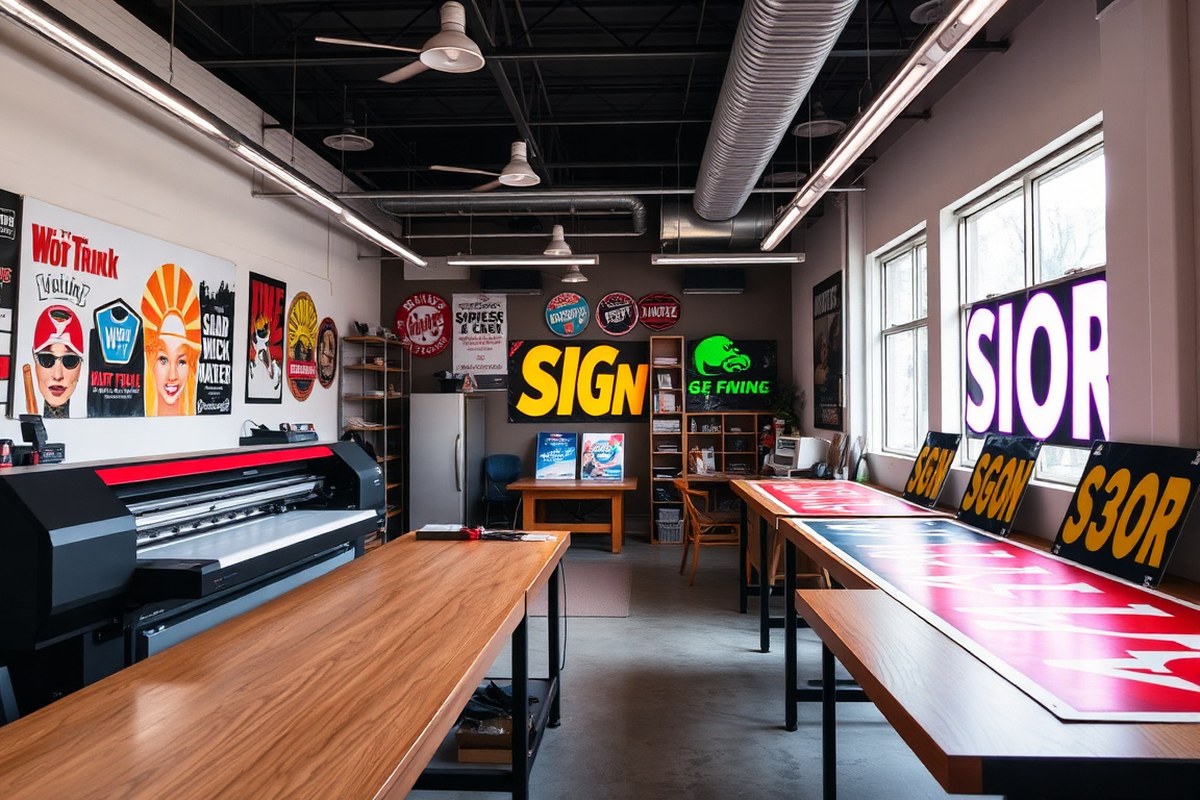
- Find and prepare your workspace. Choose a location with enough room for production, administration, and storage. A commercial lease offers better visibility and professional image but comes with higher costs. A home-based shop reduces expenses but may limit space and require zoning clearance. Ensure your space complies with safety standards and offers options for customer pickup or visits if needed.
- Plan for a practical launch timeline. Allocate 2, 8 weeks to complete registrations, acquire equipment, set up the workspace, and test workflows. Order supplies early to avoid delays. Train staff or establish outsourcing partnerships if you plan to scale quickly. Use this period to build your marketing presence so initial jobs can flow steadily.
How Much Does It Cost to Start a Sign Shop?
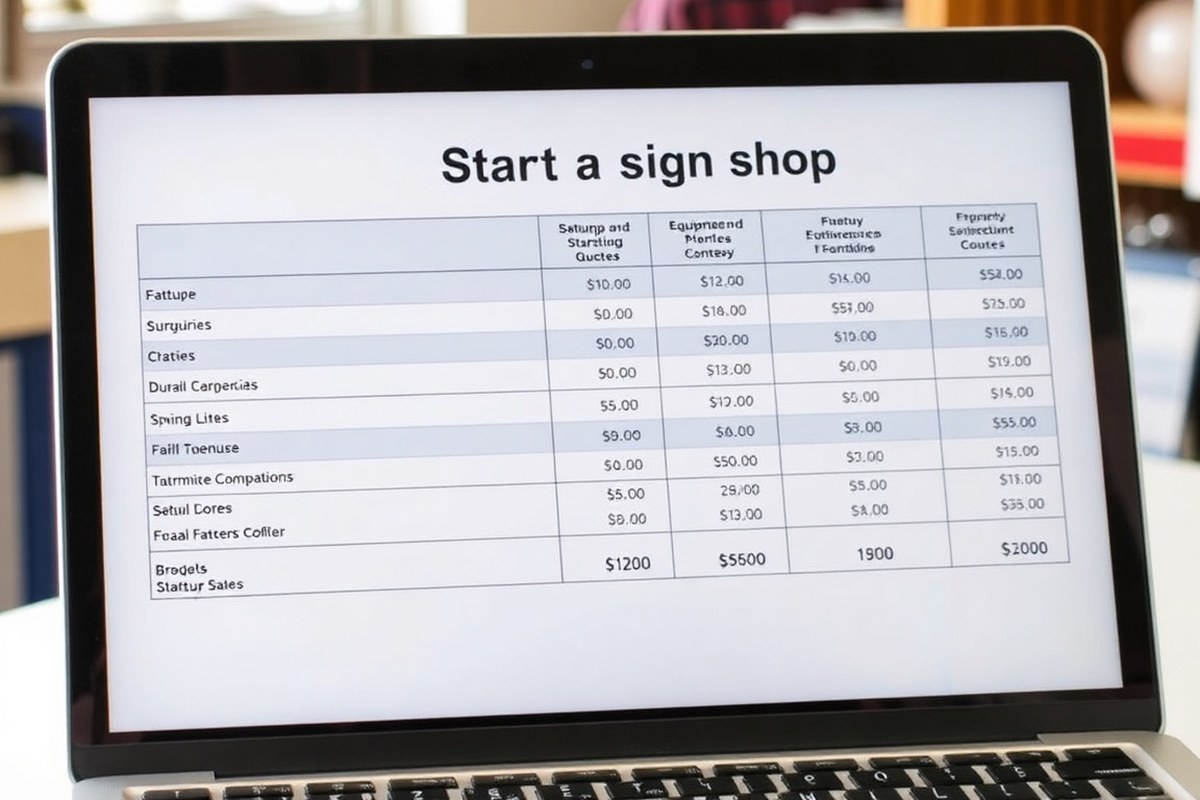
Starting a sign shop requires a clear budget plan for equipment, overhead, and working capital. Your investment depends heavily on shop size and the range of services you offer. Entry-level shops focusing on vinyl cutting will have significantly lower startup costs than full-scale production shops that print, cut, and install complex signs.
For a modest startup, expect to spend between $2,000 and $5,000 on core equipment like a vinyl cutter, design software, and application tables. These tools cover basic sign making such as cut vinyl graphics. Moving up to a print-and-cut setup with a 54″, 64″ printer, laminator, and RIP software raises your initial equipment budget to about $40,000, $50,000. Shops with flatbed UV printers, CNC routers, and extensive production capabilities can easily exceed $100,000 in equipment alone.
| Shop Type | Core Equipment | Approximate Equipment Cost |
|---|---|---|
| Entry-Level Vinyl Cutter Shop | Vinyl cutter, design software, weeding table, application tools | $2,000, $5,000 |
| Print-and-Cut Shop | Wide-format printer (54″, 64″), laminator, RIP software, cutter | $40,000, $50,000 |
| Full Production Shop | UV flatbed/hybrid printer, digital cutter or CNC router, print/cut setup | $100,000+ |
Plan monthly fixed expenses carefully. Rent for a small industrial space typically runs around $2,400, while utilities and equipment maintenance add roughly $1,100 monthly. Staffing costs, including production and installation labor, might total $4,800. Ongoing material costs average about 25% of product sales, for example, if you expect $20,000 in revenue, budgeting $4,500 for vinyl, inks, substrates is reasonable. Insurance, software subscriptions, and vehicle costs add another $1,300 per month.
Preparing a sample monthly budget helps you align your cash flow with expected revenues and expenses. Allocating your budget by product category gives insight into where money flows: banners and yard signs usually generate about $9,500 monthly revenue, vehicle and window graphics around $6,000, with interior sign work adding $2,500. Installation fees can bring in an additional $2,000, but all these activities come with their material and labor costs.
Don’t purchase all your equipment at once; start with what fits your niche and scale, then reinvest profits to expand capacity steadily.
What Equipment and Software Do I Need to Launch a Sign Shop?
Starting a sign shop requires the right mix of production equipment and software tailored to your specific services. Essential machines typically include a vinyl cutter and printer, while design and workflow software streamline production and management. You can begin with basic tools and outsource printing or installation until you’re ready to expand and invest in more advanced equipment.
Core Production Machines Explained
The backbone of any sign shop is its production equipment, selected based on the type of signs you plan to create. For beginners focusing on banners, decals, or vehicle graphics, a wide-format printer and vinyl cutter form the core setup. Entry-level vinyl cutters cost about $2,000 to $5,000 and handle most cut vinyl projects well. A laminator protects prints and extends sign life by applying a protective layer over the finished graphics.
If you want to add rigid signs or panel fabrication, you may need additional machines like a panel saw or CNC router. These increase setup costs significantly but allow you to serve architectural signage or ADA-compliant signs market segments. Worktables and finishing tools such as trimmers, grommet presses, and heat guns are also necessary for preparing and finishing your products professionally.
- Wide-format printer for banners, decals, and wraps
- Vinyl cutter for cutting decals and letters
- Laminator to apply protective finishes
- Worktables and trimming tools for finishing
- Panel saw and router for rigid sign fabrication (optional)
- Installation tools and vehicle for on-site work
Having the right machines lets you control production quality and turnaround time. A tightly focused initial service mix reduces unnecessary equipment expenses and helps you scale as demand and skills grow.
Software Tools for Sign Design and Workflow
Design software is essential for creating layouts and production files. CorelDRAW remains a popular choice because it’s compatible with many cutting and printing machines. Adobe Illustrator is another option that many sign shops use for its broad design capabilities and precision.
A print management or RIP (Raster Image Processor) software connects your design files to the printer and cutter, ensuring accurate color output and efficient cutting paths. For workflow management, software platforms that handle estimating, job tracking, customer relationship management (CRM), and proof approvals are invaluable. These systems keep jobs organized, prevent errors, and speed communication from quoting to completion.
- Graphic design software like CorelDRAW or Adobe Illustrator
- RIP software for printer and cutter output control
- Estimating and quoting software for accurate bids
- Job and proof approval management platforms
- CRM tools to track customers and job history
Using integrated software tools keeps your sign shop running smoothly. It cuts downtime, reduces mistakes, and makes reordering or job repeats faster. A reliable computer workstation capable of running design and production software is also essential.
Outsourcing Printing and Installation Options
Starting with minimal equipment and outsourcing some production steps can lower your initial investment and reduce risk. For example, beginning with a vinyl cutter and basic design software, you can contract printing to a specialized wide-format print shop. This strategy lets you offer printed materials without buying expensive printers upfront.
Similarly, hiring experienced installation contractors or subcontracting vehicle wraps and large signs installations can save you from purchasing and maintaining specialized vehicles and tools immediately. Outsourcing is a flexible option when your shop is building a customer base and cash flow.
- Start with vinyl cutter and design software only
- Outsource printing of banners and large format jobs
- Use subcontractors for installation or specialized fabrication
- Expand equipment investment as revenue grows
While outsourcing reduces capital expenses, it may slow turnaround time and reduce control over quality. Balancing what you produce in-house versus outsourcing depends on your service focus, cash availability, and your capacity to manage third parties effectively.
Should I Start a Home-Based or Commercial Sign Shop?
Choosing between starting your sign shop at home or in a commercial space depends mainly on the scale of your operation, the types of products you plan to offer, and local zoning laws. A home-based business works well for small setups focusing on vinyl decals, banners, and custom small jobs with startup costs ranging from $10,000 to $20,000. Commercial locations can support larger, more complex projects such as vehicle wraps, LED signs, and custom installations, with setup costs rising to $50,000, $100,000 or more.
Space type directly affects what equipment you can use and which products you can make. A home setup might allow entry-level vinyl cutters ($2,000, $5,000 range) but generally won’t support large UV flatbeds or routers, which require more room and power supply. Commercial shops accommodate bigger machinery and allow projects that involve vehicle wraps or electrical work, which require licensed permits and safety inspections.
Zoning and permit requirements also differ significantly. Home-based sign shops must verify if local zoning permits running a business in a residential area, especially when involving equipment noise or vehicle work. Industrial or retail spaces typically have appropriate commercial zoning, easing permit acquisition for production and installation services. Moving from home to commercial space is common as equipment needs and staff grow or when vehicle wraps and installations become part of the offering. To help you make the decision, here is a table weighing the main factors:
| Factor | Home-Based Sign Shop | Commercial Sign Shop |
|---|---|---|
| Initial Cost | $10,000, $20,000 | $50,000, $100,000+ |
| Space Required | Small (garage or spare room) | Medium to large (retail or industrial unit) |
| Permissible Equipment | Vinyl cutters, small printers | UV printers, routers, vehicle wrap tools |
| Product Types | Vinyl decals, banners, small signs | Vehicle wraps, LEDs, large-format, electrical signs |
| Zoning & Permits | Must confirm residential area rules; limited permits | Commercial zoning; permits for installations and electrical work easier |
| Customer Access | Limited walk-in traffic | High foot traffic possible in retail locations |
| Growth Potential | Good for small volume and local orders | Supports staff, larger production, and diverse services |
Start by checking your city’s zoning laws with the planning department and confirming any restrictions applicable to home businesses. Consider what equipment fits comfortably in your available space and whether it meets the type of work you want to do. Calculate your budget against expected rent and utilities, commercial rents for small spaces typically run from $1,500 to $3,000 monthly. Note that a high-traffic retail location can help attract customers but costs more.
Assess your product mix carefully. A home-based shop focusing on vinyl and small signs suits local retailers, schools, or event companies. A commercial space enables you to take on larger clients like municipalities or fleet operators needing wraps and installations. Remember, expanding from home to commercial space is a natural progression as your volume and service complexity increase.
What Legal and Permit Requirements Must I Meet?
Starting a sign shop means navigating several legal and permit requirements to keep your business compliant and avoid costly fines. You’ll need to register your business legally with your state and local government, obtain the necessary permits to produce and install signs, and ensure your products meet accessibility and safety standards.
Most exterior signs require local sign permits. These permits verify that the size, placement, and type of signs meet your city or county’s zoning and signage codes. Permanent room signs, such as restroom or exit signs, must follow the ADA Standards for Accessible Design, which cover features like raised characters, Grade 2 Braille, appropriate character size, contrast, non-glare finishes, and proper mounting height and location. Non-compliance can lead to fines and the need to replace signs.
Electric signs bring additional rules. They must be UL 48 listed for safety, comply with the National Electrical Code Article 600, and usually require electrical permits and inspections. Installing or working on electrical components often requires a licensed electrician. This reduces liability risks and ensures work passes inspections.
- Register your business and get a sales tax ID if required by your state
- Obtain local sign permits for exterior signs from city or county building departments
- Comply with ADA accessibility standards (Section 703) for all permanent interior signs
- Ensure all electrical signs have UL 48 certification and meet National Electrical Code rules
- Hire a licensed electrician or subcontract electrical work for illuminated sign installation
- Check zoning laws and landlord requirements for installing exterior signs
- Schedule inspections with local authorities after installation to verify compliance
Failing to secure the proper permits or comply with ADA and electrical standards can delay project approval, require costly corrections, or even lead to legal penalties. Costs for permits vary widely, from $50 to several hundred dollars per permit, depending on your location and the complexity of the sign. Electrical permits and licensed electrician fees add to project costs but protect against safety hazards.
Always check your local building and permitting offices before designing or installing any sign to avoid unexpected compliance issues and delays.
How Do I Define My Product and Service Mix Effectively?
Choosing the right mix of products and services is critical when you start a sign shop. Focus on profitable sign types that suit local demand and your skillset. Most startups see good margins from vinyl lettering, vehicle graphics, banners, and ADA signs. These offerings require moderate skills and tools, allowing you to build volume while maintaining reasonable costs. Specialty signs like LED displays and monument signs tend to have higher margins but come with increased complexity, longer production times, and higher initial equipment investment.
Installation services often boost profitability by adding value that customers prefer to get all at once. Handling installation in-house typically improves margins by 10% to 20% compared to subcontracting, but it demands hiring skilled installers or training yourself. Subcontracting is a flexible option if you want to limit upfront labor costs or don’t have immediate access to suitable installers. A practical approach is to start by subcontracting installations while you build capacity and expertise to bring it in-house later.
Balance volume-oriented, low-complexity jobs like decals and simple banners with higher-margin specialty signs to maintain steady cash flow alongside profitable projects. Volume jobs help establish steady income and local presence, while specialty projects improve reputation and boost profits when time and skills allow. Begin with a core set of high-demand products that require essential design and cutting tools. Expand into customized and complex signs as your team grows and you gain experience.
A market-driven service mix starts with researching nearby businesses, events, and institutions to identify common signage needs. For example, a location with many small retail shops may demand window graphics and promotional banners, whereas an industrial area might require fleet graphics or safety signs. Use local surveys, competitor analysis, and direct outreach to uncover this information before investing in costly equipment or training. This targeted approach reduces wasted resources and positions your shop to win repeat business.
Compare service types by their margin and complexity to guide your offerings. Vinyl cutting and banner printing have fast turnaround times and setup costs under $5,000 in typical entry-level equipment, with margins between 30% and 50%. Large-format or illuminated signs may require $20,000 or more in machinery and materials, with margins closer to 40%, but longer delivery times. Installation adds labor costs but improves customer loyalty and total project revenue. Matching your current skills and staff availability with the workload complexity ensures quality and timely delivery, key to building a strong client base.
Before finalizing your product and service mix, draft a simple decision script: Start with core products needing minimal investment and strong local demand. Track job profits monthly to identify which categories drive revenue. Gradually add new sign types or services where you notice consistent orders or high margins. Evaluate installation options based on your labor resources and customer preferences. Adjust your offerings every six months based on market changes and operational bottlenecks. This ongoing process helps avoid overextending your startup while capturing profitable opportunities.
What Are Smart Marketing and Branding Tactics for New Sign Shops?
To grow your sign shop successfully, focus on building a strong local reputation, creating a compelling portfolio that shows your best work, and using targeted marketing tactics both online and offline. A clear action plan with defined promotional offers and customer outreach will attract the right clients without sacrificing your profit margins.
Building a Local Client Base
Start by identifying key customer groups such as local businesses, event organizers, and commercial properties within your area. Approach prospects with a simple introduction of your services and a clear value proposition to build trust quickly. Personal visits combined with follow-up emails tend to generate quicker responses from local businesses than cold calls alone.
Offering limited-time introductory discounts can attract first-time customers. Keep promotions moderate such as 10% off your first order or free design consultation, ensuring you still maintain a margin between 30% and 50% depending on project complexity. Avoid deep discounts that erode profitability and reduce perceived value. Use this email sample when following up with potential clients:
Subject: Custom Sign Solutions for [Business Name] Hi [Name], I’m [Your Name] from [Shop Name]. We specialize in creating high-quality signs tailored to boost local businesses. If you’re considering new signage, I’d love to offer a free consultation to explore options that fit your brand and budget. For a limited time, we’re offering 10% off your first order as a welcome to our shop. Please let me know a convenient time to connect. Best, [Your Contact Information]
Creating Effective Sample Boards and Portfolios
A well-designed sample board or portfolio showcases your range, skill, and attention to detail, making it easier for clients to visualize what you can produce. Include a mix of traditional signs, vehicle wraps, and banners if you offer them. Focus on quality photos and clear descriptions of materials used and project goals.
Organize samples by industry or type to let clients quickly find examples relevant to their needs. Digital portfolios on your website and social media should mirror physical samples you present during in-person meetings. Use this checklist for building your branding and portfolio assets:
- Consistent logo and color scheme on all marketing materials
- High-resolution photos of finished signs in real-world settings
- Brief case studies explaining client objectives and results
- Printed sample board with textured materials and text styles
- Client testimonials highlighting satisfaction and reliability
- Easy navigation and contact info on digital portfolio pages
Regularly update your portfolio to replace older or less relevant work with recent projects that reflect current capabilities and trends.
Using Digital and Offline Marketing Channels
Maximize reach by combining online marketing with focused offline tactics. Create a simple website optimized for local search terms like “sign shop near me.” Include a portfolio, customer reviews, and a clear call-to-action. Use social media platforms such as Instagram and Facebook to post project photos and engage the local business community.
Offline methods include joining local chambers of commerce, attending trade shows, and distributing flyers or postcards in business districts. Sponsor local events or produce signs that get public visibility to build brand presence. Networking with real estate agents, contractors, and marketing agencies can also generate steady referrals. Key marketing actions to implement:
- Publish weekly social media posts showing projects and promotions
- Send monthly email newsletters highlighting new products and discounts
- Host open house events at your shop inviting local businesses
- Create referral incentive programs rewarding repeat customers
- Use Google My Business for customer reviews and local search visibility
- Distribute physical marketing materials in nearby commercial areas
Maintaining consistent branding across channels reinforces trust and recognition. Measuring response rates from different marketing efforts helps adjust your tactics for better results over time.
How Should I Price Products and Manage Shop Finances?
Price your signs by accurately calculating all direct and indirect costs, then adding a profit margin that fits your market. Start by totaling material costs, including vinyl, laminates, metal, or illumination components. Next, add labor costs, considering design time, printing, cutting, assembly, and installation. Don’t forget overhead like rent, utilities, equipment depreciation, and marketing expenses. A good pricing formula is:
Price = (Materials + Labor + Overhead) ÷ (1, Desired Profit Margin)
For example, if your job costs $500 in total and you want a 20% profit margin, price it at $500 ÷ (1, 0.20) = $625. Many sign shops aim for a net profit margin near 8%, but setting your markup higher during startup or for custom, complex projects helps cover unpredictable expenses.
Pricing models vary by product and client type. Flat fees suit repeat print jobs where time and materials are predictable. Time-and-materials billing works better for custom signs requiring design revisions or unusual installation challenges. For large, high-ticket items like stone or metal signs that might cost $10,000 to $30,000, detailed job costing with milestones is important to keep profitability visible. Break-even typically happens within 4 to 12 months, but careful pricing prevents early losses.
- Track every material purchase against job numbers for accurate cost attribution
- Record employee hours entry by entry for labor cost transparency
- Allocate overhead monthly based on square footage or machine hours
- Use project management software or spreadsheets for job costing
- Review and adjust pricing quarterly to account for supplier or wage changes
- Keep financial statements updated monthly to monitor cash flow and margins
- Set aside a contingency fund of 5-10% of project price to cover unexpected costs
Failing to track design revisions and change orders can quickly erode profit margins on custom sign jobs.Good financial controls include consistent record-keeping and budget reviews. Maintain detailed invoices showing cost breakdowns and payment status. Implement a checklist for expenses to confirm no costs are missed and reduce estimation errors. This clarity helps with forecasting and identifying underperforming projects early. Avoid relying only on rough estimates; integrate labor time tracking software and inventory management tools to ensure real costs feed into pricing decisions. Also, measure profitability monthly by subtracting all expenses from revenue, aiming for at least 8% net profit steadily.
How Do I Hire, Train, or Outsource Staff Efficiently?
Deciding between hiring employees and subcontracting contractors depends on your shop’s workload, budget, and long-term goals. Employees provide consistency and in-house expertise, while contractors offer flexibility without long-term commitments. Efficient onboarding and ongoing training ensure quality and safety, which are critical when working with both employees and contractors, especially in a hands-on environment like a sign shop.
Hiring vs Using Contractors
Employees are usually best for core functions that require daily attention and deep familiarity with your shop’s specific processes. For example, design, printing, and installation roles often benefit from employees who know your operation inside out. Hiring employees means managing payroll taxes, workers’ compensation insurance, and safety training, but it allows you to build a reliable, skilled team that grows with your business.
Contractors work well for specialized tasks or busy periods. If you need a skilled fabricator for a complex electric sign or extra hands during a large batch, subcontracting can save money and reduce overhead. Contractors are responsible for their taxes and benefits, so you avoid those costs. However, you sacrifice some control over their schedules and work quality, making clear contracts and communication essential. Use this framework to decide:
- Core, continuous tasks needing consistent quality and control, hire employees.
- Specialized, irregular, or overflow work, use contractors.
- When starting small, rely on contractors to reduce fixed costs.
- When expecting stable growth, invest in employees for better training and workflow.
- Evaluate local labor laws carefully; misclassifying workers can lead to penalties.
Both choices require documentation: employees need job descriptions and payroll setup; contractors need clear scopes of work and payment terms. Start by outsourcing specialized fabrication and refine your staffing as volume and cash flow improve.
Essential Roles in a Startup Shop
In a small sign shop, a few key roles cover production from design to install. At minimum, these roles are:
- Designer: Creates and edits sign layouts, proofs, and customer approvals.
- Production Operator: Handles printing, cutting, and assembly of signs.
- Installer: Responsible for mounting signs on-site safely and accurately.
- Shop Manager/Owner: Oversees orders, supplier relations, and quality control.
- Sales/Customer Service: Communicates with clients and manages quotes.
One person may cover multiple roles early on to keep costs low. As you grow, adding employees or contractors who specialize in these areas helps boost efficiency and quality. Clear responsibilities prevent overlaps and errors. Written standard operating procedures (SOPs) help everyone know their tasks, check quality, and follow safety rules.
Staff Training and Safety Procedures
Training is essential to maintain high-quality signs and protect your team during potentially dangerous work. It reduces mistakes, rework, and liability. Start with an onboarding process that covers your shop’s SOPs, equipment operation, material handling, and safety protocols. Run hands-on sessions for using vinyl cutters, printers, and installation tools properly. Here’s a basic training outline:
- Introduction to sign types and materials your shop uses
- Detailed demonstration and practice on printing, cutting, and finishing equipment
- Quality control steps: color matching, proof approval, and final inspections
- Safe handling of chemicals, sharp tools, and electrical equipment
- Proper installation techniques and ladder/vehicle safety
- Understanding emergency procedures and reporting incidents
- Review of customer service and communication expectations
Regular refresher training ensures everyone stays up-to-date on changes in equipment or procedures. Maintain training records for employees and share safety information with contractors before work starts. These efforts minimize workplace accidents and rework, keeping production efficient and customers satisfied.
What Is the Realistic Timeline and Growth Path for a New Sign Shop?
Opening and growing a sign shop is a process that unfolds over months and years, with milestones marking setup, customer acquisition, and expansion. You typically need about 60 to 90 days to finish your setup, obtain equipment, secure permits, and start attracting your first customers. Breaking even often takes 6 to 12 months, depending on your initial investment and local demand. Expanding production or services should be based on clear indicators like steady repeat business, growing order volume, and manageable equipment usage rates.
Understanding these phases helps you budget time and money realistically. Starting with equipment payments you can cover immediately ensures you don’t overextend your cash flow. Tracking repeat customers and keeping records of their preferences simplifies reorders and boosts revenue stability. Planning your growth around actual demand and financial health reduces risks and puts you in control of scaling your shop profitably. Use the following phased timeline and milestone checklist to guide your sign shop’s growth from launch through profitable scaling:
- Complete Setup (Days 1, 90): Choose location, buy and install essential equipment, obtain necessary permits, and set up software. Focus on mastering production of your initial product mix. Confirm your monthly equipment payments align with expected early sales to maintain cash flow.
- Attract First Customers (Month 2, 4): Launch local marketing efforts like signage samples, social media posts, and direct outreach to potential clients such as small businesses and event organizers. Aim to land your first 5 to 10 orders covering your operational costs.
- Refine Operations and Break Even (Months 4, 12): Track how long each sign takes and multiply by your hourly rate to set competitive pricing. Log every repeat order’s specifications for fast reordering. Expect to break even when recurring monthly revenue meets or exceeds equipment payments plus fixed costs.
- Monitor Key Growth Indicators (Months 12, 18): Look for steady increase in monthly orders, high repeat customer rates (above 50%), and consistent or growing profit margins (around 10-15%). If your equipment runs at more than 75% capacity regularly, it’s time to consider options.
- Plan for Scaling Production (Months 18, 24): Decide whether to invest in additional machinery, add new sign types, expand your service area, or hire staff/outsourcers. Base choices on order backlog and financial reserves, ensuring new costs can be covered by sales projections.
- Implement Expansion (Months 24, 36): Add new services or machines in phases, carefully monitoring impact on customer satisfaction, turnaround time, and profit margins. Post-expansion, aim for 20% revenue growth and improved operational efficiency before pursuing further scaling.
Variation occurs depending on your market size and initial investment. A home-based shop aiming for smaller local clients may take longer to break even but requires lower overhead. A commercial space with advanced equipment might attract larger contracts faster but needs more upfront capital and careful cash flow management. Tracking production times and customer repeat rates closely helps you apply this timeline to your unique situation and make informed decisions about growth.
Your First 30 Days: A Quick-Start Plan
Start strong by focusing on foundational steps that set your sign shop up for success. Each step builds toward making your business operational and ready for clients.
- Before You Start: Secure necessary permits and finalize your business structure. You’ll know you’re ready when you have your business license and tax ID number in hand.
- Day 1, 3: Order or lease core equipment like printers and cutters, plus sign-making software. Confirm delivery dates and installation times.
- Week 1: Set up your workspace whether home-based or commercial, arranging equipment for efficient workflow. A functional layout confirms your preparation.
- Week 2: Develop your initial product and service list tailored to local demand. Validate choices by researching competitor offerings and potential client needs.
- Week 3: Launch targeted marketing using social media and local advertising, focusing on branding and pricing strategies. Track early inquiries or leads as proof of outreach success.
- Week 4: Hire or contract with at least one skilled staff member or freelancer if needed, then train or onboard them clearly. A trained team member ready to work shows progress.
- End of Month 1: Complete your first customer order and gather feedback on product quality and service. Positive client response or repeat business indicates a strong start.
Frequently Asked Questions
Do I Need Formal Design Training to Start a Sign Shop?
No formal design training is required, but basic graphic skills help. Most sign shops use software like Adobe Illustrator, which you can learn online or through tutorials to create appealing designs for clients.
Can I Start a Sign Shop with Limited Funds?
Yes, starting small with essential equipment is possible. Focus on core services and affordable tools first, then reinvest profits to upgrade your shop as demand grows.
Is Buying an Existing Sign Shop Better Than Starting from Scratch?
Purchasing an existing shop can save startup time and gain customers. However, it costs more upfront and may require adjustments to fit your business style.
How Do I Choose Between Specializing or Offering Diverse Sign Services?
Specializing can position you as an expert and reduce equipment costs. Offering many services attracts broader clients but needs more investment and skills.
What Bookkeeping Method Works Best for New Sign Shops?
Simple accounting software tailored for small businesses works well. It helps track jobs, expenses, and profits without overwhelming you with complex features.
How Important Is Customer Service in a Sign Shop’s Success?
Excellent customer service builds repeat business and referrals. Prompt communication and quality work create loyal clients who often drive growth by word-of-mouth.
The Bottom Line
Starting a sign shop demands careful planning, smart spending, and steady marketing to attract customers. Taking the first concrete step today, such as registering your business or researching suppliers, moves you closer to opening your doors and growing your profits.