How Many No Trespassing Signs Do I Need? A Complete Guide with Planning Tips
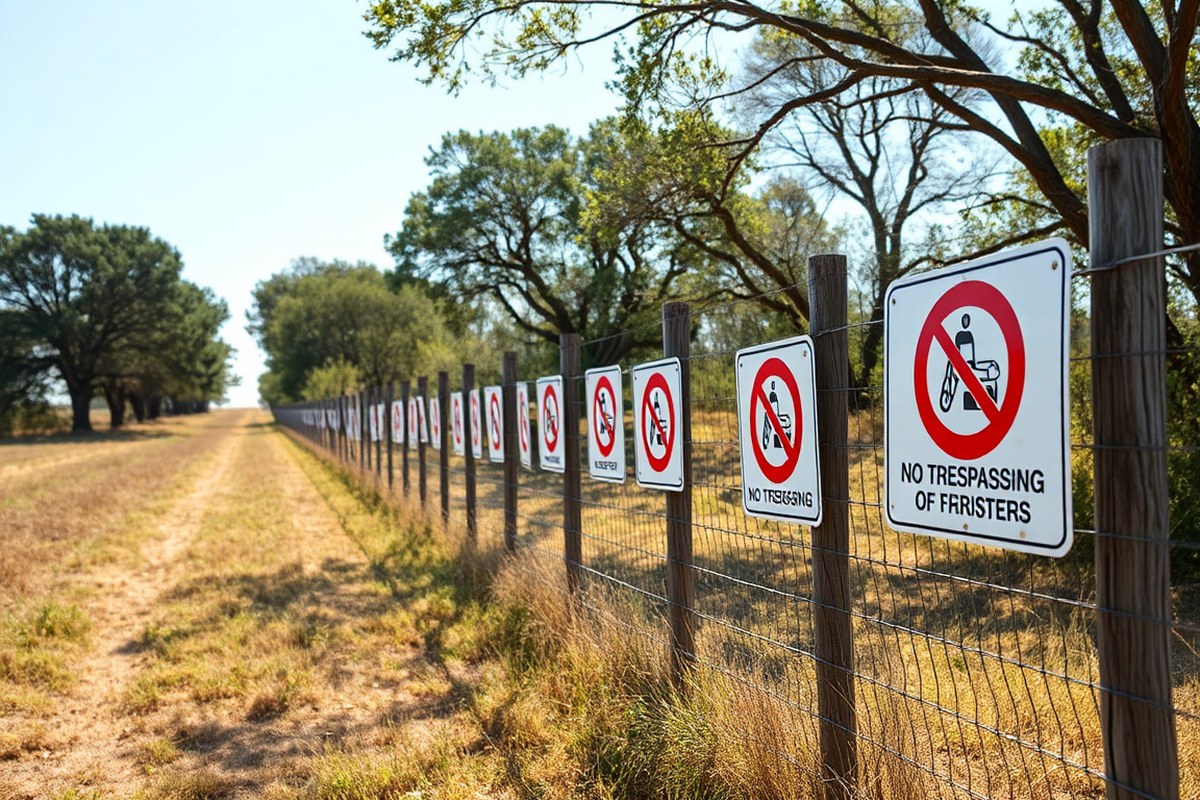
How many No Trespassing signs do I need depends on your property’s size and shape, but generally you should space signs no more than 500 feet apart. Placing signs at every corner and along the boundaries ensures clear notice to anyone approaching your land. Starting by measuring your property’s perimeter helps you calculate the number of signs required for full coverage.
Key Takeaways
- Place No Trespassing signs at every corner of your property and along boundaries no more than 500 feet apart.
- Check your state’s rules for specific sign size and placement requirements to ensure legal compliance.
- Install signs in highly visible locations such as entry points, paths, and near roads bordering your land.
- Consider purple paint marks as an alternative in states like Maine that allow color-coded trespassing markers.
- Regularly inspect and maintain your signs to keep them legible and securely fastened over time.
- Account for irregular property shapes and multiple entrances by adjusting sign placement accordingly.
How Many No Trespassing Signs Do I Need for My Property?

Calculating how many No Trespassing signs you need starts with knowing the perimeter of your property. Walk the boundary with a notebook to record distances, or use a property survey if available. The total length around your land will guide how many signs to place.
Spacing between signs matters because they need to be visible enough to warn potential trespassers throughout your entire boundary. Common state regulations require signs every 100 to 300 feet along property lines. If your state mandates a maximum spacing of 150 feet, you would divide your total perimeter by 150 to determine the number of signs needed.
For example, if you have a 15-acre rectangular property roughly 1,320 feet by 495 feet (1 acre = 43,560 square feet), the perimeter is about 3,630 feet (1,320 + 495) x 2. Dividing 3,630 feet by 150 feet for sign spacing means you’ll need about 24 signs (3,630 ÷ 150 ≈ 24.2). Always round up to ensure full coverage.
Smaller properties have shorter perimeters, so fewer signs are needed. On a 1-acre lot with a perimeter around 835 feet (assuming a square shape), and using 150 feet between signs, 6 would suffice (835 ÷ 150 ≈ 5.6). Larger properties, especially those with irregular shapes or multiple access points, require more signs to cover all entryways and visible borders effectively.
To avoid gaps, place signs where they can be best seen from roads or paths, such as near gates or trails, and at regular intervals along lines adjacent to public access. Signs should stand at eye level or slightly higher to maximize visibility. Use durable signs that meet your state’s size and reflectivity standards to keep costs reasonable, typically ranging from $6 to over $100 per sign depending on material.
A quick checklist to estimate your sign needs includes: first, measure your property’s perimeter in feet; second, find your local maximum allowed spacing between signs; third, divide the perimeter by that distance; and finally, round up the result to cover all boundary points. Adjust the number of signs upward if you have many entrances or irregularly shaped boundaries. Posting enough No Trespassing signs ensures clear legal notice and helps protect your property rights.
State-Specific Rules for No Trespassing Sign Size and Placement
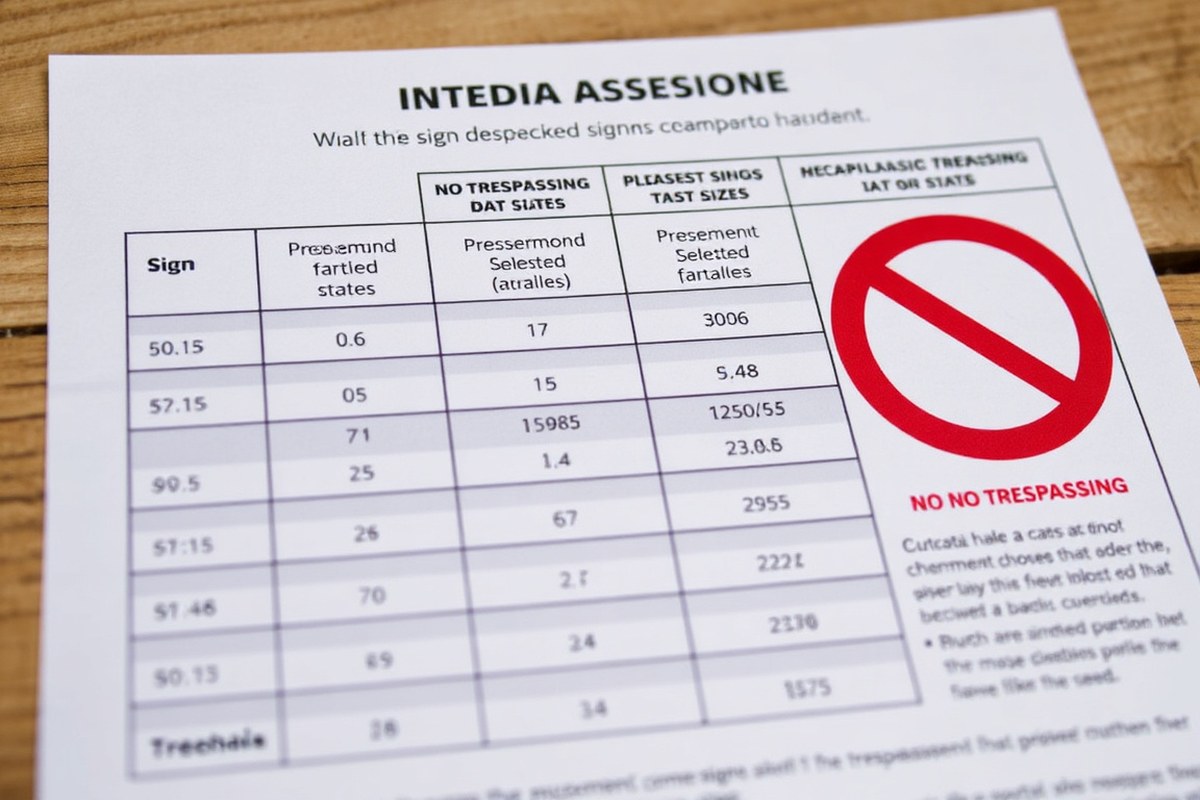
The requirements for No Trespassing signs, such as size, color, letter height, and placement distance, vary significantly by state. Some states specify exact measurements and intervals, while others set flexible guidelines or only suggest minimum standards. Knowing the rules for your state ensures your signs provide legal notice and hold up if trespassing enforcement becomes necessary.
Size matters because signs too small or with unreadable lettering can be legally ineffective. Letter height especially affects visibility from the necessary distance. Placement intervals also differ; some states require signs every 100 feet in wooded or urban areas, while others allow up to 500 feet or more in rural settings. Color contrast helps signs stand out; some states mandate high-contrast colors, and others accept any color that is clearly visible, including the use of purple paint marks.
| State | Minimum Sign Size | Letter Height | Color / Contrast | Max Distance Between Signs | Notes / Citation |
|---|---|---|---|---|---|
| Texas | 12″ × 24″ or 8″ × 1″ purple paint stripes | 2″ letters | Any contrasting color or purple paint | 100 ft (urban), 1,000 ft (rural) | Penal Code §30.05 |
| Florida | 18″ × 24″ | 1″ letters | High-contrast (commonly white/red) | 500 ft | Stat. §810.09 |
| California | Conspicuous (no fixed size) | 1″ letters suggested | Readable color contrast | 3 signs per mile (~1,760 ft) | Penal Code §602 |
| New York | 11″ × 11″ minimum | 1″ minimum | Any legible color | 500 ft or less | Common practice; varies by local ordinance |
Because letter height generally corresponds to viewing distance, you need at least 1 inch of letter height for every 50 feet of distance. For example, if your sign is visible from 100 feet, letters should be at least 2 inches tall. Larger properties with signs visible from roadside shoulders may require letters 3 to 4 inches tall on larger signs (18″ × 24″ or 24″ × 36″). This ensures clear legal notice to potential trespassers.
Sign placement depends on terrain and use. Signs in dense woods often require spacing every 100 feet to maintain visibility, while open rural areas may legally space signs up to 500 feet apart. Property corners and all entry points should always be marked. Purple paint stripes may be accepted in some states as an alternative, requiring vertical stripes at least 8 inches tall and placed 3 to 5 feet above ground, spaced every 100 yards or less.
Check your state’s legal code before posting; using signs smaller than required or spacing them too far apart might leave you without proper legal notice if you need to enforce trespassing laws.
Where and How to Position No Trespassing Signs for Maximum Visibility
Place No Trespassing signs where they catch the eye of anyone approaching your property, including along boundaries, at entry points, and facing public roads or trails. Mount signs at about eye level, around 5 to 6 feet off the ground, to ensure they’re visible to pedestrians and drivers. Adjust sign placement to fit the natural terrain and the way people are likely to enter or cross your land.
Mounting Height and Visibility Angles
Signs should be centered roughly 5 to 6 feet above the finished ground. This height hits the typical eye level of an adult pedestrian and stays low enough for vehicle headlights to illuminate the signs at night. Keeping the signs at this height increases the chance they’ll be seen clearly from a distance.
Make sure each sign faces the most likely approach directions, such as roads, trails, or paths leading onto your property. Test visibility from multiple angles, including straight on and from the sides. Avoid placing signs so that trees, shrubs, or other objects block the view.
Marking Entrances and Access Points
Put signs at every natural entry or access point to make trespassing unlawful everywhere someone could enter your land. Signs should be posted where a person can easily spot at least one sign before stepping onto your property.
- Place signs at all points where public roads, trails, or paths meet your property line
- Post signs at parcel corners to clearly define property limits
- Space signs no more than 100 to 150 feet apart along boundary lines, especially near access routes
- Use bright, weatherproof signs with lettering at least 2 inches tall for maximum legibility
- Replace or move signs if visibility becomes obstructed by vegetation growth or new obstacles
- Check signs seasonally to ensure they remain visible through different lighting and weather conditions
Spacing signs closely near access points and every 500 feet in wooded areas helps cover all likely entry spots, significantly reducing “I didn’t see the sign” claims.
Adjusting Placement for Terrain Features
On irregular or wooded property boundaries, use natural landmarks like fence lines, tree clusters, or creeks as sign posts. Signs nailed to a single isolated tree deep inside a woodlot won’t provide enough notice if the main entry points at the perimeter lack proper signage.
In dense woods, shorten sign intervals to about 500 feet or less to maintain visibility through vegetation. Clear small areas around signs if underbrush or tall grass obstructs sight lines from paths or roads.
For properties with slopes or hills, position signs so they remain in line of sight when approaching uphill or downhill. Angled signs slightly toward expected travel directions improve visibility on uneven terrain.
Using Purple Paint Marks as an Alternative to No Trespassing Signs
In over 20 states, purple paint marks on trees or fence posts serve as a legally recognized alternative to No Trespassing signs. This method meets state-specific legal requirements when applied correctly, offering an effective way to mark property boundaries. Using purple paint requires adherence to size, placement, and height rules for the marks to carry legal weight.
States That Allow Purple Paint Marks
More than 20 states have adopted purple paint laws, recognizing these markings as equivalent to posted No Trespassing signs. Examples include Texas, Arkansas, Wyoming, and Washington, among others. However, your state may not recognize purple paint as legal notice, so confirming local regulations before relying solely on paint is essential. Properties in states without such laws must use traditional signs to notify against trespassing.
Even in states where purple paint is legal, farms are usually required to post clear signs if they want to protect agricultural land from trespassers effectively. Since local ordinances can impose stricter signage rules, check community requirements before proceeding with paint marks alone. Combining paint with standard signs is often recommended to maximize legal coverage and clarity.
Application Requirements for Paint Strips
The paint must be a visibly distinct purple color, applied in vertical strips on trees or posts facing the boundary line. Most states specify each paint strip must be between 8 and 12 inches tall and 1 to 3 inches wide. The bottom of the strip should be approximately 3 to 5 feet above the ground, ensuring visibility to passersby at eye level. Placing them every 100 to 200 feet along boundary lines helps provide continuous notice of private property.
Before marking, use a proper outdoor-grade purple paint designed to withstand weather and sun exposure, so the marks remain visible for several years. Unlike signs, these paint strips won’t blow away or rust but require periodic reapplication as fading occurs over time. Following exact measurements and placement intervals specified by your state’s code guarantees legal effectiveness in warning potential trespassers.
Pros and Cons of Using Paint Versus Signs
Paint marks offer an advantage in durability by resisting weather damage and vandalism better than many signs. They don’t require mounting hardware and can cover irregular property lines more smoothly. Purple paint is cost-effective, with minimal material expense and low maintenance compared with periodic sign replacement. This method is also less visually intrusive, which some landowners prefer.
On the downside, paint marks may not clearly communicate “No Trespassing” to those unfamiliar with their legal meaning. Signs provide explicit written warnings, helping reduce misunderstandings or accidental intrusion. If your property has multiple entry points or faces public roads, signs offer more obvious notice to a wider audience. For best results in states that allow both methods, use purple paint marks along with traditional No Trespassing signs to cover all bases legally and practically.
What Legal Protections Do Properly Posted No Trespassing Signs Provide?
Properly posted No Trespassing signs provide essential legal notice by clearly informing visitors that entry without permission is prohibited. This notice is a key requirement for enforcing trespassing laws. Courts often admit signed notices or properly displayed signs as evidence that the property owner gave clear warning of prohibited access. The signs must be legible and typically printed in English, ensuring that anyone approaching the property is adequately informed.
Legal notice requires placing signs on all property boundaries where trespassing might occur. Posting signs no more than 100 yards apart and at all gates or common entry points helps demonstrate your intent to restrict access. Including language that references local trespassing laws or consequences, such as “Violators Will be Prosecuted” or citing the relevant legal code, can strengthen your position if an issue arises. This detail clarifies that trespassers face known legal consequences and discourages unauthorized entry.
Enforcement depends on visibly posted signs to hold trespassers accountable. Without clear notices, many jurisdictions may not support trespassing charges for unimproved or unfenced land. Once signs are in place, you can contact local law enforcement quickly when someone enters without permission. Reporting trespassers as soon as possible improve your chances of a proper legal response. Enforcement agencies will rely on your signage to confirm trespassing violations, so keeping signs visible and maintained matters.
Trespassing penalties vary by offense and state but may include fines, misdemeanor charges, or felony convictions. For example, first-degree trespassing can lead to one to five years in prison and fines up to $10,000. On farm properties, penalties might be more severe if damage results from trespassing. The consequences reflect the seriousness of ignoring posted notices, emphasizing why clear sign placement is critical as a deterrent.
Signs must be consistently visible and legible, faded or missing signs may weaken your legal protections during enforcement.
By posting signs with the proper language and spacing, you establish the legal baseline to pursue trespass charges. This protects your property rights and informs visitors of their limits. Should law enforcement or inspectors appear at your land, displaying these signs also confirms your right to control access and ask for legal justification if challenged. Your proactive posting of No Trespassing signs creates clear legal notice that supports enforcement and clarifies the penalties for those who ignore your warnings.
Who May Enter Property Despite No Trespassing Signs?
No Trespassing signs serve as a clear notification that access to your property is limited, but they do not completely bar entry to everyone. Certain individuals may legally enter despite these signs, based on implied rights or legal duties. Understanding these exceptions helps you know who can come onto your property without permission and why.
Emergency responders such as police officers, firefighters, and paramedics operate under statutory authority to enter private property during emergencies. Courts typically uphold their right to access even if No Trespassing signs are posted, as their presence is justified by public safety needs. Although the signs inform these responders that you object to unauthorized entry, they generally do not prevent emergency personnel from entering to protect life or property.
Utility workers often have legal access to easements or rights-of-way for installing and maintaining services like water, electricity, gas, or telecommunications. Even if your property displays No Trespassing signs, these workers may enter to perform necessary work. However, placing signs on utility poles is discouraged because it can create hazards for workers. Instead, erect signs on fences or property boundaries where they do not interfere with utility infrastructure.
Delivery drivers and mail carriers also fall under a type of implied license to approach your property. This license allows them to come onto your land or walkway to deliver mail or packages at a residence or business. The license generally lasts only as long as needed for those legitimate purposes and revokes if the deliverer engages in unwanted activity. Posting signs may deter casual trespassing but do not legally deny mail or package delivery personnel access to your front door or mailbox.
The implied license concept applies broadly to people who need to approach a door or entry point to conduct usual, expected activities, such as visitors, service providers, or salespeople. It assumes permission to enter for reasonable lengths of time without explicit consent. This kind of license can be withdrawn by a clear visible notice, like a No Trespassing sign, effectively ending permitted entry for anyone other than those excepted legally or by emergency. Key exceptions who may enter despite No Trespassing signs include:
- Emergency personnel responding to urgent situations
- Utility workers with legal easements or service duties
- Mail carriers and delivery drivers under implied license
- People with lawful court orders or official warrants
- Visitors or service providers granted implied permission
In practice, these exceptions mean your signs help establish boundaries but do not eliminate all entry risks. To reduce unwanted presence, position signs clearly and consider informing utility companies of your signage plans. For emergency responders, signs reinforce your property rights and may speed resolution if conflicts arise after their visit. No Trespassing notices combined with understanding these legal roles give you the best chance to control access effectively.
How to Maintain and Protect Your No Trespassing Signs over Time
Choosing the right materials for your No Trespassing signs is essential to keep them effective over time. Signs made from heavy-gauge aluminum with reflective sheeting offer strong weather resistance. This combination withstands rain, snow, UV rays, and temperature fluctuations without fading or warping. Plastic signs may be cheaper but tend to crack or fade within one to two years, requiring more frequent replacement. Investing roughly $15 to $30 per sign in durable materials saves money and effort in the long run.
Protecting signs from damage extends their legal durability. Applying a clear UV-resistant laminate film adds another layer against fading and moisture. Mount your signs at least 5 feet off the ground to avoid obstruction by vegetation or vandalism. Use rust-resistant screws or bolts rather than nails to keep signs securely fastened through storms and high winds.
Regularly inspecting your signs ensures they remain visible and legible. Conduct checks every six months, ideally in spring and fall, to catch wear before it becomes a legal problem. Look for signs that have faded lettering, peeling edges, or are partially blocked. Immediate replacement is critical if a sign’s message is unclear, as courts often require clear, readable postings to enforce trespassing laws.
Damaged or illegible signs reduce your legal protections. If a trespasser argues they did not see a sign because it was faded or missing, your case may weaken or be dismissed. This risk shows why keeping signs in excellent condition directly affects your ability to control access and uphold trespassing claims. In some jurisdictions, failing to maintain compliant signage can also lead to fines or liability for accidents or injuries on your property.
For ongoing maintenance, create a simple checklist: note sign location, condition, and mounting strength during each inspection. Replace any sign showing significant wear or damage with a new aluminum sign with fresh reflective sheeting. Adjust placement if trees or construction obstruct visibility. Keeping a dated photo log helps document you’ve upheld your duty to post clear warnings.
Costs for replacing signs vary, but budgeting $20 to $40 per sign every two to three years covers most weather-related wear in temperate climates. Areas with heavy sun exposure or severe weather may require more frequent updates. Planning routine maintenance and investing in higher-quality signs from the beginning help maintain clear property boundaries, ensuring your No Trespassing signs continue to protect your rights without interruption.
Planning for Irregular Properties and Multiple Entry Points
To plan No Trespassing signage effectively on irregular properties with multiple entry points, start by carefully mapping your property lines and entrances. Identify every possible point of access, including gates and driveways. Use this information to determine the precise number and placement of signs needed, ensuring full coverage and compliance with legal standards.
Measuring and Mapping Property Boundaries
Begin by obtaining an accurate map or survey of your property. If unavailable, walk your property boundary with a measuring wheel or GPS device to record key points. Sketch the property outline, noting fence lines, water boundaries, or other natural borders. This step ensures you understand the full perimeter, especially where lines curve or are irregular. Accurate mapping prevents signage gaps that can leave parts of your land unmarked.
After mapping, measure the distance between boundary points to plan sign placement. Many states require signs at corners and at intervals, typically every 300 feet along the perimeter. This helps determine the total number of signs needed before purchasing.
Assessing and Marking Multiple Access Points
Count every entrance where unauthorized persons could reasonably enter. Common access points include gates, driveways, paths, and trailheads. Note locations on your property map and mark them clearly. Each such point should have at least one No Trespassing sign prominently displayed to warn potential trespassers before entry.
Signs placed on or near public roads, highways, or water access points leading onto your land should be clearly visible from approaching traffic. This often means posting signs on fences or posts adjacent to the road right of way. In cases with several entrances close together, a single sign positioned to cover multiple paths may suffice, but position it for maximum visibility.
Guidelines for Corner and Irregular Boundary Signage
Corners of your property require special attention because they mark changes in direction and represent boundary endpoints. Place a sign on or near every corner so that anyone standing outside the property can clearly see where the limits lie. This prevents confusion around irregular lines or angled property edges.
In areas where boundary lines are irregular, such as curves, bends, or natural features interrupting fencing, signs should be posted to maintain continuous coverage. Avoid large gaps by placing additional signs as needed. Check local laws as some states mandate signs at set intervals regardless of property shape.
- Start with a detailed sketch or survey of your property boundary
- Measure distances between boundary points using GPS or measuring wheel
- Identify and mark all entrances, including gates and informal paths
- Post signs on or near public roads and access points for visibility
- Place signs at every property corner, especially on irregular boundaries
- Maintain signage intervals as required by local ordinances (often every 300 feet)
- Walk or drive your property perimeter after posting to confirm coverage
Ensure signs face outward and are visible from outside your property; signs placed only inside fences may not provide sufficient legal notice.
By following these steps, you can cover tricky property layouts thoroughly, minimizing unnoticed entry points and bolstering your legal protections against trespassing. Good planning reduces guesswork and ensures you comply with posting requirements even on complex properties.
Step-by-Step Action Plan for Posting No Trespassing Signs
Follow these steps to make sure your property is clearly marked and legally protected against trespassing.
- Before You Start: Measure your entire property’s perimeter to identify all boundary lines and potential entry points. This ensures no area is left unmarked.
- Day 1: Check local laws for required sign size and placement distances. Knowing your state’s rules helps avoid penalties and ensures your signs hold legal weight.
- Day 2: Purchase durable No Trespassing signs that meet size and design standards for your area. Look for weather-resistant materials for long-term use.
- Day 3: Install signs at every identified entry point and at intervals along boundary lines. Place signs at eye level near roads, paths, or trails to guarantee visibility.
- Week 1: Use purple paint marks on trees or posts where signs aren’t feasible or to reinforce boundaries, following specific local regulations about paint size and placement.
- Week 2: Inspect all signs for clear visibility from public access points and adjust if obstructions like bushes or fences block them.
- Monthly: Check your signs’ condition and replace or repair any that are damaged, faded, or missing. This maintains your legal protection over time.
Frequently Asked Questions
How Often Should No Trespassing Signs Be Placed Along a Property Line?
No Trespassing signs should be placed no more than 500 feet apart along property boundaries and at every corner to ensure coverage and maximum visibility, preventing accidental trespassing.
Can I Use No Trespassing Signs in Languages Other Than English?
No Trespassing signs must be in English and clearly legible to meet typical legal requirements and provide proper notice to the public.
Are There Size Recommendations for No Trespassing Signs to Increase Effectiveness?
Signs should be large enough to read from a reasonable distance, typically at least 10 by 14 inches, ensuring they catch attention and communicate the restriction clearly.
Do I Need Permission to Post No Trespassing Signs on Shared or Boundary Fences?
Posting signs on shared fences generally requires consent from your neighbors or property owners to avoid disputes and ensure the signs remain in place legally.
How Do Property Features Affect No Trespassing Sign Placement?
Natural barriers, slopes, and vegetation can require extra signs or repositioning to keep them visible and effective at all possible entry points.
Can Electronic or Digital No Trespassing Signs Be Used Legally?
Most jurisdictions do not specifically allow digital No Trespassing signs; traditional, durable physical signs remain the legal standard.
Key Points to Remember
Posting the right number of No Trespassing signs at proper locations safeguards your property rights and warns unwanted visitors. Start by measuring your boundaries and identifying all access points for sign placement. Take action today by reviewing your local regulations to ensure compliance before installing your signs.