Sign Pricing Guide: Understand Costs with Clear Tables and Simple Calculations
A sign pricing guide helps you estimate the true cost of signs by breaking down key pricing factors and overheads clearly. It works by matching sign types, materials, labor, and installation complexity to market rates so you can budget accurately. Start by comparing local labor rates and overhead levels to avoid underpricing or overcharging your projects.
Key Takeaways
- Base sign pricing around local rates, noting that $10.00 per square foot is common for many signs.
- Include labor, which often exceeds material costs, with shop rates typically from $75 to over $150 per hour.
- Plan for installation fees between $150 and $600 per sign depending on soil and site conditions.
- Allow additional budget for permits, foundations, and electrical work, often raising monument sign costs above $10,000.
- Exterior storefront signs usually range from $3,000 to $20,000 depending on size, illumination, and landlord rules.
- Regional factors can increase or decrease costs by 15% to 30%, so adjust pricing for your area’s labor market.
What Is a Sign Pricing Guide and How Does It Work?
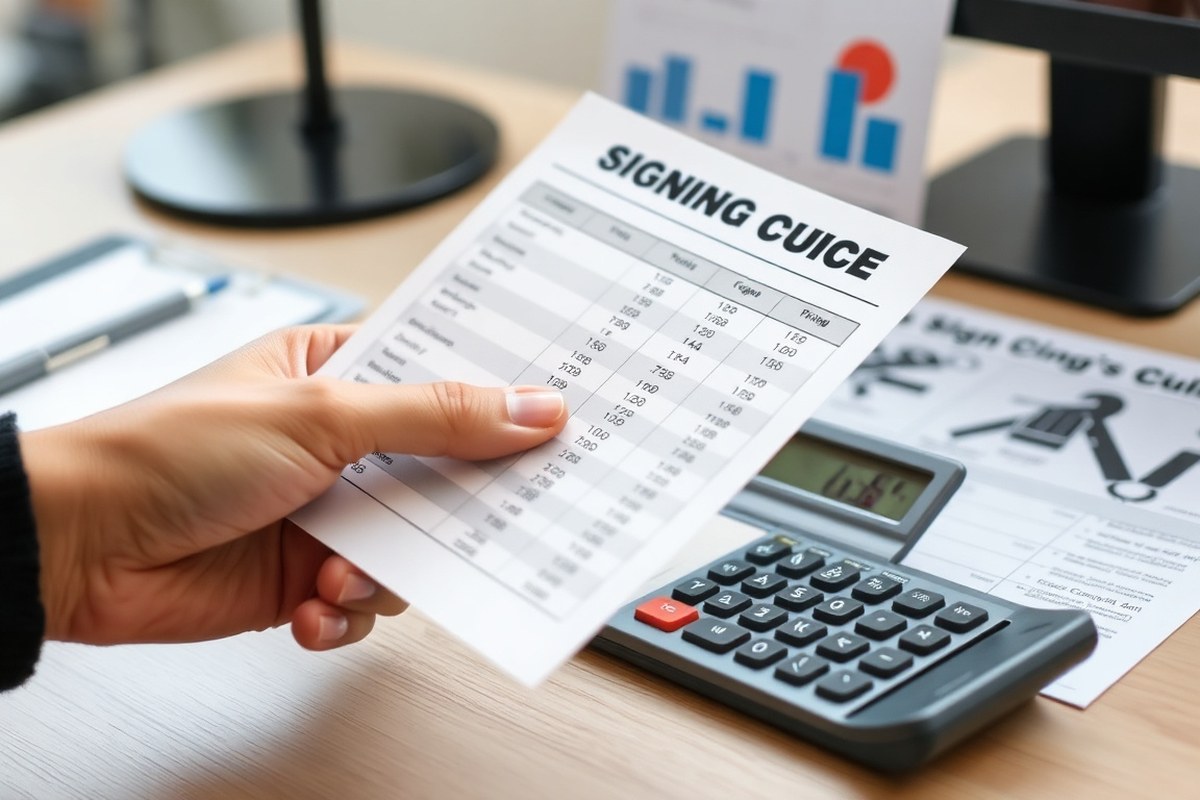
A sign pricing guide is a practical tool that helps you estimate the cost of commercial signage by using industry data, common pricing formulas, and calculators. It breaks down typical price ranges for various sign types and outlines the assumptions behind those estimates. By consulting a sign pricing guide, you can quickly assess what a sign project might cost before requesting detailed, project-specific quotes from sign shops or contractors.
This guide simplifies pricing by offering tiered levels of work complexity, usually Basic, Intermediate, and Complex, with each level reflecting different degrees of design effort, materials, and installation challenges. For example, a basic vinyl graphic might have a simple price calculation, while a complex illuminated channel letter sign requires more detailed planning, materials, and labor considerations. These levels let you understand how adding features or customizations can impact the overall cost.
Common factors included in sign pricing guides cover material types like aluminum, acrylic, or polycarbonate, illumination options such as front-lit or halo-lit LEDs, and installation variables, including site conditions and labor rates. The guide also models overhead by applying different rates representing shop expenses and profit margins. You select an overhead rate that fits your sign shop or vendor’s business model, helping translate raw cost inputs into realistic final prices. This modeling clarifies how overhead influences the customer’s quote beyond just materials and labor.
Using established examples for typical commercial sign projects, the guide explains costs for site surveys, design proofs, permits, and installation conditions. A single-tenant illuminated monument sign, for instance, often ranges from $10,000 to $30,000 in planning dollars before factoring in foundation work, electrical hookups, and permits. Labor costs usually form the largest piece of the installed price, averaging $150 to $600 per sign for installation on typical soil, increasing with complex conditions such as deep footings or restricted work hours.
Practical features of a sign pricing guide let you load relevant examples quickly and review the cost formulas and assumptions behind each quote element. This transparency helps you identify potential hidden costs, such as permit fees or old sign removal, so you’re prepared before requesting formal bids. It also highlights what a complete professional quote should include, detailed design proofs, precise material specifications, installation notes, electrical scope, and warranty details, so you can compare quotes accurately and avoid unexpected surprises.
Some sign pricing guides, like the one used in SignQuote Pro, allow you to replace the default overhead rates with your actual shop rate. This option provides an even more detailed estimate, especially if you have access to precise labor rates and material pricing. This level of customization suits business owners or marketing managers who want to control budget accuracy or validate vendor quotes before committing.
Key Components That Drive Sign Pricing Costs

Materials usually make up a significant part of the total sign cost. For example, a standard metal sign with reflective sheeting typically costs around $260. Durable materials like metal or HDU (high-density urethane) offer longevity and better appearance but come with higher upfront prices compared to vinyl or plastic. Choosing materials based only on initial cost can result in higher maintenance or replacement expenses later. The size of the sign also directly affects material volume and fabrication time, increasing costs proportionally. An 18×24-inch metal sign might cost $150, but doubling the size can more than double material use and fabrication complexity.
Labor and installation costs vary widely based on site conditions and sign type, often ranging from $100 to $600 per sign. A typical installation includes digging footings, anchoring posts, mounting hardware, and securing the sign properly. For example, installing a metal sign with a concrete post footing usually takes about two hours of labor. Complex site conditions like rocky soil, limited access, or working at height add to labor and equipment expenses, sometimes requiring lifts or cranes. These conditions can push installation labor closer to $600, even if the materials stay the same.
Permitting fees are another important cost driver, fluctuating significantly by municipality. Simple permits might cost around $25, while more complex or large-scale projects can go up to $500 or more. Delays or revisions caused by unclear permit requirements can add indirect costs to your timeline and labor. It’s important to factor in these administrative fees early to avoid surprises after the fabrication phase.
Additional costs such as delivery, disposal, and warranty coverage typically add $10 to $50 or more per sign. Delivery fees depend on distance and the size of the shipment, while disposal ensures the site is left clean after installation. Basic manufacturer warranties often come free, but extended coverage for repairs or parts replacements usually adds $50 to $150 to the total cost.
Standardize your sign specs and coordinate permitting upfront to prevent unexpected cost overruns and schedule delays during installation.
Putting these numbers together, a standard commercial sign project might break down as $260 for materials, $260 for installation labor, $150 for permits, and about $40 for delivery and cleanup. Larger or illuminated signs increase costs due to extra electrical work and heavier materials. Multi-location businesses can reduce expenses by using consistent materials and sign designs across sites, simplifying permitting and installation processes. Proper planning and clear scope definition help control each cost component, keeping your signage budget predictable and aligned with your goals.
How Different Sign Types Affect Pricing and Budget
Different types of commercial signs come with widely varying costs based on design complexity, materials, and installation requirements. Illuminated signs like channel letters tend to be pricier due to their electrical and fabrication needs. Vehicle wraps fall into a mid-to-high range depending on coverage and vehicle size, while vinyl decals represent an affordable signage option suited for temporary or simple branding needs.
Pricing Range for Channel Letters
Channel letter signs are a popular choice for storefronts, restaurants, and franchises. They usually cost between $4,000 and $12,000 before additional factors such as permits and site conditions. Higher costs come from the dimensional fabrication involved in making individual letter and logo elements, the lighting components required for illumination, and the electrical coordination needed during installation.
Channel letters often include options like front-lit or halo-lit letters and various mounting methods such as raceway or flush mounting, each impacting the final price. These signs are typically long-term assets requiring maintenance and periodic servicing depending on environmental factors.
Cost Factors for Monument Signs
Monument signs tend to cost significantly more than wall-mounted signs, commonly ranging from $5,000 to $65,000 or more. Their construction involves building into the site, which adds expenses for foundation work, electrical access, landscaping, and permitting. Installation complexity and site-specific challenges directly drive costs higher.
This type of signage is suitable when you need a high-visibility, permanent presence, such as for business parks, schools, or healthcare offices. Expect budgeting for these signs to reflect the substantial materials and on-site labor required, as well as local regulatory costs.
Affordable Options Like Vinyl Decals
Vinyl decals and simple window graphics are among the lowest-cost commercial signs available, generally starting around $200. These inexpensive options are easy to produce and install, typically fashioned from digitally printed or cut vinyl. Their light material and lack of fabrication or electrical components keep costs minimal.
Decals offer a good choice for temporary promotions, interior branding, or when you need flexible signage without extensive investment. Although affordable, they do not provide the long-term durability or illumination of channel letters or monument signs. Below is a table summarizing common sign types with typical cost ranges, primary cost drivers, and best-use cases to help you choose based on your budget and needs.
| Sign Type | Typical Cost Range | Main Cost Drivers | Best Uses |
|---|---|---|---|
| Channel Letters | $4,000 to $12,000 | Dimensional fabrication, lighting, electrical work, permits | Storefronts, restaurants, franchised locations |
| Monument Signs | $5,000 to $65,000+ | Site work, foundations, electrical, landscaping, permitting | Business parks, healthcare, schools, permanent site identification |
| Vehicle Wraps | Varies widely,* mid to high range | Coverage level, vehicle type, design complexity, fleet size | Mobile advertising for service vehicles, delivery vans, fleets |
| Vinyl Decals | Starting around $200 | Material area, printing method, ease of installation | Temporary promotions, interior graphics, low budget signage |
(*For vehicle wraps, costs depend on vehicle size, full or partial wrap options, and complexity of graphics. A detailed vehicle wrap cost guide should be consulted for specific budgeting.)
Step-by-Step Guide to Calculating Sign Prices Accurately
Calculating the total cost of a sign involves adding material expenses, labor charges, markup, and waste allowances precisely. You take measurements for materials, estimate labor hours at local shop rates, account for inevitable material waste, then apply a markup to ensure profit. A step-by-step approach clarifies each cost factor and provides an accurate total price.
Gathering Measurements and Material Costs
Start by measuring the size and quantity of materials needed for your sign project. Determine all material types, such as aluminum, vinyl, paint, or lighting components, with their unit costs. Include any special finishes or grades that affect base prices, like reflective coatings or ceramic artwork. Use current supplier prices for the most accurate estimates.
Material costs must also factor in waste. Expect about 5% to 10% extra material for cutting errors and handling loss. Add this allowance before applying markup to avoid underpricing. For example, if aluminum sheets cost $50 per square foot, and you need 20 square feet, add a 10% waste allowance for 2 extra square feet before calculating total material cost.
Calculating Labor Hours and Shop Rates
Estimate labor hours based on the sign’s complexity and type. Typical projects range from 2 to 8 labor hours, including fabrication, assembly, and finishing. Confirm your shop’s hourly rate, which often falls between $75 and $150 per hour depending on location and expertise. Multiply estimated hours by the hourly rate to find total labor expense.
Note that more customized signs or complex installations drive hours higher. Factor in additional time for electrical wiring or mounting on difficult surfaces. Accurate labor calculations prevent unexpected cost overruns.
Applying Markup and Waste Percentages
Material markup typically equals 100% of the base cost plus waste, doubling what you pay for raw materials. This covers overhead, handling, and profit margins. Apply the markup after adding materials and waste allowances but before adding labor. Keep your markup consistent to maintain profitability.
Labor markup or overhead is generally included in the hourly rate, but verify this applies to your shop. Some shops add a percentage markup on labor separately, often 10% to 20%. Confirm your pricing standards to avoid double counting. Follow these steps to calculate a sign’s price:
- Measure all components and calculate material quantities.
- Add a waste allowance (5%-10%) to the material quantity.
- Multiply the adjusted material quantity by unit cost for base material cost.
- Apply a material markup (commonly 100%) to the base material cost.
- Estimate required labor hours based on project complexity.
- Multiply labor hours by your shop’s hourly rate ($75-$150/hr) for labor cost.
- Sum the marked-up material cost and labor cost for total sign price.
Worked Example: Calculate the price of a 20 sq ft aluminum sign costing $50/sq ft, with 10% waste, 4 labor hours at $100/hr, and 100% material markup.
| Step | Calculation | Result |
|---|---|---|
| Base material qty | 20 sq ft | 20 sq ft |
| Waste allowance (10%) | 20 × 0.10 | 2 sq ft |
| Total material qty | 20 + 2 | 22 sq ft |
| Base material cost | 22 × $50 | $1,100 |
| Material markup (100%) | $1,100 × 2 | $2,200 |
| Labor cost | 4 hrs × $100/hr | $400 |
| Total price | $2,200 + $400 | $2,600 |
Understanding Labor Rates, Overhead, and Their Pricing Impact
Typical shop labor rates for sign projects vary widely depending on location, skill level, and business size. For many established sign shops in the US, hourly rates commonly range between $50 and $100. Smaller or solo operations might charge less, but you should consider your experience and the time you invest when setting rates. Charging significantly less than local competitors, such as $5 per square foot when others charge $10, can undervalue your work and hurt profitability.
Overhead costs play a critical role in pricing signs. These include rent, utilities, insurance, equipment maintenance, and administrative expenses. Overhead is usually factored as a percentage added on top of direct labor and materials. For example, if payroll accounts for 28.4% of manufacturing value according to the US Census Bureau, overhead in total may push your labor-related costs even higher. You calculate your overhead rate by dividing total overhead expenses by total direct labor hours, then add this per-hour rate to your labor charges to ensure full cost recovery.
Regional factors can significantly affect sign pricing because wages, rent, and regulatory costs differ by area. Labor and overhead in major metropolitan areas often push prices higher than in smaller towns. For instance, shop rates in metropolitan coastal cities may exceed $100 per hour due to higher living costs and taxes, while rural areas might see rates near $50. Likewise, projects requiring specialized permits or costly inspections can increase local pricing. Pricing should also consider local demand and competition; pricing too low to compete might lead to unsustainable margins.
When estimating a total project cost, consider how labor hours multiply with complexity. Installing a ground-level window graphic is different from mounting signs high above storefronts or on freestanding structures. Factors such as tactile lettering, Braille, mounting height, site audit requirements, and available power all influence labor time and overhead allocation. Track the exact labor hours for each phase, add your calculated overhead per hour, and multiply by your hourly labor rate to arrive at a realistic project labor cost.
Use local competitor pricing as a benchmark but adjust for your overhead and project complexity to avoid underpricing your labor and risking losses.
Installation Complexity and Hidden Costs to Watch For
Installation height and site conditions can add significant costs beyond the base price of your commercial sign. Higher mounts require specialized equipment such as lifts or scaffolding, which increase labor time and rental fees. Difficult soil conditions, like rocky or clay-heavy ground, may require excavation or special anchoring, raising the overall installation bill. Electrical access is another key factor; if existing wiring or outlets are insufficient or outdated, upgrades can add several hundred to thousands of dollars depending on complexity.
Permits are often necessary and can involve fees, inspection costs, and sometimes engineering documentation. Permit fees vary widely by location but typically range between $100 and $500. Delays or the need for revisions due to local sign codes affecting size, illumination, or placement can result in extra permit re-submission fees and extended timelines. Landlord approvals and local authority reviews also add to this process.
Unforeseen factors may include the removal of an old sign, wall repairs after removal, or after-hours installation when standard business hours are unavailable, all of which usually increase costs if not included upfront. To plan effectively, ask for detailed quotes that outline what’s included and explicitly state exclusions.
- Installation height requiring lifts or scaffolding
- Soil and ground conditions necessitating excavation or special anchoring
- Electrical work for access, upgrades, or new connections
- Permitting costs, inspections, and possible re-submission fees
- Landlord approvals and local authority requirements
- Old sign removal, wall repair, and disposal fees
- After-hours installation or restricted access scheduling
To anticipate hidden costs, start by thoroughly reviewing site conditions with your installer and confirming local permit requirements early. Request a permit fee estimate and timeline from your sign professional or local municipal office. Clarify whether electrical work and removal of old signage are included in the base quote. Budgeting an additional 10% to 20% of the base installation price for these unpredictable expenses can help avoid surprises. Clear communication with your installer about installation complexity and all necessary approvals is the best way to control costs and avoid delays.
Design Customization and Material Choices That Affect Pricing
Design complexity directly increases sign costs because intricate layouts require more time and skill to create, proof, and produce. Simple designs with clear fonts and limited colors take fewer hours from a designer, while complex custom artwork with fine details, gradients, or multiple elements demands extra revisions and precision. For example, straightforward custom vertical, horizontal, yard, or rider signs typically cost about $79 per design, with a 1-2 day turnaround. More elaborate signs or unique formats might cost more due to extended design time or specialized software needs.
Custom artwork fees cover work beyond template edits, including original illustrations, logo recreations, or entirely new branding concepts. Sign shops often charge flat rates for these services, but adjustments to your approved design after the fact can add to costs and extend schedules. Plan ahead by providing high-quality logos and clear instructions to reduce back-and-forth and avoid costly change orders. Expect to pay $50 to over $100 for detailed design tweaks or new artwork, depending on complexity.
The quality and type of materials chosen affect pricing and sign longevity significantly. Basic vinyl and aluminum options tend to be the most affordable, but premium acrylic, high-grade aluminum composites, and advanced LED illumination add to material costs. A 48-inch sign costs nearly double the price of a 24-inch sign of the same style because material amounts and production complexity grow with size. Durability also depends on exposure to weather, installation quality, and maintenance. Choosing high-end materials can increase your upfront price by 30% or more but provides longer-lasting results and less frequent replacement.
Vehicle wraps illustrate how material quality and design complexity interplay. The total cost depends on the vehicle’s size, how much surface area the wrap covers, and the vinyl quality. Premium vinyl lasts longer and resists fading in sunshine, which justifies its higher cost. Also, textured or specialty vinyls require more labor to apply and may raise the price further. For fleet projects, pricing might reduce per vehicle compared to individual wraps due to volume but requires coordination that can affect timelines.
In practice, selecting custom designs and materials involves balancing initial cost with the intended sign lifespan and visual impact. Investing more in detailed artwork and durable, high-quality materials saves money over time by reducing replacements and upkeep. Businesses wanting brand consistency across multiple signs or vehicles should account for design service fees and premium material costs in their budgets from the start to avoid unexpected expenses later.
How to Get Complete, Accurate Sign Quotes and Avoid Pricing Mistakes
Complete and accurate sign quotes lay out every part of the commercial sign project, from design and materials to installation and potential maintenance. Many pricing mistakes come from comparing incomplete bids or missing hidden fees. To get transparent, fair pricing, prioritize understanding the full scope first and ask specific questions to spot gaps or extra charges.
Essential Quote Items to Check
A thorough commercial sign quote must include all elements that affect cost and project success. Look for a detailed description of the sign type, size, materials, fabrication process, and finish. Check if the quote covers permits, installation methods, hardware, electrical work, and site preparation. Don’t forget to verify warranty terms and any ongoing maintenance offers.
Comparing quotes works best when you align the scope first, before price. Confirm that each provider is pricing the same size and specifications, such as the median sign width of about 32 inches if relevant. A side-by-side comparison table of these details can help separate true cost differences from scope gaps.
- Sign dimensions and design specifications
- Materials used and fabrication details
- Included installation labor and equipment
- Permitting and compliance costs
- Electrical and lighting components
- Warranty coverage and maintenance options
Missing any of these can lead to surprises on the final bill or project delays.
Common Pricing Errors and Fixes
Many pricing errors come from unclear or incomplete quotes. One frequent mistake is underestimating installation complexity, which can add significant labor hours and costs. Others include failing to include permit fees or ignoring necessary electrical work. Some quotes may list a lower base price but add costly extras later.
To avoid these pitfalls, insist on a “scope-first” quote that breaks down every component. Request that the provider itemize all costs, including materials, labor, permits, and contingencies. Be wary of quotes that lack specifics or use vague language. A reliable sign company should explain how each cost contributes to the total price.
Always look for hidden fees and ask for an itemized estimate covering everything from fabrication to final cleanup before approving any quote.
Questions to Ask Your Sign Provider
Before approving a quote, use these key questions to ensure clarity and fairness:
- What exactly is included in the fabrication and installation scope?
- Are permits and inspections fully covered in the price?
- How long will the project take from start to finish?
- Is there a warranty on materials and workmanship?
- What are the terms for additional requests or change orders?
- Can I get references or examples of completed similar projects?
Asking the same questions to each provider creates a fair basis for comparison. It avoids surprises and helps confirm each quote reflects your exact project needs.
Quick-Start Action Plan for Accurate Sign Pricing
Use this plan to estimate sign costs confidently and get reliable quotes from suppliers.
- Before you start: Define your sign type and size clearly. Confirm these details to avoid surprises in price.
- Day 1: Contact at least three sign companies for quotes. Compare labor, materials, and installation costs separately.
- Day 2: Review your design specifications and material choices. Adjust for any customization that could increase costs.
- Week 1: Use the step-by-step method provided here to calculate your own rough price. Use this as a benchmark.
- Week 2: Check for any installation complexities at your site. Ask for detailed cost breakdowns that include permits or hidden fees.
- After 2 weeks: Negotiate with your preferred supplier using your calculations and quote comparisons to get the best value.
- Before finalizing: Confirm timeline and warranty details to prevent unexpected delays or costs.
Frequently Asked Questions
What Are the Four Overhead Rates Used in the Sign Pricing Guide?
The Sign Pricing Guide uses four overhead rates: Basic, Intermediate, Complex, and a customizable shop rate, helping you tailor pricing based on your business’s actual costs and work complexity.
How Does the Sign Pricing Guide Simplify Pricing with Only Three Clicks?
It quickly narrows pricing by selecting sign type, complexity level, and overhead rate, saving time on manual calculations for your signage projects.
What Factors Cause Prices to Differ Between Basic and Complex Levels in the Guide?
Basic work covers simpler signs with standard materials, while Complex involves custom designs and advanced installs, raising labor and material costs significantly.
Can I Use the Sign Pricing Guide for Non-Illuminated Monument Signs?
Yes, the guide includes cost planning for various sign types, including non-illuminated signs, giving you a starting budget range for those projects.
How Accurate Are the Price Ranges Shown in the Sign Pricing Guide?
They serve as general budget planning tools and should not replace detailed quotes; actual costs vary by location and project specifics.
What Additional Costs Might Not Be Included in the Sign Pricing Guide Pricing?
Installation conditions, electrical setup, permits, and foundation work typically add to project costs beyond the guide’s price ranges.
Final Thoughts
Understanding how sign pricing is calculated helps you make better budget decisions and avoid unexpected expenses. Begin with clear details about your project and apply the steps shown here to critically evaluate quotes. Taking time upfront to compare and calculate costs will save money and headaches later. Your next move should be to reach out to local sign shops armed with your new knowledge and a list of questions to clarify their pricing.