How Much Does Sign Installation Cost? A Complete Guide to Pricing Factors
How much does sign installation cost varies widely, typically from $181 to $8,000 or more depending on sign type and complexity. Wall signs often cost $200 to $800, while pylon or pole signs can reach $15,000 due to height and foundation needs. Electrical work, mounting height, and site factors significantly influence the final price. Starting with a detailed quote that separates fabrication and installation costs helps you budget more accurately and avoid surprises later.
Key Takeaways
- Wall sign installation usually costs between $200 and $800, mainly driven by the wall material.
- Monument signs range from $2,000 to $8,000, with site preparation as the largest expense.
- Pylon and pole signs cost $3,000 to $15,000+, increasing with height and foundation needs.
- Electrical requirements and installations above 10 feet raise costs due to complexity and equipment.
- Fabrication and installation are separate costs; get quotes itemized to understand both expenses.
- Older sign removal and necessary wall repairs add to total installation costs and timeline.
How Much Does Sign Installation Cost on Average?
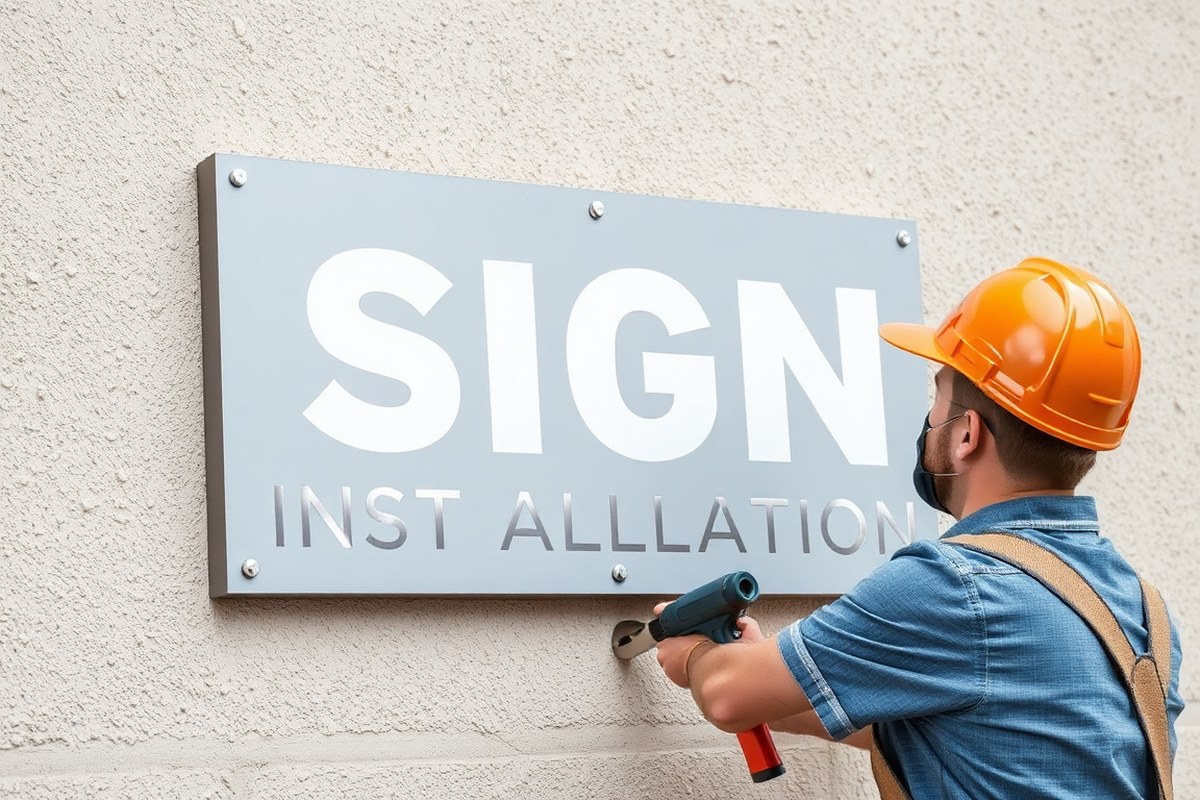
Commercial sign installation generally ranges from $181 to $804 for standard types such as wall signs, channel letters, and cabinet signs, with a national average around $464. Installing a wall sign often costs between $200 and $800, largely depending on the type of wall material. Brick or concrete surfaces usually require more labor and specialized equipment, which increases the total cost.
Monument signs involve more extensive site work, pushing installation costs significantly higher, commonly between $2,000 and $8,000 or more. This includes excavation, foundation work, and possibly electrical hookups if the sign is illuminated. The larger size and heavier weight of monument signs also mean you’ll likely pay more for cranes or other heavy equipment, and for labor specialized in site preparation.
Key cost factors for sign installation include the type of sign, its size and weight, mounting height, wall or ground surface, electrical requirements, and permit fees. Each of these influences labor time, equipment rental, and often the complexity of the installation process. For instance, installing illuminated channel letters can be costlier because electrical access and wiring add to both labor and materials costs. Letter count, height of the mounting surface, and alignment also play roles.
Examples of typical commercial sign installation scenarios highlight how these factors apply. Installing a 20-square-foot illuminated cabinet sign on a concrete wall might cost around $500 to $700. This estimate includes mounting hardware suited to concrete and electrical connections. Installing a small set of five channel letters on a metal raceway at a standard height could average $300 to $600 depending on electrical access and letter size.
The national average installation cost near $464 reflects a blend of these factors but expect your project to vary due to local conditions. Permit fees can range from about $100 to over $1,500 depending on your city’s regulations and sign type. For multi-location projects or places with strict code requirements, costs could trend higher due to repeated site evaluations and additional approvals.
In practice, detailed planning helps control costs. Provide installers with clear photos of the mounting surface, the precise installation height, and existing electrical access. Knowing these details up front means they can quote accurately and prepare the necessary tools and materials. Overlooking such details often leads to unexpected expenses or installation delays.
What Do Sign Installation Quotes Typically Include?

Sign installation quotes typically include several core components, such as labor, mounting hardware, and access equipment, but often exclude permits, electrical work, and old sign removal unless explicitly stated. Knowing exactly what a quote covers helps you avoid surprises and compare proposals accurately. A clear checklist of inclusions and exclusions is key to understanding the total cost and ensuring the quoted price matches the project’s scope.
Core Components Included in Installation Quotes
Installation quotes usually cover the field labor required to mount, align, and secure the sign at the site. This involves the manpower needed to complete the installation safely and correctly, workers will handle everything from positioning to final attachment. Along with labor, mounting hardware like brackets, anchors, or fasteners designed for the specific sign and surface is typically included. Access equipment, such as lifts, bucket trucks, or cranes, may be part of the quote, but you must confirm this, especially for high or heavy signs.
Site review is often part of installation pricing. This covers an assessment of the property conditions, mounting surface, height, and accessibility, helping estimate the complexity of the job. Without this review, unexpected challenges can increase costs or cause delays.
Common Exclusions to Watch For
Permits and government fees frequently fall outside standard installation quotes. These costs can vary widely by jurisdiction and may require separate handling, including paperwork and coordination with local authorities. Electrical work is another frequent omission. If your sign is illuminated or requires power connections, expect that wiring, conduit installation, and electrical permits might be quoted independently.
Removing old signs or repairing damaged walls after removal typically does not appear in initial installation quotes. Traffic control, scheduling additional labor for after-hours work, or site-specific restrictions can also lead to added charges not reflected in the original price. Clarifying these exclusions up front helps prevent budget overruns.
Checklist for Comparing Installation Quotes
Use the following list to review and compare the details included in each quote you receive:
- Field labor hours and workforce details
- Mounting hardware specifics (type and quantity)
- Access equipment included (lifts, cranes, scaffolding)
- Site review and coordination scope
- Permit fees and permit application support
- Electrical work and power connection services
- Old sign removal and wall repair responsibilities
This checklist helps you identify which quotes cover only the labor and equipment and which offer a more turnkey solution including permits and electrical hookups.
How to Avoid Hidden Costs in Installation Quotes
Ask the installer to clarify whether permits, electrical work, and equipment rentals are included in the price or billed separately. Request a line-item breakdown showing each cost and service expressly. Confirm whether the quote assumes the sign has already been fabricated or if it includes any part of the manufacturing or design process.
Inquire about site access challenges and whether additional fees apply for dependent conditions such as work during restricted hours or in high-traffic areas. Fully disclosing property and project details, such as sign type, mounting height, and electrical requirements, lets contractors provide more accurate estimates and reduces the risk of unexpected charges.
Always verify the scope of work in writing and request a detailed quote that lists inclusions and exclusions before approving any installation contract.
Variations Based on Installation Type
Installation-only quotes focus exclusively on field labor and equipment for signs already fabricated. These are useful if you source your signs independently or plan multiple vendors. Fully installed project quotes can bundle fabrication, hardware, installation labor, and permit coordination into a single price, simplifying budgeting but often coming at a higher total cost.
For large or complex signs like pylons or monuments, expect engineered foundations and crane use to add significantly to installation expenses. Those projects may require traffic control permits, specialized equipment, and multiple days of work. Confirm whether these elements are included or billed separately to avoid planning mistakes.
How Do Fabrication and Installation Costs Differ?
Fabrication cost covers everything needed to make your sign, including materials, design work, and production labor. Installation cost covers the on-site work to mount, connect, and secure the sign at your location. These two are quoted separately because they involve different skills, timelines, and subcontractors. Fabrication happens offsite and is often handled by sign shops. Installation demands experienced installers and may require special equipment on your property.
You should expect separate quotes if you only need the sign made or if electrical work is involved. Electrical connections require licensed electricians and are almost always priced separately from physical installation. Combine quotes when you want a turnkey solution that includes fabrication plus installation under one contract. The installer coordinates timing and handles everything from receipt of the sign to final mounting. Here’s a clear comparison to help decide the quote type:
| Buyer Question | Why It Matters |
|---|---|
| Is old sign removal included? | Removal, disposal, sealing, and surface preparation can add to installation costs if not included in fabrication |
| Is wall repair included? | Paint matching, masonry, stucco, or EIFS repairs affect installation pricing and timeline |
| Is electrical work included? | Illuminated signs need licensed electricians and power source access, often quoted separately |
| Are permit fees included? | Government fees may be paid separately or passed through without markup |
| Is permit support included? | Documentation, drawings, submissions, and revisions can be a distinct service from fabrication or installation |
Separate fabrication and installation quotes let you control each phase and compare providers precisely, especially if you prefer using your own contractor for installation. Combined quotes simplify communication and reduce scheduling risks but usually come at a premium. For example, a 60 ft² LED sign with a crane-assisted install requires complex coordination and permits, making a bundled quote practical.
Signals to request combined quotes include new construction where all services are needed, complex mounted signs on difficult surfaces, or illuminated signs requiring electrical coordination. Separate quotes suit simpler projects, retrofits like LED cabinet replacements, or when working with multiple vendors. Confirming details like sign location, permit approval, and site conditions before ordering helps avoid costly change orders during installation.
Installation Costs by Sign Type and Size
Installation costs vary widely by sign type, size, and structural requirements. Wall-mounted signs tend to be the most affordable, while monument and pylon signs involve higher expenses due to foundation work and equipment needs. Larger and heavier signs increase labor and equipment time, directly adding to costs because more support and precise mounting become necessary.
Wall-Mounted Sign Installation
Wall-mounted signs generally cost between $200 and $3,000 depending on type and size. Simple panel or wall signs without electrical components fall on the lower end, about $200 to $800. Channel letters requiring electrical hookups and lifts for mounting can push installation costs over $3,000.
The size and weight of the sign influence the complexity. Signs less than 50 pounds generally mount quickly with basic brackets or anchors. Signs over 100 pounds need reinforced mounting points and sometimes structural review of the wall. Installation height also matters; heights above 20 feet often require lifts or bucket trucks, increasing labor hours and rental fees.
Monument and Freestanding Sign Installation
Monument signs are freestanding structures that require groundwork and precise placement. Typical installation costs range from $2,000 to over $8,000. Foundation or footing preparation is often necessary, especially for signs over 4 feet tall or those weighing hundreds of pounds. Soil conditions like rocky or unstable ground can increase foundation costs.
Electrical wiring is common with illuminated monument signs, adding coordination costs before installation. Excavation equipment such as mini-excavators or digging tools is also usually required, increasing labor and rental fees. Installation time can extend from a few hours for small signs to several days for large, complex structures.
Pylon and Pole Sign Installation
Pylon and pole signs are the most expensive to install, with costs from $3,000 to $15,000 or more. Their height, often exceeding 20 feet, requires cranes, lifts, or bucket trucks along with traffic control if near roadways. Foundations must be deep and engineered to handle wind loads and structural safety.
Multi-tenant cabinets or changeable panel pylons need precise electrical installation and structural supports. This work includes sections that bolt together, electrical conduit pathways, and sometimes permits requiring engineering plans. Ground conditions and local codes also impact costs, especially in areas with underground utilities.
Interior Sign Installation Considerations
Interior signs like ADA plaques, lobby signs, wayfinding signs, and dimensional letters usually cost less than exterior signs but vary based on quantity and surface conditions. Installation costs depend on mounting method, weight, wall finish, and the number of signs. A smooth drywall surface is easier to work on than textured or painted walls which may require surface prep.
Mounting ADA signs usually requires compliance with placement height and location standards. Lobby signs tend to be heavier and need multiple mounting points, affecting labor. Wayfinding signs require consistent placement across floors and hallways, which increases coordination costs. For all interior signs, access to the installation area and after-hours work can affect pricing.
| Sign Type | Install Cost Range | Electrical Needed? | Equipment Needed? |
|---|---|---|---|
| Banner / Vinyl | $100, $400 | No | Rarely |
| Wall Sign / Panel | $200, $800 | Sometimes | Sometimes |
| Channel Letters | $800, $3,000+ | Yes | Often (lift) |
| Monument Sign | $2,000, $8,000+ | Often | Yes (excavation) |
| Pylon / Pole Sign | $3,000, $15,000+ | Yes | Yes (crane) |
This table outlines the approximate installation cost ranges, electrical requirements, and equipment needs by sign type. Understanding these cost drivers helps in planning budgets and schedules. Signs without electrical components and smaller mounting needs are generally less expensive and quicker to install.
How Electrical Requirements Impact Installation Cost
Electrical requirements can add $800 to $3,000 or more to your sign installation cost depending on the complexity. Hiring a licensed electrician for wiring and ensuring compliance with local codes is necessary. Costs vary with power supply location, the need to install new conduit or junction boxes, and additional lighting controls.
When a Licensed Electrician Is Required
A licensed electrician must handle any electrical connections for sign installations to comply with safety codes and legal requirements. This includes connecting the power supply, running conduit, installing junction boxes, and verifying that all work meets local electrical codes. Without a licensed professional, the sign cannot legally operate, and insurance coverage may be affected.
Minor non-electrical tasks can sometimes be done by your installer, but any wiring or circuit modifications require an electrician. For example, if your sign requires new wiring from the building’s main panel, the work must be done by a licensed expert. This ensures the correct gauge wire, grounding, and proper circuit breakers are installed to safely handle the sign’s electrical load.
How Power Supply Location Affects Costs
Signs installed near an existing power source typically cost less for electrical work. When suitable power is available nearby, electricians can connect the sign directly to it, lowering labor and material costs. For example, having an accessible junction box or an outdoor GFCI outlet nearby can save significant installation time and expense.
In contrast, if the nearest power supply is far from the sign location, electricians must run new conduit and wiring, increasing both labor and materials costs. This can involve cutting through walls or ceilings, fishing wires through difficult spaces, and installing new breaker circuits in the electrical panel. Each added step raises the total cost and timeline.
Additional Electrical Components and Their Impact
Installing illuminated signs often requires accessible power supplies and lighting controls. LED systems need dedicated power supplies or drivers that must be mounted near the sign for easy service access. Neon signs need transformers that must be installed in weather-safe, ventilated enclosures, adding to material and labor costs.
Controls or timers to regulate the sign’s operation hours increase installation complexity. For example, scheduling a sign to operate only during business hours requires additional control wiring and programming. This also affects your overall budget and may require consultation with the electrician on compatible equipment.
Planning Electrical Integration for Your Sign
Start by providing your installer or electrician clear site photos showing the mounting surface and surrounding area. Include approximate mounting height and details of any existing signs already connected to power. Note whether there’s visible conduit, junction boxes, or outlets near the proposed location.
Share any landlord or building regulations around electrical work and timelines for installation. This upfront information helps your contractor assess the scope, reduce surprises, and offer a more accurate cost estimate. For example, if permission is needed to open walls for wiring, that may delay work and add expense.
Worked Example of Electrical Cost Calculation
You want to install an LED illuminated sign on a building facade with no existing power nearby. The electrician quotes $1,500 for running new conduit and wiring from the main electrical panel, $400 for installing a weatherproof junction box at the sign location, and $600 for the power supply integration and connection.
The total electrical cost for this sign installation is roughly $2,500. Adding a timer control system would add another $300 to $500, depending on complexity. This example shows how power location and additional controls directly impact the bottom line.
Provide clear site photos and power access details upfront to avoid costly surprises during electrical work.
How Mounting Surface and Installation Height Affect Pricing
Mounting surface and installation height directly impact the cost and complexity of sign installation. Different materials require tailored attachment methods, affect labor time, and dictate the type of equipment needed. Improve installs add expenses for specialized machinery and safety measures, increasing labor costs beyond the base rate.
Wall material matters because it influences how anchors attach and what precautions installers must take. For example, brick masonry may have variable mortar conditions, requiring careful drilling to avoid damage or loose anchors. EIFS (Exterior Insulation and Finish System) demands attachment to the underlying structural layer to support the sign securely, often increasing labor time. Glass storefronts limit mounting options significantly and often require landlord approval or special hardware to avoid damaging the glass or facade. Metal panel installations must work around seams and cladding warranties, which can delay work or call for extra coordination.
| Wall Surface | Planning Considerations |
|---|---|
| Brick masonry | Check mortar condition; avoid drilling through weak mortar; may require anchors for solid bricks |
| Concrete or CMU | Suitable for exterior signs; common anchoring options; consider freeze/thaw cycles in cold climates |
| EIFS or Dryvit | Attach to structural layer behind EIFS; surface cannot bear load alone; may need backer boards |
| Metal panels | Coordinate around seams; avoid voiding panel warranties; attachment hardware varies |
| Glass storefront systems | Limited attachment options; often requires landlord/property owner approval and special mounting |
| Wood-framed walls | Check framing condition and backing; risks if wood is rotted or unsupported |
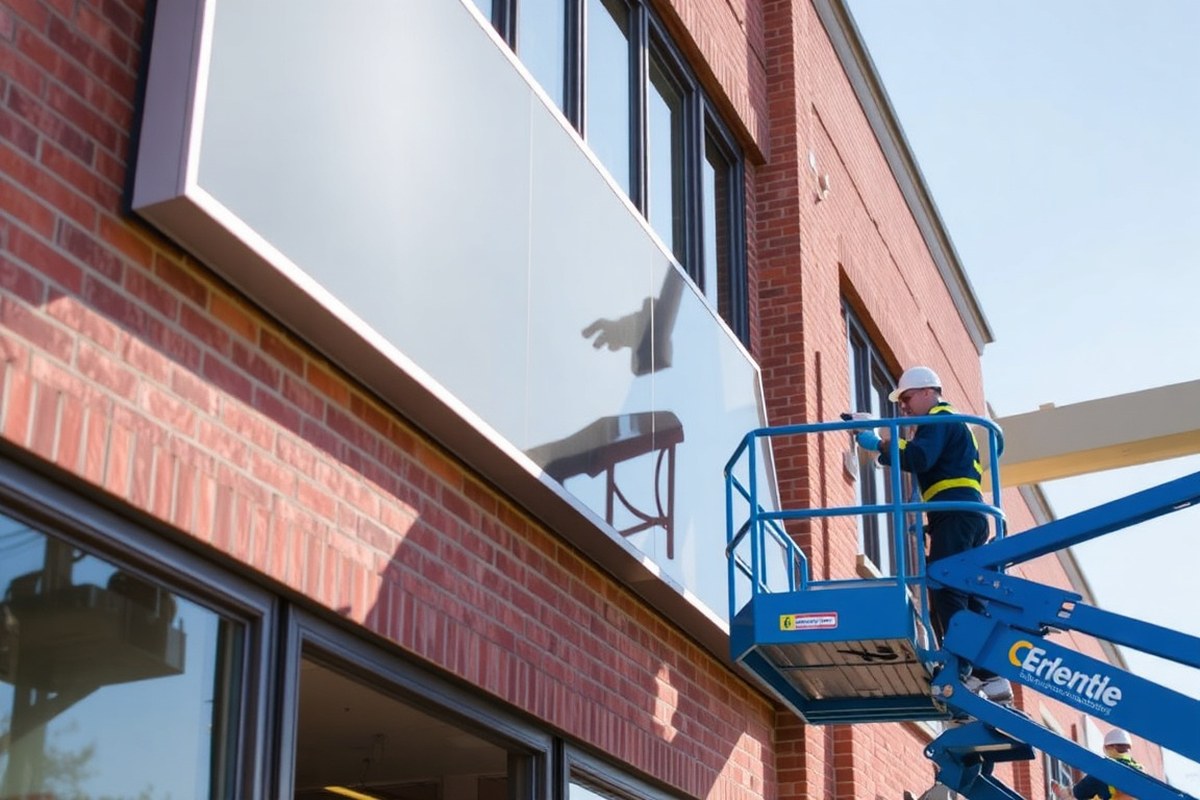
Installing signs at higher elevations involves additional challenges and expenses because reaching those heights often requires special machinery like aerial lifts, scaffolding, or cranes. The cost to rent such equipment can range from $500 to over $2,000 per day, varying by region and type. Labor charges also rise due to the extended setup time and safety measures needed when working at height. For instance, a sign mounted 20 feet above ground might take about 10 hours of work at $60 an hour, costing roughly $600, while using a crane for a sign 40 feet up can push combined labor and equipment expenses above $5,000.
To provide an accurate installation quote, measure the mounting height precisely from the ground to the intended mounting surface. Use a tape measure or laser distance finder, standing on level ground whenever possible. For signs above rooflines or hard-to-access points, gather building plans or consult a professional to get exact heights. Report height in feet and inches and indicate if the location requires special access equipment. Include details on wall material, such as “12-foot-high brick facade with sound mortar” or “30-foot-high EIFS with structural backing,” to help the installer plan properly.
What Permits, Approvals, and Site Restrictions Affect Installation Cost?
Permit fees, landlord approvals, and site restrictions play a key role in the final cost and schedule of commercial sign installation. Municipal permits often involve submitting detailed plans that show the sign’s size, location, and electrical connections. Permit fees vary by city but typically range from $100 to several hundred dollars. Historic districts may require additional design reviews or approvals, slowing the process and sometimes mandating more expensive materials to meet aesthetic rules.
Landlords and property managers commonly impose their own rules on signage. These can include specific brand standards, installation hours, noise limitations, and pre-approval of sign designs. Failing to secure landlord approval before applying for permits can cause delays and additional costs, as permits may be denied or require modifications. Shopping centers and office parks often have sign criteria tied to tenant leases, which add an extra layer of requirements.
Planning ahead helps you avoid costly delays and surprises. Incorporate a checklist of common permits and approvals into your project timeline and budget. This checklist typically includes:
- Municipal sign permit application and fees
- Landlord or property management sign approval form
- Historic district or design review approval if applicable
- Public right-of-way or sidewalk obstruction permits for installation equipment
- Electrical permits for illuminated or powered signs
- Insurance certificates and bonding if required by property owners
- Inspection scheduling and compliance documentation
When gathering information for permits, provide your local permitting office or landlord with the exact property address, sign type, dimensions, height, mounting surface, and electrical details. Submit existing site photos and samples of proposed signage. This transparent communication reduces back-and-forth and speeds approvals.
Costs related to permits can quickly add up if you underestimate the time and administrative work needed. Some cities take three to six weeks or more to approve signage permits, especially in historic or busy commercial areas. If you’re dealing with multiple locations, each site’s requirements may differ. Building permit timelines often dictate installation scheduling, so allow several weeks for approvals to avoid project hold-ups.
Non-compliance with landlord rules or local regulations may result in fines, forced sign removal, or restrictions on operating hours during installation. Using a sign installation coordinator or a service familiar with local code and property management policies can reduce risk. They ensure permits are properly obtained, inspections are scheduled, and approvals secured in the correct sequence to keep the installation on budget and on time.
How Old Sign Removal and Wall Repairs Influence Total Cost
Old sign removal often adds extra cost and time before a new sign can be installed. This step involves carefully detaching the existing sign, disconnecting any electrical components, and disposing of old materials according to local regulations. Removal costs vary widely based on sign size, mounting method, and site conditions, typically ranging from $100 to $1,000 or more. For instance, removing a small wall-mounted sign might cost under $200, while large illuminated signs with electrical wiring require specialized labor and disposal that pushes costs higher.
Once the old sign is off, wall repairs are usually necessary. Common repairs include patching holes from mounting hardware, sealing cracks, sanding rough spots, and matching paint. The surface underneath may have damage not visible until the sign is removed. The goal of repairs is to create a clean, stable, and uniform surface for the new sign’s mounting. Minor patching and paint touch-ups can cost between $150 and $600 depending on the wall material and square footage. More extensive repairs, such as replacing stucco, drywall, or brick sections, significantly increase expenses and labor time.
Estimating removal scope starts with an on-site evaluation to identify the old sign’s fasteners, electrical connections, and surface condition. Ask the installer to provide a detailed quote that separates removal, disposal, and any necessary wall repairs from the new sign installation fees. Make sure the quote specifies who handles electrical disconnection, your electrician or the sign contractor, as coordination often affects scheduling and costs. Also, clarify if paint matching is included or if you must supply paint for finishing.
A practical step-by-step removal process includes first shutting off power to any illuminated parts, then carefully detaching sign parts and hardware to avoid damage to the wall. Next, remove all fasteners and clean the mounting surface of adhesives or residue. Inspect the wall for damage and determine repair needs. Perform patching and sanding, let surfaces dry completely, and then apply sealant or primer as needed. Finally, match paint to blend repairs with the existing wall, allowing proper curing time before installing the new sign.
Request a detailed breakdown in your installation quote that clearly lists old sign removal and wall repairs as separate line items to avoid unexpected expenses.
Wall repairs depend on surface type and extent of damage. Painted drywall or wood surfaces often need filling and repainting for $150 to $400 per area. Masonry surfaces like brick or stucco might require specialized patch kits and sealing, pushing costs to $500 or more. Surface repairs also affect installation scheduling because paint and sealants usually require at least 24 to 48 hours to cure fully. Skipping or rushing repairs risks poor adhesion and visible defects under or around the new sign.
When the old sign involves electrical wiring, the process must include licensed electrical disconnection and inspection before removal. Coordination with your electrical contractor or the sign company ensures safety and code compliance. This step may extend project timelines and increase costs by several hundred dollars, depending on complexity.
What Access Equipment and Labor Factors Drive Installation Price?
Installing a commercial sign often requires specific equipment and labor planning that directly affect cost. You may need access gear like ladders, lifts, bucket trucks, cranes, scaffolding, or platforms depending on factors such as sign height, size, weight, and site layout. The more complex the equipment or restricted the access, the higher the price you can expect.
Equipment choice depends on the sign’s mounting height and the physical environment. For example, signs mounted under 15 feet might require only ladders, while those 20 feet or higher usually need bucket trucks or lifts. Very large signs or those on tall buildings may require cranes. Difficult site conditions like narrow alleys, busy roads, or confined spaces can necessitate scaffolding or customized platforms, adding labor and equipment rental costs.
| Equipment Type | Typical Height Range | Approximate Rental Cost (per day) | Cost Impact on Installation |
|---|---|---|---|
| Ladder | Under 15 feet | $10 – $30 | Lowest equipment cost, used for small signs |
| Scaffolding | Up to 30 feet | $100 – $300 | Provides stable work platform, increases setup time |
| Lift (Articulating or Telescopic) | 15 to 50 feet | $200 – $500 | Enables safe improve access, adds rental and operator fees |
| Bucket Truck | 20 to 60 feet | $150 – $400 | Common for electrical sign work, requires certified operator |
| Cranes | Over 50 feet or heavy signs | $1,000 and up | Needed for large or high signs, significantly increases cost |
| Specialized Platforms | Varies with site | Variable, often $300+ | Used in tight or busy areas, adds planning and labor time |
Labor costs vary regionally, with hourly rates reflecting local wages and union requirements. A typical commercial sign install crew can range from 2 to 5 workers. Larger signs, complex mounting, or electrical hookup add labor hours. You should budget 4 to 8 labor hours for small to medium signs and 10 or more for large or complicated jobs.
Precise scheduling matters, too. Working during off-peak hours or weekends might cost more but reduce traffic disruption if the sign is near busy roads. Coordinating crane delivery or lift rentals is important; delays can inflate labor time and rental fees. When space is tight, extra labor is often required for setup and safety compliance, which adds to total cost.
To estimate labor, multiply the crew size by expected hours and the local hourly rate. For example, a 3-person crew working 6 hours at $50 per hour totals $900 in labor. Adding $500 for equipment rental and $200 for site fees yields an installation cost of about $1,600 before taxes and permits.
How to Plan and Budget for Multi-Location Sign Installations
Coordinating sign installation across multiple locations needs careful planning to reduce costs and avoid delays. Unlike a single-site job, multi-location projects involve managing different city regulations, varied site access, and scheduling logistics to ensure crews and equipment are optimized. Efficient planning can prevent costly downtime and extra mobilization fees, saving thousands of dollars depending on project size and distance between sites.
One effective strategy is adopting a hub-and-spoke approach. In this system, a central location acts as a hub where crews gather and equipment is staged before moving out to nearby sites. This reduces travel time, lowers fuel and labor expenses, and supports easier communication and supply management. The decision rule for choosing the hub location generally includes selecting a site closest to the majority of installations or with easy highway access. To streamline scheduling and communication, create a detailed planning checklist that covers all essential aspects before installation begins. Key elements include:
- Confirm permits and local restrictions for each site well in advance to avoid delays.
- Map out site-specific access needs such as curbside parking, sidewalk closures, or traffic control requirements.
- Schedule crews for cluster days, handling several installations within the same area consecutively.
- Ensure all fabrication is completed and quality approved before dispatching crews to avoid on-site fabrication hold-ups.
- Coordinate delivery and storage of materials at the hub to prevent site clutter and theft.
- Establish a clear communication protocol between the hub, crews, and project managers to immediately address issues that arise.
- Plan for contingency days to accommodate weather delays or permitting hold-ups that can impact multiple sites.
Bundled installations can significantly reduce overall costs by negotiating contracts that combine design, fabrication, and installation services. Such bundled deals often include volume discounts and lower setup fees compared to separate contracts for each phase. Savings typically range between 10 and 20 percent of total sign project costs, depending on project complexity and contractor pricing. Without bundling, you risk paying duplicated mobilization charges and incurring higher management overhead.
Good results show up as consistent installation quality, fewer change orders, and on-time project completion. Common pitfalls include poor routing plans that increase travel time, inadequate pre-permit research causing work stoppages, and miscommunication between locations delaying material deliveries. Adjusting for regional differences in permitting or access needs is critical; sites in dense urban areas often require more lead time and coordination than suburban or rural locations.
Common Installation Mistakes and How to Avoid Them
Improper preparation and installation errors often cause costly delays and can push your sign installation over budget. One common mistake is failing to verify the mounting structure before installation. This oversight leads to surprises like weak walls, incompatible mounting surfaces, or unexpected repairs that increase labor and materials costs. To avoid this, inspect and measure all mounting points accurately before ordering your sign or scheduling installation. Use a laser level, measuring tape, and confirm wall strength with a structural engineer for signs that are heavy or require anchors.
Another frequent error is attempting complex installations on your own, especially with signs that involve electrical wiring, mounting above 10 feet, or structural anchoring. These tasks require licensed professionals to meet local safety codes and ensure reliable connections. Calling in experts up front prevents costly refixes, permit violations, or safety hazards later on. Simple banner or vinyl graphic installations, which generally cost between $100 and $400, can be DIY-friendly if the site complies with property rules and no electrical components are involved.
Inadequate measurement of existing mounting holes or failure to patch old holes when the new sign uses a different mounting pattern can also cause delays. This can increase labor if contractors need to seal patches, repaint, or realign fixtures. Consult your installer about old hole repairs early to include those costs in your budget.
- Verify wall type, strength, and dimensions with physical inspection and structural assessment
- Measure sign location area with laser levels and measure twice, order once approach
- Check landlord or leasing restrictions on sign style, size, colors, and installation hours
- Hire licensed professionals for electrical connections, heights above 10 feet, and structural anchoring
- Coordinate old hole patching or wall repairs before installation day
- Allow a 10, 20 percent contingency budget to cover weather delays and last-minute changes
Quality control during installation includes verifying that mounting brackets and anchors match the sign’s specifications exactly and are properly sealed against weather. Safety checks involve confirming scaffold or lift platform stability and ensuring installers use all required protective gear. These steps reduce risk and avoid costly site shutdowns. Signs installed incorrectly can lead to structural failure, requiring complete reinstallations that cost several times more than doing it right the first time.
Always confirm that your installation team has experience with your sign type and understands local code requirements before the work begins.
Step-by-Step Action Plan for Managing Sign Installation Costs
Tackling sign installation costs efficiently requires planning and informed decisions. Follow these steps to keep your project on budget and on schedule.
- Before you start: Gather detailed quotes from multiple sign installers that break out fabrication and installation costs separately. Confirm what’s included to compare apples to apples.
- Week 1: Identify any permit requirements or site restrictions early by contacting local authorities or a permit specialist. Verify approval timelines to avoid unexpected delays.
- Week 2: Evaluate electrical needs and mounting surfaces of your chosen sign locations. Request access equipment quotes if high mounts or difficult surfaces are involved.
- Week 3: Plan for removal and disposal if replacing an old sign. Ask installers to include wall repair costs in estimates if needed after removal.
- Week 4: Schedule installation dates in coordination with your business operations to minimize downtime. Confirm the installer’s crew size and timeline to match your schedule.
- Before installation: Prepare the site by clearing obstructions and ensuring access. Check that all approved permits and paperwork are finalized.
- After installation: Inspect the completed work for quality, electrical connections, and mounting security. Address any issues promptly with the installer before final payment.
Frequently Asked Questions
Can Weather Conditions Affect Sign Installation Costs?
Weather can delay installation and increase labor time, raising costs. Bad weather often means rescheduling, which might add fees.
Does Odd-Shaped Signage Cost More to Install?
Odd-shaped signs typically cost more due to custom mounting and alignment needs. Specialized equipment or supports can increase labor and material expenses.
How Does Sign Location Accessibility Impact Installation Price?
Hard-to-access locations raise costs by requiring extra equipment or labor. Planning ahead can minimize unexpected charges related to site challenges.
Are There Ongoing Maintenance Costs After Sign Installation?
Yes, maintenance costs vary based on sign type and environment but aren’t part of installation. Budget separately for cleaning, bulb replacement, or repairs.
Can Installation Be Scheduled Outside Normal Business Hours to Save Time?
Yes, but off-hours work often costs more due to overtime and special permits. Evaluate time savings versus increased charges when planning.
Is It Possible to Install a Sign Without Professional Help to Cut Costs?
DIY installation can be risky and may violate local codes, leading to fines or damage. Professional installation ensures safety and compliance.
The Bottom Line
Sign installation costs vary based on many factors, from sign type and electrical needs to site conditions and permits. Understanding these variables helps you get accurate quotes and avoid surprises. The next step is to reach out to trusted local sign installers to get detailed estimates tailored to your project needs.