Nfpa 704 Sign Explained: A Complete Guide to Understanding the Fire Diamond
NFPA 704 sign explained means understanding the fire diamond, a clear, color-coded label that shows fire, health, and reactivity hazards of chemicals. This standardized system gives emergency responders quick info during incidents. Start by knowing the four colored quadrants and numeric ratings to identify specific risks fast.
Key Takeaways
- The blue quadrant indicates health hazards, with ratings from 0 (no hazard) to 4 (severe hazard).
- The red quadrant shows flammability risks, helping responders assess fire dangers easily.
- The yellow quadrant reflects chemical reactivity and stability under specific conditions.
- The white quadrant highlights special hazards like oxidizers or radiation symbols.
- NFPA 704 signage is mandatory at fixed facilities where hazardous chemicals are stored or used.
- Placement and number of NFPA 704 signs depend on the authority having jurisdiction (AHJ).
What Is the NFPA 704 Sign and Its Purpose
The NFPA 704 sign is a diamond-shaped symbol used to quickly communicate the hazards of materials stored or used within a fixed facility. This system, developed by the National Fire Protection Association, visually rates the health, flammability, and reactivity hazards of chemicals through a color-coded, numbered format. Positioned at a 45-degree angle, the diamond is easily recognizable by emergency responders, enabling them to rapidly assess risks at a glance and take appropriate action.
The primary users of the NFPA 704 system are firefighters, emergency personnel, and facility safety managers. Unlike other labeling systems, it focuses on providing essential hazard information specifically for emergency situations, allowing responders to understand potential dangers without lengthy explanations. It serves as a standardized method to alert these professionals to the presence of hazardous materials and guide their response strategies to protect life and property effectively.
Its importance lies in the immediate hazard identification it offers. By displaying this sign on buildings, chemical storage areas, or fixed tanks, it ensures emergency crews can anticipate the hazards they might face, such as toxicity, potential for fire, or chemical instability. This preparedness can reduce response times, prevent accidents, and improve overall workplace safety during incidents involving hazardous substances.
Assess your facility’s chemicals using the NFPA 704 hazard criteria to assign ratings. Rate each chemical on a 0 to 4 scale in four areas: blue for health risks, red for flammability, yellow for chemical reactivity, and white for special hazards. After evaluating, put up the NFPA 704 fire diamond signs where chemicals are stored or handled. Expect costs for professional evaluations, making the signs, and putting them up. Keep the signs updated whenever hazards or stock levels change to ensure correct ratings.
Failing to use NFPA 704 signs correctly or neglecting to update them can lead to misinformed responders and increased risk during emergencies. Since the system is designed specifically for fixed locations, it does not replace container-specific labels or meet requirements for transportation or worker handling communications set by OSHA or DOT. It’s essential to understand these distinctions and incorporate the NFPA 704 sign alongside other safety measures tailored to your facility’s needs.
How to Interpret Each Color and Number on the NFPA 704 Diamond
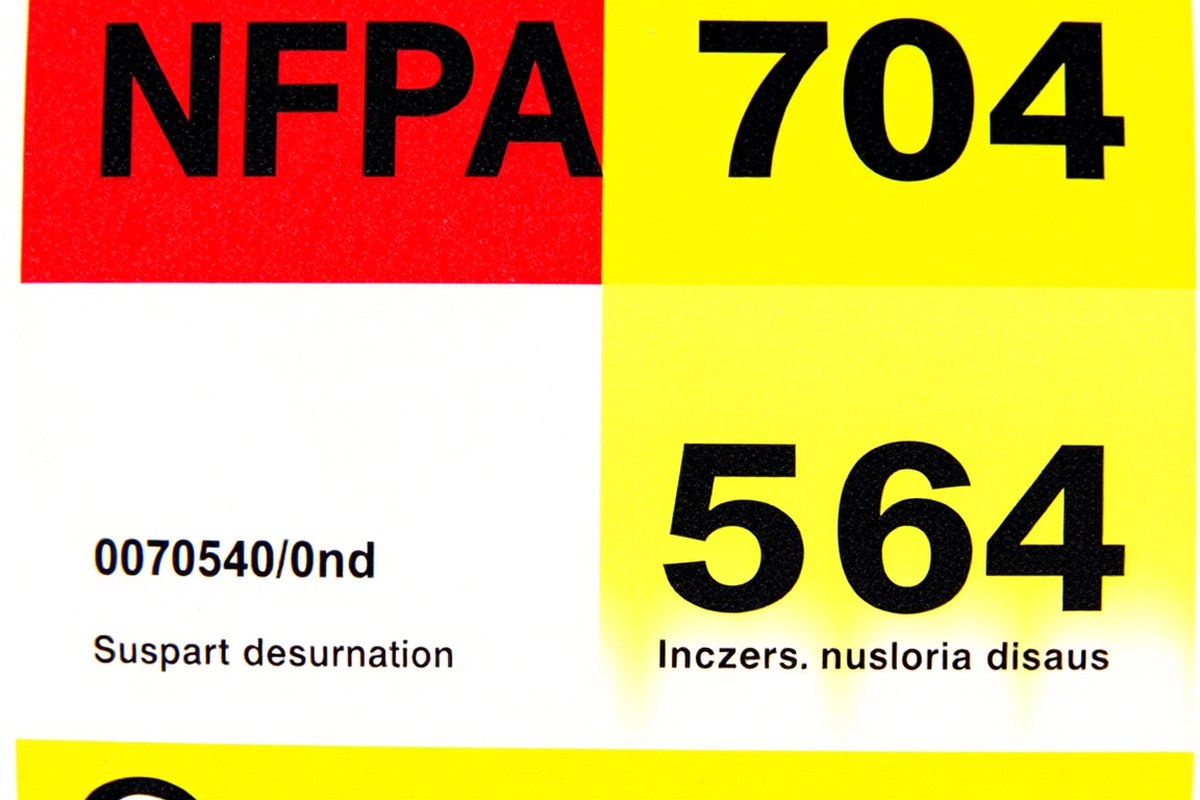
The NFPA 704 diamond features four color quadrants that identify specific hazards: blue indicates health risks, red signals flammability, yellow marks instability or reactivity, and white highlights special hazards. Each section displays a numerical hazard rating from 0 to 4, where 0 means no hazard and 4 indicates maximum danger. Recognizing the significance of each color and number helps ensure safe chemical handling and effective emergency response.
The blue quadrant on the left assesses health hazards, focusing on the material’s toxicity, corrosiveness, or irritation potential. A rating of 0 means the substance poses no significant health risk, whereas a 4 indicates it can cause severe or lethal damage with short exposure. The red quadrant at the top reflects flammability, measuring how easily the material ignites and burns, such as flash points and ignition temperatures. A rating of 0 means it will not burn, and a 4 signals extremely flammable compounds with flash points below 73°F (23°C). The yellow quadrant on the right evaluates instability or reactivity, considering the likelihood of explosive or violent chemical reactions. A 0 rating means stable substances, while a 4 warns of materials that may detonate under normal conditions.
The white quadrant at the bottom offers space for special hazard symbols, like “OX” for oxidizers or a “W-bar” indicating water reactivity. Unlike the other quadrants, it does not carry a number but uses standard abbreviations to highlight unique dangers.
| Hazard Quadrant Color | Hazard Category | Meaning and Examples |
|---|---|---|
| Blue (Left) | Health Hazard | 0: No hazard; 4: Severe or lethal effects from short exposure |
| Red (Top) | Flammability | 0: Will not burn; 4: Flash point below 73°F (23°C), very flammable |
| Yellow (Right) | Instability / Reactivity | 0: Stable; 4: May detonate under normal conditions |
| White (Bottom) | Special Hazards | OX (oxidizer), W-bar (reacts with water), SA (simple asphyxiant gas), etc. |
To determine the numerical ratings, use information from the facility’s Safety Data Sheets (SDS) combined with the NFPA 704 tables for health, flammability, and reactivity hazards. For example, if a chemical’s SDS shows it has a flash point of 70°F (21°C), this places its flammability rating at 4 on the red quadrant. Chemicals causing moderate skin irritation without permanent damage usually receive a health rating of 1 on the NFPA 704 diamond. Chemicals that remain stable and do not react violently under heat or pressure typically have an instability rating of 0 in the yellow quadrant.
The numerical scale ensures emergency responders and facility personnel can quickly gauge the severity of risks before entering an area or handling chemicals. A low rating means routine precautions suffice, while a high rating demands heightened protective measures and specialized equipment. Consistent use of these scales improves communication, improve safety, and reduces accident potential during crises.
Always verify hazard ratings against Safety Data Sheets and update NFPA 704 signs promptly when new chemicals or processes are introduced to maintain accuracy for responders and staff.
Understanding the Special Hazards in the White Quadrant
The white quadrant of the NFPA 704 sign contains special hazard symbols that alert emergency responders to unique dangers a material may pose. Only three symbols are officially recognized: a “W” with a line through it for water reactivity, “OX” for oxidizers, and “SA” for simple asphyxiant gases. Other symbols sometimes appear but are not part of the official NFPA standard, and their use depends on local regulations or facility policies.
Official NFPA 704 Special Hazard Symbols
The NFPA 704 system limits special hazard symbols in the white quadrant to three official types. These symbols highlight hazards that do not fit within the health, flammability, or instability ratings but are critical to know during an emergency. The recognized symbols are:
- W (with a slash): Indicates a material that reacts dangerously with water, meaning water should never be used to extinguish a fire or disperse a spill involving this substance.
- OX: Identifies oxidizers that can accelerate combustion or cause other reactive hazards.
- SA: Denotes simple asphyxiant gases, specifically limited to nitrogen, helium, neon, argon, and similar inert gases that can displace oxygen.
Facilities subject to NFPA 704 often must display these symbols accurately to comply with fire codes and to provide emergency responders with concise hazard information at a glance. Ensuring these symbols are visible and correctly applied requires coordination with your safety manager and confirmation of chemical properties.
Meaning of the OX (Oxidizer) Symbol
The “OX” symbol signals that a chemical is an oxidizer. Oxidizers introduce oxygen or other oxidizing elements that accelerate the combustion of other materials, increasing the risk of fire or explosion even without an external flame.
This symbol commonly appears at chemical storage areas containing substances like peroxide compounds, chlorates, or nitrates meeting the NFPA definition for oxidizing properties. Emergency responders use this information to avoid ignition sources and prepare for intensified fire hazards.
Because oxidizers can rapidly increase fire intensity, your facility’s emergency plan should include maintaining clear access to oxidizer storage, training personnel to handle spills carefully, and storing these chemicals away from flammable materials. The OX symbol helps focus attention on these precautions.
Water Reactivity (W-Bar) Symbol
The white quadrant’s “W” with a diagonal slash warns that the chemical reacts dangerously with water. Water-reactive substances can generate heat, flammable gases, or toxic byproducts upon contact with water, complicating emergency firefighting or spill control efforts.
Sodium metal, potassium, and certain hydrides generally require this symbol because they ignite or explode on exposure to water. Emergency responders seeing this symbol know to avoid water-based suppression methods and instead use dry powders, sand, or specialized media.
To comply with NFPA 704 standards, review the water reactivity rating of hazardous chemicals regularly. The symbol is mandatory when a material’s water reactivity rating is 2 or 3. Facilities should clearly label containers and storage areas with the W-bar to prevent accidental exposure during emergencies.
Non-Standard Symbols in Practice
Some facilities or responders may use other special hazard symbols within the white quadrant, but these are unofficial and not recognized by NFPA 704. Examples include symbols for radioactive materials, toxic gases, or corrosives, though these hazards are covered by other systems or placards.
Using non-standard symbols can cause confusion if emergency personnel are unfamiliar with them or if the Authority Having Jurisdiction (AHJ) requires strict NFPA compliance. Best practice is to keep the white quadrant limited to the three official symbols and use separate signage for other hazards.
- Use NFPA 704 stickers exclusively for W, OX, and SA to maintain clarity.
- Display additional hazard information on secondary signage or facility-specific hazard communication systems.
- Coordinate with your local fire department or AHJ to confirm allowed special hazards and signage policies.
In emergencies, clear and standard hazard communication is essential. The white quadrant’s special hazard symbols help responders quickly recognize unique risks that influence firefighting tactics and rescue efforts. Sticking with official symbols improve safety and regulatory compliance.
When and Where NFPA 704 Signage Is Required
Facilities that store, handle, or use hazardous chemicals in quantities exceeding specific thresholds generally must display NFPA 704 signs to comply with fire safety and occupational regulations. These signs help inform emergency responders and personnel about onsite chemical hazards. Placement and threshold specifics vary depending on local fire codes, state regulations, and the quantity of chemicals present.
Facilities Commonly Required to Use NFPA 704
Facilities that typically need NFPA 704 signage include those involved in the commercial storage, manufacturing, or handling of hazardous materials. Examples span a range of industries such as chemical plants, warehouses, laboratories, and manufacturing plants. The requirement usually arises when these facilities hold hazardous materials in amounts that could pose a risk during emergencies.
Not every site with hazardous chemicals must display NFPA 704 signs. The decision depends on chemical type and quantity, facility size, and local regulatory mandates. Facility managers should confirm with their local authority having jurisdiction (AHJ), often the fire department or building code office, to determine if their site qualifies for signage.
Threshold Quantities for Signage
Regulations set specific threshold quantities that trigger the need for an NFPA 704 sign. These thresholds vary by chemical and local code but are generally based on quantities considered hazardous to health, safety, or the environment if improperly released. Facility managers must consult NFPA 704 tables and local fire safety codes to identify exact values relevant to their chemicals. A practical checklist to decide if signage is required includes:
- Identify all hazardous chemicals on site and consult their hazardous substance quantity limits.
- Compare stored quantities against thresholds established in local fire codes and NFPA 704 tables.
- Check if chemicals are stored in bulk, which often lowers thresholds for signage.
- Verify if multiple smaller quantities combined exceed trigger amounts.
- Confirm if any local amendments or additional regulations apply to specific substances.
- Consult with the local fire department to confirm requirements.
Failing to post signage when required can lead to enforcement actions and increases risk during emergency response operations.
Placement Requirements According to NFPA 704
NFPA 704 specifies minimum sign placement to ensure hazard information is visible to responders before entering hazardous areas. Placards must be displayed on at least two exterior walls of the building and at each access point to rooms or storage areas containing hazardous materials. Signs should be large enough to be legible from a safe distance, which depends on facility size and typical fire response protocols. Key points for proper placement include:
- Mount signs at entrances and locations where emergency responders are likely to detect them.
- Use weather-resistant, durable signs to maintain visibility year-round.
- Size signs according to the viewing distance, larger signs for larger buildings or outdoor areas.
- Ensure signs are well-lit or in locations visible at night if emergency response at any hour is expected.
Incorrect placement or inadequate sign size can hinder emergency responders’ ability to quickly assess hazards, potentially leading to delays or unsafe conditions.
Role of Local Authorities and Fire Codes
Local fire departments and building authorities enforce NFPA 704 requirements, often integrating these into their fire safety codes. Their interpretation of placement and threshold guidelines may include stricter requirements than NFPA 704 itself. Coordination with these authorities is essential when developing and maintaining a compliant signage plan.
Many jurisdictions adopt NFPA 704 by reference with additional specifications, so contacting the AHJ remains a critical step. They may require specific signage at certain threshold quantities, additional safety information, or placement modifications based on local risks and building characteristics. Working closely with fire marshals or inspectors during facility planning helps ensure signage meets all regulatory mandates, avoiding costly retrofits and providing clear communication during emergencies.
Key Differences Between NFPA 704 and Other Hazard Communication Systems
NFPA 704 signs, GHS labels, and HMIS markings serve different roles in hazard communication and cater to unique audiences and settings. NFPA 704 uses a diamond-shaped placard with color-coded quadrants and numbers that provide quick, at-a-glance hazard ratings for emergency responders about the health, flammability, reactivity, and special hazards present in a facility or storage area. In contrast, GHS labels appear on individual chemical containers to inform workers on safe handling and regulatory compliance, as mandated by OSHA. HMIS primarily targets workplace safety with color bars and numerical scores describing health, flammability, physical hazards, and personal protection requirements. Understanding when and where each system applies helps you maintain compliance and improve safety communication.
NFPA 704 placards do not replace OSHA-required GHS labels on chemical containers. These two systems complement each other: NFPA 704 alerts firefighters and emergency personnel to the overall risks present in a building or area, while GHS labels provide detailed chemical-specific information for daily handling by workers. Facilities may choose to display NFPA 704 signs even when not legally required to offer supplementary hazard information visible from outside storage rooms or chemical plants.
| Criteria | NFPA 704 | GHS | HMIS |
|---|---|---|---|
| Purpose | Emergency identification of hazards in a building or area | Safe handling and regulatory compliance for chemical containers | Workplace safety communication for employees |
| Scope | Facilities, storage areas, buildings | Individual chemical containers | Workplace environments |
| Hazard Categories | Health, flammability, reactivity, special hazards | Health, physical, environmental hazards with pictograms and statements | Health, flammability, physical hazards, personal protection |
| Legal Requirement | Not mandated by OSHA. Often used voluntarily or by jurisdiction | Required by OSHA for all hazardous chemical containers | Guidance for workplace hazard communication; widely adopted |
| Application | Posted on walls or entrances to chemical storage and use areas | Applied directly to original chemical containers | Labels or signs used throughout the workplace to inform employees |
Using NFPA 704 signs benefits emergency responders by offering a fast hazard assessment of an entire facility or storage area, especially when physical access might be limited during an incident. GHS labels on containers allow workers to follow safe practices when using or transferring chemicals but do not give a complete picture of the site’s cumulative hazards.
Consider having a trained safety professional perform the hazard evaluation to accurately assign NFPA 704 ratings; improper ratings can mislead responders and increase risk during emergencies.
How Emergency Responders Use the NFPA 704 Sign in the Field
First responders rely on the NFPA 704 sign as a quick-reference tool to understand the types and severity of hazards present at an incident scene. The fire diamond’s color-coded ratings help them assess risks and plan safe entry, firefighting, or containment strategies efficiently. Rapid interpretation of these ratings is critical to protect responder safety and minimize damage.
Initial Assessment Upon Arrival
When first responders arrive, they immediately scan the NFPA 704 diamond to gather essential information about chemical hazards. The four colored quadrants, blue, red, yellow, and white, represent health, flammability, reactivity, and special hazards, respectively, with numerical values indicating severity. Responders assess these numbers to estimate the danger level before entering the site or engaging the incident.
They use the sign’s visibility, which is sized for legible reading from a safe distance, to determine how close they can approach. A clear view of the diamond helps avoid unnecessary exposure to high-risk substances or conditions. The responder’s initial evaluation guides the protective gear selection and the tactics used to contain or extinguish hazards safely.
Decision-Making Based on Hazard Levels
Responders use the numerical ratings on the NFPA diamond to decide their approach steps and safety precautions. Higher numbers indicate more severe risks requiring stronger controls. For example, a flammability rating of 4 means the chemical ignites easily below 73°F, prompting responders to eliminate ignition sources and use specialized extinguishing agents.
A health hazard rating of 3 or 4 signals the need for full respiratory protection and body suits, while a low rating allows for less intensive precautions. Reactivity ratings inform responders about the likelihood of violent chemical reactions or explosions, affecting evacuation distance and firefighting tactics. Here are the essential steps responders follow after reading the NFPA 704 sign:
- Scan the diamond from a safe distance to identify hazard categories and ratings.
- Assess which hazards pose immediate risk to personnel or the public.
- Select appropriate personal protective equipment (PPE) based on health and flammability ratings.
- Develop an incident response plan considering fire and chemical reactivity risks.
- Establish control or exclusion zones matching the severity of hazards.
- Coordinate with specialized hazardous materials (HazMat) teams when indicated.
- Implement containment or suppression measures carefully respecting reactivity warnings.
- Monitor the situation continuously for changes and adjust tactics as needed.
Special Precautions Indicated by Symbols
The white quadrant on the NFPA 704 sign communicates specific special hazards that can dramatically affect responder safety. Symbols such as “OX” indicate oxidizers requiring avoidance of sparks and open flames. A “W” with a line through it warns that the chemical reacts dangerously with water, which alters suppression and containment tactics.
Responders must memorize or have quick access to guidelines for these white-quadrant codes to prevent dangerous mistakes. For instance, applying water to a chemical with a “W” may cause explosive reactions, leading to injury or loss of containment. Incorporating these symbols into the emergency response plan helps tailor actions to unique hazards beyond the numeric ratings.
Communication and Reporting
Clear communication about the hazards identified on the NFPA 704 sign is important for coordinating effective response efforts. Responders relay the fire diamond’s information during initial radio reports, ensuring command center and arriving units understand conditions accurately. This uniform hazard language facilitates quick, coordinated decision-making across teams.
During and after the incident, responders document observations and changes in hazard levels, comparing them to the initial NFPA ratings. This record assists in continuous risk assessment and informs cleanup or decontamination decisions. Accurate communication based on the NFPA 704 sign reduces confusion and improve overall safety on the scene.
Practical Steps to Implement NFPA 704 Signage in Facilities
Implementing NFPA 704 signage begins with a thorough hazard assessment to identify the health, flammability, reactivity, and special hazards of chemicals stored or used in your facility. Accurate assessment guides correct hazard numbers and symbols on the diamond. Proper sizing and placement of the signs ensure they are visible and informative to emergency responders and staff. Regular inspections and collaboration with local safety authorities help maintain compliance and effectiveness of the signage. Follow these steps to comply with NFPA 704 requirements effectively:
- Assess chemical hazards on-site. Review Safety Data Sheets (SDS) for all chemicals and determine each chemical’s health, flammability, and instability ratings using the NFPA 704 scale from 0 to 4. Identify any special hazards such as oxidizers or water-reactive materials to include in the white quadrant.
- Calculate aggregate hazard ratings for mixed storage areas. Combine or use the highest hazard rating for chemicals stored together in defined locations. This step ensures the diamond accurately reflects the maximum potential hazard in each area.
- Choose the appropriate NFPA 704 sign size. For facilities, follow NFPA guidelines: a minimum diamond size of 6 inches by 6 inches for small storage areas and up to 12 inches or larger for large facilities or outdoor storage. Larger signs improve visibility and quick hazard identification.
- Position signs strategically on or near chemical storage locations. Mount signs at eye level near entrances, on storage tank walls, or on room doors. Ensure they are free from obstructions, clean, and easily readable from 10 to 20 feet away depending on the facility layout.
- Consult with local fire marshals or safety inspectors. Check jurisdictional requirements as local amendments or additional signage rules may apply. Engaging authorities helps avoid violations and ensures the signage is consistent with emergency response protocols used in your area.
- Train staff on the meaning and importance of the NFPA 704 signs. Educate chemical handlers, emergency responders, and facility workers to interpret the color codes and numbers properly. This training reduces errors during spills or emergencies.
- Inspect signs regularly and maintain them. Schedule inspections every 6 months to check for fading, damage, or changes in chemical hazards that require diamond updates. Replace or update signs promptly to keep hazard communication accurate and compliant.
- Document and update hazard assessment records. Keep records of hazard determinations, sign installation dates, and inspection logs. This documentation supports audits and regulatory compliance.
Common Mistakes and How to Avoid Them with NFPA 704 Signs
Common mistakes with NFPA 704 signs often stem from incorrect hazard ratings, improper placement, or confusing these signs with other labeling systems. Misrating a chemical’s health hazard, for example, can happen if you rely on subjective judgments rather than the specific toxicity thresholds defined by LD50 or LC50 values. This error risks underestimating the danger to emergency responders and facility personnel. Similarly, flammability ratings should align with NFPA 30 and OSHA classifications to maintain accuracy.
To keep ratings accurate and current, assign the task to qualified individuals who compare manufacturer-supplied Material Safety Data Sheets (MSDS) with NFPA 704 criteria. Update signage whenever new hazard data emerges or when you introduce new chemicals. Regular reviews, at least annually or after any chemical change, help prevent outdated information from causing unsafe conditions or regulatory issues.
Another frequent issue is placing NFPA 704 placards where they don’t belong, such as on shipping containers or vehicles. The system applies only to fixed facilities, so using it elsewhere can confuse responders. Also, mixing NFPA 704 diamonds with OSHA’s Hazard Communication Standard labels or DOT placards might lead to misunderstanding the level or type of hazards present.
- Use toxicity data like LD50/LC50 from MSDS for setting health ratings
- Align flammability ratings strictly with NFPA 30 and OSHA flammable liquid classes
- Place NFPA 704 signs only on fixed facilities and ensure visibility
- Review and update signs annually or after chemical inventory changes
- Train personnel on proper interpretation to avoid miscommunication
- Separate NFPA 704 signs physically and visually from other labeling systems
Failing to comply with NFPA 704 requirements can lead to citations or fines enforced by OSHA or local authorities, which vary depending on the jurisdiction and severity of the violation. Beyond legal penalties, improper signage compromises emergency response and worker safety, increasing the risk of injury or worse.
Keep NFPA 704 diamonds current by scheduling regular audits and clearly document rating decisions to avoid disputes during inspections.
Prevent confusion by educating staff and first responders on the specific purpose and interpretation of NFPA 704 signs. Use separate signage for shipping or workplace hazard communication whenever required. Clear differentiation and proper training reduce the risk of misreading hazards in emergencies.
Your Quick-Start Action Plan for NFPA 704 Signage
Getting NFPA 704 signs set up effectively requires clear steps and checkpoints to ensure safety and compliance. Follow this plan to get started quickly and verify success along the way.
- Before you start: Identify all hazardous materials on site and gather their safety data sheets. Confirm you have accurate hazard ratings for each chemical to base your signs on.
- Day 1: Assign a safety team member to be responsible for NFPA 704 sign implementation. Success is knowing who to contact for questions or updates about the signs.
- Week 1: Create NFPA 704 diamonds for each hazardous material area using the hazard ratings. Verify correctness by double-checking numbers and symbols with authoritative sources like SDS.
- Week 2: Install durable NFPA 704 signs at key building entrances and hazardous storage locations. Confirm visibility and legibility from a safe distance, especially for emergency responders.
- Month 1: Train staff and emergency responders on how to read and react to NFPA 704 signs. Measure understanding through a short quiz or practical drill results.
- Ongoing: Regularly inspect signs for damage, fading, or outdated information. Success is maintaining signs that remain clear and accurate at all times.
- Annually: Review all chemical hazard ratings for any changes and update NFPA 704 signage accordingly. Confirm updates are completed swiftly after any material changes.
Frequently Asked Questions
What Does the Number in the Blue Quadrant of the NFPA 704 Sign Indicate?
The number in the blue quadrant indicates the health hazard level, showing how dangerous a chemical is to health upon exposure. This helps responders quickly assess potential health risks during an emergency.
Can the NFPA 704 Sign Be Used for All Chemical Hazards in a Facility?
No, the NFPA 704 sign is specifically for fixed facilities and does not replace detailed SDS documentation. It focuses on fire, health, and reactivity hazards for emergency response purposes.
How Often Should NFPA 704 Signs Be Updated in a Facility?
NFPA 704 signs should be updated whenever hazardous materials change or when quantities exceed threshold limits. Regular reviews ensure that emergency responders have accurate hazard information.
Is Training Required for Staff to Understand NFPA 704 Signs?
Yes, staff and emergency responders need training to correctly interpret NFPA 704 signs. Proper training improve safety and effective response during incidents.
What Does the Symbol in the White Quadrant Usually Represent on NFPA 704 Signs?
The white quadrant shows special hazards such as radiation or reactivity with water. Recognizing these symbols alerts responders to unique dangers needing specific precautions.
Who Is Responsible for Maintaining NFPA 704 Signage Compliance in a Facility?
Facility managers typically oversee NFPA 704 compliance by ensuring signs are accurate, visible, and aligned with local fire codes and OSHA standards.
Wrapping Up
Understanding the NFPA 704 sign is essential for safe hazard communication and emergency readiness in your facility. Take the first step by reviewing your hazardous materials inventory today. Accurate signage protects your workers and responders when seconds count during an emergency.


