
Sign Ordinance Explained: A Complete Guide to Local Sign Rules and Compliance
Sign ordinance explained means understanding local rules that regulate how signs can be displayed, including size, placement, and timing. These rules protect public safety, community appearance, and property values by controlling sign clutter and hazards. Start by locating your municipality’s specific ordinance to ensure any signs comply with local law.
Key Takeaways
- Signs may only be placed as early as 24 hours before the event and must be removed immediately after to avoid violations.
- The maximum allowed size for many temporary signs is 24 inches by 24 inches, with height limits including riders.
- Only two small attached flags are allowed per sign, limited to 4 feet 6 inches in height with no large banners.
- Repeated sign ordinance violations can lead to escalating fines up to $500 per offending sign.
- State law requires local governments to allow unlimited noncommercial signs of any size during election periods.
- Start compliance by identifying the correct local ordinance and thoroughly reading its specific signage regulations.
What Is a Sign Ordinance and Why It Matters
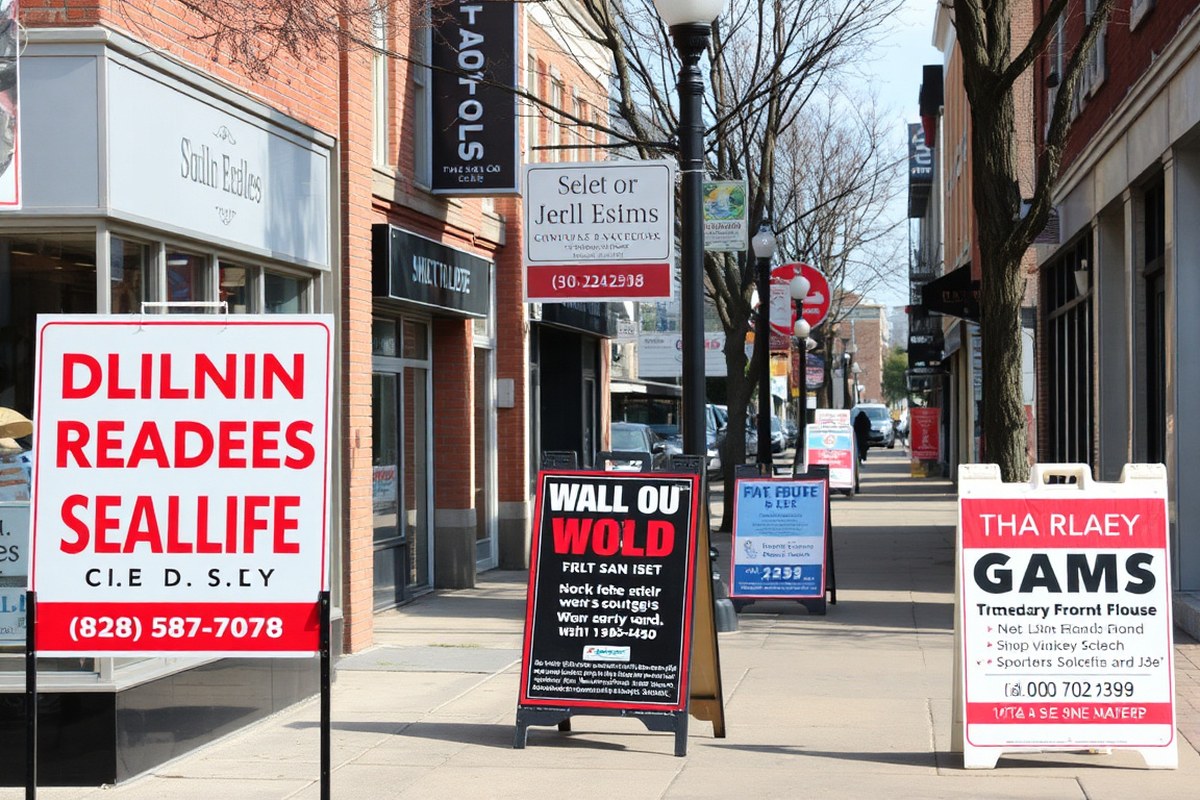
A sign ordinance is a local law that sets rules about the size, placement, and type of signs allowed on properties within a city or town. It applies to all property owners and businesses who want to display signs, usually to advertise goods, services, events, or sales. These ordinances are written to regulate how signs appear in public spaces and neighborhoods to maintain order, safety, and community standards.
Local governments establish sign regulations to reduce visual clutter and promote safety on public roads and sidewalks. These rules might limit sign height and size to keep views clear and avoid distracting drivers. For instance, an ordinance might allow only one real estate sign on a property or require signs not to exceed 24 inches in width and height, with a total height cap of 3 feet 6 inches including any additional attachments. Such controls help avoid overcrowding the area with too many or overly large signs that could cause confusion.
The authority to regulate signs typically comes from state law, which grants cities and towns the power to manage local concerns under frameworks like “home rule” or Dillon’s Rule. This authority allows municipalities to tailor sign regulations to their specific needs, such as banning certain types of signs during non-election periods or restricting open house signs to approved designs. While some rules focus on the content of a sign, such as messages about sales or political advertising, content-neutral ordinances regulate only the physical aspects, like size and placement, without regard to the sign’s message. Courts generally apply stricter review to content-based rules, meaning local governments must carefully word sign ordinances to avoid constitutional issues.
You must follow sign ordinances if you own property or run a business within the jurisdiction that enforces them. This means getting the right permits if required, using approved signage, and adhering to rules about when and where you can post signs. For instance, real estate agents often must use standardized signs approved by the local association and avoid unauthorized flag signs or off-program open house signs. Failure to comply can lead to enforcement actions such as fines or orders to remove signs, which can delay or hamper marketing efforts.
Implementing and following sign ordinances involves reviewing the specific rules published by the city or county, understanding restrictions on sign size, number, and location, and sometimes submitting applications for permits. These steps help protect property values, improve neighborhood character, and promote clear communication. Yet, overly complex or vague ordinances, common because of dense language or complicated charts, can confuse property owners and businesses, making compliance difficult and sometimes leading to unintended violations.
How Local Governments Create and Enforce Sign Ordinances

Local governments regulate signs under authority granted by state law, which defines their power to pass sign ordinances. These ordinances go through a formal legislative process before becoming enforceable local laws. Violations can lead to fines that increase with repeated offenses, helping maintain compliance.
Legal Foundations of Sign Ordinances
Municipalities derive their authority to regulate signs primarily through state enabling statutes. States either follow Dillon’s Rule, giving local governments only explicitly granted powers, or Home Rule, allowing broader self-governance on local matters. Under Home Rule, your city or county can create sign regulations as long as they do not conflict with state or federal law.
Sign ordinances are local laws enacted by the city council or county board to set rules for type, size, number, and placement of signs. They implement state or federal mandates when required, such as allowing unlimited noncommercial signs during election seasons. However, ordinances must balance regulation with constitutional protections for speech.
Typical Adoption Procedures
Passing a sign ordinance involves several official steps to ensure transparency and public input. The process starts with drafting by staff or consultants, often using a clear framework based on sign types and zone designations. This step requires review to align the draft ordinance with legal standards and community goals. Here is a typical sequence to pass a new or updated sign ordinance:
- Consult relevant state statutes and existing local codes to establish legal authority and identify requirements.
- Draft the ordinance language, including definitions, sign standards, permitted zones, and enforcement provisions.
- Conduct internal reviews with legal counsel and planning departments to check compliance with constitutional and state law.
- Hold public hearings to gather input from property owners, business operators, and residents.
- Revise the draft based on feedback and legal advice.
- Present the final ordinance to the governing body for a vote.
- Publish the ordinance and notify affected parties once passed.
- Implement procedures for issuing permits and monitoring compliance.
Strictly following this adoption process ensures the ordinance is defensible and reduces legal challenges.
Common Enforcement and Penalties
Enforcement begins when authorities identify signs violating the ordinance rules. Local governments use various tools including warnings, fines, and removal of noncompliant signs. Enforcement typically escalates for repeated offenses to encourage prompt compliance.
Penalty tiers usually start with a $100 fine for the first violation. The second violation often doubles to $200, and subsequent violations can rise to $500 for each offending sign. This graduated system provides a financial incentive to adhere to local rules while allowing some flexibility for corrective action.
Beyond fines, enforcement options include issuing cease-and-desist orders, requiring sign removal within set timeframes, and, if necessary, pursuing legal action through municipal courts. For businesses and property owners, timely compliance avoids disruptions and additional costs.
Common Sign Types and Typical Restrictions
Local sign ordinances regulate several common types of signs, each with specific size, placement, and permit requirements tailored to balance visibility, safety, and aesthetics. The main categories include permanent signs like commercial building signs, temporary signs such as real estate or garage sale signs, directional signs in parking lots, political signs, and noncommercial signage. These distinctions help municipalities control clutter and maintain order in public and private spaces.
Typically, permanent signs exceeding six feet in height require a permit to ensure they meet safety and design standards. Temporary signs, especially real estate signs advertising sales or rentals, often have exemptions from permits but must follow strict size limits and time restrictions. For example, real estate signs might be limited to 18 by 24 inches for condominiums and townhomes, and 24 by 30 inches for single-family homes. Garage sale signs are frequently allowed with constraints on location and quantity to prevent excessive signage.
Regulations also specify how many signs may be displayed near major streets and corners, commonly allowing only one or two signs per corner, to reduce distractions for drivers. Placement rules prohibit signs that block disabled access paths or interfere with public safety. Temporary signs are usually subject to time limits, often to a few weeks surrounding an event or sale.
| Sign Type | Usual Size Limit | Height Limit | Placement Restrictions | Permit Requirement |
|---|---|---|---|---|
| Real Estate Signs (Condo/Townhome) | 18″ x 24″ | Varies, typically under 6 ft | Allowed on subject property only | Often exempt from permit |
| Real Estate Signs (Single-Family) | 24″ x 30″ | Up to 6 ft | Only 1-2 per corner on major streets | Usually exempt |
| Open House Signs | Up to 3 sq ft | Max 4 ft | Temporary, near open house location | Typically exempt |
| Noncommercial Signs | Max 9 sq ft | Varies | No blocking of disabled access | May require permit if over size limit |
| Permanent Commercial Signs | Varies by zone and purpose | 6 ft or taller requires permit | Must not interfere with public paths, roadways | Permit required |
| Directional Parking Lot Signs | Varies; small directional shapes | Generally under 6 ft | Within parking lot, not obstructing traffic | May require permit |
| Garage Sale Signs | Standard small sign size | Typically under 6 ft | Limited number per residence | Usually exempt with restrictions |
To comply with these rules, check with your local planning or building department before installing signs. Determine if your sign qualifies for a permit exemption by comparing its size and type to the ordinance specifics. Permits typically require an application fee, detailed sign plans, and approval may take several weeks. Failing to follow these rules often results in fines and mandatory removal. Proper placement that respects access paths and visibility standards promotes safety and helps avoid complaints or enforcement actions.
Understanding Size, Placement, and Quantity Limits
Local sign ordinances typically set clear numeric limits on the maximum size of signs, their placement relative to roads and property lines, and the total number of signs allowed per property. These restrictions help maintain community aesthetics, ensure traffic safety, and protect the rights of all property owners. For example, most residential zones restrict signs so they do not extend above the eave line or parapet of a building. Exceptions sometimes occur, such as signs on mansard roofs that stay within the roofline.
Temporary signs such as those for open houses or garage sales generally must not exceed 6 square feet. Commercial signs on properties adjacent to main roads may be allowed to be bigger but have restrictions to prevent blocking views or causing safety issues. Rules often specify that signs must be positioned at least 10 feet behind the curb and aligned parallel to the street. Certain signs, like open house signs, may only be located within a range from 25 to 300 feet from intersections.
Quantity limits are common, restricting both the number and type of signs you can display. These limits vary significantly depending on the sign’s purpose and location. Properties backing onto multiple streets may be allowed one sign facing each frontage, but the total number is generally capped to avoid sign clutter. Temporary signs must be removed promptly, often by the end of the event or within a short period after sale or listing cancellation. Failure to comply can result in fines or orders to remove the signs.
- Maximum of two signs per residential property in many areas
- Signs placed no earlier than 24 hours before events like garage sales
- Temporary signs must be removed immediately after the event concludes
- No signs allowed on public property or rights-of-way, including sidewalks and medians
- Signs cannot block views of official or community signs
- Open house signs limited to one per location per agent
- For-sale signs must be removed within seven days after sale closes or listing cancels
Placement and quantity restrictions often protect sight lines for drivers and pedestrians and prevent visual overload. Ordinances may also regulate sign materials, allowing only one-sided signs or forbidding illumination. For larger commercial properties or special cases, you might request a variance if strict rules cause practical difficulties with your specific property. These requests often require demonstrating a unique hardship and going through a formal approval process with local officials.
Navigating Sign Permits, Approvals, and Compliance Steps
Applying for a sign permit involves locating your local sign ordinance, preparing the proper documents, submitting the application, and then waiting for the approval or denial decision. The process usually takes a few weeks but varies depending on your municipality’s workload and requirements. Following each step carefully helps avoid delays or legal issues with your sign.
Locate Your Applicable Sign Ordinance
Your first step is to find the exact sign ordinance enforced by your city or county. Local ordinances define the types of signs allowed, size limits, placement restrictions, and which signs need permits. Many municipalities post these ordinances online through their official city or county website under zoning or planning sections.
You cannot locate the ordinance online, so contact your local planning or building department for a copy. Pay attention to any recent amendments or temporary rules that may affect your application. Knowing the specific rules that apply to your sign type and location saves time and prevents application rejections.
Prepare and Submit Your Permit Application
Gather all required documents before submitting your permit application. These typically include a completed application form, a detailed drawing or photo of the proposed sign, site plans showing placement, and proof of ownership or consent from the property owner. Some localities may also require electrical permits if your sign includes lighting.
- Download or pick up the sign permit application form from the municipal building or website.
- Prepare a scaled drawing showing sign dimensions, materials, and colors.
- Mark the exact location of the sign on a site plan or property map.
- Provide details on lighting or electrical components, if applicable.
- Attach any necessary property owner consent or lease agreements.
- Include the required permit application fee, typically between $50 and $200, depending on your jurisdiction and sign size.
- Submit the completed package in person or online, depending on your municipality’s process.
Check if your municipality requires additional permits for temporary signs or banners, even when a sign permit is not mandatory.
Wait for Review and Receive Approval or Denial
Once submitted, your application enters the review phase. This usually takes between 10 to 30 business days. The local staff will evaluate your application against the sign ordinance criteria, including size, location, and design compliance.
Timely processing depends on whether your application is complete and meets all regulations. You need additional information, so expect a request for clarification, which may delay approval. Avoid reliance on discretionary decisions by ensuring all specific ordinance standards are met, as some jurisdictions do not allow permit denial if the application complies fully with the rules.
Once approved, you’ll receive a permit detailing any conditions or restrictions. An approval means you can legally erect your sign according to the permit’s specifics. When denied, the municipality must give a clear reason tied to ordinance provisions, and you can usually appeal or revise and resubmit your application.
How to Respond to Sign Ordinance Violations
Receiving a violation notice for a sign ordinance breach requires quick attention. You should first understand the notice, then correct the problem within the set timeline or consider contesting the violation through an appeal or variance request to avoid penalties.
Identify the Violation Details
Begin by carefully reading the violation notice. It will list the specific ordinance you are claimed to have violated, the deadline to fix the issue (often called the abatement period), and the fines or penalties you face if not corrected.
The notice may reference exact restrictions such as sign size, placement, or construction rules, for example, a sign stake must not exceed 4 inches by 4 inches. Knowing exactly what rule the local government says you violated helps you decide your next steps.
Take Corrective Actions Promptly
Act quickly to fix the issue during the abatement period to avoid fines or legal action. Compliance means bringing your sign up to the code or removing it if necessary.
- Confirm which part of your sign setup or display violates local rules.
- Measure and verify your sign’s size and placement against ordinance limits.
- Remove or modify the sign to meet size, location, and construction standards.
- Ensure the sign owner’s identification is included in a visible area no larger than 2 inches by 3 inches, if required.
- Take photos of your corrected sign for documentation.
- Notify the issuing authority that you have complied, according to their instructions.
- Keep copies of the violation notice and your response for your records.
Typical penalties for noncompliance include fines that increase the longer you wait, court summons, or, in some cases, liens on your property. Correcting errors ahead of the deadline usually prevents these consequences.
Request a Variance or File an Appeal
If full compliance is impossible or unreasonable, you can request a variance, a formal permission to deviate from the ordinance requirements. Alternatively, if you believe the violation notice is incorrect, you can appeal the citation through your local government’s process. Submit a written request that includes your name, address, the nature of the sign, the specific variance or relief you seek, and reasons why the variance should be granted. Below is a simple template to request a variance or appeal:
[Your Name] [Your Address] [Date] To: [Local Government Office or Zoning Board Name] [Office Address] Subject: Request for Variance/Appeal Regarding Sign Ordinance Violation Notice # [Notice Number] Dear [Official or Board Name], I am writing to formally request a variance (or to appeal) concerning the sign ordinance violation notice received on [Date] for my property located at [Property Address] . The notice cites a violation of [Specify Ordinance Section] . Due to [Explain reasons: practical difficulties, unnecessary hardship, etc.] , compliance as currently required is not feasible. I respectfully ask the board to grant a variance allowing [describe the specific relief sought, e.g., larger sign size, extended placement period] . I have attached photos and documentation supporting this request and am willing to attend any hearing regarding this matter. Thank you for your consideration. Sincerely, [Your Name] [Contact Information]
Your local zoning or planning department can provide specific instructions and deadlines for submitting these documents. Acting quickly improves your chances of a favorable outcome.
Constitutional and Legal Limits on Sign Regulations
Your right to display signs is protected under the First Amendment, which guarantees free speech. This protection means cities cannot adopt sign regulations that discriminate based on the message or its content. Ordinances that require reading the sign’s text to determine the rules, a practice called content-based regulation, face strict judicial scrutiny and often get struck down unless the government proves a compelling reason and that the law is narrowly tailored. The U.S. Supreme Court confirmed this in the Reed v. Town of Gilbert case, where it found that laws regulating signs by their message are presumptively unconstitutional unless they meet this high standard.
Content-neutral regulations, which apply equally to all signs without regard to what they say, tend to be upheld more easily. These rules typically govern time, place, and manner, for example, limiting sign size, height, or location but not the ideas expressed. Here is a comparison to clarify: content-based rules depend on the sign’s message, like banning only political signs or allowing only commercial advertising signs in certain zones. Content-neutral rules do not consider the message and apply uniformly, such as setting a maximum size or requiring permits for all signs.
| Type of Regulation | Description | Legal Standard | Example |
|---|---|---|---|
| Content-Based | Rules that depend on the sign’s message or topic | Strict Scrutiny | Banning only signs that criticize government policies |
| Content-Neutral | Rules that apply to all signs regardless of message | Intermediate Scrutiny or Rational Basis | Limiting sign height or duration of display |
Some signs cannot be restricted, especially when the regulation interferes with noncommercial speech, such as political or religious messages. Courts generally allow more regulation of commercial speech, like advertisements, applying a less rigorous intermediate scrutiny. This means commercial signs can be limited more strictly to prevent misleading advertising or protect public safety. An important legal tool cities use is the “message substitution clause.” This lets anyone replace a commercial message with noncommercial content without changing the sign’s size, placement, or other technical details. This helps avoid accusations that regulations favor commercial speech over other types of speech.
Sign ordinances that restrict signs based on their content, such as only allowing real estate signs or construction project signs in certain areas, risk being considered discriminatory. Duration limits tied to specific events, like requiring political signs be removed within days after an election, are also carefully scrutinized if they require reading the sign. Courts examine whether these regulations implicitly treat different messages unequally, which violates free speech guarantees.
Because the legal landscape for sign regulation is complex and evolving, local governments should work closely with qualified attorneys to draft ordinances. Ensuring rules are content-neutral, providing clear substitution options for messages, and applying rules uniformly will increase the chance that ordinances comply with the First Amendment. Avoiding content-based rules is essential to prevent costly legal challenges and protect free expression in public spaces.
Variations in Sign Ordinances by Jurisdiction and Law
Sign regulations vary widely depending on whether your local government operates under Dillon’s Rule or Home Rule, and state laws may limit or enable these powers. Under Dillon’s Rule, a local government only has powers expressly granted by the state. If the law is unclear about sign regulations, the local authority does not have the power to regulate. Home Rule, by contrast, grants cities more independence to create ordinances tailored to local needs, including sign controls.
Understanding which system applies helps you identify who can regulate signs in your area and the extent of those regulations. For example, a Home Rule city might pass stricter sign ordinances to encourage downtown business development, while a Dillon’s Rule city must align strictly with what the state allows. Many states explicitly authorize cities to pass zoning or health codes, which often include sign rules. Yet, if a subject is preempted by state or federal law, local sign ordinances cannot contradict those higher laws. The table below compares jurisdiction types and their impact on sign ordinances:
| Jurisdiction Type | Authority Source | Power Over Sign Regulations | Common Limitations |
|---|---|---|---|
| Dillon’s Rule | State grants powers explicitly | Only what state law allows, no ambiguity | Local laws may be invalid if state silent or preempting |
| Home Rule | Constitutional or statutory local self-governance | Broad power to regulate signs locally | Cannot conflict with state or federal laws |
| State Law Preemption | State or federal legislation overrides local ordinances | Limits or prohibits local sign regulations on certain topics | Local laws must defer to state or federal standards |
To find local exceptions or special rules, start by consulting your city or county’s municipal code online. Search for “sign ordinance” or equivalent terms; the ordinance may specify exceptions such as corner lot visibility rules. Contacting your local planning or zoning department can clarify which rules apply and if the jurisdiction operates under Dillon’s Rule or Home Rule. Also, city council meeting minutes or local law libraries may document any recent changes championed by council members.
Check whether your city is under Home Rule or Dillon’s Rule first, this determines your local government’s actual authority to impose sign restrictions.
Awareness of these jurisdictional frameworks lets you navigate sign regulations more effectively and spot potential conflicts with state laws. Keep an eye on local legislative changes since a city council can revoke or amend sign ordinances, impacting long-term compliance.
Step-by-Step Action Plan for Managing Sign Ordinance Compliance
Use this plan to ensure your signs meet local rules and to address any issues swiftly.
- Before you install any sign: Check your local sign ordinance online or at the city office for size, type, and placement requirements. Confirm understanding by being able to list your main restrictions.
- Within the first week of planning your sign: Apply for any required permits through your local permitting office. Success means receiving a written permit or confirmation of approval.
- Before installation: Review your approved permit conditions carefully and follow them exactly. Confirm with photos or measurements that the sign matches the approved specs.
- Immediately after installation: Document the installed sign with photos showing location, size, and visibility. This helps prove compliance if questioned later.
- If you receive a violation notice: Contact your local code enforcement office promptly to understand the complaint. Resolving the issue quickly, either by correction or appeal, indicates progress.
- Within 30 days of violation notice: Make the required changes or file an appeal if you believe the notice is incorrect. Completion or appeal filing signals responsible action.
- Every year going forward: Review any updates to your local sign ordinance or permits before replacing or modifying signs. Staying current prevents accidental violations.
Frequently Asked Questions
What Does Ordinance Mean in Simple Terms?
An ordinance is a local law or rule set by a city or town government. It guides how residents and businesses must behave in specific areas like property use, safety, or signs. You must follow ordinances like any law enforced by local authorities.
What Are the Four Types of Signs?
Common sign types include permanent signs, temporary signs, political signs, and ideological signs. Local governments often categorize these differently to apply tailored rules about size, placement, or permits. Check your local ordinance to see which types apply to your area.
Can I Put a Sign in My Front Yard?
You can place signs in your front yard if they meet your community’s sign ordinance requirements. Some limit size to about 24 by 24 inches and restrict placement to avoid blocking views or public safety. Always verify local rules before installing a sign.
What Are Three Examples of Ordinances?
Examples include zoning ordinances regulating land use, building codes for construction safety, and sign ordinances controlling advertising displays. Each sets specific rules local residents and businesses must follow to keep the community safe and orderly.
Are There Restrictions on the Messages My Sign Can Display?
Yes, courts review ordinances more strictly if they restrict signs based on message content. Signs regulated without regard to their message face lower legal scrutiny. Your local government usually focuses on sign characteristics like size and placement rather than content.
Do I Need a Permit Before Putting Up a Sign?
Many jurisdictions require permits before installing signs, especially permanent or commercial ones. Temporary signs like certain political or directional signs may be exempt. Applying for a permit ensures your sign complies with size, placement, and safety standards.
Final Thoughts
Understanding your local sign ordinance helps you avoid costly fines and protect your business visibility. Acting quickly to check requirements and obtain permits keeps your signage compliant and effective. Start today by locating the ordinance that applies to your property so you can plan confidently. Compliance not only prevents penalties but supports good relations with your community and local government.