
Is a Sign Business Profitable? What You Need to Know to Succeed
Is a sign business profitable? Yes, it often is, with typical gross margins around 75% and an average net profit margin near 8%. Many sign business owners break even within 4 to 12 months, making it a viable option to start quickly and grow steadily. Starting with a clear plan for costs and pricing is essential to capitalize on this strong margin.
Key Takeaways
- Expect startup costs between $5,000 and $15,000 depending on equipment and sign types.
- Laser engraving machines offer versatility and fall within a price range of $2,500 to $10,000 for models suited to small businesses.
- Pricing signs to reflect material costs plus high-value design can yield sales prices several times higher than expenses.
- Break-even usually occurs within the first year, depending on overhead and marketing efforts.
- Marketing should target local businesses, events, and political campaigns for steady orders.
- Consider optional expenses like ventilation, safety systems, and software subscriptions in your budget.
Is a Sign Business Profitable and Why?
The sign business is generally profitable, with strong financial prospects supported by industry growth and favorable margins. The Printing Industry Association of America reported $22 billion in industry revenues in 2018, reflecting steady demand for signage and printing services. This demand continues to rise at a compound annual growth rate (CAGR) of about 2.63%, indicating room for new entrants to gain market share and increase profits over time.
Profit margins in the sign business are notably positive, with gross margins typically around 75%. This high margin level allows you to absorb costs related to materials, labour, and marketing while still maintaining a good profit. On average, net profit margins hover around 8%, which means that for every $100 in revenue, you could expect about $8 in profit after expenses. Many sign business owners report reaching break-even between four and twelve months, making it a relatively fast path to profitability compared to more capital-intensive industries.
Your revenue potential depends on the type of signs you produce and the local market. For example, yard sign businesses in affluent areas can generate substantial income. Suppose you invest around $5,000 to launch your sign business, and your net profit per sign is about $50 after deducting costs. Selling approximately 100 signs would cover your initial investment, allowing subsequent sales to generate profit. Some full-time yard sign operators earn over $100,000 annually, which demonstrates the scalable nature of this business.
Growth in the signage market translates into more customers and opportunities, especially as businesses seek custom branding and advertising solutions. The sign business benefits from customer retention since signs tend to be replaced periodically or used across multiple marketing campaigns. High customer retention supports consistent recurring revenue, which is important for sustainable growth and profitability.
Operational flexibility is another factor impacting profitability. You can run the business part-time or full-time and scale according to demand. Many entrepreneurs choose niche markets or specialize in custom, high-margin products to maximize their earnings. Excellent customer service also plays a significant role, fostering repeat business and word-of-mouth referrals, which reduce marketing costs and improve net margins.
What Startup and Ongoing Costs Affect Profitability?
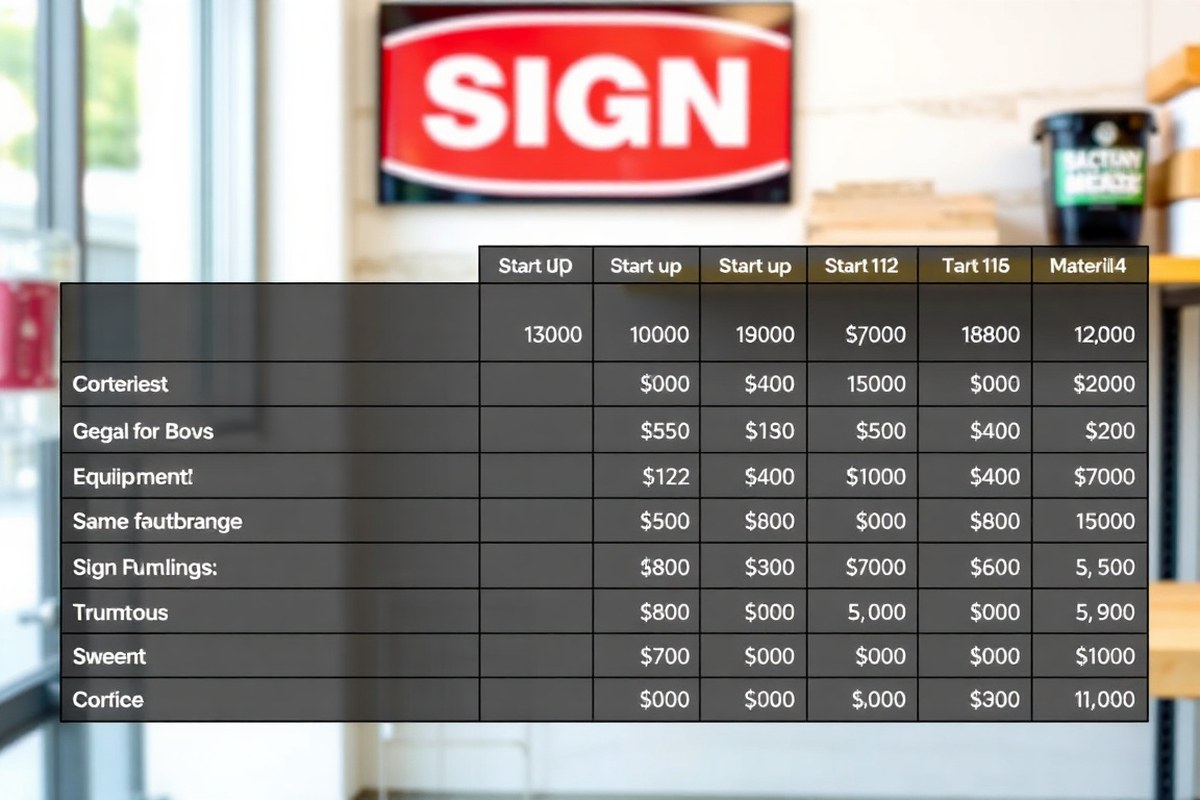
Starting a sign business usually requires an initial investment between $2,500 and $15,000, depending on the type of equipment and materials you choose. For example, CO2 laser machines, popular for creating wood and acrylic signs, generally cost from $2,500 to $10,000. Add to that the cost of software subscriptions, which range from $30 to $60 per month, as well as ventilation and safety equipment that might set you back between $200 and $800. These hidden startup costs are essential for safe and legal operation but might be overlooked at first.
Ongoing expenses significantly affect your net profit. They include consumable materials, often starting at $300 in initial stock, plus shipping supplies costing $100 or more. Monthly fixed costs for a small one- or two-person sign shop may total $8,000 to $12,000, covering rent, utilities, salaries if you hire staff, marketing, and maintenance. Annual expenses can add another $15,000 to $25,000 for larger or more established shops. Without managing these carefully, your profit margin per sign, sometimes around $53 after deducting $67 in costs from a $120 sale price, will shrink significantly.
| Cost Type | Startup Cost Range | Monthly/Annual Ongoing Cost |
|---|---|---|
| Laser Machine (CO2) | $2,500 to $10,000 | N/A |
| Ventilation & Safety Equipment | $200 to $800 | N/A |
| Software Subscriptions | N/A | $30 to $60/month |
| Initial Materials Stock | $300+ | Variable with sales |
| Shipping Supplies | $100+ | Variable with sales |
| Small Shop Fixed Expenses | N/A | $8,000 to $12,000/month |
| Annual Costs (larger shops) | N/A | $15,000 to $25,000/year |
Budgeting accurately for these costs is critical. For a new business with an $8,000 initial investment and an average net profit of $53 per sign, you’ll need to sell about 151 signs just to break even on startup expenses. These costs scale with business size and complexity, so more powerful machines, expanded product offerings, or employing a marketing team will significantly increase startup and operational expenses. Make sure you track expenses from day one to understand your actual profitability over time. Avoid underestimating overhead to prevent cash flow issues that stall growth.
Keep detailed records of all expenses and revenues from the beginning to avoid surprises during tax time and to monitor your true profit margins accurately.
Types of Sign Businesses and Their Profit Differences
Sign businesses vary widely by the production method, investment needed, and profit margins. Vinyl and decal shops serve entry-level markets with lower startup costs. Laser engraving and CNC routed signs demand higher investment in equipment but allow specialized pricing. LED and neon sign production requires medium investment with potential for higher-value orders, depending on market demand.
Vinyl and Decal Sign Businesses
Vinyl and decal sign businesses focus on making custom cut vinyl lettering, decals, and banners. These signs are popular for event promotions, vehicle wraps, and storefront windows. Startup costs are typically lower, often under $5,000 for basics like a good vinyl cutter, printer, and design software.
Profitability rests on volume and quick turnaround. Materials for vinyl signs generally cost around $10 to $20 per sign, with labor needing efficient workflow to keep total costs competitive. Pricing varies widely but can range from $50 to $200 per sign based on complexity and size. This business suits local markets where quick, affordable signage has steady demand.
Laser Engraving and CNC Routed Signs
Laser engraving and CNC routing involve machines that precisely carve or cut designs into materials such as wood, metal, acrylic, or plastic. This approach allows creation of premium items like customized gifts, business branding signs, and ornamental plaques. Startup costs vary from around $500 for a simple diode laser to more than $20,000 for advanced fiber laser equipment.
The CO2 laser, priced between $2,500 and $10,000, offers a good balance of versatility for common materials like wood and acrylic. Laser or CNC signs typically have higher materials and labor costs, averaging about $67 per unit, but they can command premium prices over $150 per sign.
Profitability depends on selecting the right laser type for targeted products and scaling production efficiently. Many businesses find that starting with a CO2 laser hits the ideal mix of cost versus capability for steady growth.
| Laser Type | Price Range (Small Business) | Best For These Sign Materials |
|---|---|---|
| Diode Laser | $500 – $2,000 | Wood, Coated Metal, Slate, Some Plastics |
| CO2 Laser | $2,500 – $10,000 | Wood, Acrylic, Glass, Leather, Anodized Aluminum |
| Fiber Laser | $4,000 – $20,000+ | All Metals (Stainless Steel, Aluminum, Brass), Hard Plastics |
Selecting the right laser depends on the intended sign materials and your budget. Diode lasers work for simpler, lower-cost work, while fiber lasers suit metal-heavy signage with higher price points.
LED and Neon Sign Production
LED and neon sign production often target retail storefronts, bars, and event signage. These signs can range from simple LED letters to elaborate neon art. Startup costs vary, but small-scale LED sign setups typically cost between $10,000 and $20,000.
Sign prices for LED neon range from $150 to $800. Materials can be more expensive, and assembly requires specialized skills. Profit margins can be higher than vinyl or laser signs due to perceived value, but the market is more niche and sensitive to trends and location.
This type suits entrepreneurs with moderate startup capital aiming at customer segments willing to invest in eye-catching, durable signage. Outsourcing complex electrical assembly while focusing on design and installation can help control costs and improve profits.
How Long to Become Profitable and Break Even?
Breaking even in a sign business typically takes between 6 to 12 months after launching. This period depends on how much you invest upfront, how quickly you secure customers, and how efficiently you manage costs. Profitability usually follows once you have covered initial expenses such as equipment, materials, and marketing, and start generating steady sales. Timing varies with the business model; for example, a yard sign business may break even faster due to lower startup costs compared to a full-service custom sign shop.
The path to profitability requires tracking specific financial milestones, including monthly sales volume, gross profit margins, and cash flow. A good benchmark is reaching consistent monthly revenue that covers all operating expenses and allows reinvestment in the business. Many small sign companies aim to hit a monthly sales target that is two to three times their fixed costs to build a safety net and fund growth.
Factors that affect how long it takes include your marketing strategy, customer acquisition speed, and the sales cycle length. A sign business often faces a longer sales process as clients take time to decide on designs and budgets. Staying engaged with prospects through follow-ups and clear communication can shorten this gap. Choosing the right niche can also impact speed to profit; specialized signs with higher margins might take longer to sell but yield greater returns.
- Track monthly income versus fixed and variable expenses carefully.
- Measure customer acquisition costs to keep marketing efficient.
- Monitor average order size to identify opportunities for upselling.
- Establish timelines for client follow-ups to accelerate sales cycles.
- Review inventory turnover rates to avoid overstocking materials.
- Set progressive revenue goals aligned with scaling capacity.
Actively managing these benchmarks helps you recognize when adjustments are needed. Speeding profitability might involve focusing on quicker turnaround products like yard signs, boosting online marketing to expand reach, or streamlining production methods to cut costs. Careful budget control and frequent financial reviews ensure you avoid cash flow problems that can delay breaking even.
For sign businesses with higher investment, such as those using costly machinery or targeting commercial clients, the break-even timeline could stretch beyond a year. In these cases, preparing a detailed business plan with cash reserves to cover the extended startup phase is essential. Being realistic about time and cost commitments upfront makes it easier to stay on track and reach profit sooner.
How to Price Signs for Maximum Profit?
Setting the right price for your signs is key to maximizing profit while staying competitive. A successful pricing strategy combines your material and labor costs, market demand, and customer perceived value. Rather than charging only your costs plus a flat margin, consider how to price signs to cover all expenses and reward your time, plus make room for discounts or upselling.
You start by calculating your total cost per sign. Material costs might run about $20, and if you pay yourself or employees $40 an hour and a sign takes 1.5 hours, labor costs add $60. Add indirect expenses like equipment wear, rent, and marketing averaged per sign, say $10, which brings your total cost to $90. To target a 50% gross margin, you’d price that sign at $180. This means your gross profit per sign after costs is $90, supporting sustainable profits.
Pricing strategies include cost-plus pricing, value-based pricing, and tiered pricing. Cost-plus sets prices by adding a markup to costs, ensuring all expenses and profit goals are met. Value-based pricing factors what customers are willing to pay, useful for custom or premium signs where your workmanship or design stands out. Tiered pricing offers standard, premium, and custom levels, allowing upselling to capture different customer segments and increase average order value.
Discounts can encourage larger orders or repeat business but should be used carefully. Instead of straight price cuts, offer bundle deals like discounted rates for multiple signs or free design consultations. Upselling options such as installation, faster turnaround, or improve materials can increase profitability without lowering your base price. Follow these steps to price your signs effectively:
- Calculate total costs: Add materials, labor, and a portion of overhead expenses to find your full cost per sign.
- Research your market: Check local competitors’ pricing and quality to position your prices accordingly.
- Choose a pricing model: Decide between cost-plus, value-based, or tiered pricing based on your business and customers.
- Set margin targets: Aim for a gross margin of 40-60% to ensure healthy profitability after all expenses.
- Factor in discounts and upsells: Design options that boost average sale size or encourage repeat business without eroding margins.
- Test prices and adjust: Monitor sales response and profitability per sign, then refine pricing to optimize.
Always confirm that your prices cover all costs and pay your labor fairly before offering discounts or promotional deals.
Marketing and Customer Targeting to Boost Profits
Focusing on specific customer segments and tailored marketing approaches can help create steady sales and boost profits for your sign business. Prioritizing local businesses, real estate agents, and event planners aligns you with high-demand clients who value signs for ongoing marketing needs. Using a mix of personal networking, community involvement, and digital promotion builds lasting relationships and repeat business.
Local Business and Retail Clients
Local businesses often demand custom signs such as storefront logos, interior displays, and acrylic signage, which tend to yield higher profit margins. These clients need signs consistently to refresh branding or highlight promotions, which means recurring orders are common. Establishing trust is essential because sign purchases represent an investment and often lack direct, frequent face-to-face interaction.
Networking with local business groups and frequenting business parks helps gain access to this client base. Meet store owners, shop managers, and marketing directors to pitch your services and demonstrate your design capabilities. You might also visit boutiques and salons to offer signage packages tailored for their specific needs.
- Join local chambers of commerce or business associations to meet decision makers.
- Offer bundled deals for multiple signs like logos, window displays, and banners.
- Use social media advertising targeted by location and industry (e.g., salons, gyms).
- Attend trade shows or local markets that attract retail business owners.
- Showcase previous projects on a professional website and online portfolios.
Building relationships involves timely communication, reliable delivery, and quality work. Sending follow-ups after project completion to propose yearly or seasonal updates can encourage repeat business. Clients are more likely to trust a sign company they perceive as consistent and professional.
Real Estate and Event Yard Signs
Real estate agents and event planners rely heavily on yard signs, making these a profitable and steady customer segment. These signs drive foot traffic and visibility, key factors in their marketing strategies. Collaborating with real estate offices and wedding planners by offering customized signs can generate frequent new orders, especially in active markets.
Visiting local real estate agents allows you to propose closing gifts that include personalized yard signs or to offer bulk discounts for multiple properties. Similarly, partnering with event organizers to supply directional or promotional signage can build a long-term client base. Your pricing in this segment can reflect the volume and customization level, often balancing affordable unit costs with decent profit margins.
- Connect with real estate agencies through local networking events.
- Provide design templates for yard and event signage that clients can customize.
- Promote seasonal discounts around peak selling or event months.
- Offer fast turnaround and rental options for temporary event signs.
- Build referral incentives for event planners and agents who recommend your services.
Consistent quality and timely delivery are important in this segment to maintain agent and planner trust. Since these customers often need quick and reliable service, emphasizing your responsiveness can set you apart. Well-maintained relationships with repeat customers lead to stable revenues.
Online and B2B Marketing Strategies
Expanding beyond local walk-ins, online marketing helps capture B2B clients such as corporate offices and other sign shops needing subcontracting or bulk manufacturing. A professional website with an easy-to-use ordering system and clear explanations of services builds credibility. Investing in search engine optimization (SEO) for local and industry-specific searches increases inbound leads over time.
Using digital platforms like LinkedIn allows targeted outreach to business parks, marketing firms, and real estate groups. Email campaigns highlighting new design styles or promotional offers can keep your business top-of-mind for existing contacts. Networking via industry-specific forums or social media groups also uncovers new potential customers.
- Develop a mobile-friendly website showcasing portfolios and pricing guides.
- Use local SEO keywords such as “custom signs near me” or “business signs [your city].”
- Run pay-per-click (PPC) ads targeted to commercial sectors and event planners.
- Engage with local business forums and social media groups to share expertise.
- Create email newsletters for repeat customers featuring seasonal discounts.
Effective online marketing requires ongoing effort and sometimes modest budgets for ads, with typical small business PPC costs ranging from $1 to $5 per click depending on location and competition. Measuring results such as website visits, inquiries converted to sales, and repeat orders helps refine your strategy. Successful online targeting complements face-to-face relationships and broadens your customer base.
Legal, Insurance, and Business Structures Impacting Profits
Choosing the right business structure for your sign business shapes your taxes, liability, and how you operate. You’ll also need proper licenses and insurance to comply with laws and protect your assets. These legal and insurance decisions directly affect your expenses and profit potential.
Sole Proprietorship vs LLC
Most sign businesses start as either a Sole Proprietorship or a Limited Liability Company (LLC). A Sole Proprietorship is the simplest and cheapest option, with minimal paperwork and taxes reported on your personal income. However, it offers no liability protection, meaning your personal assets could be at risk if the business faces lawsuits or debts.
An LLC requires filing paperwork with your state and paying an annual fee, typically $50 to $200 depending on your location. It provides liability protection by separating your personal assets from your business liabilities. You can often choose how the LLC is taxed, as a pass-through entity or even as an S-Corp for potential tax savings. For many sign business owners, forming an LLC balances protection with reasonable setup costs. Use these rules to decide:
- Pick Sole Proprietorship for low startup costs and simple tax reporting if you expect low risk.
- Choose an LLC to protect personal assets from business debts, lawsuits, and risks like property damage or injuries.
- Consider an LLC if you want credibility with clients and vendors.
- Check your state’s fees and renewal requirements to avoid unexpected costs.
- Apply for an Employer Identification Number (EIN) from the IRS regardless of structure to open bank accounts and file taxes.
Filing an EIN is free and done online through the IRS website, usually within minutes.
Required Licenses and Permits
Legal compliance starts with obtaining the proper licenses and permits specific to your sign business location. Most cities and states require a general business license. Selling physical signs usually requires obtaining a seller’s permit or sales tax license to properly collect and remit sales tax.
Additional permits may include zoning permits if you operate from a commercial location or install signs outdoors. Businesses that employ workers need to register for workers’ compensation coverage following state regulations. Check with your local city hall and state Department of Revenue or Licensing Department to gather all required permits before launching.
- General business license
- Seller’s permit or sales tax license
- Zoning or signage permits
- Workers’ compensation registration
- Environmental permits if using hazardous materials
Failing to have the correct licenses can lead to fines, shutdowns, or back taxes that eat profits and delay growth.
Insurance Types and Cost Considerations
Insurance reduces financial risks from accidents, property damage, or lawsuits. For a sign business, these insurance policies are standard:
- General liability insurance to cover injuries or property damage caused by your work
- Commercial property insurance for damage to your workspace and equipment
- Workers’ compensation insurance if you hire employees
- Commercial auto insurance for vehicles used in the business
Costs vary widely but expect to pay roughly $500 to $1,500 annually for general liability coverage, depending on policy limits and location. Commercial property coverage adds to premiums based on your workspace and asset value. Worker coverage depends on state rates and payroll size.
Choosing required insurance protects your profits by avoiding large out-of-pocket losses. Skipping insurance might save money short term but risks far greater expenses if accidents occur. Make sure your policies cover your specific sign making and installation activities to prevent gaps.
Common Profitability Mistakes and How to Fix Them
Common mistakes that reduce profits in a sign business often stem from poor cost control, inaccurate pricing, and inefficient workflow. Overpaying for materials or underestimating labor hours cuts into your margins quickly. Setting prices too low to win customers sacrifices profit, while inconsistent quality can lead to costly rework or lost clients. Identifying these errors early requires tracking expenses and production time carefully, then adjusting practices based on the data.
One frequent error is skipping detailed job costing. Without knowing your exact input costs, it’s hard to price profitably. You can fix this by creating a simple template to log material costs, labor hours, and overhead per project. For example, a typical custom sign job might have $50 in supplies, 3 hours of labor at $30/hour, plus $10 for electricity and other overhead. Total cost is $150, so your price must exceed this with room for profit. Review this template weekly or monthly to update costs and catch overruns early.
Another problem is inefficient workflows that waste time or materials. Using outdated equipment or lacking a streamlined production process means higher labor costs and longer turnaround times. Analyze your step-by-step processes for bottlenecks and invest in tools that speed up repetitive work. For instance, upgrading to a laser cutter can reduce cutting time from 30 minutes to 10 minutes per sign, improving throughput and lowering labor costs, which protects your margins.
Neglecting marketing and chasing unprofitable customers also limits profits. Focus on clients who pay well and need regular orders rather than low-budget one-offs. Build relationships with businesses needing frequent signage updates and offer package deals to increase recurring revenue.
- Track every job’s material and labor costs with a detailed template to price accurately
- Streamline production steps to reduce wasted time and materials
- Invest in efficient equipment like laser cutters for faster, precise work
- Target repeat business customers and avoid low-margin jobs
- Review pricing quarterly to adjust for rising material costs or labor rates
Maintaining strong profit margins over time means staying disciplined with your cost tracking and pricing strategies. Routine reviews allow you to spot inefficiencies or cost creep early. It’s also critical to plan for equipment maintenance to prevent unexpected downtime that could delay projects and erode profits. Depending on your business size and workflow complexity, set aside 5% to 10% of revenue annually to refresh tools and replace worn parts.
Keep a running log of every project’s actual costs versus estimated costs to identify patterns of overspending before profits shrink.
Your First 30 Days: A Quick-Start Plan
Follow this plan to launch your sign business quickly and start tracking its profitability from day one.
- Before you start: Research your local market to identify demand and competitors; confirm your target customer base by the number of inquiries or competitor presence.
- Day 1: Decide on a legal structure and register your business; success is when you receive your business license or registration confirmation.
- Week 1: Purchase or lease essential equipment based on initial budget limits; track your startup expenses to stay within planned costs.
- Week 2: Develop a pricing strategy for your signs that covers costs and market rates; verify the pricing by comparing quotes from competitors.
- Week 3: Launch targeted local marketing efforts using social media and direct outreach to potential clients; measure success by the number of leads or consultations booked.
- Week 4: Fulfill your first orders while maintaining quality and on-time delivery; track profits from initial sales to assess early profitability.
- After 30 days: Review your financial records and customer feedback; use this to adjust pricing or marketing strategies for better profit margins.
Frequently Asked Questions
Is a Sign Business Profitable in a Declining Economy?
Profitability may drop as clients cut advertising budgets, but local and essential services signs often remain in demand. Focus on sectors less affected by downturns for steadier income.
How Does Technology Impact Sign Business Profits?
New tech can reduce costs and increase product quality, improving profit margins. Staying updated helps you offer competitive services and attract more customers.
Can Seasonal Trends Affect Sign Business Earnings?
Yes, some sign types sell more during holidays or election cycles, impacting cash flow. Planning inventory around these trends can optimize profits.
Do Online Sales Platforms Improve Sign Business Profits?
Online sales can expand reach and lower marketing costs, boosting profits. However, managing order fulfillment effectively is key to success.
What Role Does Custom Design Play in Sign Business Profitability?
Offering custom design services can increase sales and command higher prices. Clients value personalized signs, which helps differentiate your business.
How Important Is Customer Service for Sign Business Growth?
Excellent service leads to repeat business and referrals, boosting profits over time. Prioritize responsiveness and quality to build a loyal client base.
The Bottom Line
A sign business can be profitable with careful planning and attention to costs, pricing, and marketing. Start by focusing on a clear target market and controlling expenses to reach your break-even point efficiently. Your next step is to commit to your pricing strategy and track sales closely to see where adjustments are needed for sustained profit growth.