Garage Sale Sign Ideas: 8 Effective Ways to Attract More Shoppers
Garage sale sign ideas that grab attention quickly boost your chances of attracting more shoppers. Clear, concise details with large fonts and visible colors help drivers spot your sale at a glance. Starting with “Garage Sale” or “Yard Sale” bold at the top draws immediate focus and sets the tone for the entire message.
Key Takeaways
- Include the essential details, sale type, address, date, and time, at the top of your sign using as few words as possible.
- Use at least 17 inches wide signs to increase visibility, similar to the size of standard realtor signs.
- Choose font sizes of four inches for headlines and at least one inch for supplementary information.
- Keep fonts fully colored and bold to maintain clarity without fading when viewed quickly.
- Consider budget-friendly materials like colorful posterboard taped to cardboard boxes for large, eye-catching signs.
- Highlight your best deals clearly, like “EVERY ITEM $5 OR LESS” or “BAG YOUR FAVORITES FOR $10!” to attract shoppers looking for bargains.
1. What Key Details Make Garage Sale Signs Effective?
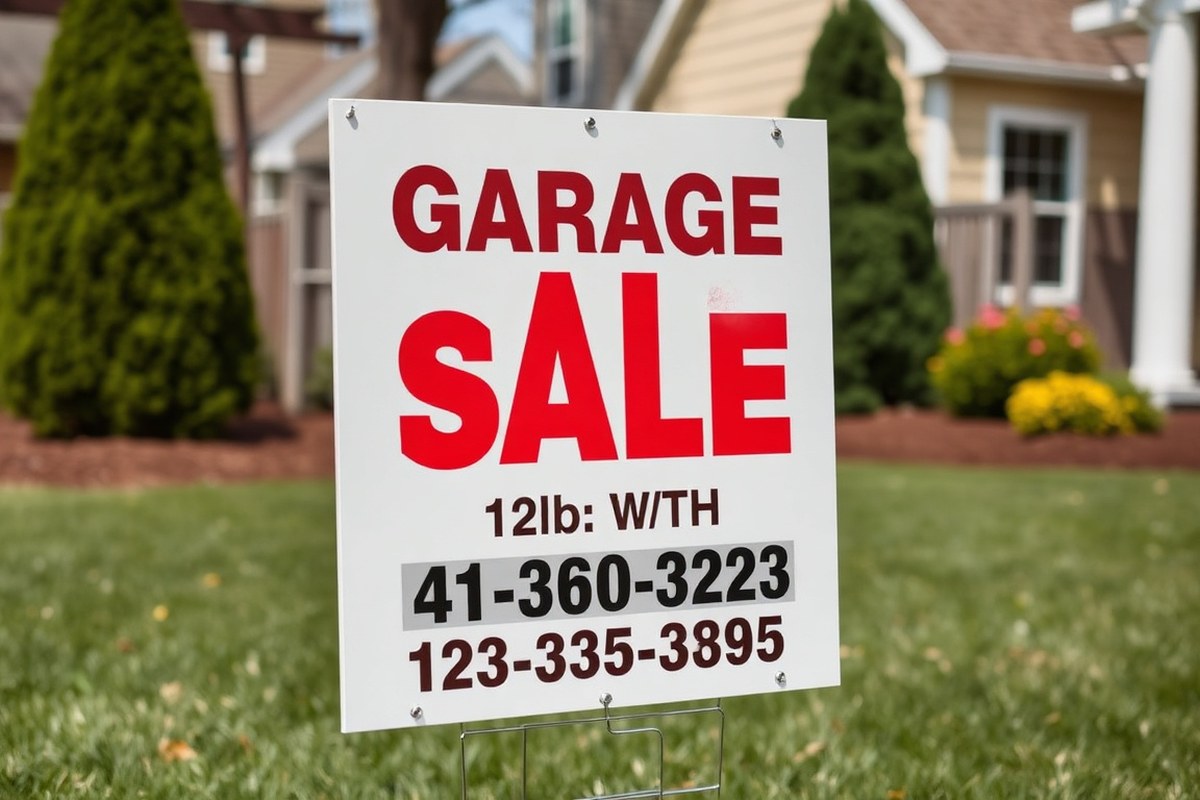
Effective garage sale signs show clear, essential details arranged to be seen and understood quickly from a distance. At the top, put a large, bold label such as “Garage Sale” or “Yard Sale” to immediately announce the event. Right below that, include the address, date, and time. These key pieces guide shoppers directly to your sale without stopping to guess.
Including your full street address usually works best, especially if your sale isn’t near a major intersection. You may add a well-known nearby landmark if the address alone isn’t easy to find. Keep this information simple and readable, avoiding extra words that clutter the message.
Font size matters because most people will read signs from their cars. Use large, bold letters sized at least 3 to 4 inches tall for the main words like “Garage Sale.” Address and timing details can be slightly smaller but should still be readable from about 20 feet away. A clear hierarchy helps: the event name stands out most, followed by address, then date and time, and finally an arrow if needed to show direction.
- Top line: “Garage Sale” in at least 3-4 inch tall letters
- Second line: Street address, in a bold but smaller font around 2-3 inches tall
- Third line: Date and time, also 2-3 inch font
- Directional element: Large arrow pointing the way if your sale is off the main road
- Simple layout: Organize information in a centered, easy-to-scan format
- Use readable fonts: Sans serif fonts like Arial or Helvetica avoid messy details
For example, a well-structured sign layout might look like this:
GARAGE SALE 1234 Maple Street Saturday & Sunday, 8am – 3pm → This way →
Signs with too many words or small fonts can confuse or miss drivers altogether. Avoid flowing text or cursive fonts that reduce quick readability. Placement of the sign also affects success: make sure it’s high enough, stable, and visible in daylight and dusk to catch attention.
2. Best Materials and Sizes for Durable Garage Sale Signs
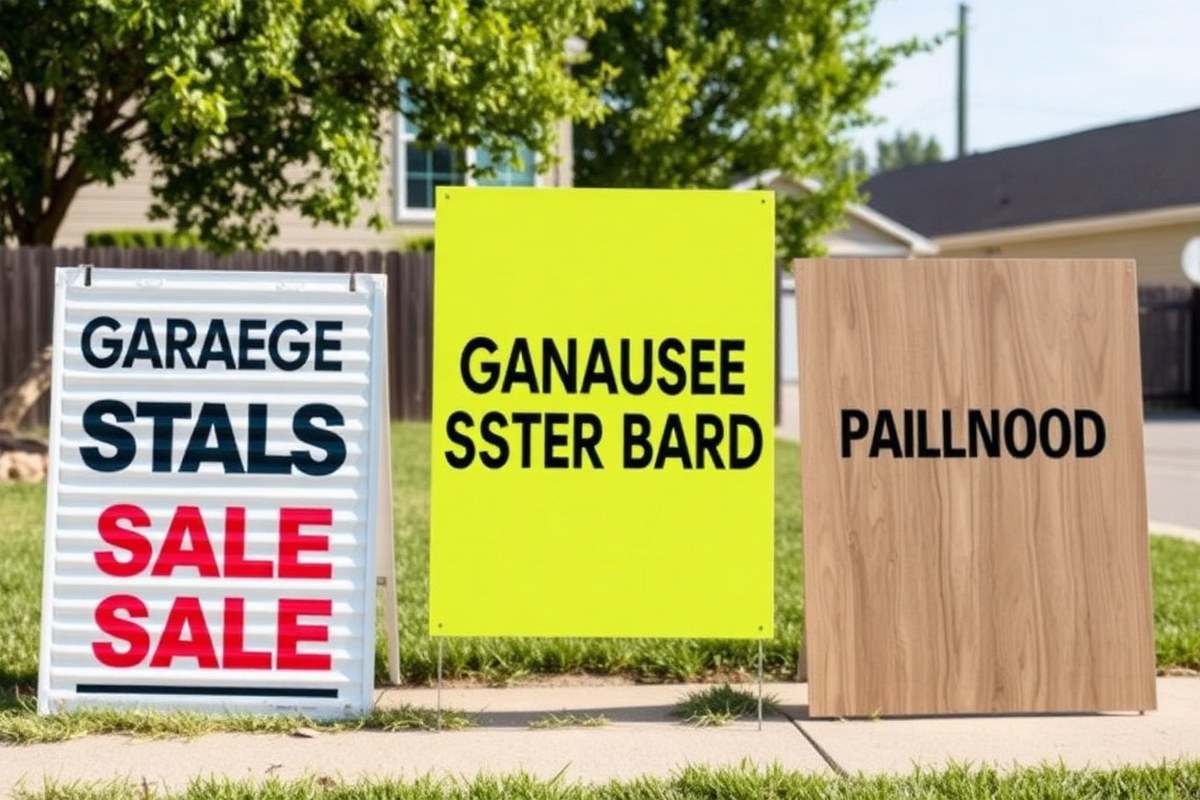
For garage sale signs that stand up to the elements and catch eyes from a distance, choosing the right material and size matters. Signs made from corrugated plastic or laminated cardstock offer good weather resistance and durability, keeping your message clear against rain or wind. Durable metal signs with stakes are another option, often reusable year after year and built to handle heavier weather. Paper signs should be sealed in clear sheet protectors or laminated to avoid smudging and damage, especially for smaller directional or price signs around 8.5 by 11 inches.
Visibility improves dramatically when your signs are at least 17 inches wide, similar to the size of most realtor signs. Larger signs help drivers spot your sale even when moving quickly down the street. Portable A-frame chalkboard signs are a weatherproof choice good for front-of-driveway placement and reusable with bright chalk markers, making your message pop with contrast.
Eco-conscious sellers can opt for reusable plastic or chalkboard signs to reduce waste and send a green message. Covering homemade signs with a protective transparent layer not only shields them from wind and rain but also makes them reusable for future sales, saving money over time.
| Material | Durability | Weather Resistance | Cost Estimate | Reusability |
|---|---|---|---|---|
| Corrugated Plastic | High | Good (resistant to rain) | $2 to $5 per sign | Reusable (with care) |
| Laminated Cardstock (8.5×11 inches) | Medium | Fair (needs lamination or protector) | Under $1 per sign | Reusable if laminated |
| Metal with Stakes | Very High | Excellent | $10 to $20+ per sign | Highly reusable |
| Chalkboard A-Frame | High | Excellent | $20 to $50 (one-time purchase) | Reusable and editable |
Choose sign sizes depending on placement: use large signs at least 17 inches wide on main streets and driveways for maximum visibility. Smaller 8.5-by-11-inch signs work well for category or price labels near sale items if laminated or protected. The key is protecting smaller signs from weather to avoid worn, unreadable print.
Protect any paper signs with a clear sheet protector or lamination to extend their life and avoid weather damage during your sale.
3. How to Use Color and Design Tricks to Grab Attention
Using bright, contrasting colors paired with clear fonts makes your garage sale signs easy to spot and read from a distance. Adding humor or a theme can catch the eye and make your signs memorable, encouraging more people to stop by. Focus on simple color combos, fun messages, and readable lettering to attract attention without confusing shoppers.
Choosing Bold, High-Contrast Colors
Colors play a key role in ensuring your sign grabs attention quickly. Neon colors like bright yellow, neon blue, and hot pink stand out best against dark backgrounds or white. Use high-contrast pairs such as black text on a neon yellow background or white text on neon blue to make letters pop and improve readability. Avoid low-contrast combinations like dark green on black or light gray on white since these are harder to read from the street.
For outdoor signs, choose weather-resistant inks or paints to keep colors vibrant through sun and rain. Bright backgrounds paired with black or white text often work best in the sunlight. Also, consider the setting: if your signs go near green lawns or gardens, avoid green backgrounds so they don’t blend in.
Incorporating Humor and Memes for Engagement
Funny signs can draw attention by sparking curiosity or a smile, making shoppers more likely to stop and check out your sale. Humor works best when it relates clearly to yard sales without confusing shoppers about what you’re offering. Popular ideas include puns on prices or references to popular culture, movies, or TV shows.
Themed signs are another way to stand out, such as using seasonal themes like Halloween or summer illustrated with simple graphics. Keep the text short and clear enough so it’s obvious you’re advertising a garage sale despite the humor or theme.
- Use funny slogans like “Buy it now or regret it later!”
- Include a meme-style image with a brief line about bargains
- Add themed decorations like pumpkins for fall or beach balls for summer sales
- Choose humor that fits your audience’s taste and neighborhood
- Test your sign by showing it to a friend to ensure the message is clear
These creative touches make your signs more noticeable and can give your sale a friendly, approachable vibe.
Selecting Readable Fonts and Lettering Sizes
Simple, bold fonts boost sign readability, especially from the road or sidewalk. Choose sans-serif fonts like Arial, Helvetica, or Impact because their clean lines make letters easy to read at a glance. Script or fancy fonts look nice but tend to be hard to decipher quickly.
Letter size matters. For signs viewed from five feet or less, letters should be at least 1 to 2 inches tall. For signs visible from 20 to 30 feet, use letters 4 to 6 inches tall. Write numbers larger than letters since the price is often a shopper’s main focus. Use capital letters sparingly, as mixed case can be easier to read.
Make letters stand out by painting or drawing your text in a color contrasting sharply with the background. Use a thick marker or paintbrush to keep lines solid and avoid thin fonts that blend into the background under sunlight or shadow.
4. Creative Phrases and Slogans to Draw in Bargain Hunters
Using catchy slogans on your garage sale signs can significantly increase foot traffic by grabbing attention and expressing clear value. Phrases that highlight urgency, quality, or unique finds motivate shoppers to stop and browse. For example, “Everything Must Go!” works best when you want to emphasize a quick sale, often for moving or clearing out inventory. This urgency pushes buyers to act immediately, usually within a single weekend.
Benefit-oriented messages, like “Fabulous Finds For Sale!” focus on the quality or uniqueness of the items, appealing to bargain hunters who enjoy treasure hunting. These types of slogans work well for general garage sales or specialty sales, such as collectibles or furniture, where buyers appreciate the idea of discovering something valuable or one-of-a-kind.
Tailoring your slogan to the specific type of sale and audience increases its effectiveness. For family-oriented sales, friendly and clear phrases like “Garage Sale This Saturday, November 25!” provide important details and build trust. If your sale includes specific categories like plants or tools, mention them to attract targeted shoppers who come prepared and ready to buy.
- “Huge Clearout Sale! Prices Slashed, Don’t Miss Out!”, great for urgent sales with lots of items.
- “Treasure Trove of Toys and Books, Best Deals in Town!”, ideal for family or kid-focused sales.
- “Garden Plant Extravaganza! Healthy Plants Priced to Move!”, perfect for plant sales.
- “Furniture Finds Galore! Quality Pieces at Bargain Prices!”, attracts buyers interested in larger items.
- “Early Bird Specials! Doors Open at 7 AM Sharp!”, creates urgency while highlighting a special deal.
- “Everything Must Go! Moving Sale This Sunday Only!”, drives a quick closing of the sale.
- “Vintage and Antiques, Uncover Hidden Gems!”, appeals to collectors and unique item seekers.
Good slogans often combine a clear call to action with details that match the sale’s purpose. Keep messages concise but informative to avoid clutter. Use a large whiteboard or poster board for enough writing space, making the text readable from a distance. Avoid vague phrases that don’t specify the item types or timing, or you risk losing potential buyers who want clear reasons to stop.
Choosing the right slogan for your garage sale can take little time and no extra cost but return much higher visitor numbers. Signs that use urgency should appear closest to the sale location to prompt immediate attention. Benefit-driven messages work well on directional or pre-sale signs placed farther away, building anticipation. Experiment with combining a slogan with specific sale information, such as date and time, for the best results.
5. How to Plan and Place Directional Signs for Maximum Traffic
Directional signs guide shoppers through neighborhoods and side streets, making your garage sale easier to find and increasing foot traffic. Careful planning and smart positioning ensure these signs work effectively while keeping neighborhoods neat and safe.
Mapping the Route from Major Roads
Start by identifying major roads that bring the most traffic near your home. From these roads, you will trace the safest and simplest route to your driveway or garage sale location. Good directional signs begin where traffic is heaviest and lead customers smooth into your neighborhood.
Sketch a basic map of the surrounding area, marking key intersections and turns along the route. This map helps to decide where signs are most needed to prevent confusion or missed turns. For streets with multiple turns, note each point for sign placement.
Safe Placement at Intersections and Corners
Place signs at prominent, visible spots on corners and intersections where drivers naturally slow down or stop. Avoid placing signs where drivers must look away from the road for too long or where signs block traffic signs or pedestrian walking paths. Signs should be securely mounted to poles, fences, or stakes without interfering with sight lines.
Check local municipal rules about sign posting. Many towns restrict placing signs on public utility poles, and some limit the total number of garage sale signs or the days signs may be displayed. Remove all signs promptly after the sale to keep the neighborhood clean and prevent complaints.
Do not place signs where they could distract drivers in hazardous locations like sharp curves or busy intersections with heavy traffic flow.
Timing Your Sign Deployment Before Sale Day
Put directional signs up the evening before your sale or early the morning of the event. Signs placed too early risk being removed by others or violating local rules. Too late, and potential buyers may miss your sale entirely. Monitor signs periodically on sale day to adjust any that fall over or get damaged.
Remove all signs immediately after your sale ends. Leaving signs up beyond the sale day annoys neighbors and may encourage uninvited visitors afterward, causing inconvenience or unwanted foot traffic.
Using Arrows and Visual Clues on Signs
Directional arrows are essential for clarifying turning points and mistakes drivers might make. Use bright, bold arrows with contrasting colours on your signs. For complex routes, include symbols like footprints or simple house icons to indicate the destination clearly.
Visual consistency helps shoppers trust the signs. Use matching colors, shapes, and fonts across all directional signs to build recognition and reinforce the message. Make arrows large enough to be read from 10, 20 feet for drivers moving at typical neighborhood speeds of 15, 25 mph. Follow this step-by-step plan to design and position your directional signs efficiently:
- Identify major roads that bring the most local and through traffic near your home.
- Draw a simple route map marking all key turns and intersections from the main roads.
- Create directional signs with clear sale information and large arrows guiding towards your address.
- Check local sign posting regulations for size, placement, and timing restrictions.
- Place signs securely at intersections, corners, and spots where drivers will naturally look.
- Deploy signs the day before or early on sale day.
- Monitor signs during the sale, fixing any fallen or removed signs quickly.
- Remove all signs immediately after the sale to respect neighbors and local rules.
6. Incorporating Digital and Interactive Elements Like QR Codes
Adding QR codes to your garage sale signs can appeal to tech-savvy buyers and provide more information than a physical sign might hold. A QR code acts as a quick link that shoppers can scan with their smartphones, taking them to a webpage with additional details, photos, or even a list of items for sale. Using digital elements like QR codes adds convenience, especially for those who want to preview items or plan their visit ahead of time.
To create an effective QR code, use a free online generator that creates a high-contrast, simple design. Make sure the URL you link to is mobile-friendly and loads quickly. A web page with photos, prices, and descriptions of key items works well, or a map with your location and any special instructions. You might also consider linking to a social media post or an event page where buyers can get updates about your garage sale, such as changes in time or weather delays.
Placement is key to making QR codes easy to scan. Print your QR code at least 3 inches square on your signs so people can easily scan it from 2 to 4 feet away without having to step too close. Avoid putting the QR code too high or low; about eye-level or slightly below works best. Using clear instructions like “Scan for photos and prices” next to the QR code helps people understand why they should scan it and how it improve their experience.
Costs to add QR codes are usually low; many free QR code generators require only your email and website link. For printing, use durable outdoor materials for the signs to prevent weather damage over the weekend. If you want to save your QR codes and linked content for future sales, consider storing your sign files digitally so you can update the online content each time you host another garage sale without redesigning the physical sign.
Good results show when buyers arrive informed and ready to dig through your offerings. A well-organized online list reduces questions and speeds up sales. On the flip side, a poor QR setup, such as a complicated URL, outdated content, or tiny codes, confuses shoppers and wastes their time. Also, don’t rely only on digital elements; physical signs still need clearly visible details like your address and sale hours because some people prefer not to use their phones or might have no cell signal.
For different situations, if your sale is in a neighborhood with many older residents or in a rural area with spotty internet, limit QR use to optional extras rather than primary information. On the other hand, if your garage sale has trendy or collectible items, an online preview can attract enthusiastic buyers ahead of time. You can update the linked page in real-time during the sale to show popular or newly added items, keeping visitors engaged.
Here’s a simple template for a QR sign caption: “Scan this code for photos, prices, and directions! More items listed online for quick shopping. Use your phone camera or QR scanner app.” This direct wording makes the purpose clear and encourages engagement without confusion.
7. Common Garage Sale Sign Mistakes and How to Fix Them
One common mistake that reduces the effectiveness of garage sale signs is using too much or too little information. Signs crowded with details become hard to read quickly, while signs missing key info like the date and address leave shoppers confused. Make sure your signs include only the essentials: the words “Garage Sale,” the sale date and time, and the street address or directional cues. Use large, clear lettering, at least 2 inches tall for easy reading from a distance.
Another frequent problem involves placement and securing of signs. Metal stakes can bend or break when put into rocky or hard soil, causing signs to fall or tilt. Instead, try using wooden stakes, zip ties on trees or posts, or weighted bases for signs. If you spot a damaged sign during your sale, quickly replace it with a backup sign or reposition it in a better spot. Carrying a small toolkit with scissors, tape, or extra markers helps fix signs quickly on sale day.
Using unclear or overly fancy fonts, or too many colors without contrast, also weakens the message. Choose simple, bold fonts like Arial or Helvetica and stick to 2 or 3 contrasting colors to ensure legibility. Avoid cursive, italics, or all caps text, which can slow recognition. Similarly, keep wording direct and avoid clutter like phone numbers or prices that can distract from the key directions.
- Overcrowded text: simplify wording to main details only
- Low contrast colors: choose dark text on light background or vice versa
- Poor sign placement: secure signs in stable spots away from obstructions
- Damaged stakes or signs: bring backups and quick fix supplies
- Hard to read fonts: use bold, plain fonts with large lettering
- Missing contact info: avoid unless necessary, to prevent confusion
- Incorrect date/time info: double-check all signs before sale day
Evaluate your signs before the sale by holding them 20 feet away to check readability, confirming all information is correct, and ensuring signs stand upright without swaying. Signs that blow over or have smudged ink send a poor signal about the sale’s organization and can turn away buyers. Fix issues by laminating paper signs or using waterproof markers to maintain durability during unexpected weather. Quick corrections during the sale keep the signs effective and help maintain steady shopper traffic.
8. Tools and Techniques for Making Eye-Catching Garage Sale Signs
Making eye-catching garage sale signs requires simple tools and attention to materials so your signs stand out and guide shoppers effectively. You’ll want a mix of durable supplies, clear lettering methods, and options for both DIY crafting and printing. Consistency in design helps customers recognize your signs from a distance and navigate your sale easily.
Choosing the Right Materials and Markers
Start with sturdy, weather-resistant materials like poster board, corrugated plastic, or old a-board signs to create signs that won’t sag or tear during your sale. Poster board is a popular, economical choice that balances ease of use and durability. For markers, use broad-tip permanent markers in bold colors, black, red, or blue, to achieve strong contrast and readability. Avoid thin pens or pencils, which won’t show up well from a distance.
Thicker markers (1/2 inch or more tip size) allow you to write larger letters, essential for visibility. Choose water-resistant or fade-resistant inks when possible, especially if rain or harsh sunlight is expected. Using stakes to hold your signs off the ground can protect them from dirt and help them stay upright in windy conditions.
Using Stencils and Templates for Clean Lettering
Clear, neat lettering attracts more attention than hurried, uneven handwriting. Stencils help you maintain consistent letter size and spacing, especially if you’re making several signs. Printable templates let you trace letters or designs, speeding up the process and giving your signs a professional look without heavy artistic skills.
Templates can also ensure consistent branding with the same font, colors, and layout across all signs, making it easier for shoppers to follow your directions. Free printable yard sale sign templates often include category labels like “Toys” or “Kitchen Items,” which help organize your sale station by station.
Printing Versus Handcrafting Signs
Handcrafting signs with markers on poster board usually creates bigger, bolder signs than printable ones on standard letter-size paper. Printable signs are useful for smaller, directional signs or price tags, but avoid using only printed 8.5″ x 11″ sheets for primary signs, they often get lost visually and look less inviting.
Investing time in making large, handwritten signs can improve your sale attendance for minimal cost, while printed templates help keep category or directional signs consistent and easy to replace. Consider combining both: DIY your large entrance signs and print smaller, clear category signs using the same design template for a polished look.
Printed signs smaller than 11 by 17 inches tend to be hard to spot; bigger handmade signs usually perform better as your main advertisements.
Lamination and Weatherproofing Techniques
Lamination or covering your signs with clear contact paper extends their life and protects colors from rain, wind, and sun damage. This process also strengthens paper signs, preventing them from bending and tearing. For larger signs made of poster board, you can tape or staple clear plastic sheeting over them to shield from moisture without expensive lamination.
Using rocks or sandbags at the bottom of signs placed on the ground keeps them stable during wind. Expect to spend $10 to $30 on lamination supplies or clear plastic covers for a few signs, which could save you from retaking the time to remake soggy or faded signs. If reusing signs over years, this investment pays off.
- Select a base material suitable for your location and budget, like poster board or corrugated plastic.
- Choose broad-tip, permanent markers in bold colors for lettering.
- Use stencils or trace printed templates to outline letters for clean, consistent fonts.
- Write or color your message clearly, focusing on large, readable fonts at least 2 to 3 inches tall.
- Laminate your signs or cover with clear contact paper/plastic for weather protection.
- Attach stakes or use sturdy backing to keep signs standing and visible.
- Place directional signs consistently along the route, matching colors and font style.
- Bring a few printable signs for smaller categories or price tags, using the same template as larger signs.
Step-by-Step Action Plan for Creating Effective Garage Sale Signs
Follow these steps to make sure your garage sale signs get noticed and bring in a crowd.
- Before the Sale: Gather all sale details including date, time, and address. Write them clearly and include a catchy phrase. Check your information for accuracy to avoid confusion.
- Two Weeks Ahead: Choose durable materials like corrugated plastic or weather-resistant cardboard for your signs. Test the visibility of your lettering from 20 feet away to ensure clarity.
- One Week Before: Decide on bright, contrasting colors and simple fonts. Print one test sign and place it outside to see if it grabs attention and is easy to read from the road.
- Three Days Before: Create directional signs with arrows and short instructions. Place them at key junctions near your sale location to guide shoppers effectively.
- Day Before: Add any interactive elements like QR codes linking to a list of key items or photos. Verify the QR code works on multiple devices.
- Day of the Sale: Put up all signs in dry, visible spots at eye level. Walk the route to confirm signs are not obstructed and make adjustments as needed.
- During the Sale: Monitor foot traffic and ask early visitors if they noticed your signs. Adjust placement if fewer buyers arrive than expected.
Frequently Asked Questions
What Are Some Easy DIY Garage Sale Sign Ideas?
Use cardboard or plywood with bold paint and large lettering for quick, clear signs. Simple designs work well to attract attention without much effort or cost.
How Can Humor Improve My Garage Sale Signs?
Funny phrases or memes can catch eyes and make your sale memorable, encouraging more visits. Just keep the humor family-friendly to appeal broadly.
Are Reflective Materials Good for Garage Sale Signs?
Reflective signs help visibility during low light but are not essential if your sale is daytime only. Use them if your sale starts early or ends late.
Can Including a Map on My Garage Sale Sign Help?
Adding a small map directs buyers easily, especially in complex neighborhoods, increasing your chances of more traffic. Make the map simple and readable at a glance.
Should I Mention Payment Methods Accepted on My Signs?
Indicating if you accept cards or cash can attract more buyers who prefer cashless transactions. Keep this info small but visible near the bottom of the sign.
What Font Styles Work Best for Garage Sale Signs?
Use bold, sans-serif fonts for readability at a distance; avoid fancy scripts that are hard to read quickly. Clear fonts improve the effectiveness of your signs.
Wrapping Up
Clear, well-placed garage sale signs that use bold colors, readable fonts, and essential details will increase the number of shoppers at your event. Start by preparing your signs early, and focus on visibility and accuracy. The next step is to test your signs in your actual sale area to make sure they stand out and guide buyers right to your door.