What Is a Pop Up Banner? A Complete Guide to Types, Uses & Design Tips
What is a pop up banner? It is a portable, retractable display that quickly expands to showcase graphics and messages for marketing or events. Designed for easy setup and breakdown, it uses a lightweight frame to snap open and hold the banner taut. Pop up banners work best at eye level for clear visibility and impact.
Key Takeaways
- Pop up banners usually weigh from 6 to 12 pounds and include a shoulder bag for convenient carrying.
- The standard size for retractable pop up banners is around 33.5 × 78.55 inches, ideal for eye-level visibility.
- Setting your banner’s key content between 40 to 60 inches from the floor ensures it hits the natural eye zone.
- Tabletop banners have compact sizes, from 8.5 × 11.875 inches up to 15.75 × 32.125 inches, fitting well on counters or desks.
- Strong, patented frames provide lightweight durability and fast setup that lasts over 20 years.
- Pop up banners support real-time brand promotion and sales, with years of proven effectiveness in retail and events.
What Is a Pop Up Banner and How Does It Work?
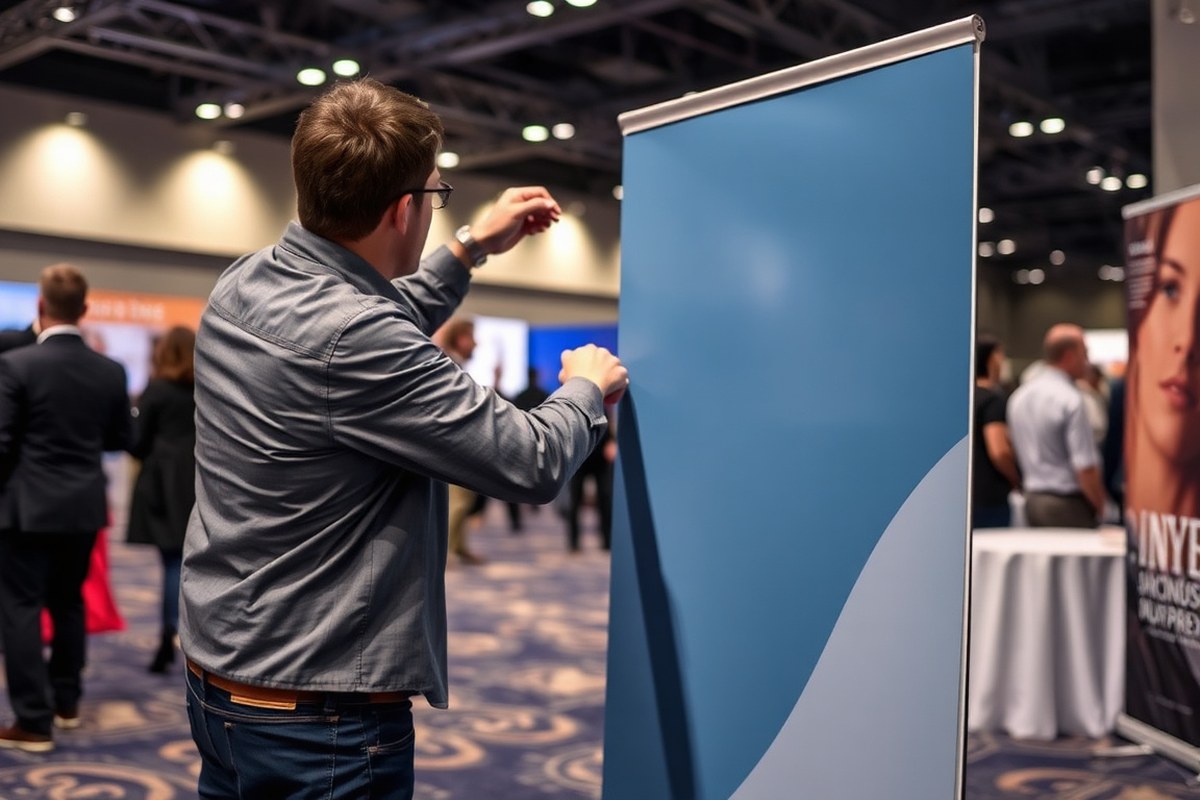
A pop-up banner acts as a portable promotional device designed to grab attention fast at venues such as trade shows, retail locations, farmers markets, or community events. It displays a printed image attached to a retractable frame that extends upward from a small base. Setting it up takes less than two minutes, converting the compact case into an upright sign. Usually, these banners weigh from 6 to 12 pounds and include a shoulder strap bag for carrying ease.
The mechanical operation for physical pop up banners relies on a spring-loaded system housed in the base. When you pull the banner up, the frame unfolds and locks into place, holding the printed graphic taut and upright. Tabletop versions of these banners work on the same retractable principle, just on a smaller scale to fit on counters or tables. Key placement is critical: positioning the banner’s main message in the middle third of the display, roughly 40 to 60 inches from the floor, aligns with natural eye level, increasing visibility and engagement.
Digital pop up banners function differently but serve a similar purpose of drawing attention and boosting interaction. These banners appear as overlays on websites through scripts that trigger based on visitor behavior, such as time spent on the page, scroll depth, or exit intent. Unlike physical banners, digital pop ups don’t rely on a physical mechanism. Instead, they involve software that overlays a visually distinct box or message on the screen. This digital display aims to increase click-through rates, conversions, or email signups by interrupting the visitor in a compelling way while they browse.
Both physical and digital pop up banners share the core goal of capturing attention and promoting a message effectively. The physical banners benefit from portability and immediate visual impact in crowded spaces, while digital banners offer timely, behavior-driven engagement online. Creating a successful pop up banner involves bold fonts, high-contrast colors, and minimal text to ensure clarity. For physical setups, pairing the banner with complementary materials like table throws, brochures, or monitors creates a cohesive branded booth that maximizes presence.
Different Types of Pop Up Banners and Their Uses

Pop up banners come in three main types, retractable banners, full frame pop up displays, and tabletop pop up banners, each suited for different event marketing needs. Choosing the right type depends on your venue size, portability needs, and display impact. Below is a detailed comparison to help you decide which banner fits your specific use case.
Retractable (Roll-Up) Banners
Retractable banners, often called roll-up banners, range typically from 33 to 47 inches wide and 60 to 90 inches tall. These banners are ideal for trade shows, retail spaces, and lobbies due to their slim profile and ease of use. The graphics roll into a metal base, allowing for quick setup in under two minutes with no tools required. This feature makes retractable banners highly portable and practical for businesses that attend multiple events or need frequent changes in messaging.
One key advantage is their protection during transport, since the graphic remains safely housed within the base. However, retractable banners have limited width compared to full frame displays, which can restrict larger or more elaborate design layouts. Their height and width typically cap around 47 inches wide and 90 inches tall, making them best for single-person booth setups or point-of-sale displays.
Full Frame Pop Up Displays
Full frame pop up banners provide large-scale, immersive displays with widths ranging from 8 to 20 feet. Their expandable frame “pops” open to create a wide, smooth backdrop wall suitable for extensive trade show booths, stage backgrounds, or exhibition spaces. These displays stand freely and offer more graphic real estate, allowing businesses to present detailed visuals and multiple branding elements.
The frame structure is modular, so it assembles into a sturdy, freestanding wall that can cover large spaces quickly. Full pop up displays tend to be heavier and require more setup time than retractable banners, usually taking 5 to 10 minutes and sometimes involving two people. While they lack the compact portability of roll-up versions, their visual impact and professional appearance make them the go-to option for high-profile events or permanent exhibition installations.
Tabletop Pop Up Banners
Tabletop pop up banners are compact, self-contained displays typically measuring between 12 and 24 inches wide and standing on counters or registration tables. These smaller banners excel at small events, trade show counters, or sale points where space is limited. Their lightweight design means you can easily transport and set them up on a tabletop without tools or extra help.
These banners often come in sizes from 8.5 by 12 inches up to 15.75 by 32 inches, making them suitable for placing beside laptops, brochures, or product samples. Tabletop banners create additional branding or messaging touchpoints in close quarters but are not meant for large venue visibility. Their portability and quick set-up time enable you to supplement larger banners or serve in venues where floor space is constrained.
Order multiple banners with slightly different messages to maximize reach at multi-day or multi-venue events.
| Type | Best For | Key Feature | Typical Size |
|---|---|---|---|
| Retractable (Roll-Up) | Trade shows, retail, lobbies | Graphic retracts into base for fast setup | 33″, 47″ wide, 60″, 90″ tall |
| Full Frame Pop Up Display | Large booths, backdrops, stage displays | Expanding frame creates a wide display wall | 8, 20 feet wide |
| Tabletop Pop Up | Small events, counters, registration tables | Compact and fully self-contained | 12″, 24″ wide |
How Portability and Durability Affect Banner Performance
Pop up banners are designed to be highly portable and durable, making them ideal for small business owners, event marketers, exhibition planners, and retail managers who often need to transport and set up displays quickly. Typically, these banners weigh only a few pounds, comparable to a light suitcase, depending on the size and materials used. Most come with a carrying case featuring a shoulder strap, allowing you to carry them comfortably over your shoulder. This ease of transport ensures minimal hassle when moving between events or venues.
Durability largely depends on the materials used. Pop up banners are commonly made from vinyl or polyester fabric, both known for their resistance to wear and tear. Vinyl banners are waterproof and can withstand mild impacts, which helps preserve the sharpness of printed graphics. Polyester fabric offers some flexibility and is less prone to creasing, but it may require a gentle cleaning routine with mild detergent to maintain its appearance. The banner’s frame typically consists of lightweight metal that resists bending, ensuring the display remains sturdy during use and transport.
Setting up a pop up banner is straightforward and fast, often taking less than two minutes. The banner retracts into a metal stand for protection and compact storage. To set it up, you pull the banner upward from the base and secure it on a vertical support pole, locking it into place. This simple mechanism avoids the need for tools, which saves time and reduces the risk of damage during assembly. After use, the banner rolls back into its base with a smooth, controlled mechanism, protecting the printed surface during transport.
Under typical indoor conditions, a good-quality pop up banner can last several years when used regularly at trade shows, retail promotions, or events. Businesses that invest in these banners spread their cost over dozens of uses, making them a cost-effective marketing tool. However, these banners are best used indoors; exposure to wind, rain, or prolonged sunlight outdoors can degrade the materials and fade prints more quickly unless the banner is specifically manufactured for outdoor use. Protecting the banner by storing it in its case after each use and cleaning it gently increases longevity and keeps your branding sharp.
Overall, the combination of lightweight construction, durable materials, and quick-assembly design makes pop up banners a practical choice for marketers who value mobility and reusability. Keeping your banner in a padded carrying case, cleaning it carefully with mild detergent when needed, and avoiding harsh outdoor conditions will help maintain its professional appearance and extend its service life.
Best Practices for Designing Effective Pop Up Banners
Effective pop up banner design revolves around clear, bold communication and strong brand alignment. Choose fonts that are easy to read from a distance, such as sans-serif types like Arial or Helvetica, sized large enough to catch the eye, generally 72 points or bigger works well for headlines. Use high-contrast colors between text and background to maximize legibility. For example, dark text on a light background or bright colors paired with neutral shades helps your message stand out in busy event environments.
A clean layout that guides the viewer’s eye improves message clarity and retention. Place your logo at the top or near the main headline where people naturally look first. Limit your text to one core message with three to five short lines, about 20 to 30 words total, so passersby grasp your point quickly without feeling overwhelmed. Avoid cluttering the banner with excessive details or small fonts, which reduces readability and diminishes impact.
Colors should reflect your established brand palette to maintain consistency across all marketing materials, reinforcing brand recognition. Incorporate key brand elements like your logo, tagline, and consistent iconography or imagery to improve visual cohesion. Using professional graphic design services can help ensure your banner matches your other branding assets and communicates effectively to your target audience.
Test your banner design at full size before printing to confirm that fonts are legible from typical viewing distances and colors pop under event lighting conditions. Consider environmental factors such as indoor versus outdoor use; outdoor banners often require more durable materials and colors that resist fading. Investing a few hundred dollars in quality printing pays off with a vibrant, eye-catching banner that can perform repeatedly at trade shows, fairs, or retail locations.
Overloading the banner with text or conflicting colors causes confusion and lowers overall engagement. Instead, aim for simplicity and strategic use of space. Use bold fonts for headlines, keep the background mostly plain, and highlight a call to action clearly. For example, a simple headline like “Boost Your Sales Today” with your logo below and a website or phone number at the bottom strikes a good balance between attracting attention and delivering a quick, clear message.
Ultimately, the best pop up banners grab attention swiftly, deliver one main idea, and align perfectly with your brand’s look and feel. This mix of font choice, color coordination, uncluttered layout, and direct messaging can boost your visibility and effectiveness at any event or retail setting.
Where and When to Use Pop Up Banners for Maximum Impact
Place your pop up banner where it naturally draws attention and supports your marketing goals. For indoor events, choose spots near entrances or along main aisles. When outdoors, secure banners made from weatherproof material to handle conditions and maintain visibility. For digital pop ups, trigger them after visitors engage significantly with your website.
Indoor Event Placement Tips
Position your banner close to areas with high foot traffic to maximize visibility. Near entrances, registration desks, or product displays work well, as attendees tend to pause or gather there. Avoid placing banners where they could be blocked by furniture or other displays. Make sure to stand your banner perpendicular to the main pathways so it’s easy to spot from a distance and at eye level.
Consider the lighting and backdrop as well. A banner should stand out against its surroundings, so avoid overly bright or cluttered backgrounds that compete with your message. In retail spaces, placing banners near checkout lines or product launch areas helps catch customers when they are most likely to make decisions.
Test different locations before the event starts by watching where attendees naturally stop or look, then adjust your banner placement accordingly.
Outdoor Usage Considerations
Banners made from waterproof and weatherproof materials are essential outdoors to withstand rain, wind, or sun. Ensure your banner fabric is strong enough to resist tearing and won’t fade quickly due to UV exposure. Anchor the banner securely using weighted bases, stakes, or tie-downs depending on the surface and expected wind speeds.
Choose locations with shelter or partial shade if possible to prolong the banner’s lifespan and improve readability. Avoid placing banners too close to the ground where dirt or water may splash. Check local regulations about sign placement in public outdoor areas to prevent fines.
Regularly inspect your banner and fasteners during multi-day outdoor events to prevent damage or accidents caused by changing weather.
Digital Pop Up Timing Strategies
Setting your digital pop up to appear after the visitor has scrolled 50 to 60 percent down a page ensures they are engaged and more likely to respond. Avoid triggering pop ups immediately, as this can annoy visitors and increase bounce rates. Use exit intent triggers to show offers when visitors move to leave the site, increasing chances of conversion without disrupting their experience.
Delay pop up triggers by several seconds to allow users to absorb content first. Synchronize digital and physical banners by using consistent designs and messages to reinforce your campaign across channels. For example, display the same offer online that your physical banner promotes at an event, encouraging smooth visitor interaction.
Test different pop up timings on your website to find what works best; small adjustments can significantly affect visitor engagement and conversions.
Step-by-Step Setup and Breakdown of Physical Pop Up Banners
Setting up and breaking down a retractable pop up banner is a quick process that usually takes under two minutes, making it ideal for busy events where every second counts. The design of these banners means you won’t need any tools. Your banner arrives with a base that houses the rolled-up graphic and a support pole, plus a carrying case to keep everything together and protected during transport.
To assemble your banner, start by removing it from the carrying case, holding the base firmly on the ground or a flat surface. Next, pull up the graphic straight from the base until it fully extends. The banner should lock into place when you insert the top of the support pole into the slot at the back of the base and secure the vertical pole to the banner’s top rail. This prevents the banner from retracting unexpectedly. You’ll want to keep the pole straight and tight for the display to look clean and professional.
When it’s time to pack up, carefully detach the support pole from the top rail and the base. Slowly, allow the banner to roll back down into the base; doing this gently prevents damage and keeps the graphic smooth. Place the pole and the rolled banner back inside the carrying case to protect the material during transport or storage.
This setup works well because the banner’s material is smooth PET vinyl that rolls neatly without wrinkles. The base protects the graphic, which means the display lasts longer even after repeated use. Although they’re heavier and slightly more time-consuming than simple banner stands, retractable banners provide a strong visual presence that can transform a blank wall or booth area in moments.
Some larger or double-sided retractable banners use telescoping poles or multiple sections that might add a minute or two to setup and takedown but still don’t require tools. Compact models are best if you have limited staff or time, as one person can manage the entire process alone. Check your banner’s instructions for any model-specific tips on pole assembly or graphic care to keep your display looking sharp for years.
Common Pop Up Banner Mistakes and How to Avoid Them
Poor design often reduces a pop up banner’s ability to attract attention and convey your message clearly. Common errors include cluttered layouts, unreadable fonts, and weak color contrast. Text should stay large and simple enough to read from at least 5 feet away. Avoid overcrowding your banner with too many words or images, stick to one clear headline and supporting visuals. Include a hashtag, website link, or call to action that connects your banner to your online marketing, but keep it short and easy to remember. Designing the banner using professional software or hiring experienced graphic designers helps ensure quality visuals that hold up well during events. Using lower-quality materials risks graphic curling on the banner’s edges, which makes the display look worn out and unprofessional after a few uses.
Placement also plays a major role in performance. Position a pop up banner where it naturally catches the eye of your target audience without obstruction. Avoid spots behind furniture, near cluttered areas, or where people walk too fast to read it. For events with heavy foot traffic, place banners near entrances, registration tables, or product displays to maximize visibility. Keep the banner’s height between 5 and 7 feet for optimal eye level viewing. Poor placement limits the banner’s impact and wastes your investment, so plan carefully according to the venue layout and expected visitor flow.
Digital pop ups often fail due to interruptions or poor timing. Overusing digital pop ups on your website or at an event can annoy potential customers and cause them to close the window immediately. To avoid this, set timing rules so digital pop ups appear only once per visitor session or after a user has spent 10 to 15 seconds on the page. Make sure the pop up’s message matches your in-person banner designs for consistency across channels. Using the same promotional buzzword or hashtag connects digital marketing with your physical display, reinforcing brand recognition. Check for mobile responsiveness to ensure digital pop ups display correctly on phones and tablets, maintaining a positive user experience.
Successful pop up banners balance clean design, thoughtful placement, and smooth interaction between physical and digital elements. An effective banner costs $150 to $400 depending on size and quality but provides a strong presence that builds brand awareness and drives visitor engagement. Avoid common mistakes by focusing on simplicity in your visuals, positioning your banner strategically, and coordinating with your digital campaigns to get the most from your marketing budget.
How to Measure and Improve Pop Up Banner Effectiveness
Measuring pop up banner effectiveness relies on tracking specific performance indicators for physical and digital types. Focus on visitor engagement, lead capture, and conversion improvements while continuously optimizing design and timing to boost your return on investment.
Tracking Physical Banner Impact
Physical pop up banners are visible tools designed to attract attention and guide customer behavior. The key metrics to track include foot traffic increases in your booth or storefront, the number of leads collected through direct interactions, and any noticeable sales boosts linked to banner use. Use manual counts or simple tools like tallies at busy hours to measure foot traffic changes before and after banner placement. Track leads by scanning business cards collected, sign-ups on clipboards, or QR code scans that link visitors to your digital offers.
Sales impact can be gauged over several days or weeks following an event or campaign. Comparing daily revenue during banner display to typical sales periods highlights the banner’s contribution. Take care to position banners in high-visibility areas so the effect can be attributed clearly. Poorly placed banners may skew data or fail to capture attention, hiding their true value.
Optimizing Digital Pop Ups
Digital pop up banners require detailed monitoring of conversion rates, scroll triggers, and exit intent accuracy to understand their performance. Use analytics platforms to track how many users see the popup, interact with it, and complete desired actions such as signing up or purchasing. Pay close attention to bounce rates and time on page following popup display. A rise in bounce rates after popup launch may indicate intrusive timing or poor messaging.
A/B testing is essential for digital pop ups. Test variations of headlines, offers, design elements, and trigger conditions like time spent on page or page scroll percentage. For instance, try showing a discount offer at 30 seconds versus 60 seconds after page load, then compare which timing yields higher engagement. Ongoing testing refines your approach and typically increases conversion rates over weeks, reducing wasted impressions and customer annoyance.
Improvement Strategies
To improve pop up banner effectiveness, start with design tweaks such as simplifying text, increasing font size, or including clear calls to action. Adjust timing triggers to show banners when visitors are most likely to engage, such as after scrolling halfway down the page or right before exit. Limit how often the banner appears to avoid fatigue, setting reasonable session caps or delays between displays.
Segmentation allows you to customize banners based on visitor data like returning status, referral source, or browsing behavior. Showing tailored offers or messages to different groups increases relevance and conversions. For physical banners, refresh graphics periodically and place multiple units strategically at entry points and high traffic zones to maintain impact. Reusing banners reduces costs since one well-made banner can serve many events or locations effectively over months or years.
Test one element at a time when optimizing digital pop ups to clearly identify which change improves performance.
Your First Week with Pop Up Banners: A Quick-Start Plan
Follow these steps to get your pop up banner ready and start seeing results quickly.
- Day 1: Choose the right type of pop up banner for your event or location based on size and intended use. Confirm it fits your available space to avoid last-minute adjustments.
- Day 2: Design your banner using clear, bold visuals and simple wording. Share the design with a trusted colleague for feedback to confirm it communicates your key message.
- Day 3: Order your banner from a reputable printer, selecting durable material suited to where you will use it (indoor or outdoor). Check the sample proof carefully before final approval.
- Day 4: Test setup and breakdown in a controlled environment. Time yourself to ensure you can assemble and disassemble the banner smoothly within a few minutes.
- Day 5: Place the banner at your chosen event or store location during setup. Step back to check visibility and readability from various distances and angles.
- After 3 Days: Collect feedback from customers or event attendees on the banner’s design and placement. Adjust positioning or messaging for future use based on this input.
- After 1 Week: Review sales or engagement metrics linked to the banner’s presence. Compare with previous periods to assess impact and decide if additional banners or design tweaks are needed.
Frequently Asked Questions
What Materials Are Pop Up Banners Usually Made From?
Pop up banners typically use vinyl or fabric for graphics, combined with aluminum or plastic frames for lightweight durability. These materials balance sturdiness with portability, making them ideal for frequent transport and setup at events or retail locations.
Can Pop Up Banners Be Customized for Different Events?
Yes, pop up banners can be fully customized with specific branding, colors, and messaging to suit any event, from trade shows to seasonal promotions. Custom designs increase engagement by targeting the right audience with relevant visuals or offers.
How Do Lighting Conditions Affect the Visibility of Pop Up Banners?
Lighting greatly influences how well your banner is seen; bright, indirect light highlights colors and text best. Placing banners where natural or artificial light illuminates them can attract more attention and improve readability.
Are Pop Up Banners Weather-Resistant for Outdoor Use?
Many pop up banners are water-resistant but not fully weatherproof; strong wind or rain can damage them. Use them outdoors only in mild conditions or with additional protective measures like weighted bases.
What Accessories Can improve the Effectiveness of a Pop Up Banner Display?
Accessories like brochure holders, lighting, and branded table throws complement banners and create cohesive promotional spaces. These extras engage visitors, provide information, and improve the overall professional appearance.
How Often Should You Replace Your Pop Up Banner?
Replace your pop up banner when graphics fade, the frame weakens, or designs become outdated, typically every 2 to 4 years. Keeping the banner current and vibrant maintains a professional image and maximizes marketing impact.
Key Points to Remember
Pop up banners combine easy setup with effective visual communication, making them a solid choice for your marketing needs. Using durable materials and clear design ensures your banner attracts the right attention and stands up over time. Start with one banner, learn from its performance, and expand your presence confidently at your next event or storefront.