Blade Sign Ideas: 8 Expert Tips to Boost Your Business Visibility
Blade sign ideas can dramatically increase your business visibility by projecting your message perpendicular to your storefront. These signs catch the eye of pedestrians and drivers on busy streets, making your business easier to notice. Start by selecting a design that suits your brand and fits local clearance rules to maximize exposure without obstructing foot traffic.
Key Takeaways
- Blade signs provide 24/7 advertising without ongoing costs, making them a cost-effective marketing tool.
- A minimum clearance of 8 feet from sidewalk to the bottom of the sign ensures pedestrian safety and compliance.
- Metal blade signs with two-sided designs stand out longer and withstand outdoor elements better than other materials.
- Illuminated blade signs attract attention day and night, significantly boosting customer interest.
- Choose vertical or horizontal orientations based on storefront space and visibility directions for maximum impact.
- Incorporate 3D elements or dynamic shapes in your blade sign to differentiate it from flat, wall-mounted signs.
1. What Is a Blade Sign and How Does It Work?

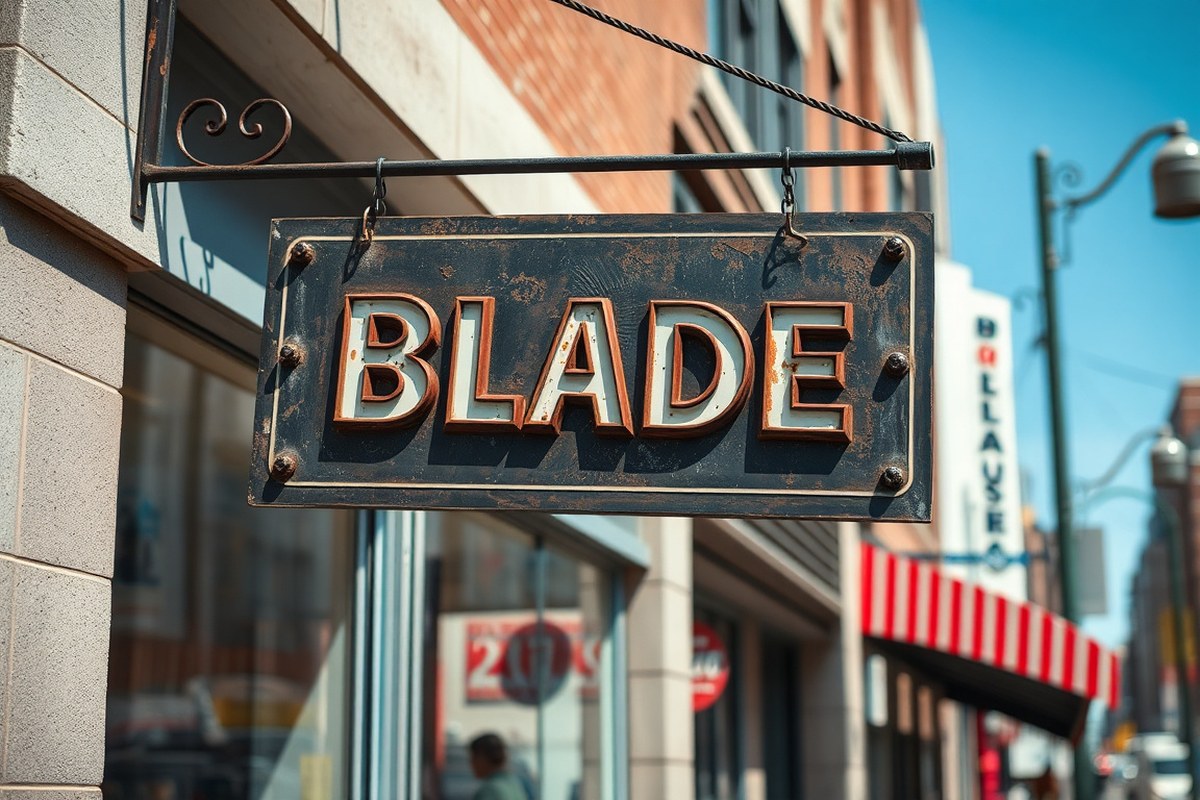
A blade sign is a type of storefront sign mounted perpendicular to a building’s facade. Unlike traditional flat signs that lay flush against a wall and face forward, blade signs extend outward, offering visibility from multiple directions. This structural design allows the sign to capture the attention of pedestrians approaching from either side of the street or walkway, which is particularly valuable in busy commercial areas with heavy foot traffic.
The perpendicular placement sets blade signs apart by creating dual-sided surfaces, typically metal panels, where branding, graphics, and messaging can be displayed. This arrangement makes blade signs more effective than flat signs for catching the eyes of passersby. In practice, this means your business name or logo is visible not only to those walking directly in front but also to people moving along sidewalks parallel to your storefront. This increases your brand exposure significantly without needing a larger sign face.
Structurally, blade signs are usually double-sided and mounted rigidly with brackets or arms attached firmly to the exterior wall. Some designs include hanging blade signs that use chains or flexible mounting brackets, allowing slight movement that can draw added attention. The size can vary widely but often ranges from 12 to 36 inches in height and 18 to 48 inches in width, a scale suitable for clear readability at typical pedestrian speeds. Materials like durable metal and weather-resistant finishes ensure the sign stands up to outdoor conditions for years.
Blade signs work well when combined with graphics or illumination to wear your brand’s personality and increase visibility after sunset. For businesses staying open into the evening or in streets with mixed vehicle and pedestrian traffic, adding lights to your blade sign can make a meaningful difference. Costs vary depending on size, materials, and lighting options but typically start around a few hundred dollars and can go up to several thousand dollars for fully customized illuminated designs.
Because blade signs protrude several feet from the building, keep local clearance and permit regulations in mind to avoid installation issues. Also, ensure the sign height and placement do not obstruct pedestrian movement. When designed correctly, blade signs become a reliable and eye-catching tool to invite more foot traffic into your store by increasing your brand’s visibility from multiple angles along the street.
2. Types and Styles of Blade Signs Explained

Blade signs come in several common shapes and styles, including square, round, and fully custom designs. They can be illuminated or non-illuminated and are available as single- or double-sided signs. Selecting the right shape and illumination style depends on your storefront, brand identity, and how visible you want the sign to be day and night.
Standard Shapes and Their Uses
Square and rectangular blade signs are popular due to their clean, versatile look. They provide ample space for your logo and information, fitting well with many storefront styles. Square signs typically weigh around 3.5 pounds, which makes them sturdy yet manageable for installation. Round blade signs offer a softer, modern alternative and tend to weigh about 2.5 pounds. These are ideal for businesses aiming to soften their visual impact or match specific architectural curves. Both shapes are easily customized with vinyl graphics or painted faces, allowing you to control your brand presentation without needing complex fabrication.
Single-sided blade signs are most common in narrow pedestrian areas or when wall access is limited. Double-sided versions maximize exposure by displaying your message toward two directions, useful on busy streets or corners. Their mounting hardware often includes strong wall brackets designed to safely handle the weight and wind load.
Illumination Options: LED, Backlit, Non-Lit
Illumination turns a standard blade sign into a 24/7 marketing tool, improving visibility during evening and low-light conditions. LED lighting is the most energy-efficient, long-lasting option, offering bright and consistent illumination without excessive electricity costs. Backlit signs create a halo effect around letters or logos, increasing depth and readability from far away. Neon lighting can also be used to give a vintage or retro vibe, although it typically consumes more power and requires more maintenance.
Non-illuminated blade signs rely solely on natural light, making them less effective after dark but often more affordable upfront. For businesses that close in the evenings or operate in high-visibility daytime areas, non-lit signs can be sufficient. Fully illuminated faces or push-through acrylic graphics are common to maximize light diffusion and visibility. Before placing an order, confirm wiring arrangements and inspect LED operation to ensure your sign lights evenly and consistently.
Custom Shapes and 3D Design Possibilities
Custom blade signs can match your logo shape or brand identity precisely, offering a more unique visual impact than standard geometric forms. These signs often feature dynamic contours, 3D elements, and special edge finishes that help your storefront stand out. Designing a custom sign is straightforward with professional sign makers who can review your artwork, lighting preferences, and mounting requirements to create a tailored solution.
While custom signs can involve longer lead times and higher upfront costs, they provide a distinct look that classic shapes may not achieve. Integrating 3D elements or unusual shapes can attract more attention but requires careful mounting to ensure stability and compliance with local codes. Working closely with your supplier to verify all details, including materials and illumination setup, helps avoid costly revisions later on.
Always verify mounting hardware strength and local sign codes before installing custom-shaped blade signs to ensure safety and compliance.
3. Choosing the Right Material for Your Blade Sign
Choosing the right material for your blade sign affects how well it stands up to weather, how much it costs, and how much upkeep it needs. Common materials include aluminum, steel, wood, acrylic, and neon, each with distinct advantages and drawbacks. Considering your sign’s location and exposure to elements is key to selecting a material that balances durability and cost effectively.
Aluminum is widely used because it resists rust, holds paint well, and is lightweight. This makes installation easier and reduces support structure costs. Aluminum signs typically cost $20 to $40 per square foot, making them mid-range in price. They handle rain, sun, and wind without much fading or corrosion, which cuts down on maintenance. However, aluminum can dent if hit and may need touch-ups over time in harsh conditions.
Steel blade signs offer high strength and a modern look but weigh more, which necessitates sturdier mounts and might increase installation costs by 10% to 20%. Steel resists impact well, but untreated steel can rust quickly outdoors. Using stainless steel eliminates the rust issue, especially important in humid or coastal environments, though stainless steel signs cost 30% to 50% more than aluminum. The longer lifespan and lower upkeep can justify the higher investment.
Wood delivers a warm, traditional appearance and is often chosen for suburban or boutique storefronts. It generally costs $25 to $50 per square foot depending on the type of wood and finishes. Untreated wood fades, warps, or cracks faster outside, so sealing and yearly maintenance are necessary to protect it from moisture and sun damage. Wood is heavier than aluminum but lighter than steel, and it offers less weather resistance overall.
Acrylic signs provide strong color vibrancy and smooth finishes, making them ideal when visual impact is a priority. Acrylic resists water and UV better than untreated wood but is less durable than metals against impacts and extreme weather. Priced around $30 to $45 per square foot, acrylic requires careful installation to avoid cracking and needs replacing every 5 to 7 years in direct sunlight. Adding an aluminum backing or frame improve durability and stability.
Neon signs add bright, colorful illumination, perfect for drawing attention during night hours. The glass tubes and electrical components require protection from weather exposure, often housed within metal or acrylic cabinets. Initial costs for neon blade signs range from $200 to $400 per linear foot of tubing plus installation. Regular maintenance keeps neon lighting functioning and safe, potentially increasing ongoing costs. The following table outlines the materials’ key traits for blade signs:
| Material | Durability | Weather Resistance | Weight | Cost (per sq ft) | Maintenance |
|---|---|---|---|---|---|
| Aluminum | Good | Excellent (rust-resistant) | Light | $20, $40 | Low |
| Steel | Very High | Moderate (rusts if untreated) | Heavy | $25, $50 | Moderate (if treated) |
| Stainless Steel | Very High | Excellent (rust-resistant) | Heavy | $35, $75 | Low |
| Wood | Moderate | Poor to Moderate (needs sealing) | Medium | $25, $50 | High |
| Acrylic | Moderate | Good | Light to Medium | $30, $45 | Moderate |
| Neon (Glass tubing) | Moderate | Good (when properly enclosed) | Light | $200, $400 per linear foot | High |
The material choice impacts how often you’ll need to repaint, seal, or repair your sign. Outdoor signs in wet or salty environments call for rust-proof options like aluminum or stainless steel, preventing the extra cost and hassle of rust damage. Signs in milder climates can benefit from acrylic or wood, offering appealing texture but requiring more regular upkeep. Heavy materials raise mounting challenges and installation costs. Mixing materials, such as metal framing with acrylic panels, can optimize both durability and style for your specific storefront needs.
4. Design Elements That Make Blade Signs Effective
Choosing the right font for a blade sign starts with readability. Select a typeface that is clear and easy to distinguish from a distance, as blade signs often serve pedestrians passing by. Sans serif fonts like Helvetica, Arial, or Futura work well because their clean lines stand out better under various lighting conditions. Use contrasting fonts for different elements, for example, a bold sans serif for your business name paired with a lighter or italic style for a tagline to create visual hierarchy. Avoid overly decorative or script fonts that can be difficult to read quickly.
Colors play a important role in improving a blade sign’s visibility. High contrast between the text and background ensures clarity, especially in low light or from across the street. Your brand colors include dark shades, so balance them with a bright, contrasting text color such as white or yellow. For example, a black blade sign with white lettering is a popular, effective choice because it remains legible throughout the day and night. Keeping your blade sign’s colors consistent with your overall brand palette strengthens brand recognition and helps customers identify your business at a glance.
Incorporating your logo into the blade sign should highlight your brand identity without overcrowding the sign. Your logo has distinctive shapes or icons; consider custom-shaped blade signs that mirror those forms, making your sign a unique extension of your brand. Route or sandblast the logo into the sign surface for a refined, tactile effect that catches light and shadow, adding depth. Ensure the logo size complements the text but doesn’t dominate; a balanced composition draws the eye naturally to your business name and message.
Maintaining brand consistency means your blade sign should match other marketing materials like business cards, website graphics, and storefront window designs. Use the exact color codes and logo files approved in your brand guidelines to prevent mismatches. Consistent presentation across all platforms builds customer trust and boosts recall. Before finalizing, compare your sign design mockup to your existing brand assets to verify alignment.
Adding creative graphic elements can improve your blade sign if done thoughtfully. Minimalist patterns or subtle textures work best without distracting from the sign’s message. Avoid cluttering the sign with too many visuals; simplicity strengthens recognition and readability. For nighttime visibility, work with a designer to ensure these graphic components integrate well with your lighting choices, maintaining contrast and clarity after dark.
5. Lighting and Illumination Options for Blade Signs
Illuminating your blade sign can significantly boost its visibility, especially during evening hours and in low-light conditions. Common lighting options include LED backlighting, internal illumination with LED modules, or external spotlights aimed directly at the sign. LED lighting stands out for its energy efficiency, long lifespan, and ability to evenly light double-sided blade signs, ensuring your business remains eye-catching from multiple angles. Internal LED systems can highlight specific lettering or graphics, increasing legibility and brand recognition.
Illumination transforms a blade sign from a daytime advertisement into a 24-hour marketing tool. It use light to capture attention from pedestrians and drivers alike, contributing to higher foot traffic and brand awareness. For projecting blade signs that stick out from the storefront, illuminating both sides ensures visibility in busy areas where potential customers approach from various directions.
Installing lit blade signs generally requires additional steps beyond those for unlit signs. Electrical permits are often necessary, and landlords or shopping center managers may have specific requirements about lighting types and power use. The cost of adding illumination varies by design complexity but budgeting an extra $500 to $2,000 for lighting installation is typical. LED systems use less energy than traditional neon or incandescent lights, usually consuming between 10 and 50 watts per linear foot, making them an economical choice for long-term operation.
Choosing the right lighting involves assessing the sign’s location, local lighting regulations, and the intended visual impact. For instance, shopping districts with strict brightness limits may require lower-wattage LEDs or externally mounted lights with shields to prevent glare. Internal lighting works well for weatherproof signs, while external fixtures are easier to maintain but may cast uneven light. Planning wiring routes and power sources before installation reduces complications and ensures compliance with electrical codes.
Always verify local electrical codes and obtain necessary permits before installing illuminated signs to avoid costly fines or forced removal.
6. Permits, Clearances, and Installation Requirements
Blade signs must meet specific legal clearances and often require permits or landlord approval before installation. Proper mounting methods and safety precautions during installation are critical to ensure the sign remains secure and complies with local regulations.
Clearance and Height Regulations
Blade signs are usually classified as projecting signs by city zoning codes, which specify a minimum height clearance above sidewalks to protect pedestrian safety. Most local ordinances require at least 8 feet of clearance from the sidewalk to the bottom edge of the sign, though this can vary by municipality. The sign’s projection distance from the building often has limits too, commonly between 2 and 4 feet, to prevent obstruction of pedestrian or vehicle pathways. Checking with your local building department or zoning board before finalizing your design helps avoid costly reconfigurations later. On multi-story storefronts or shopping district facades, additional height rules or size restrictions may apply depending on the district’s signage regulations.
Typical Permitting Process
Permits are almost always required to install a blade sign on a commercial property. The process typically starts with submitting an application that includes detailed drawings of the sign’s dimensions, materials, lighting, and mounting method. Some cities also require site surveys or photographs showing the proposed sign location. Before submitting the permit, landlord or property manager approval is important if you don’t own the building, as unauthorized installations can lead to fines or order removal. Professional sign companies often handle permitting as part of their service, coordinating with local authorities to ensure compliance. Fees for permits vary widely but usually range from $50 to several hundred dollars depending on the city and sign size.
Best Practices for Secure Mounting
Signs typically come with sturdy metal brackets designed for the specific sign model. These brackets, along with bolts or anchors provided, must be securely fastened into the building’s structural elements rather than just the facade surface. Metal returns form the primary structural body of the blade sign and are engineered to withstand wind loads and weather exposure. The mounting hardware should be corrosion-resistant, especially in outdoor environments, to maintain a secure hold over time. For indoor blade signs in malls or office corridors, ceiling suspension or wall bracket mounts are common and require properly rated anchors for the ceiling or partition walls. Proper mounting ensures the sign remains stable, reduces liability risks, and helps maintain the illuminated sign’s electrical housing without moisture intrusion.
Safety Tips During Installation
Installation of blade signs involves working at heights and handling electrical components if the sign is illuminated, which requires careful safety planning. Use scaffolding or sturdy ladders with proper footing and ensure all installers wear harnesses or fall arrest systems when working above 6 feet. De-energize electrical circuits before connecting lighting elements and hire or consult a licensed electrician as local codes typically require. Protect pedestrians and workers by cordoning off the area below during installation and displaying warning signs. Following manufacturer guidelines on torque specifications for bolts and verifying structural integrity after installation will prevent failures. Always confirm that installed signs do not block fire escapes, exit paths, or emergency lighting. Detailed instructions and mounting hardware provided with quality signs make following manufacturer recommendations straightforward and help avoid costly repairs or accidents.
7. How to Cost and Maintain Your Blade Sign
The cost of a blade sign depends on several factors including size, material, lighting, and complexity of design. Metal blade signs offer a sleek, modern look and typically cost more upfront but require less maintenance over time, making them a good investment for busy storefronts. Adding illumination, such as LED lighting, increases the initial price by several hundred dollars but improve visibility after dark, which can improve foot traffic. Custom shapes and graphics also raise costs due to specialized fabrication, especially when detailed logos or multiple colors are involved. Installation fees vary based on mounting complexity and location, usually ranging from $150 to $500 or more depending on whether you need permits or specialized brackets.
Blade signs typically last between 5 and 15 years, depending largely on exposure to weather conditions and the materials used. Signs in protected indoor areas, like malls or office corridors, tend to endure longer because they are sheltered from rain, wind, and sun damage. Outdoor signs face fading, rust, and wear from constant exposure, so choosing durable metals with weather-resistant coatings extends lifespan. Proper design and manufacturing, including corrosion-resistant finishes and sealed electrical components for illuminated signs, significantly influence durability.
Maintaining your blade sign involves regular cleaning and inspections to prevent wear and costly repairs. Dust, dirt, or bird droppings can accumulate quickly and dull your sign’s appearance, so clean the surface gently every 3 to 6 months with mild soap and water using a soft cloth or sponge. Avoid harsh chemicals that can erode finishes. Annually, have a professional inspect electrical wiring and lighting for any failures or damages that could reduce sign effectiveness or become safety hazards. Tightening mounting brackets and checking for rust helps avoid structural problems that might lead to the sign falling or needing costly restoration.
Avoid common wear and tear problems by selecting premium materials like powder-coated aluminum or stainless steel that resist fading and corrosion. Ensure any illumination components are sealed against moisture, preventing short circuits and extending bulb life. Keeping electrical parts dry and clean reduces the risk of failure. Proper installation by experienced professionals ensures your sign is secure against wind and vibration, saving on future repair costs. Protect paint or vinyl finishes by scheduling touch-ups every few years if you notice fading or chipping. Taking these steps keeps your blade sign looking fresh and effective in attracting customers for many seasons.
8. Creative Blade Sign Ideas to Stand Out from Competitors
Creative design options like unique shapes, 3D lettering, dynamic lighting, and combining graphics with materials can make your blade sign stand out from competitors. These design choices boost visibility, reinforce branding, and attract more attention both day and night by making your storefront distinctive and memorable.
3D and Custom-Shaped Blade Signs
Using 3D lettering raises your sign’s profile literally and figuratively by adding depth and shadow. Letters or logos that extend beyond a flat surface catch the eye better than flat signs. Custom shapes break away from typical rectangles, aligning the sign’s form with your brand identity. For example, a fish-shaped blade sign with textured finishes fits well for a seafood restaurant and captures casual foot traffic. Achieving this requires CAD design and skilled fabrication, often using materials like aluminum or acrylic that hold shapes well. Costs may run between $500 to $2,000 depending on complexity, but the investment pays off through stronger brand recall and visual impact.
Carefully plan the thickness of 3D elements; too thick might add weight and require stronger mounting, while too thin could look cheap or be fragile. Consider your storefront’s architectural style to ensure the shape complements rather than clashes with your building’s lines.
Dynamic and Color-Changing Lighting
Incorporating LED lighting that can change colors or pulse creates a sign visible and attractive after dark, ideal for businesses open late or in busy nightlife districts. Lighting behind 3D letters or edging your blade sign with programmable LEDs lets you adjust brightness and color based on time of day or promotional campaigns. This flexibility can increase engagement but also raises electricity costs slightly, usually an extra 5 to 20 watts per foot of LED strip. Installations often require a professional electrician to meet code and prevent damage, especially if the sign is exposed to weather.
Non-illuminated designs still work well for daytime visibility or areas with strict light ordinances, but dynamic lighting adds value by extending your advertising hours. Ensure lighting elements are weatherproof and have a lifespan of 30,000 to 50,000 hours to avoid frequent replacements.
Combining Graphics with Physical Materials
Integrating printed or painted graphics with physical materials offers a layered visual effect. For example, mounting a high-resolution fish graphic on a wood or metal blade sign improve texture and detail. Materials like aluminum or PVC can be digitally printed or vinyl wrapped, allowing vibrant colors that endure sun exposure without fading for years. Combining materials lets business owners highlight logos or artwork distinctively, creating a tactile and visual experience simultaneously.
This technique also helps maintain brand consistency, matching storefront aesthetics closely. Ensure graphics are UV-resistant and use protective coatings or laminates to extend the sign’s life. Direct printing on acrylic provides crisp images but may require professional-level printers and specialized inks, affecting cost and turnaround time.
Examples of Successful Creative Signs
A craft coffee shop uses a rectangular aluminum blade sign with thick 3D foam letters painted matte black, contrasted by neon blue backlighting that pulses gently in the evenings. This approach grabs attention without overwhelming the street view. Another example is a boutique with a wood-framed blade sign shaped like a leaf, featuring raised metallic lettering and a digital printed floral graphic overlay. This blends natural textures and modern print techniques, emphasizing the store’s eco-friendly brand image.
Many successful signs combine subtle movement, like shadow play from layered materials or softly changing LED hues, with simple, bold typography. Businesses that avoid clutter and focus on a few distinctive design elements often see an increase in foot traffic by up to 20%, according to retail signage experts. Choose designs that suit your business hours, neighborhood style, and marketing goals rather than chasing every available effect.
Ensure your 3D and lighting components comply with local sign codes to avoid costly reworks or fines after installation.
Your First Month: A Quick-Start Plan for Effective Blade Signs
Follow this step-by-step plan to design, choose, and install a blade sign that boosts your business visibility and draws in customers. Each step helps you move closer to having a functional, eye-catching sign.
- Before you start: Research local sign permits and installation rules. Confirm your planned sign type is allowed to avoid costly revisions.
- Week 1: Select your sign material based on durability needs and budget. Test samples to ensure the finish matches your business branding.
- Week 2: Design your blade sign focusing on simple fonts and clear graphics. Share mockups with colleagues or potential customers to gauge readability and appeal.
- Week 3: Decide on lighting options considering your storefront location and hours. Arrange for a licensed electrician if you choose illuminated features.
- Week 4: Hire professional installers with experience in blade signs. Confirm measurements and structural support to secure your sign safely.
- After installation: Monitor your sign’s visibility during different times of day. Adjust lighting or positioning if necessary to maximize impact.
- Monthly ongoing: Clean and inspect the sign for wear and damage. Schedule maintenance to extend your sign’s lifespan and effectiveness.
Frequently Asked Questions
What Are the Best Locations for Mounting Blade Signs to Maximize Visibility?
Mount blade signs perpendicular to sidewalks where foot traffic is highest to capture attention from multiple directions. Position them near entrances or busy street corners to increase the chance passersby notice your business easily.
Can Blade Signs Be Customized to Fit Different Business Branding Styles?
Yes, blade signs can be fully customized, including colors, fonts, and logos, to match your brand identity. Ensuring cohesive design helps build brand recognition and attract the right customers.
How Do Blade Signs Impact Pedestrian Traffic Compared to Flat Storefront Signs?
Blade signs create two-way visibility, making them more effective at catching the eye of pedestrians than flat signs. This increased exposure often leads to higher foot traffic and more walk-in customers.
Are There Size Limits for Blade Signs in Urban Business Districts?
Many urban areas have size restrictions for blade signs, typically related to height and width. Checking local codes ensures your sign complies while still making a strong visual impact.
How Long Does It Typically Take to Install a Blade Sign at a Storefront?
Installing a blade sign usually takes a few hours to one day, depending on mounting complexity and permits. Planning for professional installation helps avoid delays and ensures safety.
Can You Combine Blade Signs with Digital Displays for More Dynamic Advertising?
Combining digital elements with blade signs is possible but requires more power and maintenance. This can increase initial costs, so consider if the dynamic content justifies the investment for your business.
Wrapping Up
Blade signs offer a practical way to increase your storefront’s visibility and attract more foot traffic. Choosing the right design and materials tailored to your business environment makes a significant difference in attracting customers. Start by confirming local rules and planning your design carefully. Taking these steps will help your sign stand out and work effectively from day one.