How Much Does a Pole Sign Cost? A Complete Guide with Clear Pricing Factors
How much does a pole sign cost? Expect to pay between $3,000 and $30,000 for most installations, depending on factors like height, structure complexity, and lighting. Large, multi-tenant signs or custom designs can run higher. Start by determining your desired sign size and location to understand foundation and permitting needs, which heavily impact pricing.
Key Takeaways
- Pole sign costs rise sharply with height due to thicker steel and larger concrete foundations.
- Multi-tenant pylon signs cost more upfront but can generate monthly revenue from panel fees.
- Lighting options, like LED versus basic lighting, can add thousands to the total sign cost.
- Installation costs vary widely and may include trenching and electrical conduit runs if panels are far.
- Refacing an existing pole sign is usually cheaper than full replacement but depends on structural condition.
- Permitting fees and local regulations significantly affect project timing and costs.
Typical Costs of Pole Signs and What Influences Them
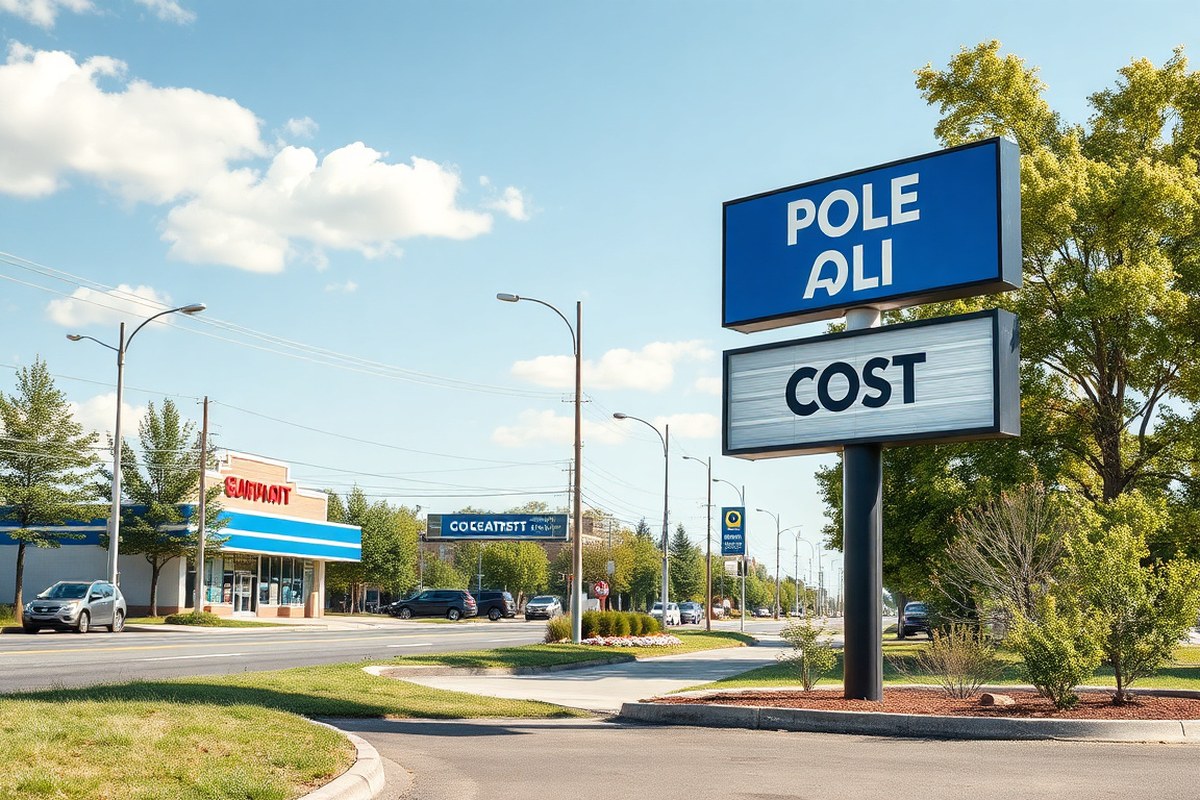
Expect a typical pole sign to cost between $12,000 and $100,000 or more, depending on size, materials, and complexity. This wide range results from several key factors that drive the price. Pole signs require not only the sign cabinet but also a sturdy support structure, which must handle wind loads and local code requirements. Taller poles, heavy-duty foundations, and integrated lighting systems push costs upward. For example, a simple unlit pole sign might start near $12,000, while a custom illuminated sign with a 30-foot pole could easily rise to $50,000 or beyond.
Labor and installation expenses are significant contributors to the total price. Installing pole signs usually demands cranes or heavy equipment, especially for poles taller than 20 feet. Nationally, installation alone generally runs from around $3,000 to $15,000 plus, depending on soil conditions and the complexity of the job. Foundations for pole signs are often deep, requiring concrete and heavy reinforcement, which adds materials and labor hours. The need for structural engineering permits contributes to the cost, since these signs must meet strict safety standards.
Lighting options also influence the final cost. Electrified pole signs require wiring, electrical components, and regular maintenance access. You can reduce costs by opting for non-illuminated signs or using energy-efficient LED modules, which might have higher upfront costs but lower operational expenses over time. Other factors, such as local zoning and permitting fees, vary widely and can impact your timeline and budget. Some municipalities require engineering reports or design reviews before granting approval, increasing your pre-installation expenses and planning time.
Material choices for the sign face and pole finish affect durability and aesthetics, which in turn affect price. Aluminum and steel supports are common, with steel typically costing more but offering greater strength. Sign cabinets made from acrylic or polycarbonate provide different price points and resistance to weather. If your location demands custom shapes or graphics, expect the manufacturing cost to increase. Finally, higher visibility roadsides often require larger, more strong signs to stand out, naturally raising the base price.
Understanding these factors helps you anticipate costs and make informed decisions about design, installation, and budgeting for your pole sign project. For your business, investing in a well-engineered, professionally installed pole sign can attract more attention, but the complexity of the job means careful planning to avoid unexpected costs.
How Height and Size Affect Pole Sign Pricing

The height and size of a pole sign have a direct impact on its total cost. Taller signs and larger sign faces require more materials, structural engineering, and installation effort, which can quickly increase expenses. Understanding these factors helps you plan your budget accurately and avoid unexpected price jumps.
How Height Drives Material and Engineering Costs
Taller pole signs demand stronger and often heavier support structures to withstand wind loads and meet safety codes. This means more steel or aluminum is needed. Engineering reviews are usually stricter for taller signs, requiring certified structural calculations and sometimes third-party inspections. A sign that is 30 feet tall may cost significantly more in materials and engineering than a 15-foot sign, even if the sign face size remains the same.
In addition to material costs, installation complexity increases with height. Crane rental or specialized rigging may be necessary, raising labor and equipment expenses. Foundation requirements grow more demanding for taller signs to prevent tipping or shifting, which adds to the initial site prep and concrete work costs.
Impact of Sign Face Size on Fabrication and Visibility
Larger sign faces increase material use for the display itself, such as acrylic or polycarbonate panels, metal framing, and illuminated components. Not only does more material cost more, but larger faces also require higher fabrication precision to maintain structural stability and visual appeal. A 50-square-foot sign face will be more expensive than a 25-square-foot face due to these factors.
Big displays often need improve lighting to maintain readability at night or from a distance. This means additional internal lighting components or external light fixtures, which add to electrical and maintenance costs. Conversely, smaller faces reduce light requirements and can be more budget-friendly but may limit visibility from the road.
Foundation and Installation Complexity Grow with Scale
Height and size together influence foundation design. Taller, heavier signs require deeper and wider concrete foundations, increasing excavation, materials, and curing time. Soil conditions at your site might necessitate additional foundation reinforcement or pilings for stability, pushing costs higher.
Installation also takes longer and demands more specialized equipment as size grows. High signs can require cranes, lifts, and skilled crew members able to work safely at heights. Larger sign faces may mean assembling components onsite rather than delivering preassembled, increasing labor hours.
Balancing Visibility with Budget Constraints
Choosing the optimal height and size involves balancing visibility needs with cost limits. Roadside businesses often aim for pole signs between 20 and 40 feet tall with sign faces from 30 to 60 square feet. Going beyond these ranges can drastically escalate costs due to structural, foundation, and installation demands.
When planning, measure sightlines and traffic speed near your location to decide the minimum size and height needed for effective visibility. Avoid overbuilding a sign that will cost more but provide only marginal increases in attention.
Factors That Can Alter Height and Size Costs
Additional factors influence how height and size affect pricing. Double-sided signs essentially double the sign face area, boosting fabrication and illumination costs. Multi-tenant panels add complexity in design and materials. Also, local codes might limit maximum height or require special permits, affecting your timeline and expenses.
Site conditions such as limited access or poor soil can raise installation and foundation costs disproportionately for taller or larger signs. Always confirm with your sign professional and engineer that the proposed height and size fit within your budget and comply with local zoning laws.
Ensure your sign’s height and size fit both your visibility needs and local code limits to avoid costly redesigns or delays.
Exploring Different Pole Sign Types and Their Cost Variations
Pole sign costs vary significantly depending on the style and features you choose. Single-tenant or multi-tenant configurations, traditional versus digital displays, and the pole structure type all impact the price. Understanding these options helps you plan a sign that fits your budget and marketing goals.
Single-Tenant vs Multi-Tenant Pole Signs
Single-tenant pole signs serve one business or property, generally with a simpler design and fewer panels. They typically cost less upfront, ranging from $5,000 to $25,000 depending on size and illumination. Multi-tenant signs display several businesses on separate panels, which adds complexity and expense. For example, a 6-tenant pylon sign can cost more initially but offers revenue opportunities through tenant panel fees, commonly $100, $500 per month in some metro areas like Atlanta.
Multi-tenant signs require modular panel designs allowing easy tenant changes, increasing fabrication costs. The coordination for panel updates, sign face replacements, and structural reviews may add ongoing expenses as well. You should consider current and future tenants to decide if a multi-tenant sign fits your property’s purpose.
Traditional vs Digital LED Displays
Traditional pole signs use static message faces, often internally or externally illuminated. These generally cost less upfront, ranging from $10,000 to $50,000 based on size and lighting type. Non-illuminated signs are cheapest but limit nighttime visibility, while internally illuminated options add electrical and servicing costs. Externally illuminated signs require fixture placement and power but can have simpler maintenance.
Digital LED pole signs are more expensive, often exceeding $50,000 depending on the display size, resolution (pixel pitch), brightness needs, and software or control systems. They provide dynamic content, better visibility, and remote programming but demand higher electrical access and ongoing service for electronic components. Licensing or message restrictions may also affect the installation plan and costs.
Single-Pole vs Double-Pole Structures
Single-pole signs use one central support and are common for smaller or less wide sign cabinets. They are generally less expensive to build and install, with costs around $3,000 to $15,000 for installation depending on height and foundation needs. However, wide or heavy signs may require additional stability.
Double-pole configurations feature two parallel poles with the sign mounted between them. This style suits wider, multi-tenant cabinets and provides increased structural stability but increases material and installation costs. Double-pole signs are typical for multi-tenant signs that need to accommodate several tenant panels comfortably.
Additional Features Affecting Cost
Lighting is a major factor: LED conversions on older cabinet signs increase energy efficiency but add upfront costs. Digital display add-ons also involve software, content management, and service access, pushing prices higher. Weather exposure in outdoor environments causes dirt buildup, requiring regular cleaning to maintain appearance.
Maintenance costs include lighting service, face replacements after tenant changes, and structural reviews after damage like storms or vehicle impact. Multi-tenant signs require periodic tenant panel updates, influencing both ongoing costs and installation complexity. The following table summarizes typical cost ranges by common pole sign types and key planning notes:
| Pole Sign Type | Cost Range | Planning Notes |
|---|---|---|
| Single-tenant, non-illuminated | $5,000, $12,000 | Good for small retail or office entrances; lower complexity |
| Single-tenant, internally illuminated | $10,000, $25,000 | Common for restaurants, gas stations, hotels; adds electrical requirements |
| Multi-tenant, double-pole, non-digital | $20,000, $50,000 | Supports several tenants; modular panel updates needed; higher upfront cost |
| Multi-tenant, digital LED | $50,000 and up | Dynamic content display; high electrical and software costs; ongoing service |
| Single-pole, small size (under 10 ft) | $5,000, $12,000 | Cost-efficient for small properties; easier installation |
| Double-pole, large size (20-30 ft) | $20,000, $50,000 | Increased stability and size; ideal for shopping centers and multi-tenant sites |
Choosing the right pole sign means balancing your budget against visibility, tenant needs, and the location’s exposure. Digital upgrades and multi-tenant options come with higher costs but can increase revenue and flexibility if planned carefully.
Lighting Options and Their Effect on Sign Cost
Lighting significantly affects the cost of a pole sign both in upfront expenses and ongoing energy use. Internal lighting, which places light sources inside the sign cabinet, generally increases the initial fabrication cost because it requires specialized materials like translucent panels and durable LED or fluorescent fixtures. These signs can cost between $3,000 and $15,000 or more depending on size and brightness, and they provide even illumination that improves visibility at night or in poor weather. However, they require a continuous power supply, causing higher electricity bills, typically ranging from $50 to $150 monthly depending on usage and local rates.
External lighting uses fixtures mounted outside the sign to shine light onto the sign face. This option costs less upfront than internal lighting, often saving $1,000 to $3,000 on fabrication. The main costs come from installing durable LED spotlights or floodlights, which usually range between $200 and $800 per fixture plus installation. External lights generally consume less power overall but may be less attractive visually and more prone to weather exposure and vandalism. Maintenance can include replacing bulbs or LEDs every few years, adding to long-term costs.
Choosing no lighting at all is the least expensive upfront option, saving several thousand dollars on manufacturing and installation. This option suits locations with ample daylight or businesses that do not need night visibility. However, the sign’s visibility severely declines after dark, which might reduce customer traffic or brand exposure during evening hours.
- Internal lighting involves translucent panels and embedded LED or fluorescent lights.
- External lighting uses LED spotlights or floodlights mounted on sign poles or brackets.
- Unlit signs avoid electrical and lighting equipment but lose night visibility.
- Internal lighting has higher upfront and monthly energy costs.
- External lighting costs less initially but requires periodic maintenance.
- No lighting is cheapest initially but limits signs to daylight use only.
- Electrical tie-in fees typically range from $500 to $2,000 depending on distance to power.
To decide what works best for you, consider your business hours, location visibility, and local regulations on sign lighting. Installing a sign with internal lighting usually means higher upfront and operating costs but offers superior and uniform night visibility. External lighting can be a middle ground, providing illumination without the expense and maintenance intensity of internal systems. No lighting minimizes expenses but makes your sign less effective after dusk.
Hidden Costs: Installation, Permitting, Foundation, and Electrical
Beyond the base price of a pole sign, several hidden costs can significantly increase your total budget. These additional expenses often catch business owners and property managers by surprise unless anticipated early in the planning stage. Site preparation, foundation design, permits, electrical connections, and labor are the main areas where extra charges tend to arise and should be carefully considered.
Site conditions directly influence costs because uneven terrain, underground utilities, or limited access to the installation spot may require more extensive groundwork. Foundation work varies greatly with sign size and height; a taller pole demands a deeper and wider concrete footing, which can add hundreds or even thousands of dollars. Electrical work typically includes pulling power lines, installing wiring, connecting controls, and ensuring compliance with local electrical codes. These charges often run from $150 to $500 depending on the complexity and distance from the nearest power source.
Permits and engineering fees form another layer of expense. Local governments usually require building permits for pole signs, with fees ranging from $25 to $500. The permit application often requires submitting engineered plans to prove the structure’s safety, particularly for taller or heavier signs. Engineering or structural reviews might add consulting fees that are sometimes overlooked in initial quotes. Failure to obtain proper permits or overlook engineering requirements can cause delays, fines, or costly redesigns. In practice, you can use a simple checklist to ensure you account for all hidden costs before accepting a bid or starting the project:
- Verify local permitting requirements and estimate permit fees.
- Assess site conditions for grading or obstructions affecting installation.
- Confirm foundation specifications based on sign size and height.
- Determine electrical connection needs, including power access and code compliance.
- Plan for removal and disposal if replacing an existing sign.
- Include labor costs for installation, testing, and cleanup.
- Request engineering review fees if structural or design approvals are required.
Get written confirmation from your sign provider about which hidden costs are included and which might come as extra charges later.
Costs can escalate if the sign design exceeds local height limits or landlord restrictions, triggering additional engineering reviews or modified foundations. Concrete foundations for a pole sign typically extend 3 to 6 feet deep and may require reinforcing rebar to handle wind loads and soil conditions. Electrical work often requires coordination with your utility to provide a dedicated circuit or meter for illuminated signs, pushing the expense upward. Labor fees for installation usually cover site inspection, equipment rental, footing excavation, pole assembly, wiring, and final testing.
Planning thoroughly and requesting detailed quotes that break down these hidden expenses will help you avoid unexpected budget overruns. This approach also allows you to compare bids fairly and make an informed decision based on your site’s unique conditions and local code requirements.
When to Reface, Retrofit, or Replace Your Existing Pole Sign
Choosing between refacing, retrofitting, or fully replacing your existing pole sign depends on the structure’s condition, your project goals, and budget. Refacing updates the visible branding while keeping the structure. Retrofitting upgrades lighting or electrical aspects without changing the face. Replacement involves installing a new sign when the current one is beyond repair or does not fit your needs.
Definition of Re-Facing Pole Signs
Refacing means replacing the sign’s visible faces, tenant panels, or branding graphics while using the existing cabinet and pole structure. This option works best when the frame is still sound and the lighting, if included, is in good condition. You update only the external panels, doors, or face inserts, preserving most of the original installation. The goal is a fresh look with minimal disruption and generally lower cost than full replacement.
Refacing typically applies when your sign’s face dimensions fit current branding, and no major electrical upgrades are required. It suits single-tenant or retail properties where brand appearance, rather than structural changes, drives the project.
Scope and Benefits of Retrofits
Retrofitting involves modifying or upgrading lighting systems, electrical components, or digital displays on an existing pole sign while keeping the cabinet and structure intact. It often means switching from older neon or fluorescent lights to LED lighting or adding electrical access for digital panels. This option helps improve energy efficiency, sign visibility, or functionality without rebuilding the entire sign.
Before retrofitting, verify the sign’s structural condition and electrical capacity. Ensure local codes permit the desired lighting methods. Retrofitting fits projects focused on lighting or tenant panel upgrades and can extend the sign’s useful life at a fraction of replacement cost.
Cost and Timing of Full Replacement
Full replacement involves removing the existing pole sign and installing a new structure. This is necessary when the current sign’s frame, foundation, or electrical system is beyond repair or insufficient for your branding and lighting needs. New signage may also be required in new developments or if your property address changes, affecting visibility or signage allowance.
The cost for full replacement is significantly higher than refacing or retrofitting, including demolition, foundation work, new electrical connections, permitting, and installation. A new pylon sign can cost tens of thousands of dollars depending on height, size, and materials. Lead times range from weeks to months due to permitting and fabrication, compared to days or weeks for refacing or retrofitting.
When to Choose Each Option
Your choice depends on the existing sign’s structural use, lighting system, visual condition, code restrictions, and budget. Use this decision rule:
- Choose Refacing if the structure and lighting are usable and only the face panels or branding require updating.
- Choose Retrofitting if the sign needs better or new lighting, electrical upgrades, or digital enhancements but the cabinet and structure are sound.
- Select Replacement if the frame is damaged, there’s no usable structure, or if you require a significantly different size, height, or new foundation.
The table below compares these options based on typical conditions and what to verify before quoting.
| Option | When It May Fit | What to Verify Before Quoting |
|---|---|---|
| New pylon sign | You have a location without any existing signs or a new property that requires an outdoor sign along the road. | Code allowance, height, size, foundation, electrical access |
| Reface | Existing structure usable; visible branding or tenant panels need updating | Face dimensions, cabinet condition, tenant panels, lighting |
| Retrofit | Existing sign requires lighting or electrical upgrades, digital displays added | Structural condition, electrical capacity, code requirements |
| Replacement | Existing structure failed, or significantly different size or height needed | Structural condition, foundation needs, permitting |
Cost savings vary widely. Refacing typically costs 30% to 50% of replacement because it limits materials and labor, focusing on face and graphic work. Retrofitting lighting or electrical upgrades usually runs 40% to 70% of full replacement costs, varying with complexity. Full replacement carries the highest cost due to demolition, permitting, new foundations, and extensive installation. Selecting the right approach reduces downtime and ensures your sign meets visibility, code, and branding goals.
Breakdown of Labor, Timing, and Installation Challenges
Installing a pole sign typically takes between one and four hours on the day of the install. This labor time depends on factors like soil condition, required depth for the footing, and the size of the installation crew. Labor costs usually range from $100 to $600 per sign, with more challenging sites demanding additional time and effort. For example, rocky or sandy soil can slow down digging and securing the post, increasing labor hours and total price.
The overall project timeline extends beyond the installation day. Fabrication of the pole sign often takes one to four weeks, depending on complexity and vendor schedules. Permitting processes may add a few days to several weeks, depending on local rules and whether inspections are required. Scheduling the installation with contractors also affects timing, so projects typically conclude two to six weeks after placing an order.
Installing a pole sign involves several steps that influence labor needs and cost. First, the site is surveyed to mark the exact location and assess ground conditions. Next, a hole is excavated to the proper depth, often 3 to 6 feet deep, to secure the pole with concrete footing. This step is important to ensure stability during wind and weather. After the concrete sets, usually several hours or overnight, workers assemble the sign structure and mount the sign panel. Electrical connections are made if the sign includes lighting.
Unexpected challenges can increase expenses and extend timelines. If utilities are buried where the sign is planned, locating or relocating them adds costs and delays. Inconsistent soil may require additional foundation work or specialized equipment. Weather conditions like rain or freezing temperatures can halt work or require extra site preparation to protect the concrete. Poor access to the site or tight spaces might slow installation and increase labor hours.
Good planning can help avoid these pitfalls. Confirming permitting requirements early and allowing time for municipal inspections prevents last-minute hold-ups. Hiring experienced installation crews familiar with various soil types and urban settings reduces unforeseen challenges. Choosing an installation date with favorable weather forecasts minimizes weather-related delays. Expect the labor portion of your budget to cover these variables, with straightforward jobs closer to $100 and complex conditions pushing toward $600 or more per sign.
How to Get Accurate Pole Sign Quotes and Avoid Cost Surprises
Getting an accurate pole sign quote starts with providing clear, detailed information to the sign company. Include specifics like the exact dimensions of the sign, the design or types of panels needed, and any existing site conditions such as photos of the current sign or mounting location. Confirm whether the quote covers the sign cabinet alone or if it includes foundation work, electrical hook-up, and permits. These details matter to avoid a gap between the initial price and the final bill.
Be precise about the site’s access for installation equipment and any local code requirements that might affect design or height restrictions. Clarify who is responsible for the permit fees and whether these costs are included or extra. Inform the vendor if there’s an old sign to remove and ask whether removal, disposal, patching, and painting charges are part of the quote. Lifting equipment rental, such as cranes or boom lifts, often shows up as separate fees that can add thousands to the cost.
- Send clear photos and documents of the site and any current signage.
- Specify exact sign size (width, height, depth) and panel types.
- Ask if foundation, electrical, and permits are included in the quote.
- Request a breakdown of labor, equipment rentals, and removal fees.
- Confirm power source distance and panel capacity requirements.
- Check local code distinctions between pole and pylon sign regulations.
- Compare quotes line-by-line to spot hidden fees or exclusions.
Never assume the listed price covers all installation and permitting costs; always get a written breakdown before signing.
Negotiation tips include asking if bundling components like electrical, foundation, and signage lowers your total cost. Sometimes vendors separate these to show lower upfront pricing but combining saves money. Also, discuss timing flexibility; scheduling installation during off-peak seasons or slower work periods can reduce labor costs. Clarify warranty terms upfront and who handles future repairs or upgrades, those responsibilities influence your long-term expenses.
Failing to specify details or misunderstanding what’s included can cause budget surprises. For example, a quote might omit lift rentals or disposal fees, which typically range from several hundred up to over a thousand dollars. Not verifying local permit processes might delay installation and incur fines. Since pole sign pricing varies widely by location, size, and site conditions, a professional’s walkthrough or consultation ensures more dependable quotes. When you communicate clearly and ask focused questions, you’ll make better decisions and keep your project on budget.
Step-by-Step Action Plan for Budgeting Your Pole Sign Installation
Follow these steps to manage your pole sign project budget and avoid unexpected expenses.
- Before you start: Research local sign regulations and permit requirements to confirm project feasibility. Success means you know which permits you must obtain and their costs.
- Week 1: Request detailed quotes from at least three reputable sign companies, specifying size, height, lighting, and installation needs. You want clear, itemized pricing to compare.
- Week 2: Consult with an electrician or engineer regarding foundation and electrical needs based on your site conditions. Verify their recommendations align with your quotes.
- Week 3: Choose whether to reface, retrofit, or replace your current sign based on condition and cost estimates. This decision affects your total budget.
- Week 4: Schedule your installation during favorable weather and confirm timelines with your installer. Aim for a date with minimal disruption to your business.
- Day of installation: Supervise the process to address any issues quickly. Installation going smoothly means no hidden delays or extra charges.
- After installation: Monitor the sign’s lighting and structure for the first few days to ensure everything functions properly.
Frequently Asked Questions
How Much Does a Basic Pole Sign Typically Cost to Install?
A basic pole sign installation usually runs between $3,000 and $15,000. Costs depend on height, foundation needs, and single or multi-tenant features.
Can Skipping Lighting Reduce the Overall Cost of a Pole Sign?
Yes, avoiding lighting can significantly lower costs since electrical work and illuminated components add to expenses.
Does the Type of Pole Structure Affect the Sign’s Price?
Different pole materials and designs, such as steel versus aluminum, impact cost based on durability and appearance.
How Do Local Regulations Influence Pole Sign Costs?
Local codes can require specific setbacks, permits, or materials, which raise compliance costs and installation time.
Are Foundation Requirements a Major Factor in Pole Sign Pricing?
Yes, engineering and construction of the foundation can be costly, especially for taller or heavier pole signs.
What Is the Cost Difference Between Single-Tenant and Multi-Tenant Pole Signs?
Multi-tenant signs usually cost more due to larger size and additional panels needing separate design and fabrication.
The Bottom Line
Knowing all costs involved, from permits to installation, helps you set a realistic budget for your pole sign. Getting detailed quotes and expert advice reduces surprises and keeps the project on track. Take the first step now by checking your local sign codes and gathering initial estimates from trusted vendors.