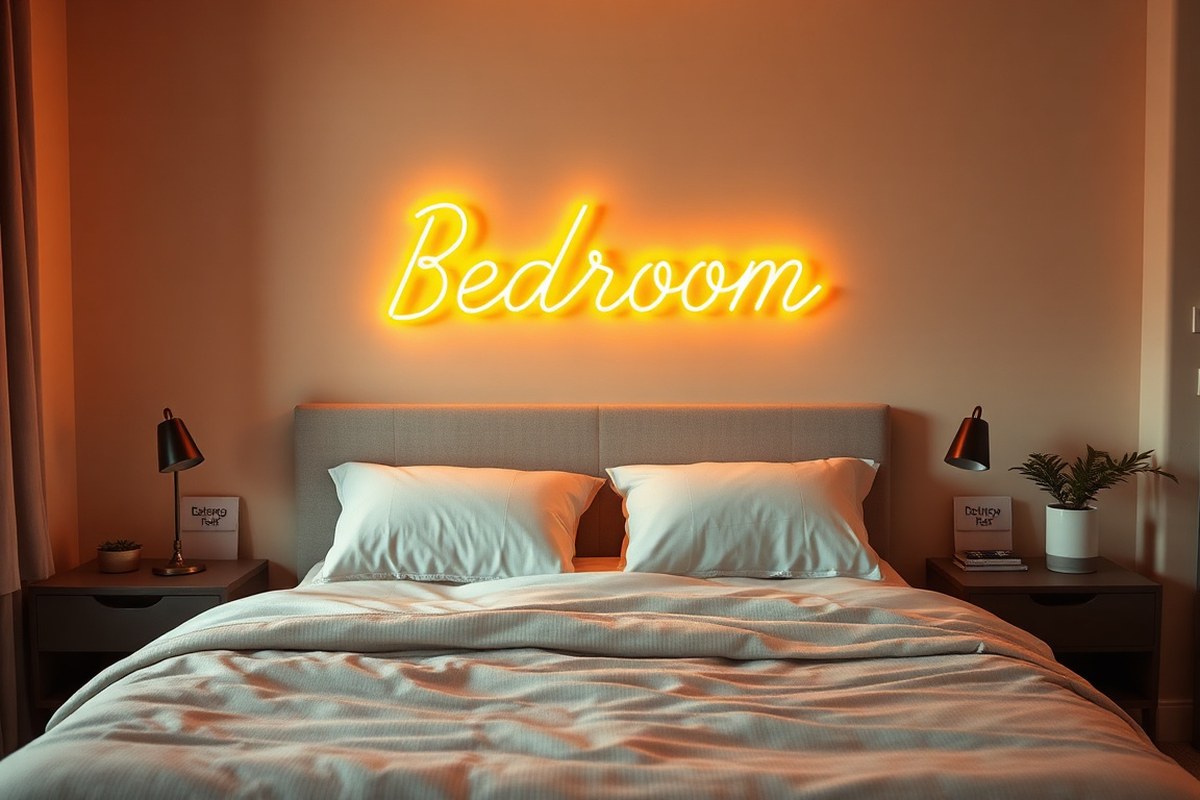
Bedroom Sign Ideas That Transform Your Space with Light and Style
Bedroom sign ideas bring personality and soft lighting into your space, transforming plain walls into cozy, stylish backdrops. Using warm neon or LED signs with personalized phrases or motifs instantly updates your bedroom’s mood while consuming minimal energy. Start by choosing a sign with warm 2700K to 3000K lighting to create a soothing atmosphere where you can relax.
Key Takeaways
- Pick bedroom signs with warm color temperatures between 2700K and 3000K for a calming light effect.
- Position signs about 10 to 14 inches above your headboard or dresser for optimum visual impact.
- Select neon signs that use around 10 watts to keep monthly energy costs low, even left on nightly.
- Choose sign designs featuring personal phrases or symbols to improve your bedroom’s unique character.
- Plan for at least 5 feet of concealed cable to ensure flexible, neat installation behind your wall.
- Consider LED alternatives if you want lower heat emission and easier maintenance compared to neon.
Popular Bedroom Sign Ideas and Their Impact
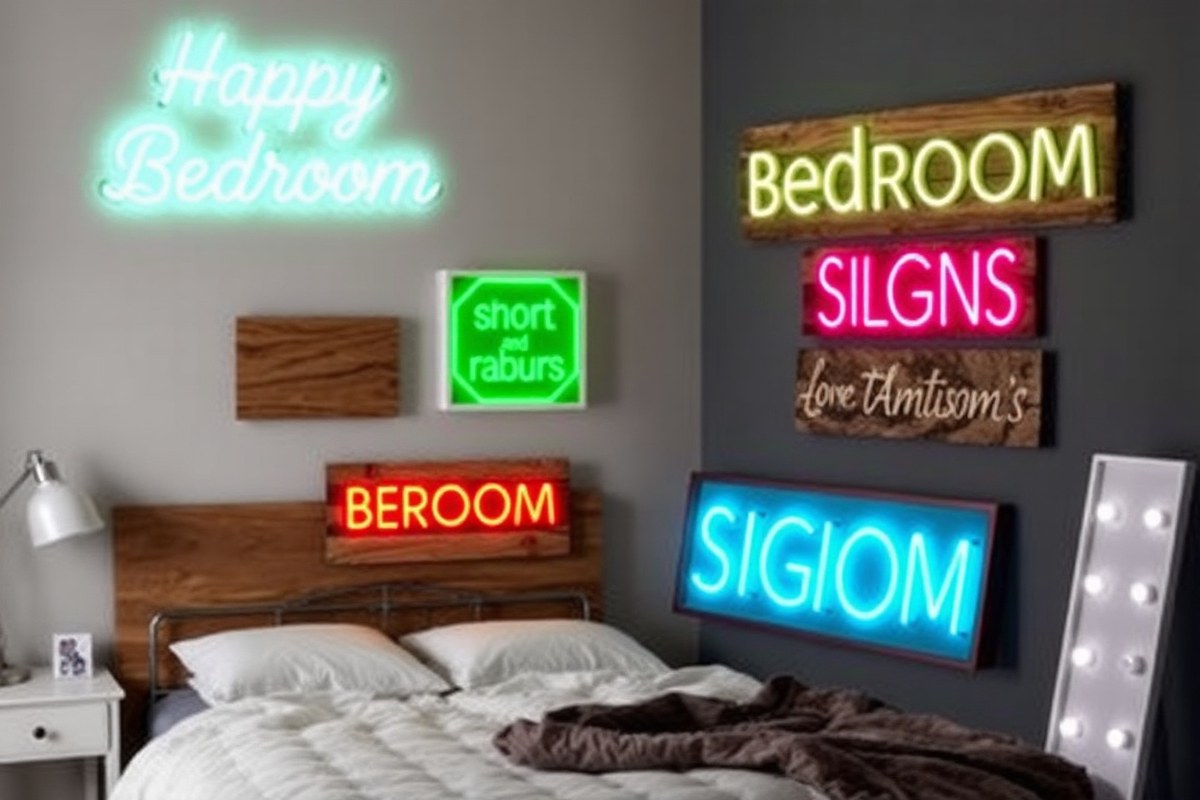
Bedroom signs come in several popular styles that add personality and create a cozy atmosphere. Personalized neon or LED signs displaying your name, a favorite phrase, or a meaningful motif are especially effective. These signs provide warm light, usually around 2700K to 3000K color temperature and 200 to 400 lumens brightness, which improve the room’s friendliness while avoiding harsh glare. Placing the sign about 10 to 14 inches above key furniture like the headboard or dresser helps anchor the space visually.
Popular types include word signs, symbol or shape signs, and illustrated artwork. Word signs such as inspirational quotes or welcoming messages bring a sense of comfort and motivation. Designs like “This must be the place” or calming phrases underline personal connection and invite restfulness. Motifs like flamingos or unicorns add playful charm or evoke whimsy, fitting pastel or neutral décor themes well. For a more sensual ambiance, signs showing a female back silhouette or lips can transform the bedroom’s mood.
- Personalized name or phrase signs: Perfect for a unique, meaningful touch; may require custom ordering and higher cost.
- Motif and symbol signs: Easy to find pre-made, great for adding personality and fitting decor themes; may lack customization.
- Artistic neon acrylic signs: Blend well with modern or minimalist rooms; typically more expensive but visually striking.
- Playful or whimsical designs: Ideal for kids’ or youth-focused bedrooms; add color and joy but can clash with mature styles.
- Bold or sensual signs: Suitable for adult bedrooms seeking mood lighting; use carefully to avoid overwhelming the space.
- Inspirational quote signs: Foster positive vibes and relaxation; widely available and generally affordable.
Matching sign style to bedroom décor involves balancing the sign’s theme, color, and light warmth with existing elements. For example, a warm 2700K glow from a script font phrase complements traditional or farmhouse styles with pastel accents. In contrast, neon art with vintage yellow or pastel pink tones offers striking contrast in modern or minimalist settings. Avoid cold or overly bright colors in the bedroom since they can disrupt sleep patterns and disturb the cozy atmosphere.
Signs add more than light; they reflect your personality and set the room’s mood, making the space distinctly yours. Choose a style and size that feels right for your bedroom, keeping in mind power use is minimal, about 10 watts for a 24-inch sign, costing roughly $0.31 monthly if used six hours nightly at the US average electricity rate. This low energy cost makes bedroom signs practical while boosting ambiance and decor charm.
How Neon and LED Signs Work in Bedrooms
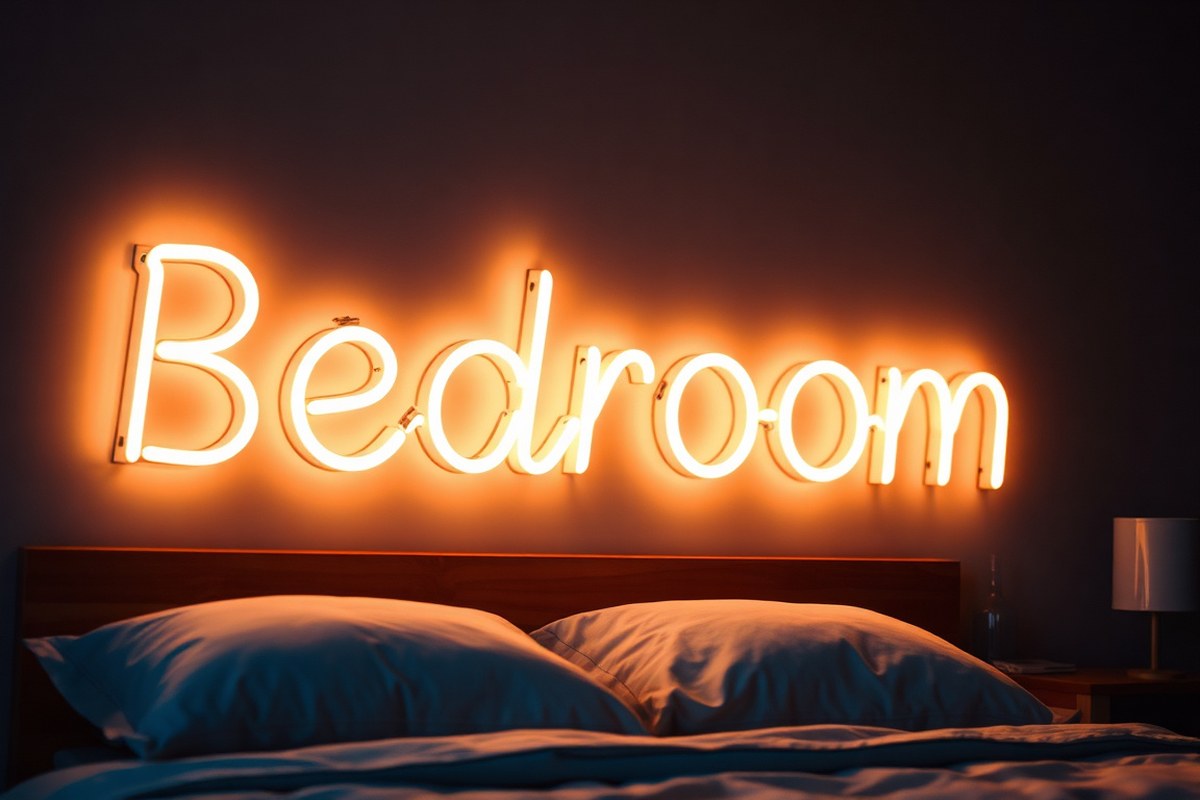
Neon and LED signs in bedrooms use very different technologies that affect their energy use, lifespan, and overall function. Neon signs create light by passing electricity through neon gas sealed in glass tubes. This gas glows in vibrant colors, but these tubes are fragile and require careful handling. LED signs use light-emitting diodes, which are solid-state bulbs that glow when electric current passes through them. This difference makes LED signs more energy-efficient and durable for bedroom settings.
Energy consumption and lifespan vary significantly between neon and LED signs. Neon signs typically run on higher voltage and use more power, while LED signs operate on low-voltage DC, often 12 volts, making them safer and cheaper to run. A typical neon sign can last around 8,000 to 15,000 hours, while LED signs often reach 50,000 to 100,000 hours or more if quality components are used. LED signs also tend to maintain their brightness longer without degrading.
Below is a comparison table summarizing key differences in lifespan and power usage for neon versus LED bedroom signs:
| Aspect | Neon Sign | LED Sign |
|---|---|---|
| Power Use (Watts) | 25 to 40 W typical | 5 to 15 W typical |
| Voltage | High Voltage AC (around 1000-1500 V) | Low Voltage DC (12 V) |
| Typical Lifespan (Hours) | 8,000, 15,000 hours | 50,000, 100,000+ hours |
| Brightness Control | Limited | Dimmable with remote |
| Weight | 600 g to 2 kg | Lightweight, typically less than neon |
| Safety | High voltage risk | Safe 12V DC with UL/ETL listings |
To illustrate energy cost, consider a 10-watt LED neon sign running 5 hours daily in your bedroom. The monthly energy use is:
- Daily kWh = 10 W × 5 hrs / 1000 = 0.05 kWh
- Monthly kWh = 0.05 kWh × 30 days = 1.5 kWh
At an average electricity rate of $0.13 per kWh, monthly cost is:
1.5 kWh × $0.13 = $0.20
This shows LED signs can run cost-effectively even with frequent use. Neon signs with higher wattage would use about 30 W, tripling that cost to around $0.60 monthly.
Ensure your LED sign has proper UL or ETL certification and uses a silicone sleeve rated for IP65 to resist humidity and dust in your bedroom.
LED signs also allow dimming, so setting the brightness to 50% halves the power draw and extends lifespan further, making them excellent for overnight use. Neon signs are less flexible and can be riskier left on continuously.
Choosing the Right Material for Bedroom Signs
Choosing the right material for a bedroom sign affects its look, feel, durability, and how much care it needs. Popular choices include acrylic, wood, metal, and neon. Each material offers different advantages that suit various bedroom styles and maintenance habits. Acrylic signs have a smooth, modern finish and are lightweight. Wood adds a warm, rustic touch but may require occasional dusting and protection from humidity to avoid warping. Metal signs are sturdy and often come with a sleek or industrial finish, but they can rust if not coated properly. Neon signs, famous for their nostalgic glow and vibrant colors, create a cozy ambiance and require careful handling of electrical parts.
Neon signs typically come with a cable length of at least 1.5 meters (about 5 feet) from the sign to the driver. This distance helps hide wiring for a cleaner look. Cost and durability vary, so understanding the trade-offs helps you pick a sign material that fits your style and bedroom environment.
| Material | Typical Cost Range | Durability | Style Notes | Care Needs |
|---|---|---|---|---|
| Acrylic | $30 – $100 | Moderate; resistant to moisture but can scratch | Sleek, modern, available in many colors | Wipe with a soft, damp cloth; avoid abrasive cleaners |
| Wood | $50 – $150 | Good if kept dry; can warp or crack in humidity | Warm, rustic, customizable with paint or engraving | Dust regularly; avoid exposure to moisture |
| Metal | $70 – $200 | Highly durable but may rust if uncoated | Industrial, sleek, reflective finishes | Clean with dry cloth; use rust protector if needed |
| Neon | $100 – $400 | Fragile glass tubes but long-lasting when maintained | Bright, colorful, nostalgic warm glow | Keep dry; avoid bumping tubes; dust gently |
Acrylic signs fit well in a bedroom with modern decor and low maintenance tolerance. Wood suits spaces where you want a cozy, natural look but should be placed away from humid areas like a bathroom-adjacent bedroom. Metal signs work best in minimalist or industrial-themed bedrooms and bring a sturdy feel. Neon signs add vibrant character and come in up to 18 different shades, such as soft pink or light blue, which are ideal for kid’s rooms or playful themes. Neon also requires electrical safety considerations and a power source hidden by its cable length for a clean installation.
Matching the material to your bedroom conditions and your willingness to clean or maintain the sign helps keep it beautiful and functional. For example, avoid wood in damp rooms or neon in very small, cluttered bedrooms to prevent damage and ensure the sign complements your space.
Best Placement Strategies for Bedroom Signs
Bedroom signs work best when placed where they catch the eye yet complement other elements in the space. Hanging signs around 5 to 6 feet above the floor maximizes visibility and balances with furniture heights. Placement affects both the room’s style and how light from a neon or LED sign spreads, influencing mood and comfort.
Central Wall Spots for Maximum Impact
Placing your bedroom sign on a central wall facing the main entrance or above the bed creates an immediate focal point. For example, the “Good Vibes Only” neon sign is often hung centrally to draw attention and set the tone for the room. Signs placed above the headboard should hang roughly 6 inches to 12 inches above the furniture top, avoiding crowding the space and providing a clean visual break.
This spot also allows light to disperse evenly, creating ambient illumination that softens the room without overwhelming it. Signs with softer colors like pink glow emit gentle light that gently brightens the bedroom without disturbing rest, adding to a cozy feel.
Adjusting Height According to Furniture and Sightlines
Height matters for both style and practicality. Aim to hang signs between 60 to 72 inches from the floor, adjusted by the surrounding furniture:
- Above a dresser or desk: 6 to 8 inches above the surface
- Near bedside tables: eye level sitting or standing, about 60 inches high
- On a blank wall opposite the bed: around 66 inches for easy visibility
- On smaller walls or near windows: lower height to avoid glare or blockages
- For personalized name signs in a teen’s room: near the wardrobe or study area for balance
This approach helps signs serve both decorative and functional roles without interfering with everyday use or creating awkward shadows and eye strain.
Balancing Light Distribution and Room Mood
Neon and LED signs naturally throw light beyond their shape. Position your sign so this glow plays well with existing bedroom lighting to support both energizing and restful moods. Because bedroom lighting needs to move from bright enough for tasks to dim for relaxation, signs with dimmer remotes offer better control.
Signs that emit light above 4000K color temperature tend to feel clinical and disrupt your body’s wind-down process. Softer, warmer glows near 2700K to 3000K mimic sunset tones and are best for nighttime ambiance. Place signs away from direct view of windows to prevent glare and ensure the light wraps softly around the room.
Placement Decisions Based on Bedroom Layout and Sign Style
Different bedroom shapes and styles call for varied sign placement strategies. Rectangular rooms benefit from signs on longer walls near center points, which anchor eye movement. Smaller rooms can avoid clutter by picking a single neat spot above key furniture rather than multiple signs.
For bold, bright signs or text-based messages, choosing walls with less competing decor avoids visual noise. Artistic or symbolic signs like the “Hand of God” suit versatile spots where they can complement both modern and classic styles, such as beside a mirror or near a reading nook.
Quick Tips for Effective Bedroom Sign Placement
- Measure your wall space before buying or mounting a sign
- Use a laser level for straight, precise hanging
- Consider wiring and outlet placement to minimize visible cords
- Keep signs at least 2 feet away from direct light sources to reduce glare
- Test dimmer settings in the evening to find comfortable brightness
- Pair signs with neutral wall colors to improve visibility
- Try mock placement using paper templates before drilling
Following these steps ensures your bedroom sign improve style and ambience without overpowering the space or disrupting bedroom function.
How to Customize and Order a Neon Bedroom Sign
Customizing and ordering a neon bedroom sign starts with picking your design, selecting the size and colors, and then completing the order through a configurator or vendor. The entire process usually takes about two to three weeks from design approval to delivery. Taking the time to choose the right fonts, colors, and effects ensures your sign will fit perfectly with your bedroom’s style.
Selecting Your Sign Text or Motif
Decide what message or image you want your neon sign to display. Popular options include names, inspirational quotes, or themed motifs like a palm tree or heart. The design sets the tone of your bedroom, from romantic to relaxing, and can be completely personalized.
Many custom neon sign services offer a preview tool that shows how your chosen text or artwork looks against light and dark backgrounds. This feature helps you visualize the final result and tweak the design before ordering.
Choosing Size, Color, and Lighting Effects
Size matters for both impact and fit. Measure the wall space where the sign will hang to pick an appropriate size. Small signs can be as little as a few inches wide, while larger pieces may exceed three feet. Prices usually start around $61 for simple two-letter designs and increase with size and complexity.
Color options range from classic neon shades like pink and blue to RGB color-changing models. RGB signs offer more than 100 lighting effects controlled via remote, allowing you to adjust colors and moods anytime. Choose fonts that are readable and match your bedroom style; script fonts offer elegance, while block fonts provide modern clarity.
Ordering Process and Expected Delivery Time
Use the custom neon sign configurator provided by the vendor to finalize your design, size, and color choices. After placing your order, expect a production period of about one to two weeks. Shipping usually adds an additional 3 to 7 days depending on your location and shipping method selected. Here’s a simple step-by-step guide to ordering your neon bedroom sign:
- Choose your sign text or motif, using a design preview tool if available.
- Measure your intended wall space to decide on an appropriate sign size.
- Select your preferred neon colors and any special lighting effects like RGB cycling.
- Pick a font style that improve readability and fits your bedroom’s vibe.
- Use the vendor’s configurator to upload your design or create it from templates.
- Review your custom sign preview to confirm design accuracy.
- Place your order and provide payment details.
- Wait for production and shipping, planning around a total 2-3 week timeline.
Consider choosing an RGB color-changing sign if you want the flexibility to update your room’s mood without buying a new sign.
Ideal Lighting Specifications for Bedroom Signs
For bedroom signs, choosing the right color temperature makes a big difference in setting a restful mood. Warm white lights at about 2700K offer a calm and hotel-like ambiance, ideal for placing above the bed or in the master suite. This color temperature is less likely to interfere with your sleep cycle because it minimizes blue light that can suppress melatonin, the hormone that helps you fall asleep. Avoid cooler temperatures like ice blue (around 470 nm), which can feel energetic and disrupt relaxation if used near your sleeping area.
Brightness is another key factor to keep your bedroom sign from disturbing sleep. Signs that emit about 100 to 200 lumens are usually sufficient to create a glowing accent without overpowering the room. Too bright a sign can make it harder to fall asleep, especially if it shines directly into your eyes. Keeping the sign’s brightness low to medium helps maintain a cozy, inviting space. Adjusting the sign to a softer glow in the evening signals your body to wind down and prepare for rest.
Installing a dimmer switch or using a smart plug with adjustable settings is highly recommended for neon signs in the bedroom. Dimmers allow you to change brightness levels easily throughout the day. You can keep the sign brighter during evening activities, then lower the light as bedtime approaches. Smart plugs offer additional convenience by enabling scheduled dimming or turning the sign off remotely through an app. Both options typically cost between $15 and $50, depending on features and brand. Integration with a bedroom’s existing lighting controls is often straightforward.
For practical lighting settings, start with a soft white (3000K) or warm white (2700K) sign during most evening hours. If your bedroom features a wind-down zone, consider amber-colored lighting at 2200K exclusively in the late evening to mimic candle-like warmth that encourages restful feelings. Brightness should stay near the lower end of your dimmer’s range, around 100 lumens just before bedtime. Avoid running your sign at full brightness past an hour before sleeping.
Using these lighting strategies ensures your neon bedroom sign improve the decor without compromising sleep quality. Signs left too bright or at cool, high temperatures can cause glare or overstimulation, making it harder to relax. Opt for warm tones, moderate brightness, and adjustable dimming so your bedroom sign fits the rhythm of your day and night activities, creating a peaceful retreat you enjoy all day long.
Safe Installation Practices for Bedroom Signs
Bedroom signs can be safely installed on drywall using the proper anchors and tools. Following a clear installation checklist helps avoid damage and ensures the sign is secure and stable. Managing electrical connections carefully reduces risks and keeps the setup tidy. Signs designed for bedrooms usually weigh under 10 pounds, meaning common drywall anchors and four-point fixings effectively support them.
Preparing Wall and Tools Needed
Start by selecting a clean, dry wall area free of dust and grease. Signs that are lightweight and pre-mounted on a backboard allow you to screw directly into drywall without needing studs, provided the anchors are strong enough. Collect necessary tools such as a drill with appropriate bits, a screwdriver, a level, a tape measure, a pencil, and drywall anchors rated for the sign’s weight.
Choosing anchors rated for at least 15 pounds ensures a safety margin. Nylon anchors designed for 3/8 inch (9.5 mm) drywall thickness provide solid support. Verify the manufacturer’s instructions for any specific mounting hardware included or recommended with your sign.
Mounting the Sign Securely on Drywall
Properly securing your bedroom sign prevents falls and wall damage. Use a four-point fixing pattern to distribute weight evenly and reduce stress on the drywall. Align the sign horizontally centered above the headboard, leaving 10 to 14 inches (25 to 35 cm) from the top of the headboard. Mark the drill points carefully with a pencil and check level before drilling. Follow these steps for safe mounting:
- Measure and mark where the sign will go, centering and maintaining recommended spacing above furniture.
- Drill holes for anchors using a bit sized for your specific fasteners.
- Insert nylon drywall anchors fully into the holes until flush with the wall surface.
- Align the sign’s mounting holes over the anchors.
- Insert screws through the sign’s backboard into the anchors and tighten while keeping the sign level.
- Verify stability by gently nudging the sign once mounted.
Signs weighing over 10 pounds may require additional support, such as attaching to a stud or using heavy-duty toggle bolts. Avoid hanging signs too low where they can be bumped or cause injury.
Managing Cables and Electrical Connections
Bedroom signs commonly use low-voltage LED systems that are safe to touch and comply with IEC 62471 safety standards. Keep power cables routed neatly along corners or edges to avoid tripping hazards and aesthetic clutter. Use cable clips or adhesive cable organizers rated for indoor use to secure wires discreetly.
Hide drivers (power supplies) in nearby drawers, behind furniture, or mounted on the wall but out of reach, ensuring adequate ventilation. Never cover drivers with fabric or block airflow, as overheating can be a fire hazard. Ensure all connections follow the manufacturer’s wiring instructions, and consider using surge protectors to safeguard against electrical spikes.
Cost Breakdown and Budgeting for Bedroom Signs
Bedroom signs vary widely in cost based on size, material, lighting type, and customization. On average, a simple custom neon sign with a short phrase or name often fits the “Simple Letter” pricing model, which makes pricing more predictable. Ready-made signs generally cost less, while fully custom designs or those using specialty characters and extra features increase the price. Planning your budget carefully will help you find an option that fits your style without overspending.
Several pricing factors affect the final cost. Size plays a major role, larger signs use more materials and require additional wiring. The type of lighting, such as LED neon versus traditional glass neon, influences cost and energy use. Materials vary from acrylic and metal backings to flexible neon tubing, each at different price points. Custom design complexity, including unique fonts or graphics, can add to the lead time and price. Also, adding dimmers or smart plugs slightly increases upfront costs but can save up to 40% on electricity by lowering brightness when you sleep. The table below compares common cost factors for custom and ready-made bedroom signs, highlighting how each element affects your budget:
| Pricing Factor | Typical Range | Impact on Cost |
|---|---|---|
| Size (height × width) | 12 × 24 in to 24 × 48 in | Larger size increases material and labor expenses |
| Lighting Type | LED Neon: $100-$300; Glass Neon: $300-$600 | LED uses less power and costs less initially |
| Material | Acrylic, Metal, Flexible Neon | Metal and flexible neon tend to cost more than acrylic |
| Customization Level | Simple letters to unique graphics or alphabets | Higher complexity raises design and production time |
| Additional Features | Dimmer, Smart Plug: $20-$50 extra | Reduces ongoing energy costs by up to 40% |
| Lead Time | 1 Week to 4+ Weeks | Longer lead times usually mean higher cost for rush orders |
Budgeting for a bedroom sign starts with determining your maximum spend, including installation if you’re hiring a professional. For a modest budget, choose smaller, ready-made signs with LED lighting. Custom signs are better if you want a specific message or style, but expect to pay more and wait longer. Adding smart plugs or inline dimmers upfront can reduce electricity bills, offsetting their initial cost in about a year. Prioritize what aspects matter most, size, look, energy use, and weigh your options accordingly.
Remember to adjust brightness settings after 10 pm to protect melatonin production and save on energy costs.
Careful planning and understanding the main cost factors let you choose a bedroom sign that fits your bedroom’s vibe and your wallet. Always request detailed quotes from manufacturers to clarify any extra fees for customization or accessories before finalizing your order.
Creative and Motivational Bedroom Sign Ideas
Choosing creative and motivational bedroom sign ideas means picking phrases and motifs that match the vibe you want in your personal space. Signs with uplifting quotes or playful messages create a mood that lifts your spirits or adds a touch of fun. For example, a wooden sign saying “Rise and Shine” fits well for a morning boost. Keeping the sign size manageable is key, the height should be no taller than 12 inches (30 cm) for short phrases, or around 10 inches (25 cm) for single words, to maintain readability without overwhelming the wall.
Motifs should reflect your personality or the tone you want. Symbols like stars, moons, hearts, or simple geometric shapes can complement the text visually. For a calming bedroom, consider moon or cloud icons alongside gentle quotes. For a lively, youthful mood, playful symbols like smiley faces or quirky animals work well. Selecting a motif that pairs with your sign’s message helps keep the look cohesive and meaningful. Here are some phrase ideas grouped by tone and age group to help you decide:
- Inspirational (All Ages): “Dream Big,” “Stay Positive,” “Believe in Yourself,” “You Got This”
- Playful (Teens and Kids): “Good Vibes Only,” “Dance Like Nobody’s Watching,” “Be Awesome Today,” “Powered by Dreams”
- Personalized (Adults): Your family name, a hometown motto, or a favorite quote such as “Home Sweet Home” or “Adventure Awaits”
To pick signs that truly reflect your personality, think about the feelings you want the room to evoke first. Write down a few phrases or words that inspire you or make you smile. Next, choose motifs that match the theme or tone of the phrases. Assemble these ideas visually by sketching or using an online design tool if ordering custom signs. Customization often adds $30 to $50 in cost, but it ensures the sign connects deeply to your style.
Good results come from balancing phrase length and design size, and from combining words and images that create a unified statement. Overly long signs can feel cluttered or hard to read, while too few words with no visual element may lack impact. Avoid signs with fonts that are too small or cursive styles that are hard to decipher in dim bedroom lighting. When done right, these signs become a magical focal point that inspires daily motivation and adds charm to your space.
Troubleshooting and Maintaining Bedroom Signs
Neon signs can flicker or dim due to several common issues like a loose power connection, faulty transformer, or aging tubes. LED signs might dim because of a bad power supply or overheating. Addressing these problems quickly ensures your sign stays bright and adds to your bedroom’s vibe without interruption.
Start troubleshooting with a simple checklist. First, unplug your sign and check all connectors and cables for looseness or damage. Tighten or replace any faulty wires. Next, inspect the transformer or power supply for any signs of burning smell or unusual heat, if you detect this, it likely needs replacing, which typically costs between $20 and $60. Check your neon sign’s glass tubes for dark spots or flickering, as these show worn-out electrodes. For LED signs, ensure the driver unit is working properly and that the sign isn’t exposed to excessive heat, which can shorten its lifespan.
- Unplug and check power cords and connections for damage or looseness
- Inspect the transformer or LED driver for overheating or failure
- Look for dark or flickering areas on neon tubes as signs of wear
- Keep signs away from heat sources or direct sunlight to prevent damage
- Clean the sign regularly with a soft cloth and mild cleaner to remove dust
- Use a surge protector to prevent electrical damage
- Consult a licensed electrician if problems persist or for transformer replacement
Routine maintenance helps your bedroom sign maintain its glow and prevents costly repairs. Neon signs benefit from gently wiping the tubes and backing board every few months to remove dust or fingerprints. Avoid harsh chemicals, they can eat away at the coating and reduce brightness. LED signs require less cleaning but still need dust removal to avoid overheating.
Signs typically last 10,000 to 30,000 hours depending on quality and usage. Turning off your sign when not in use extends its lifespan significantly. Consider installing a timer or smart plug to automate this. Regular checks for wear and proper attachment to the wall prevent accidents and maintain a polished look.
Troubleshooting and maintenance may seem technical, but following these steps keeps your sign vivid and your bedroom inviting. You should hire a professional when problems are frustrating or involve complex electrical parts to keep your sign safe and working well for years.
Tips for Combining Signs with Other Bedroom Decor
Combining bedroom signs with other decor like plants, art, furniture, and lighting creates a balanced look that feels intentional and inviting. Start by placing the sign where it can serve as a focal point without overwhelming the space. For example, a bold neon sign with a red script looks striking against a soft pastel wall, offering a classic cinema-marquee vibe. Matching the sign’s colors and style to your existing theme avoids clashes. Vintage signs fit well in period-style rooms, while modern LED signs blend into contemporary designs.
Incorporate greenery strategically to soften the glow from illuminated signs and add texture. Small potted plants next to the sign or on nearby shelves create visual interest and contrast. Wall art should complement rather than compete with your sign. Choose simpler pieces or those framed with similar colors or materials. For furniture, keep lines clean and avoid bulky pieces that crowd the sign area. A sleek nightstand or floating shelf can highlight the sign without competing for attention.
Lighting around the sign matters for impact and comfort. Use dimmable lamps or low-wattage bulbs nearby to balance the brightness of the sign. These add warmth and help avoid harsh shadows. Avoid putting multiple bright light sources near the sign to prevent a cluttered look. Layered lighting that includes your sign, ambient light, and task lighting creates depth and makes the room feel cohesive.
- Place signs where they naturally draw attention, like above the headboard or on a feature wall.
- Match sign colors with existing decor for smooth integration.
- Use plants to reduce glare and add natural elements adjacent to signs.
- Choose wall art with simple colors or matching tones near signs.
- Opt for furniture with clean lines to keep focus on your sign.
- Incorporate adjustable lighting to complement sign brightness.
- Keep surrounding surfaces clear of clutter to prevent style clashes.
Make sure your sign has enough space around it to stand out, crowding it with too many decorations can reduce its visual impact.
The cost of coordinating signs with existing decor depends on elements like plant size, artwork, and lighting upgrades. Small potted plants often cost between $10 and $30. Art prints range widely but simple, stylish pieces can be found under $50. Dimmable LED bulbs typically run around $5 to $15 each. Spending modestly on these complementary items improve your bedroom decor without large investments. Successful combinations highlight the sign as a centerpiece while creating a harmonious room that feels personalized, not cluttered.
When to Hire a Professional for Bedroom Sign Installation
Professional installation is advisable when your bedroom sign requires electrical wiring, especially for neon or custom LED setups. Handling wiring involves risks such as electrical shock or damaging your home’s electrical system. Signs that are heavy or unusually large also call for expert mounting to ensure they are securely attached to the wall without causing damage or falling hazards.
Determining whether to hire a professional depends on the complexity and weight of the sign, as well as your comfort level with electrical work. For signs that operate on standard plug-in power sources and weigh less than 10 pounds, DIY installation can be safe if you follow all safety instructions. However, for signs requiring hardwired connections, higher voltage setups, or weighing more than 10 pounds, it’s safer to call a licensed electrician or a professional sign installer. Risks of DIY attempt include improper wiring, voiding warranties, and damaging the structure of your bedroom walls.
To find a qualified neon sign installer or electrician, look for professionals with current licenses and good reviews on platforms like Angie’s List or HomeAdvisor. Ask for proof of insurance and past project references. It’s helpful to request an on-site estimate so they can evaluate specific needs such as wall type, proximity to power outlets, and voltage requirements. Installation prices typically range from $100 to $500 depending on sign size and complexity, but negotiating a fixed price beforehand prevents unexpected charges.
When you hire a professional, expect clear communication about safety procedures and an estimated timeline, often a few hours for typical bedroom signs. They should secure the sign properly using appropriate anchors for your wall material, whether drywall, plaster, or brick. For lighting signs, they will ensure wiring complies with local electrical codes, preventing fire hazards and preserving device lifespan. Avoid installers who dismiss safety standards or pressure you to skip permits required by your municipality.
In summary, choose professional installation for any bedroom signs involving hardwired electrical connections, heavy or large pieces, or if you lack experience with electrical or mounting tools. DIY installation is more suitable for lightweight, plug-in signs if you carefully follow installation guides and safety tips. Taking the right approach keeps your bedroom safe and your sign looking great for years.
Your Step-by-Step Bedroom Sign Setup Plan
Follow these steps to choose, install, and style the perfect bedroom sign that reflects your personality and creates a welcoming atmosphere.
- Before you start: Measure the wall space where you want to place the sign. This ensures your sign size fits and complements your room layout.
- Day 1: Pick a bedroom sign style that matches your room’s mood, neon for a modern vibe or wood for a cozy feel. Confirm the material feels right by requesting samples if possible.
- Week 1: Customize your chosen sign with a name, quote, or design that inspires you. Visualize it using mockups or online previews to confirm it fits your taste.
- Week 2: Order your sign from a trusted vendor and plan installation. Check the sign’s lighting specs to ensure it won’t overwhelm your room’s ambience.
- Week 3: Safely install your sign following manufacturer instructions or hire a professional for complex setups. Test the sign to verify it works and is securely mounted.
- After installation: Style the area by layering complementary decor like framed art or plants. Adjust surrounding lighting to balance the sign’s glow for a cozy look.
- Monthly check: Inspect your sign for dust or damage and clean it carefully to keep colors vivid and lights bright.
Frequently Asked Questions
What Makes a Neon Sign Idea Cozy for Bedroom Decor?
Cozy neon sign ideas combine warm light around 2700K to 3000K with soft brightness between 200-400 lumens, creating a relaxing atmosphere perfect for winding down after a long day. Personal phrases or motifs add a comforting touch tailored to your style.
How Can Bedroom Sign Placement Affect the Room’s Mood?
Placement 10 to 14 inches above the headboard or dresser optimizes visibility and ambiance, allowing the sign’s warm glow to improve your space without overpowering it. Proper height prevents glare while making the sign a welcoming focal point.
Are Personalized Bedroom Signs More Popular Than Generic Ones?
Yes, shoppers under 35 in the US prefer personalized bedroom signs over branded or generic options because they reflect individual style and make the bedroom feel unique and inviting. Personalization adds emotional value.
Why Is Color Temperature Critical in Choosing Bedroom Neon Signs?
Color temperature heavily influences the room’s mood; warm 2700K to 3000K tones promote relaxation, while cooler tones feel less cozy and can disrupt sleep. Most buyers choose wrong initially, so testing samples helps.
What Common Mistakes Should Be Avoided When Buying Neon Bedroom Signs?
Avoid choosing overly bright signs or those with harsh colors that disrupt a calming environment. Also, beware of poor installation options that could damage walls or create glare. Soft lighting and proper mounting height improve effectiveness.
How Can Neon Signs Complement a Modern Bedroom Design?
Neon signs with vintage-style yellow or pastel pink hues contrast modern decor, adding color and warmth without clashing. These gentle colors blend well with minimalist designs to create a balanced, inviting space.
Wrapping Up
Choosing and installing a bedroom sign that suits your style can transform your space into a personal retreat. Start by visualizing the vibe you want, then take action with measurement, selection, and safe installation. Your next step is to pick a sign style and size that speaks to you, setting the stage for a cozy and unique bedroom atmosphere.