No Smoking Sign Law: Complete Guide to Compliance and Penalties
Understanding the no smoking sign law is essential for maintaining legal compliance and ensuring workplace safety. These laws require specific signs that clearly indicate smoking is prohibited, often including a no-smoking symbol and clear wording stating the ban is by law. Start by checking federal and state regulations to ensure your signs meet all requirements and are properly displayed where smoking is restricted.
Key Takeaways
- No smoking signs must include a no-smoking symbol and a clear statement that smoking is prohibited by law.
- Display no smoking signs at all entrances to smoke-free premises, except where only the symbol is allowed.
- Federal and state laws vary; check your state’s specific requirements alongside federal guidelines.
- Certain industries like hotels, motels, and healthcare facilities have stricter no smoking sign regulations.
- Failing to display compliant no smoking signs can result in fines up to $5,000 federally and civil penalties up to $25,000.
- Maintain no smoking signs regularly to ensure visibility and compliance over time.
What Are the Legal Requirements for No Smoking Signs?
No smoking sign laws require that certain premises, vehicles, and areas where smoking is banned must display clear, visible no smoking signs. These signs must include the no smoking symbol and text indicating that smoking is prohibited by law. The duty to display these signs usually falls on the occupier or manager of the smoke-free premises or vehicles. This legal obligation exists independently of the smoking ban itself, meaning even if smoking is prohibited, failing to post proper signage can itself be a violation subject to penalties.
The specific legal requirements vary by jurisdiction, but in many states like Arizona, Oregon, Illinois, Utah, Indiana, and North Dakota, business owners and property managers must post no smoking signs at all public entrances and internally in designated smoke-free areas. For example, Connecticut law requires posting signs with the no smoking symbol, along with a toll-free complaint line number, regulatory code, and a website address at entrances. In England, the Health Act 2006 explicitly makes failing to display compliant no smoking signage an offence. Because requirements differ by state and country, you should first check your local and state or national regulations.
To comply effectively, key legal elements for no smoking signs include prominently displaying the standardized international no smoking symbol accompanied by clear wording such as “No Smoking” or “Smoking Prohibited by Law.” Positions that maximize visibility include main entrances, exit doors, restrooms, break rooms, hallways, and inside vehicles where smoking bans apply. Some laws require additional information like regulatory references or complaint hotlines on the signs. You can often purchase compliant signs for between $6.89 and $31.19 each, depending on the design and jurisdiction.
Who must post the signs? The responsibility generally lies with whoever occupies, manages, or controls the smoke-free area. This includes landlords, business owners, property managers, or supervisors of vehicles and workplaces. If your premises or vehicles are subject to smoke-free laws, you should treat no smoking sign posting as a mandatory compliance task, much like maintaining fire safety signs. Failure to post the required signs can result in fines or other enforcement actions.
Use a straightforward checklist to ensure compliance: confirm smoking is banned via local or state law, identify all entrances and interior locations where signs must go, select signage that meets wording and symbol standards, and post signs in conspicuous places at an appropriate height for visibility. Review specific state or national statutes for extra required elements such as enforcement contact information. Keeping spare signs on hand helps maintain compliance, especially in high-traffic or multiple-entry facilities.
Where and How Must No Smoking Signs Be Displayed?

No smoking signs must be displayed at all entrances to workplaces where smoking is not allowed, within all indoor work areas, and inside vehicles used for work purposes. These signs need to be placed in a way that makes them highly visible to anyone entering or using these spaces to ensure compliance with smoke-free laws. The law requires employers to post the international no-smoking symbol along with clear wording such as “NO SMOKING UNDER PENALTY OF LAW” or similar statements, depending on the exact location and context.
Locations differ in how signs should be displayed. At building entrances where smoking is prohibited, signs have to be conspicuous and easily seen from a distance to prevent any uncertainty before entering. Inside workplaces, signs should be placed in common areas or hallways where employees and visitors are likely to notice them. Vehicles used for company business also require signage, either on the doors or within the cabin, to communicate the no smoking rule effectively.
Placement height and visibility are important for compliance and effectiveness. Signs should generally be mounted at eye level, about 5 to 6 feet from the ground, so they are clear without obstruction. They must not be hidden behind other objects, faded, or placed in low-traffic areas. Adequate lighting around signs ensures readability during all operating hours, especially in dimly lit entrances or parking lots. Follow these steps to place no smoking signs properly:
- Map your property: Identify all entrances to buildings, work areas, pedestrian walkways, and vehicles that require no smoking signs by law.
- Choose compliant signs: Select signs featuring the international no-smoking symbol and legally required wording such as “NO SMOKING UNDER PENALTY OF LAW.”
- Position signs at entrances: Mount a sign at every entrance to smoke-free buildings or areas, ensuring the sign is on or near the entrance door or gate.
- Install signs inside workplaces: Post signs in hallways, break rooms, and other common areas visible to all occupants, avoiding locations where sightlines are blocked.
- Place signs in vehicles: Attach signs inside company vehicles, such as on the dashboard or door frame within clear view of passengers and drivers.
- Set mounting height: Install signs approximately 5 to 6 feet above the floor or ground, ensuring eye-level visibility.
- Check visibility: Walk common paths and entrances to confirm signs are unobstructed, legible, and adequately lit at all hours.
- Document installations: Keep records of sign locations and photos to prove compliance during inspections or legal reviews.
Regularly inspect all no smoking signs for damage, fading, or obstruction and replace or reposition them promptly to maintain legal compliance and workplace safety.
How Do Federal and State No Smoking Sign Laws Differ?
Federal no smoking sign laws set broad requirements for workplaces and public areas, but states fill in many details, leading to significant differences in implementation and enforcement. Understanding both federal standards and state-specific rules is essential to maintain compliance and avoid penalties. These distinctions affect where signs must be displayed, what they must say, and what penalties businesses face for violations.
Key Federal Signage Rules
The main federal regulation related to no smoking signs arises under the Occupational Safety and Health Administration (OSHA), which mandates employers to post clear and visible no smoking signs in areas where smoking is prohibited to ensure worker safety from tobacco smoke hazards. The federal rule focuses on workplaces with hazardous materials or environments where tobacco smoke adds certain risks.
The U.S. Department of Housing and Urban Development (HUD) also imposes no smoking requirements with signage for federally assisted housing, requiring clear notifications about smoke-free policies for residents. Federal signage regulations generally specify the need for easily understood wording and the use of standardized no smoking symbols but do not always dictate font size, language translations, or exact placements beyond visibility.
Notable State Variations
States regulate no smoking signs within broader public areas, restaurants, bars, workplaces, and private businesses differently. Some allow smoking only in designated areas, while others prohibit it almost entirely indoors. Signage requirements vary strongly by state. For example, the California Labor Code Section 6404.5 requires no smoking signs but allows smoking in ventilated areas, whereas Arizona’s Smoke-Free Arizona Act bans smoking entirely in workplaces, restaurants, and bars, requiring prominent no smoking signage.
| State | Law/Statute | Smoking Allowed? |
|---|---|---|
| Alabama | Clean Indoor Air Act | Smoking in Designated Areas |
| Alaska | Alaska Statute 18.35.300 | Smoking in Designated Areas |
| Arizona | Smoke-Free Arizona Act | Not in Workplaces, Restaurants, and Bars |
| California | Labor Code 6404.5 | Smoking in Ventilated Areas |
| Colorado | Clean Air Act | Not in Workplaces, Restaurants, and Bars |
Local regulations may impose additional requirements that exceed state mandates. States like New York and New Jersey also have specific sign options for “smoking permitted” or “smoking prohibited” to clarify areas within properties. Some states require bilingual signs; Arizona, for instance, commonly requires English and Spanish language options to meet its diverse workforce and public audience.
Penalty Ranges and Enforcement
Penalties for failing to display compliant no smoking signage or violations of smoking bans vary widely. Federal OSHA violations can result in fines starting at several thousand dollars, particularly if repeated or involving hazardous environments. HUD-enforced properties also face penalties for missing or inadequate signage.
State fines typically range from $50 to several hundred dollars for first offenses, with higher penalties for repeated violations or failure to post visible and correct signs. Enforcement agencies include state health departments, local fire marshals, and workplace safety inspectors. Some states employ a warning system before fines, while others apply immediate penalties. Maintaining up-to-date, state-specific signage that matches local language, size, and placement requirements minimizes risks of fines and supports a smoke-free environment for employees and patrons.
What Design and Wording Are Required for Compliant No Smoking Signs?
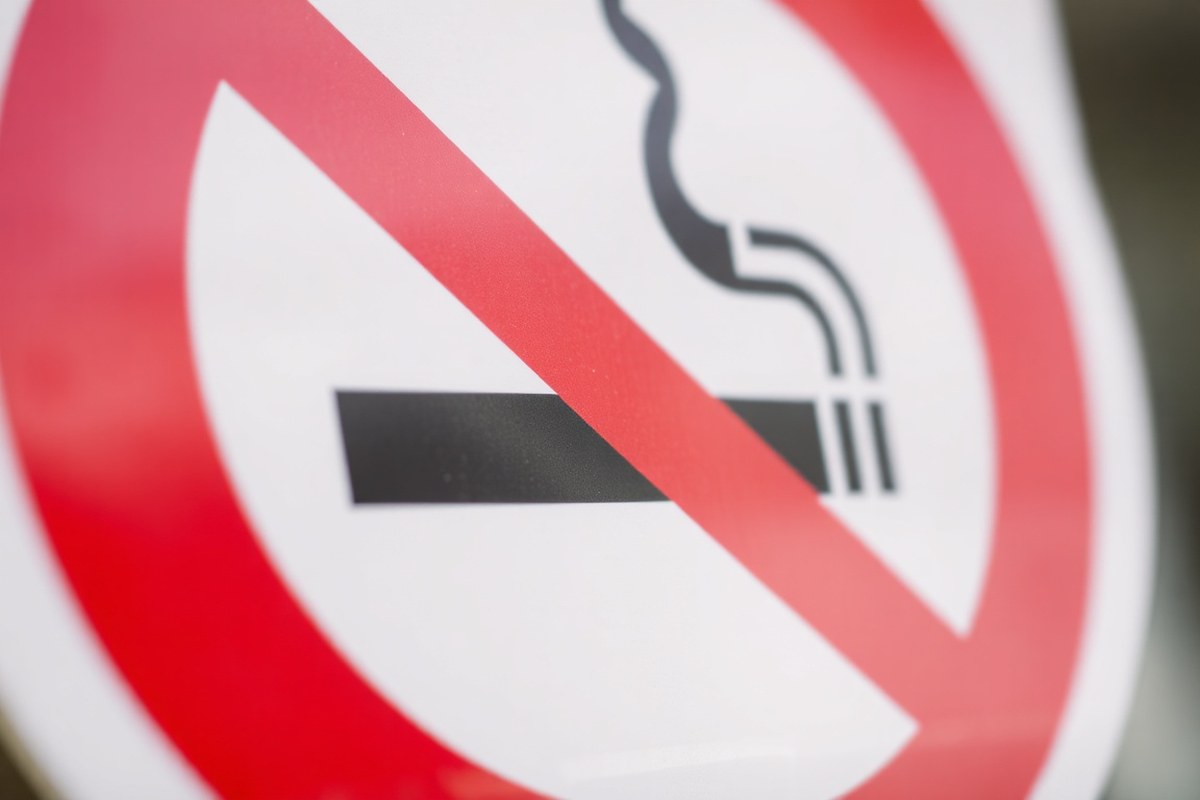
No smoking signs must include the international no-smoking symbol, which consists of a red circle with a diagonal line crossing out a cigarette. This symbol follows the BS EN ISO 7010 standard to ensure clear recognition globally. The symbol needs to be prominently displayed, clearly visible, and legible from a normal viewing distance at entrances to enclosed workplaces or any area where smoking is banned. The red color signals prohibition, while the white background and black cigarette image offer high contrast for readability.
While the phrase “No Smoking” is not strictly required alongside the symbol, many businesses include it to reinforce the message. The wording should be simple and direct, such as “No Smoking” or, where vaping is banned as well, “No Smoking or Vaping.” Signs may use all capital letters or mixed case, but the text must be easy to read with a font size large enough to be seen clearly, often at least 1 inch high. Including additional phrases like “Thank you for not smoking” is optional and should not detract from the main prohibition message.
Employers and property managers should confirm local regulations for any mandated sign wording, especially in states like Oregon, where signage must explicitly mention vaping alongside smoking. The exact size and placement can vary by jurisdiction, but typical signs are about 7 by 10 inches to ensure visibility without being obtrusive.
Language accessibility is essential when serving diverse populations. Posting bilingual or multilingual no smoking signs is advisable if employees or visitors have limited English proficiency. This practice helps prevent misunderstandings and aligns with workplace safety and health communication standards. For example, a sign might display “No Smoking / No Fumar” in English and Spanish in areas with many Spanish speakers. Check state or local rules for required languages in public-facing or employee areas.
A checklist for compliant no smoking signs includes the correct international no smoking symbol per BS EN ISO 7010, use of red color for the prohibition circle, clear and legible text stating “No Smoking” or “No Smoking or Vaping” if applicable, appropriate sign size to ensure visibility, and availability of the sign in relevant languages. Businesses should maintain signs in good condition, replacing any faded or damaged signs promptly to avoid enforcement issues.
What Are No Smoking Sign Rules for Specific Industries?
No smoking sign rules vary across industries due to differing health risks, legal mandates, and workplace conditions. Healthcare, hospitality, and manufacturing sectors have tailored signage requirements with specific exceptions and designated smoking areas, reflecting the nature of their environments and regulations.
Healthcare Facilities Signage
Healthcare facilities must strictly enforce no smoking rules to protect vulnerable patients and maintain sterile environments. Federal law bans smoking inside all healthcare-related buildings receiving federal funding, including hospitals, clinics, and long-term care facilities. These venues require prominently displayed no smoking signs at all entrances and within patient care areas.
Signs should use clear wording like “No Smoking Within This Facility” and include international no smoking symbols. Some areas, such as outdoor designated smoking zones for staff, may be permitted but must be clearly marked and located away from building entrances and air intakes to prevent smoke infiltration.
Restaurants and Bars Requirements
Restaurants and bars often face stricter no smoking laws at the state or local level, with many prohibiting smoking entirely in indoor spaces. Where smoking is banned, no smoking signs must be displayed at each public entrance and in conspicuous indoor locations. The signage must inform customers clearly that smoking is prohibited to comply with health regulations and protect patrons from secondhand smoke.
Some jurisdictions allow outdoor smoking in designated areas for hospitality venues. In such cases, signs are required to delineate these smoking zones and to remind patrons that smoking is prohibited inside. Operators must ensure that these designated areas are well marked and comply with local air quality standards to avoid citations.
Industrial and Manufacturing Sign Rules
Manufacturing and industrial workplaces frequently have customized no smoking signage rules due to the presence of flammable materials or chemicals. Many require not just standard no smoking signs but also hazard-specific warnings where combustible substances are stored or used.
Areas like chemical storage rooms, fuel handling zones, and places with explosive materials must display signs warning of smoke and fire risks. Employers often designate smoking areas outside and away from such high-risk zones, clearly marked to protect worker safety and facility integrity.
- Signs must be durable and visible in harsh industrial settings
- Use color-coded or symbol-specific signs indicating fire hazards
- Post signage at all entry points to hazardous zones
- Comply with Occupational Safety and Health Administration (OSHA) guidelines, where applicable
- Maintain lighting and placement standards to ensure visibility
Proper implementation includes regular checks to replace damaged or obscured signs and clear communication to employees about smoking policies and designated areas based on the facility’s layout and risk assessments.
Check local and industry-specific regulations regularly, as no smoking sign requirements can vary and updates may impact your compliance strategy.
How Are No Smoking Sign Laws Enforced and What Penalties Apply?
Enforcement of no smoking sign laws typically falls to local health departments, state agencies, and in some cases, federal regulators such as the Occupational Safety and Health Administration (OSHA). These bodies perform inspections and investigate complaints to ensure that businesses and property owners comply with signage requirements mandated by law. Enforcement can also involve fire marshals or local code enforcement officers, depending on the jurisdiction.
Penalties for failing to display proper no smoking signs vary by law but commonly include civil fines and, in severe cases, criminal charges. Civil fines can reach up to $25,000 per violation, reflecting the seriousness lawmakers assign to preventing tobacco exposure. On the federal level, penalties for each violation can be as high as $5,000. These fines apply specifically for the absence or improper display of the required signs and are separate from penalties for smoking violations themselves.
The enforcement process usually begins with a warning or notice to comply, giving the business a defined period, often 10 to 30 days, to correct the signage issue. When the violation persists beyond the deadline, inspectors may impose fines or citations. Persistent failure to comply can escalate enforcement actions, including larger fines or legal proceedings. In rare but serious cases, intentional disregard of the signage laws can lead to criminal charges. Willful non-compliance, especially if it contributes to health hazards or repeated offenses, may result in imprisonment depending on state laws and case circumstances.
Business owners should understand that failing to display the correct no smoking signs is a distinct offense under laws like the Health Act 2006. The law separates the duty to post compliant signs from the act of smoking itself, meaning you can face penalties for improper signage even if no one is caught smoking on the premises. This distinction highlights the importance of proactive compliance monitoring to avoid fines and legal trouble.
To maintain compliance and minimize risk, establish a regular sign inspection routine and keep records of sign placement and condition. Receiving a violation notice means you should quickly fix the problem by installing or updating signs to comply with legal requirements. This step reduces the chance of fines and lengthy enforcement actions. Being well-informed about your local signage requirements and enforcement procedures ensures your property meets legal standards, protects employee and customer health, and avoids costly penalties or criminal exposure.
How Should Businesses Implement and Maintain No Smoking Signage?
Businesses must install no smoking signs where required, check them regularly to keep them visible and legible, and update them promptly to stay aligned with current laws. Regular maintenance prevents compliance issues and helps maintain a safe environment for employees and visitors.
Initial Sign Installation
Start by identifying all locations where no smoking signs are legally required. Common spots include entrances, exits, restrooms, employee break areas, and within 20 feet of building entrances or windows, as per certain state regulations like California’s. Choose signs that meet size, wording, and design requirements set by local laws. Follow this step-by-step plan to install your signs correctly:
- Survey your property to pinpoint all mandatory sign locations based on applicable laws.
- Purchase signs that comply with design and wording standards mandated by your jurisdiction.
- Clean surfaces where signs will be mounted to ensure proper adhesion or secure mounting.
- Install signs at eye level, typically between 5 and 6 feet high, ensuring no obstructions block them.
- Confirm signs are durable enough for indoor or outdoor conditions they will face.
- Document the installation with photos and location notes for your compliance records.
Expect to invest between $10 and $50 per sign for quality materials; costs vary by size and durability. Accurate placement and proper mounting reduce the risk of damaged or ineffective signage.
Routine Inspection and Upkeep
Check all no smoking signs at least once every six months to catch fading, damage, or removal. Regular inspections ensure signs remain visible and legible, which maintains compliance and signals your commitment to a smoke-free environment. Use this maintenance checklist during inspections:
- Verify signs are securely attached and not falling or crooked.
- Check for fading or discoloration caused by sunlight or weather exposure.
- Remove any obstructions like posters or decorations that block signs.
- Replace missing or illegible signs promptly, ideally within two weeks of notice.
- Note inspection dates and any corrective actions taken in a compliance log.
Failing to maintain signs can lead to fines, enforcement actions, and confusion about smoking policies. Proper upkeep also reduces long-term replacement costs.
Updating Signs for Legal Changes
No smoking laws can change yearly at state or local levels. Conduct an annual review of relevant regulations and update your signage accordingly. This practice helps avoid penalties linked to outdated or incorrect signs. Include these steps in your update process:
- Monitor official state or local government websites for changes in smoking regulation.
- Compare your current signs against new legal requirements, including wording, size, and locations.
- Edit your smoking policy to reflect updated rules, if necessary.
- Order new compliant signs and remove outdated ones.
- Reinstall updated signs promptly to maintain continuous compliance.
- Train employees, especially those managing facilities, on new signage requirements.
Some areas require additional signage like distance-specific notices (e.g., no smoking within 20 feet of entrances). Staying proactive in updates reduces the chance of enforcement fines and keeps your workplace safe.
What Special Considerations Apply to No Smoking Signs for Vehicles and Outdoor Areas?
No smoking signs are required inside vehicles when those vehicles are used for work purposes or public transport, according to the Health Act 2006 in England. This means that employers must display clear no smoking signage inside work vehicles to ensure compliance with smoke-free regulations. Signs should be placed where they are highly visible to drivers and passengers alike, such as on the dashboard, side windows, or near entry doors. The exact size and wording recommended will align with general no smoking sign standards, often stating “No smoking in this vehicle” to be unambiguous.
Outdoors, requirements focus on entrances and smoke-free zones. Signs must be clearly and conspicuously placed at all building entrances where smoking is prohibited to prevent smokers from lighting up near doorways. This usually means signage should be installed on both the inside and outside of the main entrance at eye level, approximately 5 feet above ground. Employers or property managers should evaluate all possible entrance points, including side or staff entrances, and post signs accordingly. Outdoor restricted zones, like near playgrounds or designated smoke-free areas, require similar signage to inform both employees and visitors.
Regarding vaping and e-cigarettes, recent updates to smoke-free laws often include these devices under the same restrictions as traditional smoking. Signs, therefore, commonly include language such as “No smoking or vaping allowed” or a graphic showing both a cigarette and e-cigarette with a prohibition symbol. Including vaping in signage reduces confusion and enforces a consistent smoke-free environment. Verify the latest local or state laws to confirm vaping inclusion, as regulations vary by jurisdiction.
To ensure vehicle signage compliance, follow this checklist: first, confirm the vehicle is subject to smoke-free laws (work vehicle or public transport). Next, select signs sized at least 7 by 10 inches for visibility. Install the sign inside the vehicle where drivers and passengers will easily see it, such as near entry points or the dashboard. Use clear wording like “No smoking in this vehicle.” Finally, regularly inspect the sign for damage or wear to maintain visibility.
For outdoor signage, decide your approach based on entrances and proximity to no smoking zones. If smoking is banned anywhere on your property, post signs at every public and employee entrance. Use durable, weather-resistant signs placed at eye level, typically 60 to 72 inches from the ground, to ensure visibility. Incorporate vaping into signage language if local rules require it. This decision rule helps avoid enforcement issues and keeps smoke-free boundaries clear for all.
Regularly inspect no smoking signs for damage or fading, especially outdoors, as weather exposure can reduce visibility and weaken legal compliance.
Your First 30 Days: A Quick-Start Plan for No Smoking Sign Compliance
Follow this step-by-step plan to ensure your business meets no smoking sign laws and avoids penalties. Each step helps confirm your signage is correctly placed and legally compliant.
- Before You Start: Review federal and state no smoking sign laws specific to your industry and location. Verify design, wording, and placement requirements to know exactly what to comply with.
- Day 1: Conduct a full walk-through of your premises, vehicle fleet, and outdoor areas. Identify all spots where no smoking signage is required and document them.
- Day 2-3: Purchase or create no smoking signs that meet all legal specifications for size, content, and visibility. Request or confirm they include required symbols and wording.
- Day 4: Install no smoking signs at all mandated locations, including entrances, restrooms, work areas, vehicles, and outdoor zones. Ensure signs are placed at eye level and unobstructed.
- Week 1: Train managers and key staff on the importance of no smoking signage and how to enforce these rules. Provide written guidance to support consistent enforcement.
- Week 2: Verify signage remains visible and intact after installation. Check for wear, damage, or vandalism and replace signs showing defects.
- Week 3-4: Conduct a compliance audit with a checklist referencing legal requirements. Correct any issues promptly and document your efforts to maintain compliance.
- After 1 Month: Establish a regular maintenance schedule to inspect and update no smoking signs, especially after relocating equipment or altering property layout.
Frequently Asked Questions
Can Businesses Use Custom No Smoking Signs Instead of Standard Ones?
Custom signs may not meet legal requirements; use approved designs to avoid fines. Confirm with local laws before using any non-standard signs.
Are No Smoking Signs Required in All Areas of a Workplace?
Signs are usually required in all indoor public areas and workplaces; some states also mandate outdoor signs. Check state-specific laws to ensure full compliance.
Do No Smoking Sign Laws Apply to Electronic Cigarettes and Vaping?
Many states include vaping in no smoking laws, requiring signs that mention both smoking and vaping. Verify local regulations to know if vaping must be explicitly prohibited.
Can Landlords Be Fined for Missing No Smoking Signs in Rented Properties?
Yes, landlords can face penalties for non-compliance in multi-unit housing under state or local smoke-free laws. Posting signs is often a legal responsibility.
Are No Smoking Signs Required in Employee Break Rooms?
No smoking sign requirements generally include break rooms where smoking is prohibited indoors. These signs remind employees of smoke-free policies and legal mandates.
Is It Necessary to Replace No Smoking Signs If They Become Faded or Damaged?
Yes, maintaining clear, readable signs is important for compliance; damaged signs may lead to enforcement actions. Regular inspection and prompt replacement are recommended.
Final Thoughts
Understanding and following no smoking sign laws protects your business from fines and legal issues while promoting a safe environment. Start by ensuring your signage matches all legal criteria exactly. Take immediate action by reviewing your current signs and adjusting placement or design as needed to meet those legal standards.