What Is a Fiber Laser? A Complete Guide with Advantages & Uses
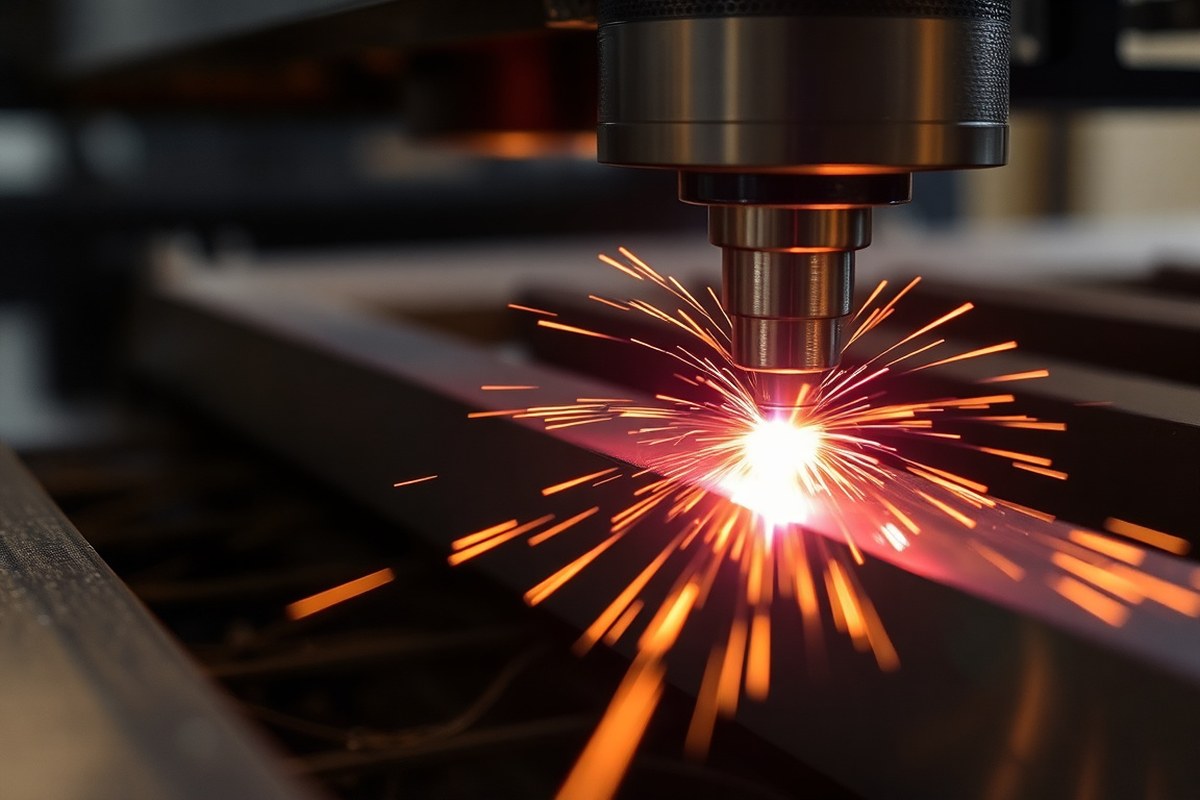
What is a fiber laser? It is a type of laser that generates light by exciting optical fibers doped with rare-earth elements. Fiber lasers offer high efficiency, precise beam quality, and long operating life, making them ideal for cutting, marking, and engraving metals and plastics.
Fiber lasers work by converting electrical energy into laser light at an efficiency of up to 30%, significantly outperforming traditional CO2 lasers. Their compact design and lower power consumption reduce operating costs and maintenance needs.
Key Takeaways
- Fiber lasers convert up to 30% of electrical energy into laser light, outperforming CO2 lasers with 5, 15% efficiency.
- They offer operating lifespans exceeding 100,000 hours due to simpler cooling systems and strong fiber components.
- Fiber laser cutting machines use 20, 30% of the power CO2 machines require, lowering overall operating expenses.
- Flying optic fiber lasers support larger bed sizes beyond the typical galvo standard 6-by-6-inch work area.
- Fiber laser stations like Gravotech’s LW2 and LW3 excel in precise industrial marking on metals and plastics.
- Tabletop fiber laser engravers such as the LS100EX are well-suited for engraving detailed designs on metal and plastic materials.
What Is a Fiber Laser and How Does It Work?

A fiber laser uses an optical fiber infused with rare-earth elements like ytterbium, erbium, neodymium, or dysprosium to produce a laser beam. Unlike conventional lasers that depend on gas or crystal mediums, fiber lasers use these doped fibers as their active laser source. This approach generates and boosts the laser beam within the fiber, resulting in a concentrated and efficient beam.
The laser beam generation starts with a low-power seed laser diode, which produces an initial beam. This seed beam then travels through a series of ytterbium-doped optical fibers, where the energy from solid-state laser diodes pumps the doped fibers, amplifying the beam progressively. This process concentrates the light inside the fiber, resulting in a highly intense and precise laser beam with a wavelength around 1064 nanometers. This specific wavelength is well-suited for cutting and engraving metals and other hard materials due to its exceptional absorption characteristics.
Fiber lasers stand out from other laser types because of their unique construction and operating principle. Unlike CO2 lasers that use gas tubes and mirrors to generate the beam, fiber lasers are all-solid-state, housing the active medium inside a flexible, rugged optical fiber. This makes them more energy-efficient, with fiber laser cutting machines typically consuming only 20 to 30 percent of the power required by CO2 lasers of similar power output. The design also means fiber lasers require less maintenance, have longer lifespans exceeding 100,000 working hours, and provide superior beam quality.
The highly concentrated beam results in a smaller laser spot with a diameter that can be much less than that of other lasers, enabling very precise and fine cuts or markings. This precision comes from the stable beam profile maintained by the fiber, which reduces distortion and energy losses. Fiber lasers deliver an intensity up to 100 times greater than CO2 lasers at equal power levels, making them particularly effective for metal processing and high-precision applications.
Operating a fiber laser involves pumping the doped fiber with semiconductor laser diodes, which convert electrical energy into the light used to amplify the seed beam. These diodes typically operate efficiently at room temperature, reducing cooling requirements compared to other laser systems. While fiber lasers have higher initial costs than CO2 lasers, their lower operating expenses and higher efficiency often justify the upfront investment, especially for industrial manufacturers focused on metal cutting, engraving, or marking.
Types of Fiber Lasers and Their Differences
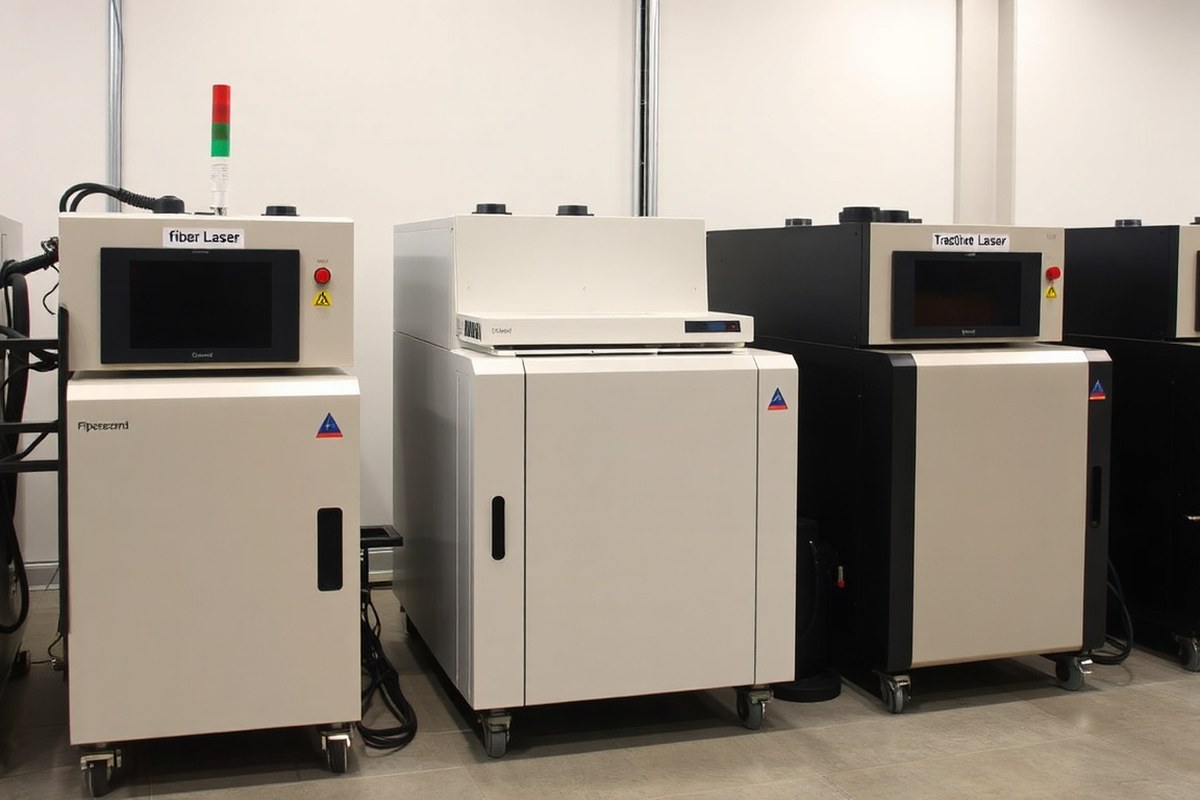
Fiber lasers come in several types, including traditional, MOPA, and ultrafast (picosecond) variants. Each type offers distinct control over laser output and suits different industrial applications. Knowing these differences helps you select the best fiber laser for cutting, marking, or engraving tasks.
Traditional Fiber Lasers
Traditional fiber lasers deliver a fixed pulse duration, which makes them reliable for general-purpose marking, cutting, and engraving on metals and many plastics. They operate efficiently and are relatively low maintenance, ideal for high-volume industrial use. These lasers suit applications where consistent, broad output pulses produce clean, permanent marks without detailed modulation control. For example, cutting steel sheets or stainless steel components commonly uses traditional fiber lasers because of their power and beam quality.
These lasers generally excel in precision and speed on flat metal surfaces but lack the flexibility to adjust pulse characteristics mid-operation. With stable output power and moderate cost, they remain the cornerstone for many manufacturing environments where durability and simplicity matter most.
MOPA Fiber Lasers and Modulation Control
MOPA (Master Oscillator Power Amplifier) fiber lasers improve on traditional models by allowing fine control of pulse duration, often adjustable from a few nanoseconds to hundreds of nanoseconds. This capability gives you more freedom over laser interaction with different materials, such as metals and plastics, enabling customization of surface finish and marking color effects. For instance, changing pulse timing can produce color marks on anodized aluminum or optimize engraving on plastics without burning or melting.
The pulse modulation also helps reduce heat-affected zones, decreasing the risk of warping or thermal damage in sensitive components. MOPA lasers typically cost more, but their versatility suits industries needing detailed marking or complex engraving with varied materials. Adjusting pulse duration can improve contrast or mark quality, especially useful in aerospace or automotive part identification where traceability is critical.
Too short pulses risk insufficient energy for marking; too long pulses can cause heat damage, start with medium pulse widths and adjust gradually.
Picosecond and Ultrafast Fiber Lasers
Picosecond fiber lasers generate pulses in the trillionth-of-a-second range (10^-12 seconds), far shorter than nanosecond pulses from traditional or MOPA lasers. These ultrafast pulses have enough peak power to ablate material with minimal heat transfer, producing incredibly precise cuts or engravings with little to no thermal distortion. This precision makes picosecond lasers suitable for delicate tasks like micro-machining, semiconductor manufacturing, or marking reflective metals without damaging the substrate.
Because of their complexity, picosecond fiber lasers demand higher upfront investment and precise setup but offer unmatched quality in engraving fine text, micro features, or transparent materials. If your work involves high-value components or requires minimal post-processing, picosecond lasers provide superior results by avoiding material burn, melting, or cracking.
Choosing between these fiber laser types depends on your specific application requirements, budget, and material characteristics. Traditional fiber lasers cover general metal cutting and marking efficiently. MOPA types add flexibility in pulse control for detailed engraving and customized surface effects. Picosecond lasers deliver exacting precision for sensitive or intricate work where thermal impact must be minimized.
Fiber Laser Applications Across Industries
Fiber lasers are widely used across industries for cutting, marking, and engraving due to their ability to process a variety of materials with precision and speed. They effectively cut metals such as stainless steel, aluminum, brass, and copper, and can also work on certain plastics and composites. This flexibility makes them particularly valuable in fields where detailed metalwork or high-quality marking is essential.
In automotive manufacturing, fiber lasers enable fast and accurate cutting of sheet metal parts and precise engraving of serial numbers or barcodes on components. The medical industry uses these lasers for marking surgical instruments and shaping metal parts for devices, benefiting from the cleanliness and repeatability of fiber laser processes. Electronics manufacturers take advantage of fiber lasers to cut and mark circuit boards and metal casings, where fine detail and minimal heat damage are required.
The signage industry commonly employs fiber laser engravers and cutters for producing detailed metal nameplates and small series custom signs. In manufacturing broadly, fiber lasers improve efficiency by cutting materials quicker than traditional mechanical tools or CO2 lasers and deliver millimeter-level accuracy in marking. The high energy density of fiber lasers allows clean cuts and intricate engravings that meet strict quality demands.
- Cutting stainless steel, aluminum, brass, copper, plastics, and composites
- Marking metal parts with serial numbers, barcodes, and data matrices
- Engraving automotive components and medical instruments
- Cutting circuit boards and metal casings in electronics manufacturing
- Producing detailed metal signs for architectural and commercial use
- Cleaning and surface treatment in materials processing
- Small-series production and prototyping across multiple sectors
Operating a fiber laser for these applications typically requires selecting the right laser power based on material thickness and type, commonly from a few hundred watts up to several kilowatts for cutting. Marking and engraving often use lower power settings for controlled ablation without damaging the base material. Because fiber lasers focus the beam into a small spot with superior beam quality, cutting speeds are faster, and edges are cleaner compared to CO2 lasers, though managing reflected light and alignment is essential for system longevity and safety.
Costs for fiber laser machines can be higher initially than alternative technologies, but the improve productivity and reduced need for secondary finishing tasks can offset these expenses in high-volume or precision-demanding environments. Regular maintenance and professional servicing help prevent alignment issues and fiber degradation, keeping the laser efficient over time. Industries prioritizing high-quality metal processing, rapid production, and durable markings find fiber lasers a reliable investment for their manufacturing needs.
Fiber Laser vs CO2 and Diode Lasers: Efficiency and Cost Comparison
Fiber lasers deliver significantly higher energy efficiency than CO2 and diode lasers, converting electrical energy into laser light at rates over 30%, compared to around 10-15% for CO2 lasers. This higher efficiency reduces energy consumption, lowering operating costs and making fiber lasers more cost-effective in the long run. They also offer a longer operational life, which helps spread the initial investment over more years of production.
When it comes to cutting speed, fiber lasers outperform CO2 lasers by 3 to 5 times at equivalent power levels. Their technology allows them to cut metals at higher speeds while maintaining excellent surface quality. Conversely, CO2 lasers perform better on non-metal materials like wood, plastics, glass, and ceramics, making them suitable for projects that focus on those substrates rather than metals.
Diode lasers provide flexibility in power, size, and wavelength by using different laser diode modules coupled with a light-diffusing fiber. Their efficiency can exceed 90%, especially in precise marking and engraving tasks, although they usually handle thinner materials or smaller scales compared to industrial fiber laser cutters.
| Laser Type | Electrical Efficiency | Cutting Speed (vs. CO2) | Best Material Suitability | Initial Cost | Operational Costs | Typical Lifespan |
|---|---|---|---|---|---|---|
| Fiber Laser | 30% or higher | 3 to 5 times faster | Metals (thick & thin) | Higher | Lower (energy efficient, low maintenance) | Long (better ROI over time) |
| CO2 Laser | 10, 15% | Standard baseline | Non-metals (wood, plastic, glass) | Lower | Higher (gas tube maintenance, more energy) | Shorter (tube wear and gas refills) |
| Diode Laser | Up to 90% | Varies; generally slower | Thin materials, marking, engraving | Variable (depends on diode module) | Low (minimal upkeep) | Moderate (depends on power use) |
Choosing the most suitable laser depends on your primary material and production needs. Fiber lasers excel in fast, precise metal cutting with good surface finishes, making them ideal for industrial metal fabrication. CO2 lasers remain the preferred choice for cutting non-metal materials due to their wavelength properties, despite higher maintenance and lower energy efficiency. Diode lasers shine in specialized marking or engraving applications where lower power and high efficiency are advantageous.
Cost differences extend beyond purchase price. Fiber lasers, while more expensive upfront, save money through lower power consumption and less frequent maintenance. CO2 lasers might cost less initially but incur more operating expenses from gas tube upkeep and energy use. Diode lasers vary widely, but their modularity grants flexibility for tailored applications, balancing initial costs and efficiency.
How Fiber Laser Cutting and Engraving Work Step-By-Step
Fiber laser cutting and engraving follow specific steps from generating a laser beam to interacting with the material and producing precise cuts or marks. The process starts with creating a high-powered laser, directing it through fiber optics, and then focusing the beam onto the workpiece. The difference between cutting and engraving mainly lies in the depth and intensity of the laser’s interaction with the material, with many parameters affecting quality and speed.
Generating the Laser Beam
The process begins with the laser source emitting a high-power beam at a wavelength of 1064 nm, typical for fiber lasers. This wavelength is well-absorbed by metals, which makes it ideal for cutting and engraving metal parts. The laser generation involves semiconductor diodes pumping energy into a doped optical fiber, which then produces a coherent laser beam. This step is critical since the beam’s quality determines the precision and effectiveness of the subsequent cutting or marking.
Maintaining stable laser power output ensures consistent results. The laser source can deliver power ranging from a few watts for engraving to several kilowatts for cutting thicker metals. Variation in power settings directly affects whether the laser punctures through material (cutting) or modifies its surface (engraving).
Focusing and Directing the Beam
After generation, the beam travels through flexible fiber optic cables that maintain high energy efficiency with minimal loss. The fiber optics deliver the beam to the cutting or engraving head with precision and flexibility, allowing complex machine layouts and ease of installation. A focusing lens then concentrates the beam into a tiny spot, which typically measures between 20 and 50 micrometers in diameter.
This tight focus creates an intense heat source. The focused beam size influences cut quality; a smaller spot means cleaner, narrower kerfs and the ability to cut finer details. Adjusting the focal length helps accommodate different material thicknesses, affecting the beam’s intensity on the surface. Proper calibration of the laser head’s position relative to the material ensures maximum efficiency.
Material Interaction and Cutting/engraving
During cutting, the focused laser beam heats the material rapidly to its melting or vaporization point. Assist gases such as nitrogen, oxygen, or compressed air are used to blow molten material out of the kerf, resulting in clean and narrow edges. For metals, oxygen also supports exothermic reactions that improve cutting speed. Parameters like laser power, cutting speed, assist gas type, and pressure must be carefully selected to avoid excessive dross or heat-affected zones.
Engraving operates on a shallower scale, where the laser beam modifies the surface texture without fully penetrating the material. The laser power is lower, and the beam often moves faster to create permanent marks, traceability codes, or decorative patterns. This approach is common in personalizing industrial parts like tools, jewelry, or equipment ID plates. Higher engraving speed (up to 2000 mm/s on some machines) enables fast marking without sacrificing resolution.
Keep the focus spot tightly calibrated and adjust gas type and pressure according to material thickness to minimize edge burr and improve cut quality.
Finishing and Cooling
After cutting or engraving, the material often requires minimal post-processing, especially on thin metals where fiber lasers produce smooth edges and permanent markings. Cooling occurs naturally through thermal conduction in the workpiece and sometimes with additional air or water cooling systems integrated into the machine bed. Insufficient cooling can lead to warping in thin or heat-sensitive materials.
High-quality cuts feature a narrow kerf width, little to no dross, and reduced heat-affected zones, which preserves the mechanical properties of the workpiece. Slower cutting speeds combined with suitable laser power typically improve edge finish but reduce throughput. Conversely, faster speeds increase productivity but may produce rougher edges or require secondary cleaning operations.
Maintenance and Troubleshooting for Fiber Laser Machines
Routine maintenance is key to keeping your fiber laser machine running smoothly and extending its lifespan. Unlike CO2 lasers, fiber lasers require less frequent service but still need attention to components like cooling systems and protective housings. Efficient cooling prevents overheating, which can degrade laser performance or shorten its life, so regularly check coolant levels and inspect hoses for leaks or clogs.
Cleaning the laser lens and protective windows is another essential task. Use lens-cleaning solutions recommended by the manufacturer and avoid abrasive materials that could scratch protective surfaces. Regular cleaning prevents burns or marks on the workpiece caused by residues or dust on optics. For routine cleaning, continuous fiber laser cleaning methods work well, but more precise or tough residues might require pulsed fiber laser cleaning to maintain beam quality.
- Inspect and top off coolant fluids every 1,000 operating hours or as indicated by system alerts.
- Clean lenses and protective windows weekly using manufacturer-approved non-abrasive cleaners.
- Check fiber optic cables and connectors monthly for damage or loose connections.
- Run diagnostic software daily to track output power and beam quality deviations.
- Keep ventilation filters clean and replace them every 3, 6 months depending on environment.
- Monitor system temperature and ensure proper airflow around the machine.
- Schedule professional calibration annually to maintain cutting and marking precision.
Common problems include power fluctuations, faded marking quality, and unexpected shutdowns. Power dips often relate to cooling failures or clogged filters; resolving these involves cleaning filters or repairing coolant leaks. Dim or inconsistent marks may come from dirty optics, cleaning lenses or replacing damaged windows fixes this. Unexpected shutdowns can signal electrical issues or overheating; check system logs for error codes and consult the manufacturer’s troubleshooting guide or customer support.
To maximize the operational life, avoid excessive machine idling, which wastes laser tube hours without productive use. Operating the laser at recommended power levels and avoiding abrupt temperature changes within the workshop also help. Protective housings must remain intact to shield internal components from dust and debris, reducing maintenance needs and preventing misalignment. Investing in training for operators ensures careful handling and routine maintenance adherence, lowering the risk of damage and downtime.
Safety Protocols and Risks When Using Fiber Lasers
Operating a fiber laser involves inherent risks, primarily due to the intensity and wavelength of the laser beam. The greatest safety concern is eye damage, as fiber lasers typically operate at a wavelength around 1064 nm. This infrared light is invisible and can cause severe retinal injury even from indirect reflections. Handling such equipment without proper protection puts you at high risk for eye injuries.
Another risk comes from toxic fumes generated when cutting or marking certain materials. These fumes may irritate the respiratory system and require effective extraction methods to maintain air quality. Although fiber lasers can cut reflective metals like aluminum and copper safely without back reflections damaging the source, control of fumes and fire hazards remains important in any setup.
Fire hazards arise because the laser’s high energy can ignite combustible materials or debris in the work area. Maintaining cleanliness and restricting the workspace to metal-only zones help reduce this risk significantly. An emergency shutoff switch is essential to quickly stop laser operation if any unsafe conditions develop.
To operate fiber lasers safely, wear appropriate protective gear, including laser safety goggles rated for the specific wavelength. Many fiber laser machines come enclosed with protective viewing windows that filter harmful radiation. Training is important; operators should understand the laser’s hazards and emergency procedures before use.
- Use laser safety goggles specifically rated for 1064 nm wavelength
- Operate fiber lasers within fully enclosed systems with protective viewing windows
- Employ proper ventilation or fume extraction systems to manage toxic fumes
- Maintain a clean workspace designated for metal use only to prevent fires
- Equip the system with an emergency shutoff switch easily accessible to the operator
- Train all operators on laser hazards, protective measures, and emergency protocols
- Regularly inspect safety equipment and machine enclosures for damage or wear
Cost considerations for safety equipment vary depending on system size and complexity. Laser safety goggles typically range from $50 to $300 each. Fume extraction units can cost between $1,000 and $5,000, depending on capacity. Enclosed machine designs often add to the upfront price but significantly improve safety levels. Good results include zero incidents of eye injuries, controlled air quality, and no fire incidents during operation.
Failing to follow these safety protocols can lead to severe eye injuries, health problems due to inhaled fumes, or fires that damage equipment. Whether you are a hobbyist or industry professional, adhering to these safety standards is required to protect yourself and ensure efficient fiber laser operation.
How to Choose the Right Fiber Laser for Your Application
Choosing the right fiber laser depends on matching its power, type, and features to the specific materials and applications you handle, all while fitting your budget. Begin by identifying the exact work you need done and the materials involved, then decide if you need a standard or specialized laser type like MOPA or picosecond. Balancing these factors with cost and ongoing operating expenses will guide you to the best fit.
Assessing Application Requirements
Pinpoint the primary tasks you want the fiber laser to perform, whether it is cutting, marking, engraving, or cleaning. Different applications demand different laser characteristics; for example, cleaning intricate components or removing coatings typically requires pulsed fiber lasers with adjustable frequency to control energy delivery and surface quality. Materials also affect your choice, metals such as steel or aluminum respond differently compared to plastics or glass, which may require specialized wavelengths or pulse durations.
The level of precision and speed your projects need plays a role in selection. High-precision marking or micro-engraving usually benefits from lasers like the MOPA type, which allows fine control over pulse shape and duration, minimizing heat-affected zones. If you work with very thin materials or delicate surfaces, short-pulse lasers such as picosecond variants reduce thermal damage and provide cleaner results.
Selecting Power and Laser Variant
Match the laser power range to the material thickness and speed requirements. For cutting and engraving thin metals, a fiber laser in the 20-50 watt range may suffice, while thicker metals or faster production rates generally require 100 watts or more. Industrial cutting tasks often use lasers from 500 watts up to several kilowatts, depending on throughput demands and material hardness. LASIT offers a broad range of fiber lasers for different power needs, which reflects this variability.
MOPA lasers provide versatility where pulse parameter control is important, such as color marking on metal or plastics. Picosecond lasers deliver ultrashort pulses for applications needing minimal heat input and precise ablation, commonly in electronics or medical device marking. A classic fiber laser model works well for most general cutting and marking tasks, balancing precision, power, and speed without the complexity or cost of specialized pulse control.
Choose a laser with adjustable frequency if you expect to vary your application types, as this flexibility can improve results across different materials and tasks.
Budget and Operational Considerations
Purchase prices for fiber lasers vary widely, ranging from about $20,000 for basic models to over $200,000 for high-power or specialized systems. Factor in maintenance, potential consumables, and the cost of operator training when budgeting. Higher-powered and picosecond lasers often incur greater operational expenses due to more complex components and cooling requirements.
Consider total cost of ownership alongside upfront price. A lower-cost laser may lack features such as adjustable pulse parameters or advanced cooling, reducing versatility or increasing downtime. Determine how critical uptime and quality consistency are for your operations; investing in a reliable system with strong support can offset higher initial costs by preventing production losses.
Vendor and Support Evaluation
Choose suppliers with a broad product range and strong customer service in fiber laser technology. Vendors like LASIT, known for offering various laser powers and types, can tailor solutions to your needs and provide expert advice. Look for companies that offer complete installation support, training, and maintenance plans.
Evaluate vendor responsiveness and technical support quality before purchasing. Access to timely troubleshooting and parts replacement avoids costly delays. Reliable warranty terms and clear upgrade paths also protect your investment as your application demands grow or change. Consulting experts or peers who have experience with specific brands helps confirm vendor credibility and service capabilities.
Step-by-Step Action Plan for Using Your Fiber Laser Efficiently
Use this plan to get your fiber laser cutting or engraving system up and running smoothly, ensuring safety and precision from the start.
- Before You Start: Read the user manual thoroughly to understand your specific fiber laser model and its safety requirements. Confirm you have appropriate protective gear; success means no injuries or near misses during initial tests.
- Day 1: Set up the machine in a well-ventilated, clean environment with stable power supply. Verify stable laser operation by running a test pattern and checking the beam quality and power readings.
- Week 1: Calibrate the laser focus and alignment based on manufacturer guidelines. Achieve consistent cutting or engraving depths on sample materials similar to your main application.
- Week 2: Start small production runs using your selected parameters and materials. Confirm turnaround times and quality meet your needs without excessive machine downtime.
- Month 1: Implement routine maintenance checks such as cleaning optics, checking cooling systems, and inspecting fiber connections. A smooth, uninterrupted run indicates successful upkeep.
- Month 2: Document performance data including power output, cutting speed, and material compatibility. Use this information to optimize your processes and anticipate consumable replacements.
- Ongoing: Follow updated safety protocols and train all users regularly. Proper safety enforcement will minimize risks and comply with workplace regulations.
Frequently Asked Questions
What Is a Fiber Laser Engraver?
A fiber laser engraver uses a fiber laser source to engrave metals and some plastics. It offers high precision, long life, and low maintenance compared to other laser types.
What Are the Five Types of Lasers Commonly Used in Manufacturing?
Common types include CO2, fiber, diode, solid-state, and excimer lasers, each suited to specific materials and applications. Fiber lasers excel in metal processing due to their efficiency and precision.
Who Makes Fiber Lasers?
Leading manufacturers include IPG Photonics, Trumpf, and nLIGHT. These companies produce fiber lasers for cutting, welding, and marking across industries.
What Is the Working Principle of Laser Cutting?
Laser cutting uses a focused laser beam to melt, burn, or vaporize material for precise cuts. Fiber lasers deliver higher power density, improving cutting speed and quality on metals.
How Do Fibre Lasers Work?
Fiber lasers amplify light through optical fibers doped with rare-earth elements, producing a high-intensity beam. This design enables efficient, compact systems with low power consumption.
What Materials Can Fiber Lasers Cut Efficiently?
Fiber lasers cut metals like steel, aluminum, and copper effectively, outperforming CO2 lasers on reflective metals.
Before You Go
Fiber lasers offer precise, efficient, and versatile solutions for cutting and engraving across various industries. Focusing on safe operation and routine maintenance will protect your investment and optimize results. Start by identifying the exact materials and tasks you need to tackle, then select fiber laser parameters and accessories that match those requirements.