What Is a Retractable Banner? A Complete Guide with Benefits and Sizes
A retractable banner is a display that can be conveniently rolled into a small base for transport and storage. The banner extends upward smoothly from this base to stand on its own, making it perfect for use at events and promotions. Its design allows for fast setup and compact storage while effectively presenting your message.
Key Takeaways
- A typical retractable banner measures about 31.5 inches in width and 79 inches in height.
- Materials like vinyl typically weigh 10-13 ounces per square yard, balancing durability and print quality.
- Lightweight stands, around 8 to 15 pounds, support stability yet remain easy to carry.
- Keep text large and readable, targeting visibility from 6 to 10 feet away.
- Store banners dry after wet weather to prevent mildew and protect the roller mechanism.
- Tabletop banners range from roughly 8.5 x 12 inches up to 16 x 32 inches for smaller displays.
What Is a Retractable Banner and How Does It Work?
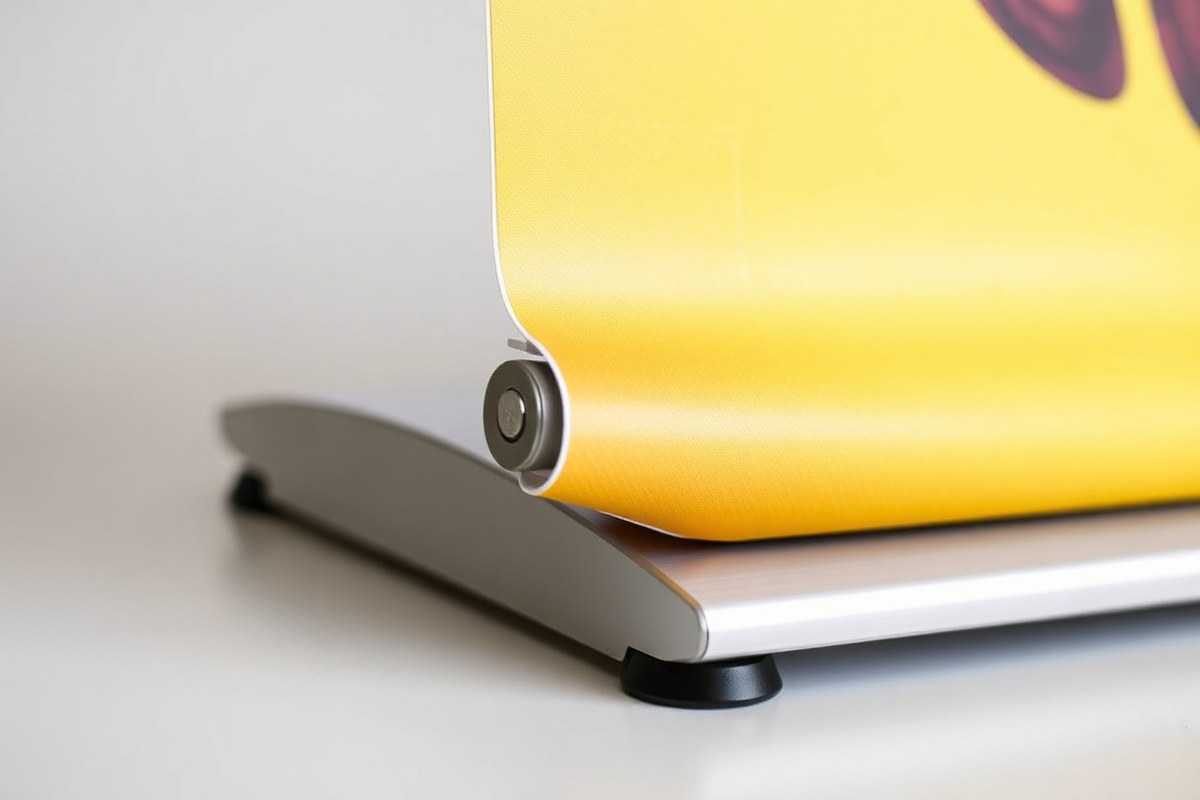
A retractable banner is a portable display used for marketing and promotional purposes, combining a printed graphic with a stand that allows quick setup and easy packing away. It gets its name from the spring-loaded roll-up mechanism inside the base, which lets the graphic retract or roll back into the stand when not in use. This design makes it simple to transport and store the banner without damaging the printed material.
The retractable banner works much like a window blind. The base contains a spring-loaded roller that tightly winds the printed banner around it. To set up the banner, you pull the graphic straight up from the base until it’s fully extended. Then, you secure the top of the banner onto a vertical support pole, which typically clicks or locks into place on the opposite side of the base. Once in place, the banner stands upright, showing your printed message clearly and professionally.
Here’s exactly how the mechanism operates step-by-step: First, place the base on the floor or table where you want the display. Pull the banner gently but firmly upwards from the base. As you pull, the spring inside unwinds, allowing the graphic to extend. When fully extended, you hook the banner’s top edge to the support pole. The pole, usually telescoping or sectional, holds the banner taut and stable. To pack away, you unhook the top, let the spring mechanism retract the banner smoothly back into the base, and then place the whole unit into its carrying case.
The retractable feature is essential because it protects the banner when it’s not being used and gives it a compact form that fits easily in a carrying case. This portability appeals especially to small business owners, trade show exhibitors, and event managers who need a professional display that sets up in minutes and packs away without hassle. The banner’s compact base is often made from lightweight materials like aluminum or plastic to make carrying and transport easier.
Typical retractable banner sizes measure around 31.5 to 39 inches wide and about 79 inches tall, providing ample vertical space to capture attention at events or retail spaces. Some banners are double-sided, allowing a message to appear on both sides for added visibility. The quality of the spring mechanism and banner material plays a role in durability: a sturdy design supports years of repeated setups and teardowns, while lower-quality versions may wear out faster or have issues with the banner not retracting properly.
Maintaining the mechanism involves ensuring the banner stays dry and clean. Displaying it in rainy or humid conditions without proper drying can cause mildew on the material or corrosion in the spring mechanism, reducing lifespan. Because the setup and breakdown each take just a minute or two, you can quickly adapt the banner for use indoors and outdoors, provided you protect it from moisture.
Overall, the retractable banner’s spring-loaded roll-up system delivers convenience, speed, and protection. It allows you to deploy a high-impact visual display in seconds without tools, helping you focus on your marketing message rather than complicated setups. Proper use means your banner remains crisp and ready for many promotional events over several years.
Key Components and Materials of Retractable Banners

A retractable banner consists of a base stand, support poles, and the banner graphic itself. Its design allows the graphic to roll up inside the base for easy transport and storage. The materials chosen for each part influence how portable, durable, and stable the display will be during use.
Base Stand Types and Features
The base stand is the foundation of a retractable banner. Most quality stands are made from aluminum, which provides a lightweight but sturdy frame that resists rust and scratches. Aluminum bases typically weigh between 5 to 10 pounds, making them easy to carry while maintaining stability when the banner is extended.
Some stands feature a wide base design to increase stability, especially useful in busier environments like trade shows or retail floors. A wide base reduces the chances of tipping over without needing extra weights or anchoring. Plastic bases exist but tend to be lighter and less durable, making them better suited for infrequent use or small indoor events. Aluminum stands usually include a spring-loaded rolling mechanism that allows the graphic to retract smoothly and securely.
Choose an aluminum base with a wide footprint for environments with heavy foot traffic to avoid accidental tipping.
Support Poles and Stability Options
Support poles extend vertically from the base to hold the banner upright. Commonly, banners come with one or two telescoping aluminum poles that fit into slots on the base and attach to the top of the graphic. Aluminum poles balance weight and strength, keeping the banner straight without adding much bulk for travel.
Some retractable banners use dual poles for double-sided graphics or extra steadiness. Poles may screw together or click into place for quick assembly. Stability improves with poles that have rubber feet or swivel supports to prevent slipping on smooth surfaces. Trade show exhibitors often select stands with built-in pole supports designed for fast setup and takedown, saving time while ensuring a professional look.
Banner Material Choices and Benefits
Banner graphics usually come in two common materials: vinyl and fabric. Vinyl banners are heavier and provide excellent durability, especially for short-term outdoor use or in controlled indoor environments. Vinyl resists water, wear, and tearing, and prints vividly on glossy or matte finishes. These banners typically weigh around 10 to 13 ounces per square yard.
Fabric banners offer a lighter, wrinkle-resistant option with a softer appearance. They are popular in indoor settings such as retail stores or trade shows where repeated folding and packing occur. While fabric generally costs more per square foot, it produces less glare under lighting and is easier to clean with a gentle brush or mild detergent. Fabric banners usually weigh 6 to 9 ounces per square yard.
Banners attach to the top rail of the stand through clamps or adhesive strips, then roll down neatly inside the base. Proper tension from the spring mechanism reduces wrinkles and sagging, preserving the graphic’s smooth look. Selecting the right material depends on how often you’ll use the banner, exposure to elements, and your budget for replacements or upgrades.
Common Sizes and How to Choose the Right One
Standard retractable banner sizes mostly range around widths of 31.5 to 47 inches and heights from 79 to 89 inches. The most common size used is 31.5 inches wide by 79 inches tall, offering a good balance between portability and visibility. This size is versatile, fitting standard booth spaces and smaller venues without crowding the area.
Larger banners, such as those 47 inches wide and around 80 inches tall, work well in bigger display areas like wide trade show booths or high-traffic event zones. The increased width improve visual impact, making your messaging more noticeable from a distance. However, larger banners can be heavier and less portable, so consider transport and setup needs carefully.
| Banner Size (W x H) | Recommended Use | Portability | Visual Impact |
|---|---|---|---|
| 31.5″ x 79″ | Small booths; limited space retail areas; conferences | High – lightweight and easy to carry | Moderate – good for close-up viewing, standard visibility |
| 33″ x 80″ | Standard trade show booths; job fairs; corporate events | High – still compact and portable | Moderate to High – balances size and impact |
| 47″ x 80″ | Large booths; conventions; high-traffic areas | Moderate – heavier and less compact | High – more eye-catching with wider display area |
| 31.5″ x 89″ | Longer displays for detailed messaging; trade shows | Moderate – taller size requires careful handling | Moderate to High – height adds presence without too much bulk |
Choosing the right retractable banner size depends mainly on your venue’s space and the purpose of your display. For promotional use in small or crowded spaces where ease of setup and packing are priorities, opt for sizes around 31.5 to 33 inches wide. These sizes keep your display lightweight and easy to move, while still providing enough room for clear messaging.
In larger venues or areas with heavy foot traffic, wider banners around 47 inches deliver stronger visual impact. Your banner can stand out among competing displays and attract attention from farther away. Note this comes with the tradeoff of additional weight and bulk, meaning setup takes more time and may require extra carrying support.
Size also affects design choices. Larger banners allow for more images, larger fonts, and a more complex layout to catch the eye. Smaller banners call for simple, bold messaging and a clear visual hierarchy to communicate quickly and clearly.
Make sure the chosen banner fits your typical travel and storage arrangements. Retractable banners come with an aluminum base and padded carrying case for protection during transport. Oversized banners may call for reinforced or wheeled cases to ease handling.
Top Benefits of Using Retractable Banners for Marketing
Retractable banners offer a practical and effective solution for businesses looking to boost their marketing visibility. Their portability is one of the biggest advantages: these banners roll up into a compact base that one person can carry, transport, and store easily. This makes them perfect for trade shows, conferences, and in-store promotions where quick setup and breakdown are essential. You can have your banner ready in less than a minute without needing any special tools or assistance, saving time and labor costs.
Ease of setup goes hand in hand with reusability. The design can be changed seasonally or updated for different events by swapping out the printed graphic while using the same retractable base. This flexibility keeps your marketing fresh without the expense of buying new hardware. On top of that, retractable banners are generally affordable, often costing less than other types of trade show displays. For small businesses or marketers working with tight budgets, they provide a cost-effective way to make a professional impression.
- Portability: lightweight and easy to carry in a small case, making transportation easy.
- Quick setup: a single person can assemble or retract the banner in under a minute without tools.
- Reusability: change out banner graphics for different events or promotions, extending the banner’s lifespan.
- Cost-effectiveness: lower upfront and maintenance costs compared to larger, permanent displays.
- High visibility: usually sized around 33 x 79 inches, large enough to catch attention but not overwhelm booth space.
- Professional appearance: crisp graphics on smooth materials help convey brand quality and trust.
- Space-efficient: retracts into a compact base that takes up minimal storage or booth footprint.
Retractable banners improve visibility by providing a tall, vertical surface that displays key messages at eye level. Their standard height of around 6.5 feet means they stand out without blocking sightlines, ideal for busy trade show floors or retail entrances. To maximize impact, position the banner near the booth entrance or high-traffic areas. Use bold colors, concise messaging, and your logo prominently to draw people in. Graphic designs should be simple and readable from several feet away to prevent missing passerby attention.
Because these banners are easy to set up and move around, they are highly preferred for repeated use at multiple events. Retail managers and event organizers appreciate how retractable banners allow quick changes in display space without professional installation. They also fit well into varied environments, indoor or covered outdoor, with durable materials that resist wrinkles and minor damage during transport. Businesses relying on retractable banners report higher engagement at trade shows and quicker recognition among attendees thanks to their consistent, professional look.
Where and When to Use Retractable Banners Effectively
Retractable banners excel in spaces where quick setup, portability, and a strong visual impact are essential. Trade shows are a top venue, offering large crowds and a competitive environment where your banner needs to stand out. Large formats measuring up to 33 inches wide and 79 inches tall ensure visibility from a distance, helping you attract attendees to your booth effectively. Similarly, corporate events and conferences benefit from banners by clearly displaying your branding and key messages in lobbies, registration areas, or presentation rooms.
Retail environments are another common use case. You can place retractable banners near entrances, aisles, or checkout counters to promote sales, new products, or special events. In stores, smaller banner sizes work well in limited spaces without blocking foot traffic. Public spaces like airports, malls, and transit stations also see effective use of retractable banners for advertising due to their portability and ability to be easily replaced with new messages.
Special care is needed in environments with fluctuating lighting or high foot traffic. In low-light areas, adding lighting to the banner stand improve visibility and ensures your graphics remain clear. For busy locations, position stands where they don’t interfere with movement but still catch eye lines, such as near entrances or at corners of corridors.
- Trade shows: use large banners for distant visibility and brand impact
- Corporate events: place banners in entryways and networking areas
- Retail stores: highlight promotions near entrances or checkout lanes
- Public spaces: use high foot traffic but ensure compliance with venue rules
- Limited space venues: choose smaller-sized banners to avoid congestion
- Low-light settings: add LED lighting to increase banner readability
- Outdoor usage: avoid unless banner is specifically rated for weather resistance
Place retractable banners on flat, stable surfaces to prevent tipping and reposition them as needed to maintain maximum visibility during events.
Using the right size and placing banners at key vantage points leads to better engagement. For instance, in retail spaces, a banner placed too far inside could get lost in the foot traffic, while near the entrance it captures customer attention immediately. In trade shows, position your banner behind your staff or to the side of the booth to complement your presence without blocking interaction. Budget-wise, investing in a banner stand with an integrated carrying case simplifies transport and protects your investment, allowing you to reuse the banner multiple times and keep your promotional costs down.
Step-by-Step Setup and Breakdown of Retractable Banners
Setting up and breaking down a retractable banner can be done quickly with the right approach. Proper handling helps protect the banner from damage and extends its lifespan. Follow few key steps to install and store it correctly for your marketing events.
Unboxing and Preparing the Banner Stand
Start by unpacking the banner stand carefully to ensure no parts get lost or damaged. Check for all components: the base, the banner graphic rolled inside, a support pole, and a carrying case. Place the base on a flat surface to provide stability during setup.
Before assembly, inspect the banner graphic for any wrinkles or tears. Keep the carrying case handy for transporting the assembled stand later.
Pulling Up and Securing the Graphic
Setting up the banner involves extending the graphic and securing it. Handle the graphic gently to avoid creases or rippling. Use the support pole to hold the banner upright once fully extended.
- Remove the banner stand from the carrying case and place it on the ground.
- Take out the support pole and assemble it if it comes in sections.
- Locate the slot or mounting hole on the base where the support pole fits.
- Insert the support pole into the base and ensure it is firmly seated.
- Grab the top of the banner graphic and slowly pull it upwards from the base.
- Attach the banner’s top hanging bar to the hook or slot at the top of the support pole.
- Make sure the banner is taut and stands straight without leaning or sagging.
Take care not to pull the graphic too fast or with excessive force. Allow the spring mechanism inside the base to work smoothly. The banner should fully extend to about 6.5 feet tall, suitable for most trade show booths or retail displays.
Rolling and Storing the Banner Properly
Packing down the banner correctly is important to avoid damage and keep it ready for reuse. Rolling the graphic back into the base gently prevents creases and extends its functional life. Follow these steps to disassemble and store the banner:
- Hold the support pole steady and unhook the banner’s top bar from the pole.
- Slowly guide the graphic back down into the base, letting the spring retract it smoothly.
- Disassemble the support pole into sections and pack it with the base inside the carrying case.
- Ensure the graphic retracts fully without catching or folding irregularly.
- Store the banner stand in a dry location, away from extreme heat or moisture.
Avoid forcing the graphic back into the base or retracting it too quickly as this could damage the internal spring or cause wrinkles. Transporting the banner in its padded case protects it during transit to shows or retail setups. Regularly inspect for any damage and clean the graphic with a soft cloth to maintain its appearance.
Design Tips for Creating Impactful Retractable Banners
Designing a retractable banner that stands out requires a balance of clear text, eye-catching colors, and strategic use of branding elements. Prioritize simplicity and readability to make sure your message is absorbed quickly by people passing by. Good design grabs attention and guides the viewer’s eye through your key information within seconds.
Choosing Readable Fonts and Text Sizes
Choose fonts that are clean and easy to read from a distance. Sans-serif fonts like Arial, Helvetica, or Open Sans typically work best because they avoid unnecessary decoration that can blur letters. For text size, headlines should be at least 72 points, while secondary information should not be smaller than 30 points. This ensures readability from 6 to 10 feet away, which is the common viewing distance at trade shows or retail spaces.
Avoid using more than two different fonts to keep the design cohesive. Use bold fonts for key messages and keep body text simple. Maintain generous spacing between lines and letters to prevent the text from appearing crowded.
Using Color and Contrast Effectively
High-contrast color schemes increase visibility and can draw attention effectively. Dark text on a light background or light text on a dark background works best. Avoid low-contrast combinations like yellow on white or pale blue on gray that make reading difficult from afar.
Limit the palette to two or three primary colors that align with your brand identity. Bright accent colors like red or orange highlight calls to action or important details. Use blank space strategically to avoid clutter and guide the viewer’s focus.
- Use black or navy for main text and white or light gray for backgrounds
- Incorporate your brand’s primary colors to strengthen recognition
- Apply bold or saturated colors for calls to action or offers
- Avoid gradients or busy patterns that reduce legibility
- Stick to solid colors or simple shapes for icons and graphics
For example, a blue and white banner with large white text on a blue panel draws eyes better than a pastel color mix. Keep the layout clean so color highlights key points, not distract from them.
Incorporating Logos and Key Messages
Place your logo near the top or upper third so it’s immediately visible. Make sure the logo contrasts well with the background and isn’t crowded by other elements. Your brand name or tagline should be easy to find but not overshadow the main message.
Craft a concise headline or value proposition that quickly explains what you offer or why viewers should care. Below that, include no more than three bullet points or a short message that supports the headline. End with a clear call to action, such as a website link, phone number, or social media handle.
Keep in mind that too much information can overwhelm. An effective retractable banner tells a brief story that guides viewers from your brand to the offer, then to the next step.
Maintenance, Care, and Common Issues to Avoid
Regular maintenance and careful handling are key to keeping your retractable banner looking professional and extending its useful life. Cleaning the banner with a mixture of mild soap and water helps remove dirt without damaging the vinyl surface. Avoid harsh chemicals or abrasive sponges, as these can scratch or fade the graphics. Use a soft cloth to gently wipe both sides of the banner, then allow it to air dry before rolling it back into the stand.
Damage often occurs from rough handling, such as pulling the banner too hard or at an angle, which can cause the spring mechanism to malfunction. Storing the banner in extreme temperatures or leaving it in direct sunlight for long periods accelerates fading and material breakdown. Protect your banner by setting it up indoors whenever possible or using a weather-resistant model designed for outdoor use. Frequent exposure to rain or wind also risks bending the support pole or warping the base. Follow this maintenance checklist to keep your retractable banner in good condition:
- Clean with mild soap and soft cloth; avoid harsh chemicals
- Store in a cool, dry place away from direct sunlight
- Handle carefully when setting up and retracting to avoid spring damage
- Use a protective carrying case for transportation
- Check support poles and base for stability before each use
- Consider weather-resistant banners for outdoor events
- Inspect for tears or wrinkles and address promptly
Professional repair might be necessary if the retractable mechanism jams irreversibly or if there are significant tears or creases affecting display quality. Repair costs vary but weigh these against replacement expenses and how often you plan to use the banner. Since most stands weigh between 8 and 15 pounds, handling them gently is usually sufficient to avoid major damage.
Never force the banner to retract if it resists; this can break internal springs and lead to costly repairs.
Your First Steps: Setting Up and Using Your Retractable Banner
Follow these steps to get your retractable banner ready and making an impact quickly.
- Before your event: Select the banner size that best fits your booth or display area. Test its portability by packing and unpacking it once to confirm ease of transport.
- Day of setup: Carefully remove the banner from its case and pull up the graphic fully until locked in place. Make sure the base sits flat and the banner stands straight to avoid tipping.
- During the event: Position the banner where it catches foot traffic while keeping it stable. Check periodically for wrinkles or tilt and adjust as needed.
- After event close: get the banner roller and slowly retract the graphic to avoid creasing. Store it in the case to protect it during transport.
- Weekly maintenance: Wipe the graphic gently with a damp cloth to remove dust. Avoid abrasive cleaners that can damage print quality.
- Monthly check: Inspect the base and pole joints for any loose screws or damage. Tighten or repair parts promptly to keep it functioning properly.
- When planning to redesign: Create a fresh graphic that follows design best practices and order a replacement banner to update your marketing message efficiently.
Frequently Asked Questions
How Do Retractable Banners Compare in Cost to Other Banner Types?
Retractable banners typically cost more than economy banners but less than custom large-format prints, offering a good balance of price and reusability. Consider long-term use and portability when comparing costs to other display options.
Can Retractable Banners Be Used Outdoors Safely?
Retractable banners can be used outdoors temporarily in calm weather but are not designed for prolonged outdoor exposure. Avoid wet conditions to prevent mildew and damage to the retracting mechanism.
How Heavy Are Retractable Banner Stands Generally?
Weight varies but most aluminum retractable banner stands weigh between 5 to 7 pounds, making them easy to carry and set up. This lightweight feature helps with transport to trade shows or events.
Are Retractable Banners Customizable with Unique Shapes or Sizes?
Most retractable banners come in standard sizes and rectangular shapes, limiting customization. Custom sizes or shapes usually require different banner types or special orders which may increase cost.
What Types of Graphics Work Best on Retractable Banners?
High-resolution, vibrant digital prints work best to grab attention quickly. Matte finishes reduce glare, which helps readability under bright indoor event lighting.
Can Retractable Banners Be Repaired If Damaged?
Some minor damage like graphic scratches or stand issues may be repairable, but significant tears or mechanism problems usually require replacing the banner or stand. Protective cases help avoid damage during transport.
Before You Go
Retractable banners offer a practical way to present your brand where it matters most. You have a tool that combines portability, professional appearance, and ease of use to boost your marketing efforts. Start by selecting the right size and design, then use the banner consistently at events to build recognition.