What Is One Way Vision Film: How It Works, Benefits & Installation Tips
What is one way vision film? It’s a specialized window film made of microperforated PVC that allows clear viewing from one side while displaying graphics on the other. This design uses tiny holes to balance visibility and image quality by controlling light transmission. Start by choosing a film with the right perforation rate for your visibility needs.
Key Takeaways
- One way vision film typically uses 30%-50% perforation to balance image clarity and one-way visibility.
- Higher perforation rates improve see-through visibility but reduce the sharpness of printed graphics.
- One way vision film differs from regular window vinyl by allowing visibility through perforations.
- Common uses include vehicle wraps, storefront advertising, and privacy screens on glass surfaces.
- Lighting conditions play a key role; brighter exterior light improve the one-way vision effect.
- Select film thickness and perforation size based on window size and desired image resolution.
What Is One Way Vision Film and How It Works
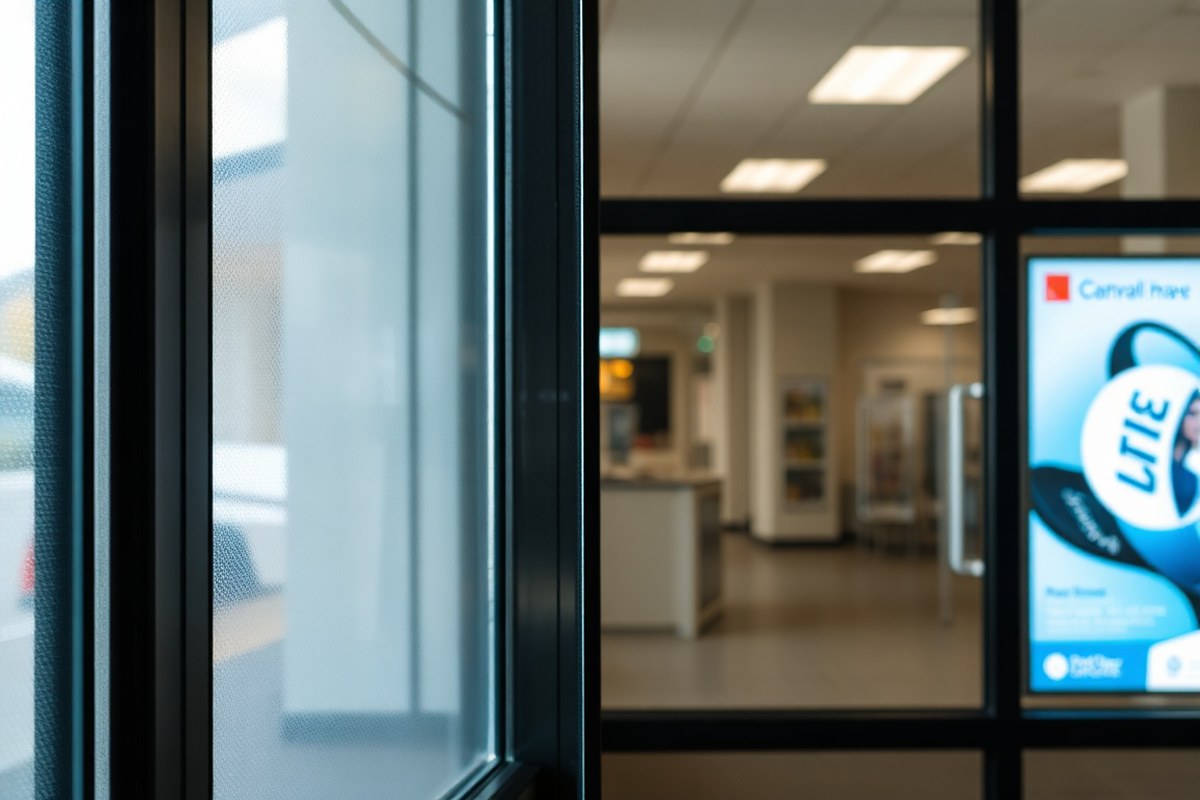
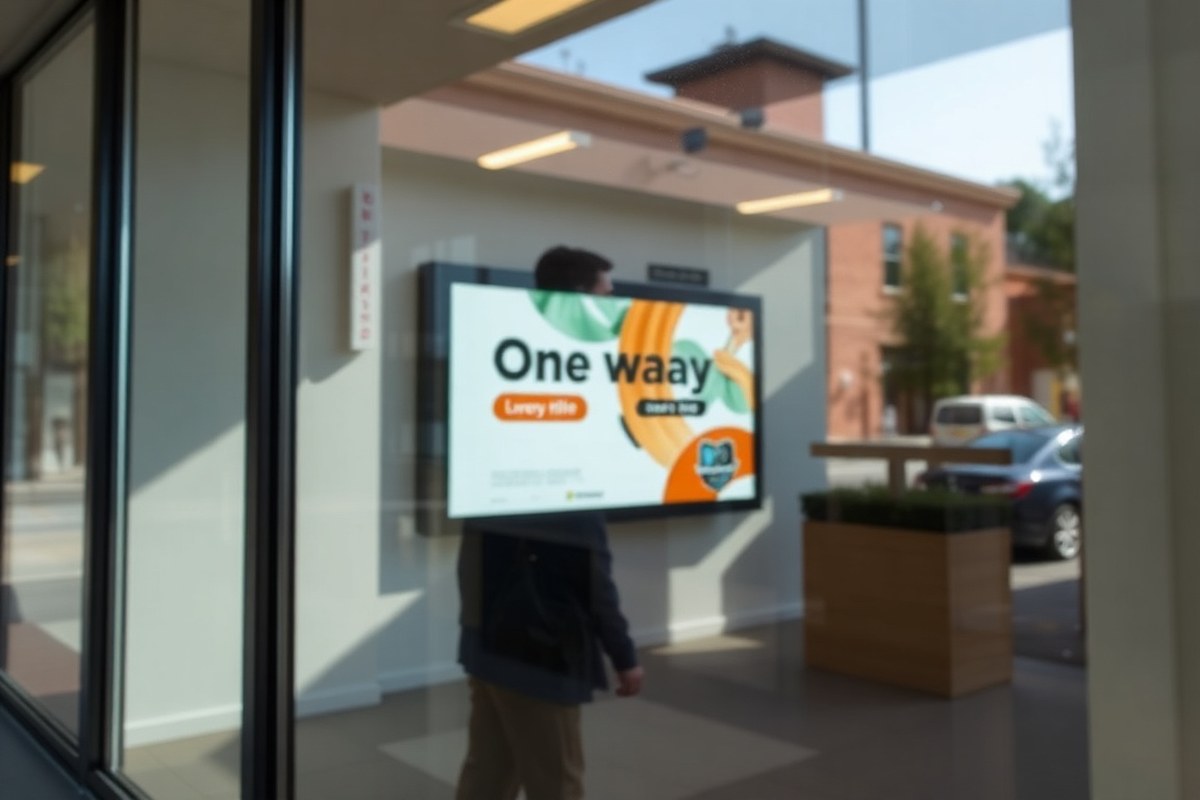
One way vision film consists of a PVC-based self-adhesive vinyl with microperforations covering about half its surface. These tiny holes allow clear graphics to appear on one side of a window while maintaining transparency for people inside. Businesses often choose this film to showcase advertising while preserving natural light and outdoor views in commercial spaces.
The principle behind one way vision film relies on differences in lighting on each side of the glass. The perforations in the PVC film form small open areas that let light pass through. When the outside environment is brighter than the interior, the film reflects enough light to create a mirrored look from the outside. This reflection obscures the view into the building, maintaining privacy and presenting the printed image clearly.
From the indoor side, where it is darker, enough light passes through the tiny perforations for people to see outside without significant obstruction. The effectiveness depends on the light contrast: the brighter the exterior relative to the interior, the stronger the one-way visibility effect. Without this lighting differential, visibility and privacy may be reduced.
One way vision film differs from solid printable vinyl, which completely covers the glass without perforations and blocks visibility altogether. The perforations, usually covering 30% to 50% of the surface, allow the film to serve dual purposes, promoting a graphic image while preserving outward views. Manufacturers produce this film in various thicknesses, commonly around 150 microns, and widths like 1370 mm and 1525 mm, suitable for standard commercial window applications.
To install one way vision film properly, the surface must be clean and smooth, as dirt or irregularities can reduce adhesion and optical clarity. Once applied, the film’s self-adhesive backing holds it firmly against the glass. The unique perforations create a pattern that the human eye interprets as a graphic from outside while allowing light and vision to pass through from inside.
Choosing the right perforation rate and film thickness depends on factors such as desired image resolution and visibility levels. Higher perforation means better visibility but lower image density, and lower perforation provides richer graphics with less see-through effect. Most commercial uses balance both to maintain branding impact and occupant comfort.
How Perforation Rate Affects Visibility and Image Quality
The perforation rate in one way vision film determines how much of the surface is open holes versus printed areas. This rate directly controls how clear the image looks from the outside and how well you can see through from the inside. Choosing the right perforation rate is important to achieving a balance between impactful advertising graphics and interior visibility.
Understanding Perforation Percentage
Perforation rate refers to the percentage of the film’s surface that consists of tiny holes. For example, a 50% perforation means half of the surface is open space, while a 30% perforation means fewer holes and more solid film. These holes allow people inside to see out while maintaining an image on the exterior. Jiu Mao’s one way vision films commonly range between 30% and 50% perforation.
The higher the perforation rate, the more visible it is inside, because larger or more frequent holes let in more light and view. This affects not only how much light enters but also the clarity of the image viewed from outside. Lower perforation rates block more light and produce clearer, more saturated graphics but reduce inside visibility.
How Perforation Impacts Graphic Appearance
A film with a lower perforation rate (around 30%) emphasizes the exterior graphic, making advertising images look sharper and more solid from outside the building. This is because more surface area is covered with print, leaving less open space. However, this reduces how well people inside can see out, which might not be ideal for spaces needing natural light or outside view.
At the other end, a 50% perforation is a practical compromise. It improves interior viewing by allowing more light and detail from outside, but it also reduces the graphic’s vibrancy and sharpness. Many businesses prefer a 50/50 perforation especially during sunny months for better interior brightness and a balanced advertising effect. As the perforation rate increases, the outdoor image becomes lighter or less distinct since more light comes through the holes.
Lighting conditions further influence these effects. When the interior is brighter than outside, especially at night, the film’s reflective properties can reverse the effect, making the view inside visible from the outside. This can diminish privacy and graphic impact regardless of perforation.
Choosing Perforation Rate by Application
Deciding on the right perforation rate depends on the priority between advertising visibility and interior see-through clarity. For storefronts or retail windows where attracting attention with bold graphics is key, a lower perforation rate around 30% works well. It maximizes graphic clarity and reduces light entry, focusing on the ad’s visibility.
For office spaces or buildings where occupants need to maintain clear exterior views, a higher perforation rate such as 50% is ideal. It allows more light and better outside visibility while still supporting some level of exterior branding. This rate is also popular in summer months for balancing daylight with marketing presence.
In cases where lighting contrast could reverse visibility, pairing the one way vision film with interior window treatments or solar control films can help maintain privacy and graphic quality at night. Testing samples under your actual lighting conditions before installation ensures the chosen perforation rate meets your specific needs without surprises.
Always review samples of your chosen perforation rate in the actual location under daytime and nighttime lighting to confirm the desired balance between exterior graphic clarity and interior view.
Differences Between One Way Vision Film and Regular Window Vinyl
One way vision film differs from regular solid window vinyl primarily in its material and purpose. One way vision is made from perforated vinyl, featuring numerous tiny holes evenly spaced throughout the film. These holes allow someone inside a building or vehicle to see outside clearly, while presenting a printed, colored image on the exterior side for passersby. Regular window vinyl is solid with no perforations and is designed mainly for full coverage graphics or privacy, blocking vision entirely from both sides.
The two types of films serve different practical purposes based on your visibility and privacy needs. One way vision is better suited for applications where you want to maintain outward visibility, such as storefronts, vehicle windows, or security-sensitive locations where people inside need to see out. Regular solid vinyl works best if your goal is total concealment or bold advertising where visibility through the glass is not a concern.
Security and privacy benefit from these design differences. One way vision film lets light through via its perforations, but at night or when lighting conditions change, the film’s one-sided privacy effect reduces significantly. This means outside observers may be able to see inside when interior lights are on, which is not a concern with solid vinyl that blocks all visual access. For absolute privacy, only blackout or opaque films provide complete coverage.
Printing options also vary between the films. One way vision is commonly printed using eco solvent printers on the white vinyl side, where the image is formed by varying colors around the holes. The perforations limit how dense images can appear, and the perforation percentage affects image vibrancy and visibility balance. Regular window vinyl offers a more uniform surface for printing vivid, detailed designs without interruption and allows for higher graphic resolution.
| Feature | One Way Vision Film | Regular Solid Window Vinyl |
|---|---|---|
| Material | Perforated self-adhesive vinyl with tiny holes | Solid self-adhesive vinyl with no perforations |
| Visibility | Allows viewing from inside out; outside view blocked by print | Blocks visibility both ways; no see-through |
| Privacy | Provides daytime privacy but limited at night | Provides consistent privacy regardless of lighting |
| Common Uses | Vehicle windows, storefronts, security applications | Full window coverage, branding, blackout privacy |
| Printing Options | Eco solvent printing on white perforated surface | Suitable for high-resolution digital printing, screen printing |
| Light Transmission | Allows light through perforations; image visibility varies with perforation rate | Blocks light fully across covered area |
| Cost Considerations | Generally higher due to specialized perforation and printing requirements | Typically lower, depends on vinyl grade and print complexity |
Choosing the right film comes down to your priorities in visibility, privacy, and the environment where the film is installed. One way vision requires attention to lighting conditions since the privacy effect does not hold up under all scenarios, especially after dark. Regular vinyl avoids this issue but eliminates any viewpoint through the glass. Costs vary based on film type and printing technique, with one way vision typically costing more due to its unique manufacturing features and specialized usage situations.
Where and Why One Way Vision Film Is Commonly Used
One way vision film is widely applied across retail spaces, commercial buildings, and vehicles because it combines privacy, advertising, and sunlight control. Retail storefronts, for example, benefit from advertising graphics printed on the film, which look vibrant from the outside while limiting visibility into the interior during daytime. This dual function supports marketing goals by capturing customer attention without compromising the store’s privacy or interior aesthetics.
Businesses choose this film for several reasons beyond advertising. It offers daytime privacy by reflecting exterior light while allowing those inside to see out clearly, maintaining occupant comfort and security. This feature is essential for commercial offices, showrooms, and medical facilities where protecting confidential information and customer privacy matters without sacrificing daylight.
One way vision film also helps manage sunlight and heat inside buildings and vehicles. By rejecting a significant portion of solar energy, including visible light, infrared, and ultraviolet rays, it reduces glare and lowers indoor temperatures. This reduction can contribute to energy savings by lessening the need for air conditioning, improving occupant comfort while protecting interior furnishings from UV damage.
- Storefronts use one way vision film for brand promotion and daytime privacy without obstructing interior views.
- Commercial buildings apply it on office windows and glass partitions to protect sensitive areas and maintain privacy.
- Vehicle wraps incorporate it to carry advertising messages on windows while enabling driver visibility and passenger comfort.
- Pop-up and point-of-purchase (POP) displays use the film to attract attention and control the lighting environment.
- Medical and data center environments use similar films with decorative options to block visibility while allowing natural light where needed.
- Retail campaigns use its ability to reduce glare, helping customers view products without bright reflections.
- Office conference rooms and private areas can use frosted or patterned films that maintain privacy throughout the day.
Installing one way vision film generally involves preparing clean, dry glass surfaces and carefully applying the film to avoid bubbles and ensure alignment of images for advertising clarity. Costs vary based on film quality, perforation rate, and installation size, typically ranging from $5 to $15 per square foot. Good results show clear outdoor graphics visible at close distances and daylight privacy inside, with minimal reflection or distortion.
Tradeoffs include reduced visibility at night if interior lighting is brighter than the outside, which can diminish the one way effect and expose interiors. In such cases, using complementary window treatments or interior lighting controls can provide better privacy management. Combining one way vision film with other glazing solutions or decorative films can solve complex needs in commercial and retail environments.
How Lighting Conditions Influence One Way Vision Effectiveness
The one way vision effect relies heavily on the difference in lighting between the inside and outside of a window. The film works best when the exterior environment is brighter than the interior. In daytime conditions, abundant sunlight outside allows you to see clearly through the film from inside while the film appears as a dark, obscuring surface to those outside. This is because the human eye naturally focuses on the brighter side, making the perforated pattern blend into darkness on the brighter side.
At night or in situations where interior lighting is significantly brighter than the outside, the effectiveness of one way vision films decreases. When lights are on indoors after sunset, the interior becomes the brighter environment, causing the film to act like a tinted window rather than a one way mirror. This reversal allows outsiders to see inside, which can cause a loss of privacy for businesses or building managers relying on the film. This happens because the film’s dark adhesive side faces inward and the contrast no longer favors outside brightness.
Managing lighting is essential to preserve privacy and visibility. Controlling interior light intensity by using dimmable fixtures or shades helps maintain a darker inside compared to outside. For businesses, positioning exterior lights or installing high-intensity floodlights to illuminate the outer window surface can keep the outside brighter even at night, sustaining the one way effect for longer periods.
- Keep interior lighting low during evening hours to maintain privacy.
- Install exterior floodlights directed at the windows to boost outside brightness.
- Use blackout blinds or curtains to reduce interior light leakage when privacy is critical.
- Opt for dual-reflective films to balance daytime privacy and minimize interior mirror reflections at night.
- Test lighting setups before full installation to ensure the desired visibility effect is achieved.
- Avoid relying on one way vision film alone for 24/7 privacy in low outdoor light conditions.
Proper lighting control is key, without it, even the best one way vision film will reveal the interior after dark.
Businesses and marketers should consider how lighting patterns change throughout the day and implement solutions accordingly. Even advanced films cannot defy the basic physics of light. A proactive approach combining lighting adjustments with appropriate film choices ensures better security and customer-facing aesthetics. This is especially important for retail storefronts and office environments where privacy fluctuates with daylight and artificial illumination.
Selecting the Right One Way Vision Film for Your Project
Selecting the right one way vision film depends on matching film thickness, perforation rate, adhesive type, roll size, and brand with your specific window project needs. These factors affect durability, image clarity, installation ease, and how well the film performs in different environments. Considering each specification carefully will help optimize privacy, security, and visual impact for your application.
Key Film Specifications to Know
Perforation rate directly influences both the see-through effect and image quality. Common perforation rates range from 30% to 50%, but because manufacturers may calculate these percentages differently, confirm the actual visible hole area before choosing. Hole diameter usually measures around 1.5 mm with a pitch near 2.6 mm, balancing outward visibility with graphic resolution.
Roll widths vary from about 0.98 meters to 1.52 meters, with standard lengths typically 50 meters but options span from 25 to 100 meters depending on project scale. Light transmission, sometimes called luminousness, affects daytime visibility and privacy and generally sits around 30/70 (visible light passing through versus blocked by the film).
- Perforation rate between 30% and 50% based on desired transparency and image clarity
- Hole diameter near 1.5 mm for balanced viewing and print quality
- Roll widths between 0.98 m and 1.52 m for different window sizes
- Standard roll lengths of 50 m, with options from 25 to 100 m
- Luminousness ratios around 30/70 for typical indoor/outdoor light conditions
Technical specifications like release paper weight (around 140 gsm) also impact handling and installation ease. Clarify these details with suppliers to compare products accurately and prepare for your printer and ink system compatibility.
Adhesive and Thickness Options
Film thickness usually ranges around 0.12 mm, providing durability while remaining flexible for installation on curved or irregular window surfaces. Thicker films may offer increased resistance to scratching and environmental wear but can be harder to work with when wrapping corners.
Adhesive types vary primarily between permanent and removable options. Use permanent adhesives on exterior-facing windows or high-traffic areas for long-lasting results that resist peeling and moisture ingress. Removable adhesives suit short-term promotions or leased spaces but require careful cleaning before reapplication.
Choosing the right thickness and adhesive will differ based on the surface type, temperature exposure, and project duration. For example, colder climates or rougher glass surfaces might demand stronger adhesive formulations specific to those conditions.
Comparing Top Manufacturers
Global brands like 3M and Jiu Mao lead the market with extensive film portfolios covering a broad spectrum of perforation rates, thicknesses, and adhesives. 3M emphasizes customizable solutions backed by specialized installer training, ensuring optimal application results. Jiu Mao offers customizable roll widths, perforation options, and packaging to fit diverse project needs, specifying up to 50% perforation rates.
Country of origin can affect regulatory compliance and lead times, so confirm local availability and support services before ordering. Large manufacturers typically provide better technical support and consistent quality control, which matters for complex or large-scale projects.
- 3M provides a wide selection and installer training for tailored commercial solutions
- Jiu Mao focuses on customizable perforation and roll sizes for various applications
- Check manufacturer support for local regulations and installation assistance
- Consider brand reputation to ensure consistent film quality and warranty coverage
Ultimately, partnering with a manufacturer that understands your project’s specific window dimensions, climate conditions, and printing technology will help you achieve the desired privacy, security, and graphic outcomes smoothly.
Step-by-Step Guide to Installing One Way Vision Film
Installing one way vision film requires careful preparation, cleaning, and precise application to avoid defects like bubbling or misalignment. Using the right tools and following a specific process ensures the film adheres smoothly for lasting results. Both DIY installers and professionals can achieve good outcomes by paying close attention to surface prep, application technique, and finishing steps.
Preparing the Window Surface
Thorough window cleaning is critical before applying one way vision film to ensure proper adhesion and avoid trapped dirt or dust. Use a glass cleaner or a soapy water solution to wash the surface, then wipe it dry with a lint-free cloth. Remove any stickers, paint, or residue that might interfere with the film’s stickiness.
Measure the window dimensions carefully and cut the film about 1 inch larger on all sides. This extra margin allows trimming for a perfect fit after application. Work in a clean, dust-free environment where the temperature is moderate, around 60°F to 80°F is best, to prevent condensation or rapid drying.
Applying the Film Without Bubbles
Correct application prevents bubbles and wrinkles, which compromise both appearance and durability. Begin by spraying the glass surface with a soapy water solution to allow repositioning and smooth out air pockets during installation. Peel the backing off the film slowly, exposing the adhesive side without letting it touch dirt or dust.
- Spray the window thoroughly with a soapy water mix, ensuring an even wet surface.
- Align the film on the glass, starting at the top edge, and gently press it down.
- Use a squeegee to push bubbles and excess moisture from the center toward the edges, applying firm and consistent pressure.
- Trim the excess film around the edges with a sharp utility knife or blade for a clean finish.
- Check the film for any stubborn bubbles and use the squeegee to smooth them out.
Taking time with the squeegee and ensuring even pressure avoids peeling or bubbling later. Work slowly and inspect the film regularly during application.
Finishing and Maintenance Tips
Once applied, allow the film to dry and set for at least 24 to 48 hours before cleaning or touching it extensively. Avoid harsh chemicals or abrasive materials when cleaning; mild soap and water with a soft cloth work best. Keep the film dry to prevent lifting or damage.
Hiring a professional installer can reduce risks of common problems like bubbling, peeling, or poor alignment. Professionals have the training and equipment to handle tricky windows or large surfaces. However, if you take on a DIY project, following these specific steps carefully will improve your end results and the longevity of the film.
Limitations and Common Myths About One Way Vision Film
One way vision film can improve privacy during daylight by reflecting light from the brighter outside environment, making it appear as a mirror from the street while allowing those inside to see out clearly. However, this privacy depends entirely on maintaining a strong light differential, when the interior becomes brighter than the exterior, such as at night with indoor lights on, the film loses its reflective effect and offers little privacy. This fundamental limitation means one way vision film alone cannot provide full, 24/7 privacy without supplemental measures like blinds or curtains inside the building.
A common misconception is that one way vision film permanently blocks visibility from one side, regardless of lighting. The physics of light reflection and transmission prevent this. The film’s effectiveness depends on which side is brighter; it does not create an impenetrable barrier. Another myth is that these films can also serve as security films to stop impacts; most standard one way vision films are not designed for security or shatter resistance but primarily for visual privacy and advertising uses.
The expected lifespan of one way vision film generally ranges from 5 to 7 years under typical outdoor exposure. Factors such as intense UV radiation, harsh weather, and frequent cleaning play a role in how long it lasts. Maintenance typically involves gentle cleaning with mild soap and water using a soft cloth, avoiding abrasive materials or strong chemicals that may degrade the film’s perforations or adhesive. Proper cleaning preserves image quality and adhesive strength but will not extend the privacy function beyond the natural limitations imposed by lighting conditions.
This film cannot block heat as effectively as specialized solar control films, nor can it eliminate glare entirely. It also does not provide soundproofing or structural reinforcement. Because the film is perforated, light and some small particles can pass through the small holes; it does not seal the window airtight. Business owners and building managers should therefore consider its intended use carefully: excellent for daytime privacy and advertising visibility, but not as a standalone solution for nighttime privacy or improve security.
For reliable nighttime privacy, use one way vision film in combination with interior blinds or curtains rather than relying on the film alone.
Your First 30 Days: A Quick-Start Plan for Using One Way Vision Film
Follow these steps to choose, install, and optimize your one way vision film project for maximum impact and clarity.
- Before you start: Measure your window surfaces accurately and assess lighting conditions to select the right perforation rate and film type. Proper sizing ensures good fit and visual effectiveness.
- Day 1: Order the one way vision film from a reputable supplier matching your project’s size and desired image quality, factoring in your lighting conditions. Confirm the perforation pattern suits your privacy and visibility needs.
- Day 3: Prepare the window by thoroughly cleaning it with a non-abrasive cleaner to remove dust and residue. A clean surface prevents bubbles and improves adhesion.
- Day 4: Cut the film slightly larger than the window dimensions to allow trimming after application. This helps avoid errors along edges.
- Day 5: Use soapy water spray to wet the window before applying the film. This lets you reposition the film easily for perfect alignment.
- Day 6: Smooth out the film from the center outward with a squeegee, removing any air bubbles and excess water. Clear, bubble-free coverage confirms proper installation.
- Week 2: Inspect the film daily for peeling or lifting edges. Adhere any loose sections and avoid cleaning windows aggressively during the first two weeks to allow full curing.
- After 4 weeks: Evaluate the film’s performance in different lighting conditions and make notes for future projects. Adjust perforation rates or design if visibility or image quality isn’t optimal.
Frequently Asked Questions
What Materials Are Used to Manufacture One Way Vision Film?
One way vision film is made primarily from self-adhesive polyvinyl chloride (PVC) with microperforations that cover 30% to 50% of its surface to balance visibility and image clarity. These features allow it to function effectively on glass surfaces for advertising and privacy.
Can One Way Vision Film Be Reused After Removal?
Typically, one way vision film cannot be reused once removed because the adhesive backing loses its effectiveness, and the material may tear during removal. Plan installations carefully to avoid waste and additional costs.
How Long Does One Way Vision Film Last When Applied Outdoors?
Outdoor durability of one way vision film varies but usually ranges from 3 to 5 years depending on environmental exposure and product quality. Choose films with UV and weather resistance for longer-lasting results.
Does One Way Vision Film Affect Building Energy Efficiency?
Yes, applying one way vision film can reduce solar heat gain by partially shading windows, helping to improve energy efficiency and maintain cooler interior temperatures. This can result in lower air conditioning costs.
Is One Way Vision Film Suitable for Use on Curved or Irregular Surfaces?
One way vision film is designed primarily for flat glass surfaces; applying it on curved or uneven surfaces can cause distortion and reduce film effectiveness. For irregular shapes, specialized films or installation techniques may be necessary.
Can One Way Vision Film Be Printed with Multiple Colors and Graphics?
One way vision film is printable in full color, allowing for vibrant, detailed advertising graphics. The white side of the film acts as the printing surface, while the perforations maintain see-through visibility from the inside.
Before You Go
One way vision film offers a practical solution to combine privacy and advertising without sacrificing natural light. Choosing the right film and installing it correctly improve both appearance and functionality. To move forward, gather your window measurements today and consult with a supplier about your specific lighting and privacy needs for a better-informed purchase decision.