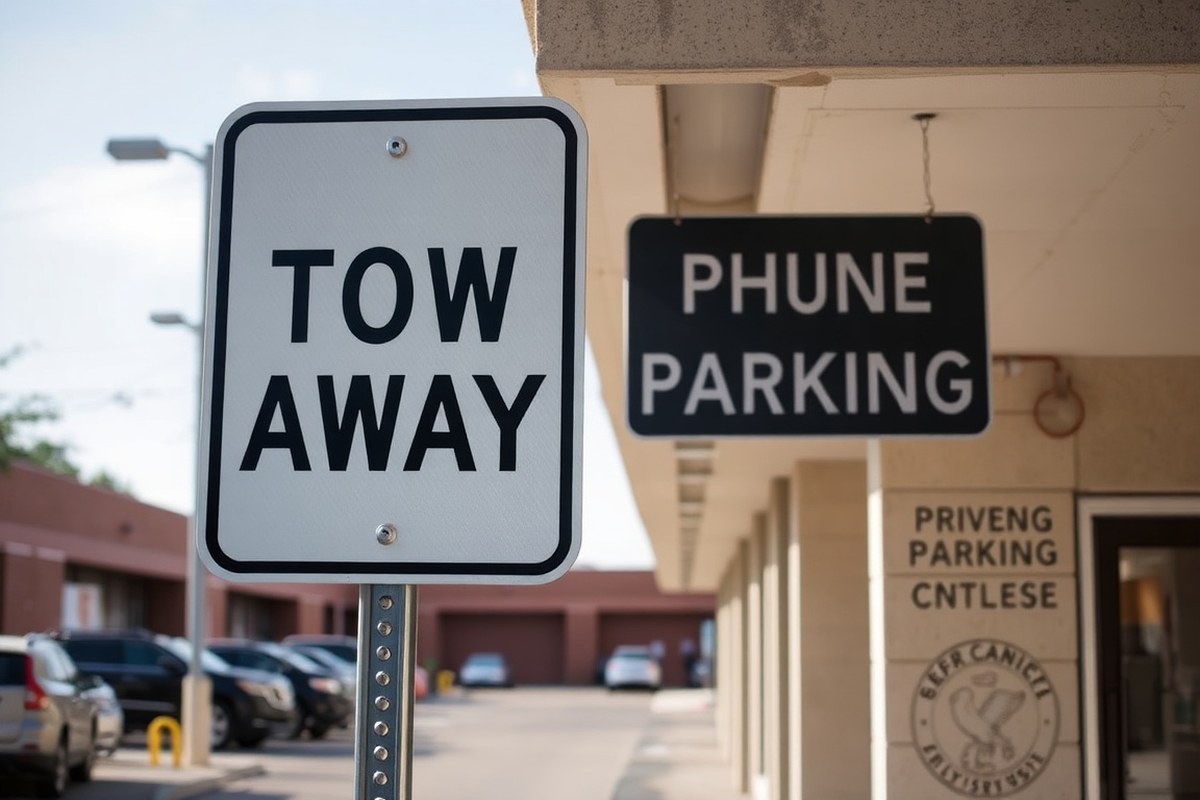
Tow Away Sign Requirements: Complete Legal Guide with Placement and Design Tips
Tow away sign requirements dictate the minimum size, lettering, and placement standards property owners must follow to legally tow vehicles. Signs generally must be large enough, with clear letters at least 1 inch tall, installed near all entrances at readable heights and distances. Meeting local regulations prevents disputes and avoids costly legal penalties. Start by confirming your state’s specific rules on sign dimensions, letter height, and positioning to ensure proper compliance before towing.
Key Takeaways
- California requires tow signs at least 17×22 inches with letters at least 1 inch high, posted at every entrance at 4 feet above ground.
- Florida mandates signs at each driveway within 10 feet of the roadway, with a minimum size of 18×24 inches and “Towing Enforced” in 2-inch letters.
- Letters should be at least 4 inches tall to be clearly readable from 25-30 feet under good lighting conditions.
- Signs must face drivers entering the property and remain posted for at least 24 hours before towing can occur.
- Use durable materials like .080 aluminum with reflective sheeting to ensure signs withstand weather and maintain visibility day and night.
- Combining notices for towing and other restrictions, like loading zones, on one sign panel meets multiple legal requirements efficiently.
Minimum Size and Lettering Standards for Tow Signs
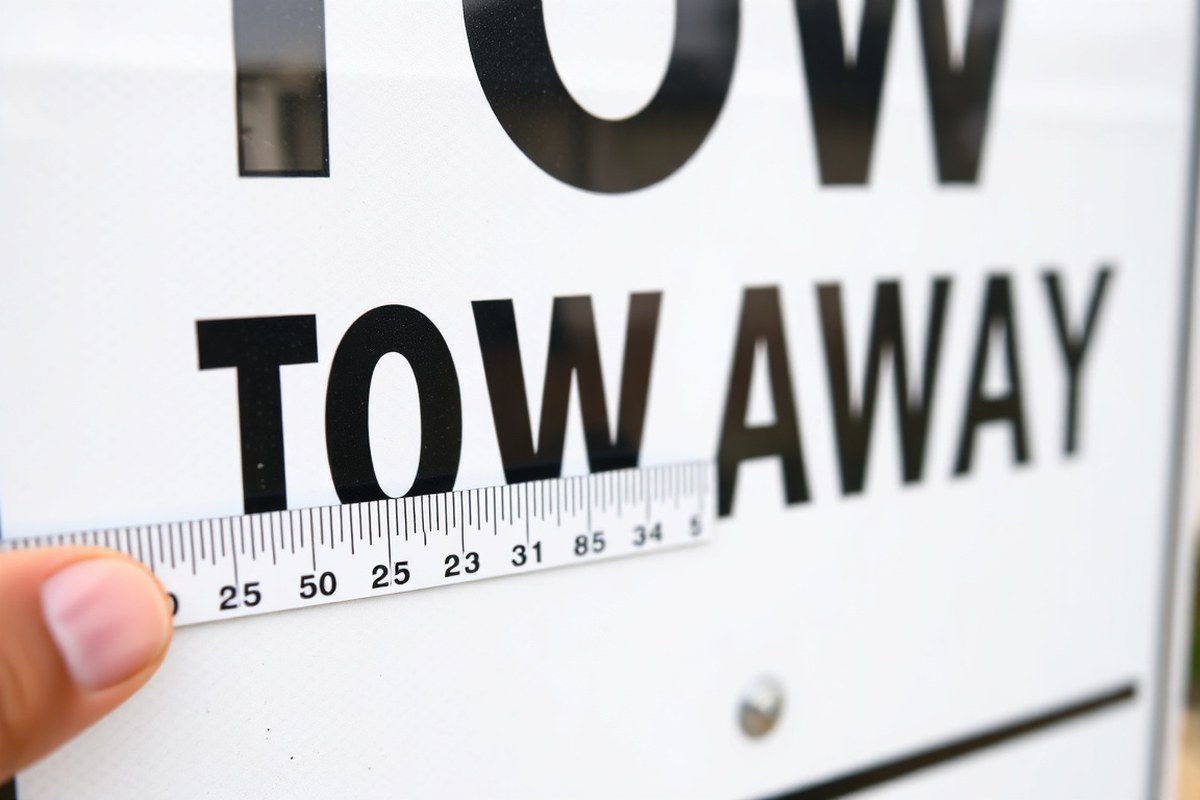
The minimum size and lettering standards for tow away signs vary by state, but a common baseline is around 18 by 24 inches for the physical dimensions, with lettering at least 1 inch tall. For example, California requires signs to be at least 17 by 22 inches, with letters one inch or taller, posted at every property entrance according to Vehicle Code Section 22658. Texas mandates 18 by 24-inch signs facing drivers entering the lot, including a towing symbol. Florida’s statute 715.07(2)(a) demands reflective letters and placement within 10 feet of each driveway. Arizona requires visibility of the sign not only at entrances but also across the lot, with clear parking restrictions. These minimum sizes ensure your signage is easily read and legally defensible.
Proper sign size and lettering height are critical for visibility and legal compliance. The letter size must allow drivers to read the sign clearly from a reasonable distance, typically 50 to 75 feet depending on speed and sight lines. Smaller letters can hinder legibility, inviting disputes or lawsuits, as happened in Arizona, where a property owner was fined $8,000 due to inadequate signage. Using high-contrast colors, such as white lettering on a red or black background, alongside reflective materials that meet state reflectivity standards, improves both daytime and nighttime readability. Materials like .080 aluminum with reflective sheeting maintain the sign’s clarity and durability over years of exposure.
State laws dictate not only the size and lettering but also where the signs must be placed. Post signs where drivers first enter the property and, if necessary, at strategic points throughout large or complex lots. This placement ensures no driver can pass without seeing the notice. Lettering height affects the distance at which the sign remains legible; a 1-inch letter height is generally readable up to 50 feet under good lighting conditions. For longer distances or higher speeds at entrances, larger letters may be advisable.
Using commercially produced signs that conform to your state’s specific requirements saves time and reduces legal risks. Custom reflective aluminum signs can incorporate required verbiage in readable font sizes and appropriate reflectivity grades, with pre-punched mounting holes for straightforward installation. Costs for these signs start around $22 for smaller sizes with standard reflectivity, increasing with size and reflectivity level. Investing in compliant signage proves cost-effective by preventing costly towing disputes and ensuring enforcement actions hold up under scrutiny.
Checklist for selecting tow away signs: adhere to minimum dimensions specified by state law, generally no smaller than 17 by 22 inches; ensure lettering height is at least 1 inch to guarantee legibility; use high-contrast colors and reflective materials rated for your lot’s lighting conditions; place signs at every driveway or entrance and visible points within the lot; choose durable materials like .080 aluminum that withstand weather and retain reflectivity for 7 to 10 years. Following these standards helps you enforce towing policies lawfully and clearly.
Required Information That Tow Away Signs Must Display
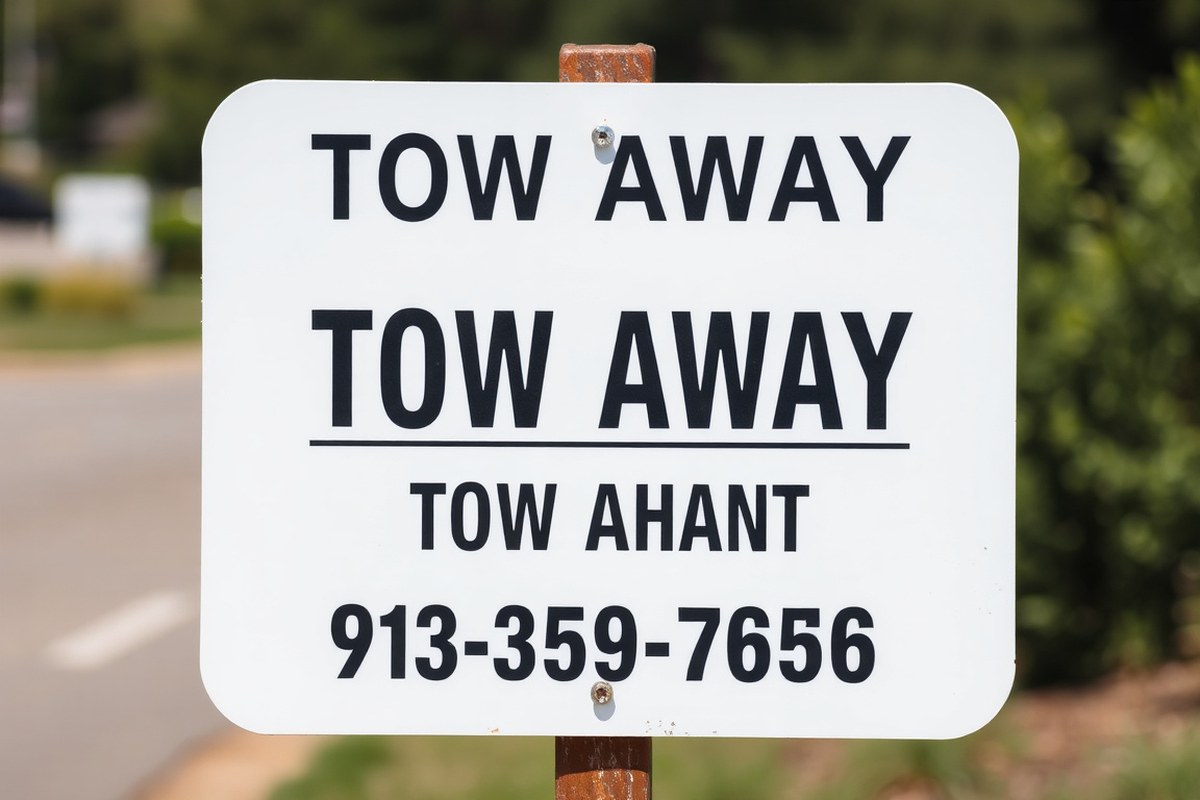
Legal tow away signs need to show specific symbols and text to comply with state regulations and clearly inform drivers. The top of the sign must display the international towing symbol, which is a solid tow truck silhouette pulling a vehicle. Below this image, the sign should read “Towing Enforced” in letters at least 2 inches tall. This makes it clear that unauthorized parking will lead to towing.
The sign should also specify that any unauthorized vehicles will be towed at the owner’s cost. Include straightforward wording like “Unauthorized vehicles will be towed at vehicle owner’s expense.” This makes responsibility clear and can reduce misunderstandings if a vehicle gets towed.
It’s mandatory to display the towing company’s full name and phone number prominently on the sign. Simple phrases like “Violators will be towed” without the towing company’s contact details are insufficient and often illegal. This ensures the vehicle owner knows who to contact to retrieve their vehicle. Also include the property owner’s contact information when possible, as required by several state statutes.
You should also incorporate any state-specific language or fee disclosures. For instance, some states require the sign to mention towing fees or the need for a written authorization agreement with the towing company before towing can occur. Confirm your local laws to include accurate, current text regarding fines or towing conditions. Here is a template of a compliant tow away sign wording that you can customize: [International towing symbol]
Towing Enforced
Unauthorized vehicles will be towed at vehicle owner’s expense.
Tow Company: [Full Company Name]
Phone: [Tow Company Phone Number]
Property Owner: [Owner Name or Contact]
[Optional State-Specific Text or Fee Information]
Keep in mind, if you change towing companies, update the signs immediately to reflect the new company’s name and phone number. The law often requires maintaining a written contract confirming your authorization to tow and specifying that the towing company must keep you informed of any contact changes.
Make sure the sign includes the towing company’s exact name and phone number; missing or outdated contact details make the sign invalid and can prevent legal towing.
How to Place Tow Away Signs for Maximum Compliance
Tow away signs must be posted at every entrance, driveway, and curb cut for your property, facing drivers clearly as they enter. Mount these signs at eye level between 4 and 5 feet high for maximum visibility. For large lots with wide entrances exceeding 35 feet, place additional signs every 25 feet along the opening to ensure clear notice.
Height Guidelines for Tow Signs
Mount tow away signs at a height of 4 to 5 feet off the ground. This range places the sign at driver’s eye level, improving readability and compliance. Signs placed too low risk being blocked by parked cars or landscaping, while signs mounted higher than 5 feet may be harder for drivers to notice quickly.
Keeping the sign height consistent throughout the property helps avoid confusion and meets common regulatory expectations. Ensure signs are level and facing the traffic entering the lot to aid visibility.
Determining Sign Count per Property Size
Count the number of entrances, driveways, and curb cuts to determine how many signs your property requires. Each official access point needs its own clearly posted tow away sign. If your property lacks clearly defined entrances and the entry width is greater than 35 feet, place signs at intervals of no more than 25 feet across the access width.
For example, a lot with one 50-foot-wide entrance without curbs or landscaping should have at least two signs, one at the beginning and one at 25 feet. For multiple entrances, post one sign at every location. This ensures compliance with visibility requirements and helps avoid liability for improper towing notifications.
- Identify all entrances, driveways, and curb cuts to your property.
- Measure the width of each entrance; note if it exceeds 35 feet.
- For entrances wider than 35 feet without defined entry points, plan to place signs every 25 feet along that width.
- Confirm at least one sign is installed at the beginning of each entrance or access point.
- Calculate total signs by adding one per defined entrance plus additional signs for wide openings as needed.
Best Mounting Practices for Visibility
Use durable mounting methods such as metal posts embedded in concrete or wall mounts at entrances for stability and long-term durability. Avoid temporary measures like wood stakes or tape that can shift or fall.
Choose reflective aluminum signs with high-contrast borders. This increases sign visibility by about 30%, particularly in low light or poor weather conditions. Face signs toward incoming traffic to ensure drivers see them before parking.
Investing $300 to $800 per sign depending on size and custom features gives a lasting, professional appearance while meeting local code and safety needs. Regularly inspect and maintain signs to ensure they remain upright, clean, and legible.
State Variations in Tow Away Sign Rules and Enforcement
Tow away sign requirements vary significantly by state, especially in size, wording, placement, and enforcement rules. Some states impose stricter standards to ensure legal towing, while others allow local jurisdictions to add rules. Knowing these key differences helps you stay compliant and avoid costly mistakes.
California Tow Signs Requirements
California requires tow away signs to measure no less than 17 by 22 inches, with letters at least one inch tall. In Los Angeles, the signs have to be larger, at 24 by 24 inches. This size difference occurs because LA’s signage must comply with both California Vehicle Code 22658 and Los Angeles Municipal Code Section 80.71.4. Also, the signs need to display the names and contact numbers of all towing companies authorized under agreement, along with the local traffic enforcement phone number.
Los Angeles imposes extra regulations on fire lane tow signs, governed by the local fire department, which means you may need locally produced signs with specific layouts. These local requirements reflect a broader trend in California cities to customize tow sign rules beyond the state minimum, which can complicate enforcement if not carefully followed.
Florida and Texas Signage Rules
Florida law states tow away signs must be posted at every driveway or curb cut that allows vehicle entry, within 10 feet from the road. These signs are required to display the towing company’s name and a current phone number for quick contact. Placement must ensure signs are easily visible to drivers, ensuring clear sight lines to prevent conflicts over towing.
Texas generally follows the state minimum size of 17 by 22 inches and one-inch high letters as well, but local enforcement can vary widely. Unlike Florida, Texas does not mandate posting the towing company’s contact information on the sign statewide, though some cities may have local rules. Texas property owners should check municipal requirements closely for compliance.
Illinois and Other State Highlights
Illinois, like Florida, requires that tow signs display the towing company’s name and phone number. Both states emphasize clear contact details to facilitate vehicle retrieval and avoid consumer complaints. Illinois also enforces detailed formatting rules to meet statutory towing conditions, which can affect how and where signs are installed.
Other states differ widely, with many insisting on a minimum sign size of 17 by 22 inches and letter sizes of at least one inch; however, some also accept alternative compliance methods for lawful towing. Enforcement procedures and signage details fluctuate depending on whether towing falls under state statute or local ordinances, making it essential to understand both levels of regulation. The table below compares key states on size, lettering, and placement requirements for tow away signs:
| State | Minimum Sign Size | Minimum Letter Height | Placement | Required Contact Info |
|---|---|---|---|---|
| California (statewide) | 17″ x 22″ | 1 inch | Plain view at all entrances | Name and phone of towing companies and local traffic enforcement |
| Los Angeles (city) | 24″ x 24″ | 1 inch | Additional fire lane regulations apply | Same as state + fire department rules |
| Florida | 17″ x 22″ | 1 inch | At each driveway or curb cut, within 10 ft of road | Towing company name and phone number |
| Texas | 17″ x 22″ | 1 inch | Varies by locality | Varies, often none required statewide |
| Illinois | 17″ x 22″ | 1 inch | Visible at all vehicle access points | Towing company name and phone number |
Following these state-specific requirements ensures your signs meet legal standards, making enforcement smoother and reducing risks of disputes or fines. Municipal or local rules often add to state requirements, so checking both thoroughly helps avoid costly errors.
Choosing Materials and Reflective Grades for Tow Away Signs
For tow away signs that meet visibility, durability, and legal standards, .080 aluminum with DOT-compliant reflective sheeting is the recommended material. Selecting the right reflective grade depends on your lot’s lighting and exposure, with Engineer Grade being suitable for basic parking enforcement and High Intensity or Diamond Grade preferred for higher visibility needs. Proper materials and reflectivity affect how long the sign lasts outdoors and how easy it is to see day and night.
.080 Aluminum and Its Benefits
.080 aluminum is the standard choice for durable outdoor tow away signs. This thickness provides a rigid yet lightweight base that resists bending and corrosion. Its metal surface holds up well against weather conditions, especially when combined with UV-protected coatings that extend lifespan.
The use of aluminum also ensures compatibility with the mandatory DOT-compliant reflective sheeting, which is a legal requirement in most jurisdictions for parking enforcement signs. Signs printed on aluminum typically come in sizes ranging from 12 by 12 inches up to 36 by 24 inches, with custom options available to fit your property’s needs. Plastic signs can be an option but generally lack the durability and reflectivity compliance that aluminum offers for long-term outdoor use.
Engineer Grade vs. High Intensity vs. Diamond Grade Reflectivity
Selecting the right grade of reflective sheeting is essential to ensure signs are visible, particularly after dark. Engineer Grade Reflective Sheeting offers basic retroreflective properties and complies with the minimum standards outlined in the MUTCD for many parking facilities. It tends to be less bright but is an affordable choice for locations with adequate lighting.
High Intensity Reflective Sheeting offers significantly greater brightness and visibility in low-light or uneven lighting conditions. This grade is a strong choice if your lot is outdoors with some ambient lighting but requires improve sign readability at night.
Diamond Grade Reflective Sheeting delivers the highest reflective brightness and is mostly used on public roadways. Though often more expensive, it ensures maximum visibility under all lighting conditions and can be necessary where legal codes demand the highest standard.
| Reflective Grade | Brightness Level | Typical Use Case | Compliance | Cost |
|---|---|---|---|---|
| Engineer Grade | Basic retroreflectivity | General parking lots with adequate lighting | Meets minimum MUTCD standards | Low |
| High Intensity | Significantly higher brightness | Parking lots with poor or low lighting | Exceeds basic standards | Medium |
| Diamond Grade | Highest brightness available | Public roadways, high-visibility areas | Required in many jurisdictions for public roads | High |
Use Engineer Grade for small, private lots with good lighting and consider upgrading to High Intensity if your property lacks lighting or has larger traffic volumes at night. Diamond Grade suits locations near busy roads or where legal requirements specify this maximum reflectivity.
Weather Resistance and Longevity Factors
The lifespan of your tow away signs depends heavily on exposure to sunlight, temperature fluctuations, and moisture. Standard aluminum signs can start fading within 2 to 3 years in sunny regions due to UV exposure. Adding UV protection to the aluminum and reflective sheeting extends this lifespan to 5 to 7 years.
Replacing signs every 3 to 5 years is a practical rule for most climates to maintain visibility and legal compliance. Damage from extreme weather such as heavy rain, high winds, or snow can shorten the effective life of signs, so inspect regularly and replace if fading or damage affects legibility.
Warning: Installing non-reflective or digital signs may lead to legal challenges if a towed vehicle owner claims inadequate signage contributed to towing disputes.
Common Tow Away Sign Mistakes and How to Fix Them
One common mistake that causes tow away signs to be invalid is using the wrong sign size or lettering. Signs that are too small or have unclear text fail to give vehicle owners enough notice, which can lead to legal challenges. Signs must be large enough to read from a reasonable distance, with letters at least 2 to 3 inches tall depending on where they are posted. Using abbreviations like “24 hr tow” instead of “24-hour towing” confuses drivers and can invalidate the warning. Make sure letter spacing is consistent and highly visible against the background color.
Another frequent error involves improper fee disclosure. If you charge more than the amount displayed on the sign, it can be seen as deceptive and open you to disputes or fines. For example, if the sign states a $150 towing fee but your actual charge is $200, this difference violates legal requirements. Always update signs to match current fees exactly and remove old signs promptly.
Incorrect placement or insufficient quantity of signs is also a legal risk. Signs must be mounted where drivers enter the property and clearly visible at all times. You need enough signs to cover every entrance and complex route within the parking area that a vehicle might take. Failure to do so can invalidate all towing notices on the property.
- Use signs with letters sized 2 inches or larger for small lots; increase for larger properties
- Avoid abbreviations or vague phrases; use full terms like “24-hour towing” and “authorized vehicles only”
- Match posted towing fees exactly to your current charges and update signs immediately if fees change
- Place signs at every entrance and in visible spots along property lines or where vehicles park
- Use durable, weather-resistant materials to keep signs readable year-round
- Check local and state regulations regularly to ensure signs meet legal language and fee disclosure requirements
- Include contact info for towing company and how to reclaim vehicles clearly on the sign
Fixing these issues starts with measuring sign dimensions according to your specific lot size and revising wording for clarity. Replacing faded or damaged signs with new ones that meet reflective guidelines ensures visibility day and night. Confirm your towing rules and fees with a licensed professional or local authority before posting. Keeping signs updated and consistent reduces conflicts and helps enforce towing legally and fairly. Investing $20 to $50 per sign in quality materials and proper installation can prevent costly disputes and support smooth property management.
Calculating Sign Quantity and Placement for Complex Properties
Properties with multiple entrances or long street frontage require careful planning to determine the correct number and placement of tow away signs. Ensuring each entrance is clearly marked prevents confusion and legal challenges. For lots without clear driveway access points, signs must be spaced evenly along the frontage to maintain visibility and compliance.
For example, Florida mandates one tow away sign per driveway entrance or one sign every 25 feet of frontage if no driveway is defined. This rule ensures that vehicle operators see notice regardless of where they enter or park on the property. Other states may have different spacing or quantity requirements, so checking local rules is essential.
Here is a practical approach to measure, calculate, and install signs for a complex property. Use this process to meet legal standards and protect your property from unauthorized parking.
- Measure the frontage: Use a tape measure or laser distance meter to determine the linear feet of your property’s street-facing edge. Include all public access points, curbs, and uncurbed sections.
- Count entrances: Identify and count every driveway or vehicle entrance to the property. Each entrance will need its own tow away sign unless your local rules allow combining entrances under one sign.
- Check local regulations: Review state and city rules for sign quantity and spacing requirements. For example, Florida needs one sign per driveway or one sign every 25 feet without driveways. Other states may specify different intervals or require additional signs around the perimeter.
- Calculate sign quantity: If the property has defined entrances, use the number of entrances as the minimum number of signs. For a 100-foot frontage with no driveways in Florida, you would need four signs (100 feet ÷ 25 feet per sign = 4 signs).
- Plan sign placement: Position signs at eye level near each entrance or evenly spaced along full frontage if no entrances exist. Avoid placing signs where landscaping or structures block the view.
- Choose the right sign dimensions: Use signs that measure no less than 18 inches wide and 24 inches tall, ensuring the letters have spacing at least 1.5 times their height to maintain clarity. Opt for reflective materials to improve visibility during night hours.
- Document placement locations: Draw a simple map indicating sign positions relative to entrances and property lines. This helps verify compliance and assists future maintenance or inspections.
- Install signs securely: Use durable mounting hardware, such as metal posts or wall brackets, ensuring signs remain upright and visible year-round.
Worked Example: A property with 3 driveway entrances and 150 feet of frontage has multiple options depending on local rule variations. In Florida, install one sign at each of the 3 entrances. Because frontage exceeds 100 feet, add additional signs spaced every 25 feet where no driveway exists, that is, 150 feet ÷ 25 = 6 signs total distributed across entrances and frontage stretches. Combining entrances under one sign is typically not permitted, so plan accordingly.
Legal Risks and Requirements Before Towing Vehicles
Posting tow away signs is necessary but not sufficient to legally tow vehicles from your property. Signage must meet specific legal standards, but beyond that, property owners must follow state laws that include proper authorization and notice to the vehicle owners. Failure to comply can lead to significant legal risks, including costly lawsuits and financial penalties.
Before you tow a vehicle, you need more than just clearly visible signs; you also have to follow legal steps that allow the tow. In California, Vehicle Code Section 22658 states the vehicle must be parked illegally or without permission. Signs must be posted at every entrance, informing that unauthorized vehicles can be towed at the owner’s cost. These signs have to include the towing company’s name and contact number. The vehicle owner should be given enough time to move their car unless it is blocking access or creating an immediate danger. Certain states require notifying local police after a tow to prevent accusations of theft or improper impoundment. Michigan, for instance, also requires clear signs at all entrances before towing.
Property owners should maintain a written agreement or record with the towing company, ensuring the tow truck operator is licensed and follows legal procedures such as documenting the vehicle’s condition before towing. This reduces liability if disputes arise. Using towing services that provide compliant signage can simplify this process and help keep your property’s towing practices lawful. Joining a property management association can also keep you updated on evolving towing regulations to avoid accidental noncompliance.
Penalties for towing without proper signage and authorization may include fines, the cost of vehicle release fees reimbursed to the owner, and damages for emotional distress or financial hardship. Some cases in California have resulted in damages exceeding $50,000 when vehicle owners proved they suffered from an illegal tow. Lawsuits can also lead to bad publicity and higher insurance premiums.
Ensure your towing company provides signage that meets state standards and always keep records of authorization and notification to avoid costly legal trouble.
To reduce liability, always confirm that all entrances have clearly visible and compliant signs, that you have documented permission or documented evidence of unauthorized parking, and that you notify local authorities when required. Allow time for notice or immediate removal only when allowed by law. This checklist safeguards your right to tow legally and protects your property from unauthorized parking while minimizing the risk of lawsuits and penalties.
Your First Steps: A Quick-Start Plan for Posting Compliant Tow Away Signs
Follow these steps to ensure your tow away signs meet legal requirements and protect your property from unauthorized parking.
- Before You Start: Review local and state regulations for tow away signs to know specific size, wording, and placement requirements. Confirm compliance by checking official resources or consulting with legal counsel.
- Day 1: Measure your property entrances and parking areas to determine how many signs you need based on visibility and property layout. Verify coverage to avoid blind spots where vehicles might park without seeing the signs.
- Day 2: Order or create tow away signs using the minimum size standards, required wording, and approved reflective materials. Ensure lettering is clear and meets local size and font rules.
- Day 3: Install signs at all required locations, maintaining the proper height, spacing, and orientation for maximum visibility. Take photos to document correct installation.
- Day 4: Notify tenants or users about the new signage and towing policy through clear communication channels. Confirm awareness with a follow-up reminder or signage review.
- Week 1: Conduct a property walkthrough during different lighting conditions to confirm sign visibility and reflectivity. Make adjustments as needed for obstructions or dim areas.
- Ongoing: Keep records of sign installation, compliance checks, towing notices, and any updates to regulations. Perform regular inspections to maintain compliance and avoid legal issues.
Frequently Asked Questions
Do I Need to Update My Tow Signs If Local Laws Change?
Yes, you must update tow signs to comply with new local laws promptly to avoid legal risks. Regularly check city or state regulations for changes affecting your property.
Can I Combine Private Property Rules and City Ordinances on One Sign?
Yes, combining private rules with city ordinances on a single panel is allowed and helps with compliance. For example, a No Parking Loading Zone Tow Away sign covers multiple regulations effectively.
Are Digital Tow Away Signs Legally Acceptable on Private Lots?
Most states require physical signs, so digital signs usually don’t meet legal standards. Verify local law before using digital signage to avoid enforcement issues.
How Do Seasonal Weather Conditions Affect the Durability of Tow Away Signs?
Harsh weather like sun, rain, and snow can degrade signs faster. Use durable, weather-resistant aluminum signs with reflective coatings to extend sign life.
What Details Should Be Included on a Tow Sign for Multi-Tenant Properties?
Signs should clearly state towing policies and contact info, visible to all tenants and visitors. Proper placement at all entrances ensures everyone is informed.
Is It Necessary to Notify Tenants Before Towing in Residential Private Lots?
Some states require tenant notice before towing, especially in single-family or multi-unit dwellings. Consult local regulations to confirm tenant notification rules.
Wrapping Up
Posting tow away signs correctly helps you enforce parking rules and reduces the risk of legal challenges. Start by verifying your local requirements and installing visible, compliant signage today. Taking this first step protects your property and keeps your parking areas well-managed.