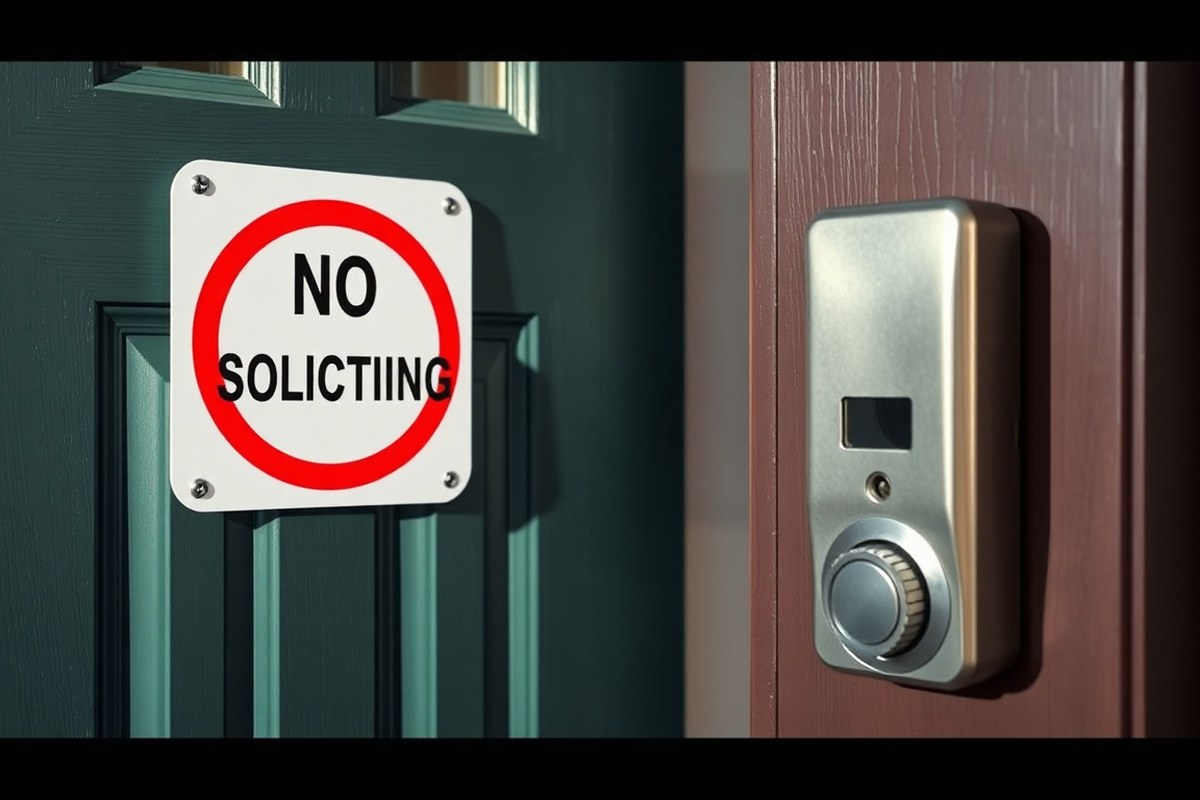
Is a No Soliciting Sign Enforceable? What Actually Works to Stop Unwanted Visitors
Is a no soliciting sign enforceable? Yes, in many cities ignoring a no soliciting sign can lead to fines up to $1,000 or more. Enforcement depends on local laws and whether solicitors have the required permits or are on no-knock registries, so posting a clear sign is an important first step to deter unwanted visits legally.
Key Takeaways
- A no soliciting sign can lead to municipal fines ranging from $50 to $1,000 if ignored, depending on local ordinances.
- Solicitors must respect no soliciting signs if they lack a permit or if your address is on a no-knock registry.
- Local laws govern the enforceability of no soliciting signs through trespass statutes and permit requirements.
- The First Amendment does not protect commercial solicitors from following no soliciting and no trespassing notices.
- Registering your home on a no-knock list strengthens your legal protection against unwanted solicitors.
- Posting your name and address on no soliciting signs can support enforcement actions against violators.
Are No Soliciting Signs Legally Enforceable?

No soliciting signs are generally legally enforceable against commercial solicitors under state trespass laws across the United States. These signs serve as explicit notice that commercial visitors do not have permission to enter or remain on the property for solicitation purposes. If a solicitor ignores the sign and continues to approach or remain on your property, you have legal grounds to treat the situation as trespassing. Although arrests do occur, law enforcement typically issues warnings first, especially for first-time offenders.
The legal support for enforcing no soliciting signs primarily comes from trespass statutes. These laws recognize posted signs as explicit denial of entry or permission. Commercial salespeople fall under this category and are usually covered by these legal provisions. Having a clearly readable no soliciting sign posted at your property establishes a clear boundary that a commercial solicitor cannot legally cross without your consent. This differs from “no trespassing” signs, which apply more broadly to all unauthorized entry rather than just solicitation.
Commercial solicitation is distinct legally from other types of solicitation, such as political canvassing or religious outreach, which are often protected under the First Amendment. These types of solicitors may not be legally restricted by a no soliciting sign in many jurisdictions. For those commercial solicitors who ignore the sign, repeated violations may result in legal action under trespass laws or local ordinances requiring permits for solicitation.
To legally prevent solicitors using a no soliciting sign, place a clear and legible sign near your main entrance or property boundary where it is easily visible. The sign should explicitly state “No Soliciting” or a similar clear message. While the cost of a quality sign can be as low as $10 to $30, the key is its visibility and clarity. You do not need a permit to post such signs in most areas, but local laws may vary, so checking local ordinances is recommended to ensure compliance. Without a sign, you lose the explicit legal notice that supports trespass enforcement.
Property owners should understand that the sign itself does not automatically stop solicitors from knocking, but it does create a legal basis to ask them to leave and potentially pursue trespass charges if they refuse. The sign removes any implied license to enter for commercial purposes. What you want to avoid is confrontation. Start by politely informing the solicitor of the sign and your request for them to leave, then involve police if they disregard the notice and refuse to leave.
Which Types of Solicitors Must Respect No Soliciting Signs?

No soliciting signs primarily target commercial solicitors, people who approach homes or businesses to sell products or services. These signs help maintain privacy and reduce unwanted sales interruptions for residents and business owners. It is important to know which groups must respect these signs and who might be exempt, as the rules differ by type of solicitor and local laws.
Commercial solicitors, including salespeople and door-to-door vendors, are required to respect no soliciting signs. Ignoring such signs can lead to fines, especially in areas with strict local ordinances. Political canvassers and religious groups usually have different protections. Thanks to First Amendment rights, many local laws do not require political or religious visitors to follow the same permit rules as commercial sellers. However, homeowners can still ask these visitors to leave if they see a no soliciting sign, treating them as trespassers if necessary.
Delivery persons, newspaper carriers, and other service providers typically do not count as solicitors. These individuals are often exempt because their visits serve a necessary role rather than trying to sell goods or influence opinions. Homeowners who want to stop salespeople but still receive packages or newspapers should use clear no soliciting signs, sometimes adding wording that specifically allows deliveries.
- Commercial solicitors must respect no soliciting signs and may face penalties if they do not.
- Political canvassers have First Amendment protections but should still leave if asked by the homeowner.
- Religious groups like Jehovah’s Witnesses and Mormon missionaries are similarly protected but not exempt from being asked off private property.
- Delivery persons and newspaper carriers are generally exempt and not considered solicitors.
- Local laws vary; some exempt certain groups from no soliciting sign rules.
- Homeowners can treat unwanted political or religious visitors as trespassers if they ignore signs.
- Using clear, specific wording on signs helps ensure the correct groups respect your property preferences.
Applying a no soliciting sign involves more than just placing the sign; it means understanding who the sign covers and who does not. This ensures effective communication of your privacy desires without unintentionally banning necessary visits. In areas like Frisco, Texas, signs must clearly state expectations, and ignoring them can carry a financial penalty, which adds a layer of enforcement for commercial solicitors.
Make sure your no soliciting sign clearly states that deliveries and invited guests are welcome if you want to allow those visits while blocking salespeople and canvassers.
How Local Laws and Ordinances Affect No Soliciting Sign Enforcement
Enforceability of a no soliciting sign often depends on your local laws, including municipal codes and trespass statutes. Most cities require solicitors to have permits, and ignoring a no soliciting sign can lead to fines or even criminal trespass charges. Understanding how these local rules work helps you know what actions you can take to protect your property.
Overview of Common Permit Requirements
Many municipalities require solicitors to obtain a local permit before they can legally approach residences or businesses. This permit ensures that solicitors comply with certain standards and usually involves submitting an application and paying a fee. The requirement is separate from posting a no soliciting sign, meaning a licensed solicitor might still be breaking the law if they ignore the sign and enter your property.
Permit applications typically ask for the solicitor’s identity, purpose, and sometimes a background check. Enforcement officers may revoke permits if solicitors violate local soliciting rules, including ignoring no soliciting signs. These permits are designed to give communities control over commercial solicitations and protect residents from unwanted intrusions.
Typical Fines and Penalties by City
Municipal ordinances usually set civil fines for solicitors who violate permit requirements or approach addresses with no soliciting signs. Fines often range from $50 to $500 per incident but can reach as high as $1,000 in some cities. These penalties may be issued by local code enforcement officers or law enforcement.
In many places, ignoring a no soliciting sign might be enforced through civil fines tied to municipal codes, with criminal trespass charges adding a separate layer of enforcement. This means a solicitor could face both a permit violation fine and a trespassing charge, increasing the potential penalties.
Examples of Local Ordinance Variations
Local ordinance rules vary by state and city, especially about permit requirements and trespass statutes. The table below shows how different states approach solicitation laws, trespass statutes, and permit requirements:
| State | Primary Trespass Statute | State Solicitation Law | Municipal Permit Required |
|---|---|---|---|
| California | Penal Code § 602 | Limited state law; local ordinances govern | Yes (most cities) |
| Texas | Penal Code § 30.05 | Limited state law | Yes (most cities) |
| Florida | F.S. § 810.09 | Limited state law | Yes (most cities) |
| Illinois | 720 ILCS 5/21-3 | Limited state law | Yes (most cities) |
| New York | Penal Law § 140.05 | Limited state law | Yes (most cities) |
This variety means enforcement depends heavily on your location. Even states with limited state-level solicitation laws defer to detailed local ordinances about permits and penalties. Knowing your city’s specific rules gives you clearer rights and remedies when a solicitor ignores your sign.
How Trespassing Laws Support Enforcement
Most states treat soliciting on a property with a no soliciting sign as criminal trespass because the sign revokes permission to enter. This gives property owners stronger legal grounds compared to civil fines alone. Law enforcement can issue warnings, fines, or arrest warrants based on state criminal trespass laws.
Penalties for criminal trespass vary, but a solicitor ignoring the sign often faces greater consequences than a simple municipal fine. Trespass laws reinforce the no soliciting sign by providing a criminal enforcement option, which often includes higher fines or potential legal charges if the solicitor refuses to leave.
What Role Does the First Amendment Play in No Soliciting Sign Restrictions?
The First Amendment places important limits on prohibiting door-to-door solicitation, particularly when it involves political and religious speech. Unlike commercial solicitation, which a no soliciting sign can effectively bar, political and religious canvassing enjoys strong constitutional protection as core First Amendment activity. This means no soliciting signs do not override these constitutional rights.
Municipalities cannot impose broad permit requirements on political canvassers and religious groups without constitutional conflicts. In Village of Stratton (2002), the Supreme Court found laws demanding permits for door-to-door speech activities, including political and religious topics, violate free speech protections as an unconstitutional prior restraint. The Court pointed out that no soliciting signs provide a simpler, less restrictive method for homeowners to maintain privacy without infringing on constitutional freedoms.
Although political and religious speech receives greater protection, this does not give canvassers unrestricted access. A homeowner’s explicit request for someone to leave their property, whether given verbally or through a no soliciting sign, must be respected. Ignoring such a request can lead to trespassing charges, even if the canvasser claims First Amendment protections. For example, a political campaign worker who disregards a no soliciting sign and is told to leave by the homeowner is on private property without permission and must comply immediately.
There is no nationwide law that standardizes door-to-door solicitation, but numerous municipalities impose rules against soliciting, especially for commercial purposes. These local regulations often include time restrictions, like prohibiting solicitations after a certain hour in the evening. For instance, someone calling at 9:30 p.m. In a place where solicitation stops at 8 p.m. Would violate the local law even if no sign is posted. Although political and religious solicitors typically aren’t required to get permits, they still must honor property owners’ rights.
In practice, you can use a no soliciting sign to clearly express your preference against all unsolicited visits. For commercial solicitors, the sign often serves as the formal revocation of consent needed to enforce trespassing laws. For political or religious canvassers, it signals your invitation status, if they ignore it, you can verbally order them to leave. This combination respects constitutional protections while safeguarding your privacy and property rights. Costs for signage vary but generally run under $20 for durable outdoor signs.
What Should You Do If Someone Ignores Your No Soliciting Sign?
Begin by calmly asking the solicitor to leave your property when they ignore your no soliciting sign. Should they refuse, document the incident and reach out to local authorities. Legal action may be appropriate if the solicitor continues to harass you despite warnings and police involvement.
Politely Ask the Solicitor to Leave
Begin by addressing the solicitor directly and calmly request that they leave your property. This step gives clear notice that your no soliciting sign is meant to be respected. A polite but firm request shows you are serious and establishes verbal proof that you asked the individual to leave.
Make sure to communicate clearly, for example, say, “I have a no soliciting sign posted. Please leave the property.” Avoid confrontation or aggressive language, which can escalate the situation unnecessarily.
Document the Incident with Photos or Videos
When the solicitor fails to comply, start collecting evidence right away. Use your phone or a nearby camera to take photos or videos of the solicitor on your property. Record as much detail as possible, including the date, time, and any interaction you have with them.
Written notes or witness statements from neighbors or anyone else present add weight to your evidence. This documentation is important if you need to report the trespass or file complaints later. Keep the files organized and in a safe place.
Documenting the incident protects you and speeds up police or legal action.
Contact Local Authorities as a Next Step
Call the police if the solicitor refuses to leave after being asked or returns after a warning. Police officers typically respond first with a verbal warning and request that the solicitor vacate your property. After ignoring the warning, the police have the authority to remove the solicitor for trespassing.
Make sure you clearly explain that a no soliciting sign is posted and that the individual disregarded it. Proof that the solicitor was aware of the sign or was directly asked to leave strengthens your case. The trespass charge is the most common legal consequence in such situations. Here are the steps you should follow when involving the police:
- Call the non-emergency police number unless the situation is dangerous.
- Explain that a solicitor is ignoring a posted no soliciting sign.
- Provide the location and descriptions of the individual(s).
- Document the officer’s response, including any warnings or citations issued.
- Keep a record of all incidents to support persistent issues.
Consider Legal Action If Harassment Continues
You may consider civil legal action if the solicitor continues, especially with proof of repeated violations and reports filed with the police. Trespassing charges require evidence that the solicitor knowingly ignored the sign or refused to leave when asked.
Consulting a licensed attorney can help you explore options like restraining orders or filing harassment complaints. These measures usually come with court fees and may take time but serve to legally prevent further unwanted solicitations. Repeat offenders or commercial companies who ignore your notice and police intervention can face fines or criminal prosecution depending on your local laws, so keeping thorough records is essential.
How to Make Your No Soliciting Sign More Legally Effective
Making your no soliciting sign more legally effective begins with clear visibility and precise wording. A sign posted near the front entrance or directly on the front door offers the best chance a solicitor will see it before attempting to approach. This placement meets legal requirements in most states by providing clear notice, which means the sign can serve to revoke the implied license for solicitors to enter the premises.
The size and legibility of the sign matter significantly. A sign measuring around 8 by 10 inches with contrasting colors improves readability from a reasonable distance. Use simple, direct language such as “No Soliciting. Trespassers Will Be Prosecuted” or “No Soliciting. Private Property.” Avoid ambiguous phrasing to prevent confusion. Some homeowners find that customizing wording to specify commercial solicitation can strengthen the sign’s message. For example, using “No Commercial Soliciting” can make it clear that political canvassing or charity work may not be included, depending on local rules.
Placement should focus on where visitors or solicitors naturally approach the property. The ideal spot includes the main entry path, mailbox, or gate. At least one sign should face the street to be visible before anyone steps onto private property. You might need more than one sign if the property has multiple entrances or a large frontage. Check your city or county ordinances; some require specific heights or locations for signs to be considered legally enforceable. Here’s a checklist for making your no soliciting sign more effective and legally binding:
- Place the sign near the front entrance or main door, at eye level.
- Use letters at least one inch tall with high-contrast colors (e.g., black text on white background).
- Write clear and direct wording: “No Soliciting. Trespassers Will Be Prosecuted.”
- Use a sign size of about 8×10 inches or larger for easy readability.
- Consider multiple signs if property has several access points.
- Check local laws for any specific wording or placement rules.
- Keep the sign maintained, replace faded or damaged signs promptly.
A well-designed and properly placed sign costs roughly $10 to $30 for a durable version made of metal or weather-resistant plastic. This investment ensures the sign remains clear across all seasons. Signs that are small, hard to read, or hidden behind plants or decorations often fail to provide proper notice, reducing legal enforceability. Poorly visible signs may leave you unable to prove that visitors received adequate warning when dealing with repeated solicitations.
For neighborhoods where solicitors persist, a no soliciting sign is just the first step. Documenting violations and escalating complaints to the companies involved or local consumer protection authorities can help enforce the sign’s intent. Ultimately, a sign that is clear, visible, and compliant with local regulations carries the strongest legal weight when you need to address trespassing or solicitation issues at your property.
Differences Between No Soliciting and No Trespassing Signs
No soliciting signs and no trespassing signs serve different legal and practical purposes on your property. A no soliciting sign specifically targets commercial or sales-related visitors, clearly communicating that such activities are unwelcome. In contrast, a no trespassing sign forbids any unauthorized entry onto the property, providing a broader legal shield. Understanding these differences helps you choose the right sign depending on the level of protection and type of visitor control you need.
The biggest legal difference lies in enforcement strength. A no trespassing sign explicitly revokes the implied license to enter any part of your property without permission, which carries more direct legal weight under laws like California Penal Code § 602. A no soliciting sign, while effective in many states, primarily signals that commercial visitors lack permission; it indirectly supports trespassing claims when someone disregards it. This means a no trespassing sign often offers stronger legal protection against unwanted visitors beyond just solicitors.
Choosing between signs depends on your goal. Use a no soliciting sign if your main concern is stopping unwanted salespeople and fundraisers but you want to allow other visitors. Opt for a no trespassing sign if you want to bar all unauthorized persons, including solicitors, neighbors, or anyone without your explicit consent. Some homeowners combine messages for added clarity and protection, which can help avoid confusion and strengthen legal standing.
| Aspect | No Soliciting Sign | No Trespassing Sign |
|---|---|---|
| Primary Purpose | Stops commercial or sales solicitations | Prevents all unauthorized entry |
| Legal Basis | Revokes implied permission for solicitors (commercial visitors) | Explicitly revokes all implied permission to enter |
| Enforcement Strength | Moderate; often treated as trespassing upon violation | Strong; court-backed trespassing law enforcement |
| Typical Use | Residential or small business settings focused on stopping soliciting | Properties needing full access restriction, including residential, commercial, industrial |
| Sign Placement Advice | At entrances or near the front door to inform solicitors | At all property access points for clear legal notice |
| Cost and Maintenance | Inexpensive, under $20 for quality signs; needs visible placement | Similar cost; may require more signs for full perimeter coverage |
| Effectiveness Factors | Depends on visibility and local enforcement patterns | Higher if signs are clear and placed properly, supported by local laws |
To maximize legal effectiveness, position your selected sign where visitors first approach your property. For no soliciting signs, placing it near the front door or a mailbox is best because it clearly revokes commercial visitors’ implied license to enter. No trespassing signs should be obvious at all entry points, not just near the house, ensuring anyone crossing your boundary receives unambiguous notice. Upgrading a no soliciting sign with added “No Trespassing” wording can also improve protection without confusing your message.
The choice also depends on local enforcement norms. Some areas treat no soliciting signs mainly as psychological discouragement, while others back them with trespassing penalties. Understanding how your jurisdiction handles these signs can save you legal frustration. Combining signs or consulting a licensed attorney ensures you comply with local laws and gain the strongest protection for your home or small business.
Who Is Exempt from No Soliciting Signs and Why?
Some groups can legally ignore no soliciting signs based on local laws or constitutional protections. Common exemptions include charitable organizations, political candidates, religious groups, and government officials. These exemptions exist because their activities serve public interests or have protections under free speech laws.
Charitable Organizations
Charitable groups often have an exemption from no soliciting signs to allow fundraising efforts that support public causes. Many local ordinances recognize that these organizations provide social benefits and therefore allow them to solicit donations even if a sign forbids other sales or solicitations.
However, this exemption can vary by jurisdiction, so not all charitable solicitations are automatically allowed everywhere. To legally solicit despite a no soliciting sign, a charitable group may need to register with local authorities or provide proof of nonprofit status. Some communities limit the days or hours when charitable soliciting can occur to balance residents’ privacy with fundraising.
Political Canvassers
Political candidates and campaign workers usually have protection under the First Amendment to engage in door-to-door communication regardless of no soliciting signs. Political canvassing is considered a form of free speech about issues and candidates, so these groups are commonly exempt from sign restrictions.
In practice, political canvassers should still respect times allowed for solicitation, such as daytime hours, and avoid aggressive behavior or trespassing. Some local rules require permits for political canvassing, so checking with city or county election offices can help campaigns comply with both solicitation and local rules.
Religious Groups
Religious groups are usually exempt from no soliciting sign restrictions to allow door-to-door proselytizing or distribution of religious materials. Courts have upheld these exemptions based on freedom of religion and free speech protections, recognizing the importance of these activities for many religious communities.
Despite the exemption, religious solicitors should be mindful of local ordinances that might require permits or restrict hours. They should clearly identify themselves and their organization during visits. Homeowners can still ask religious solicitors to leave, but legal enforcement against them is often limited unless other laws are broken.
Government Officials
Government officials or representatives acting within their official duties are generally exempt from no soliciting signs. This includes census workers, utility inspectors, or code enforcement officers who need to interact with residents as part of public service.
These officials must usually carry identification and conduct visits only during reasonable hours. While they can legally disregard no soliciting signs, it’s advisable for them to explain their role and purpose clearly to avoid confusion or complaints from residents.
- Charitable groups usually must prove nonprofit status or registration
- Political candidates have free speech protection but may need local permits
- Religious solicitors have broad protections but should identify themselves
- Government officials must act within official duties to qualify for exemption
- Exempt groups should respect reasonable hours for solicitation
- Local laws may override or limit some exemptions
- Homeowners can still ask solicitors to leave even if they are exempt
Check local rules on solicitation exemptions before assuming a group can ignore your no soliciting sign, as requirements vary widely and some groups must register or have permits.
Step-by-Step Action Plan for Enforcing Your No Soliciting Sign
Take clear, consistent steps to protect your property from unwanted solicitors and increase your sign’s effectiveness.
- Day 1: Install a clearly visible no soliciting sign at all main entrances. Confirm the sign is readable from a distance and complies with local regulations.
- Week 1: Check local laws online or with your city hall to understand specific rules about no soliciting signs in your area. Knowing this helps you enforce your rights legally.
- Week 2: If a solicitor ignores your sign, politely inform them you do not allow solicitation. Note the date and description of the person for future reference.
- Month 1: If solicitors continue to ignore your sign, contact local law enforcement or a community mediation service to report repeated violations. Watch for responses indicating enforcement actions.
- Anytime: Consider adding a no trespassing sign alongside the no soliciting sign to strengthen your legal position. Check that both signs comply with local rules to avoid confusion.
- After 3 months: Reassess whether solicitors respect your sign. If problems persist, consult a local attorney to understand your legal options.
Frequently Asked Questions
Can a No Soliciting Sign Prevent All Types of Solicitation Legally?
No, it primarily prevents commercial sales solicitation; political and religious solicitation often have more protections and may not be fully blocked by these signs.
Do No Soliciting Signs Have to Meet Specific Criteria to Be Enforceable?
Yes, the sign must be clearly posted, readable, and visibly placed to invoke trespass laws effectively against commercial solicitors.
Can a No Soliciting Sign Stop Solicitors from Knocking on the Door?
No, solicitors can still knock; the sign mainly supports trespass claims if they persist after being asked to leave.
Are There Fines for Ignoring a No Soliciting Sign?
Yes, many cities impose fines that can reach up to $1,000 for ignoring no soliciting signs, based on local trespass laws.
Does Putting Your Name on a No-Knock Registry improve Your No Soliciting Sign Protection?
Yes, registries add legal weight by explicitly stating your preference not to be solicited, aiding enforcement against violators.
Is It Legal for Police or Officials to Disregard No Soliciting Signs?
Typically, government officials in their official duties are exempt from no soliciting sign restrictions.
The Bottom Line
No soliciting signs generally have legal backing, especially when paired with local ordinances and clear communication. Your best protection comes from combining visible signs with informed action if someone ignores your request. Start by posting a sign that complies with local laws, then document and report violations when necessary. Taking these steps helps protect your property and peace of mind effectively.