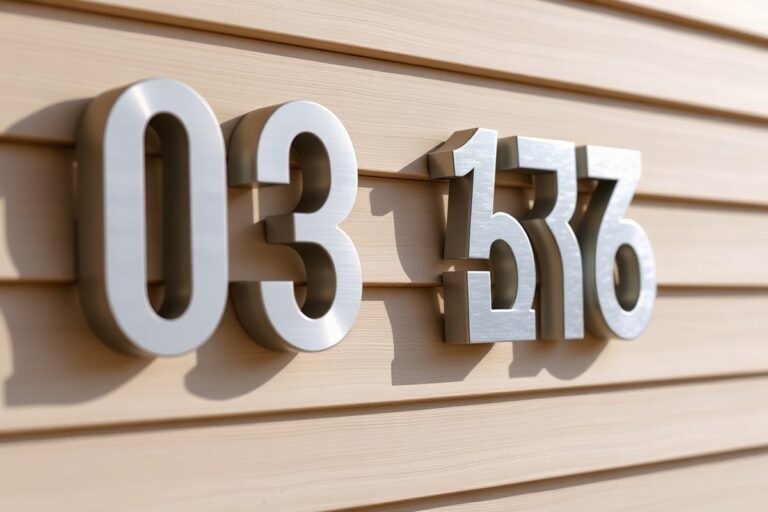
House Number Size Guide: Clear Rules and Tips for Perfect Visibility
A house number size guide shows that the ideal number height depends on the distance from your street to the house. A simple starting point is one inch of height for every 10 feet of viewing distance, with a minimum of four inches. This rule ensures your numbers are visible and comply with most local codes.
Key Takeaways
- Choose at least 4-inch tall numbers for houses less than 50 feet from the street.
- Increase number height by 1 inch for every 10 feet beyond 50 feet of house setback.
- Local codes often require minimum 4-inch numbers, but set back properties need 5 to 6 inches or more.
- Use thicker stroke widths for better visibility, especially at longer distances.
- Simple, clear fonts improve legibility compared to decorative, thin styles.
- Mount house numbers between 4 to 6 feet high for optimal line of sight from the street.
What Is the Ideal House Number Size for Your Home?

Standard house number sizes typically range between 3 inches and 12 inches or more, based on how far your home is from the street. A common guideline suggests sizing your numbers at 1 inch in height for every 10 feet between your house and the road. For instance, a house 50 feet away from the street should have numbers at least 5 inches tall. This scale helps make sure your numbers are clearly visible to drivers traveling near 25 mph.
Most U.S. Building codes require a minimum digit height of 4 inches for single-family homes located close to the street. However, properties with longer driveways or bigger setbacks often must use larger numbers, sometimes up to 6 inches or more. This minimum also factors in requirements from fire and safety codes, which dictate not just size but sometimes stroke width and illumination for nighttime visibility. Ignoring these standards can make your house harder to find in emergencies or everyday deliveries.
| Setback Distance from Road | Minimum Digit Height | IFC Compliant | Secondary Sign Needed |
|---|---|---|---|
| 0 to 30 feet | 3 inches | Yes (use 4-inch IFC minimum) | No |
| 31 to 50 feet | 4 to 5 inches | Yes | No |
| 51 to 80 feet | 6 to 8 inches | Yes | Recommended |
| 81 to 110 feet | 8 to 10 inches | Yes | Yes |
| 111 to 150 feet | 10 to 12 inches | Yes | Yes |
| Over 150 feet | 12 inches or larger | Confirm with local fire marshal | Required |
To apply these guidelines, first measure your property’s setback from the road using a tape measure or laser distance measurer certified to ASTM E2193 standards. Multiply that distance by 0.1 to get your minimum number height in inches based on the 1-inch-per-10-feet rule. Next, check your local building or fire code for the official minimum size, which often sets a baseline of 4 inches for homes under 70 feet from the street.
For example, a home with a 90-foot setback would calculate a baseline size of 9 inches (90 ft × 0.1). According to the table above, the recommended size for that setback is between 8 and 10 inches with a secondary sign suggested for extra visibility. In this case, installing numbers around 9 inches tall meets both the rule and code recommendations. Adding a secondary sign perpendicular to the road with numbers 4 to 6 inches tall also improves legibility if the main house is obscured.
How to Measure and Calculate the Correct Number Size

To measure and calculate the correct house number size, start by measuring the available mounting space accurately. Use printable templates to visualize the digit size and arrangement. Factor in margins, gaps between digits, and stroke widths to ensure your numbers fit and remain legible.
Measuring Available Wall or Door Space
Begin by measuring the full width and height of the area where the house numbers will be mounted. Use a tape measure or laser distance measurer for best accuracy. Record the maximum vertical space to determine the tallest digit height your surface can accommodate. Also, measure the width to find out how many digits fit without appearing crowded.
Remember to measure from the wall surface out to the closest street or driveway to help calculate appropriate digit height for visibility. For example, add 1 inch of digit height for every 10 feet of distance to the road. This relates your setback to the size needed for readability.
Using Printable Templates for Visualization
Download and print house number sizing templates scaled to various heights. Tape these on the mounting surface to get a real-world sense of how different sizes appear. These templates include proper stroke width and spacing, helping you avoid guesswork.
Testing several sizes visually allows you to pick a dimension that complements your home’s architecture and meets visibility goals. Templates also expose the amount of wall space numbers will consume, letting you decide if smaller or larger sizes work better.
Accounting for Margins, Gaps, and Digit Widths
While planning your number layout, allow margins on the sides for neatness, usually at least 1 inch total. Use standard digit width and gap ratios for consistent spacing. For instance, the total width of a 3-digit number is about 1.86 times the digit height plus two gaps plus padding.
The stroke width should be one-tenth of the digit height (a 5-inch tall digit has 0.5-inch stroke width) to maintain legibility from a distance. Using a consistent stroke width avoids numbers that look thin or too bulky on your wall.
Proper spacing and margins prevent crowding, which can reduce readability. Planning based on digit size and count keeps your house address clearly identifiable. Follow these steps to measure and calculate your house number size:
- Measure the vertical space: Use a tape measure or laser distance measurer to find the maximum height for digits.
- Measure the horizontal width: Capture the total available width to fit all digits comfortably.
- Estimate viewing distance: Measure setback from street center to number mounting point.
- Calculate digit height: Divide setback distance (feet) by 10 and round up. Ensure it is at least 4 inches for readability.
- Download and print digit templates: Tape them to the surface to test visual appeal and spacing.
- Calculate total number width: Use the formula width = (digit width factor × height) + gaps + margins based on digit count.
- Check stroke width: Ensure stroke width matches one-tenth digit height for clarity.
- Adjust layout as needed: Shift digits or reduce size if space is limited or crowded.
Always verify your measurements before ordering or mounting numbers to avoid costly mistakes or a poorly readable house number.
Why Font Style, Stroke Width, and Digit Shape Matter
Font style, stroke width, and digit shape greatly influence how easily your house numbers can be seen and read from a distance. Choosing the right combination ensures clear visibility, helps emergency responders locate your home quickly, and meets local code requirements for legibility. Bold sans-serif fonts with sufficiently thick strokes typically offer the best readability, while decorative styles often sacrifice clarity.
How Font Style Affects Readability
Font style impacts how distinct each number appears from afar. Sans-serif fonts with clean, simple lines avoid extra details that can blur or merge under distance or poor lighting. Bold block styles, often seen with stroke widths from 0.6 to 1 inch, stand out best on most residential homes and comply with fire and building codes. Serif or slab serif fonts maintain some readibility if their strokes are thick enough (0.5 to 0.9 inch), suiting traditional or farmhouse aesthetics.
Fonts with thin or hairline strokes, usually 0.1 to 0.3 inch thick, look elegant but fail basic visibility tests beyond close range and do not meet minimum stroke width code requirements. Script or cursive fonts have variable stroke widths and forms that complicate quick recognition, making them inappropriate for primary address numbers but acceptable only for decorative purposes.
Choosing the Right Stroke Width for Number Height
Stroke width should scale with the height of the digits to maintain legibility. A common guideline is at least a 0.5-inch stroke for numbers 4 inches tall or more, following IFC 505.1 and NFPA 1 requirements. For taller numbers, such as those 6 to 12 inches high used on homes set back further from the street, stroke widths between 0.6 and 1 inch improve contrast and visibility.
Too thin a stroke on a tall number results in a fragile appearance but poor legibility, especially in low light or from steep angles. For example, a 6-inch number with only a 0.2-inch stroke may fail to be seen clearly beyond 30 feet. On the other hand, an excessively thick stroke on small numbers can make digits look crowded or less distinct from each other.
When Decorative and Script Fonts Can Work
Decorative fonts and script styles typically have thinner strokes and more intricate shapes, reducing visibility at common viewing distances. These styles are generally not compliant with fire codes or visibility standards and should be avoided for primary house numbers. Instead, reserve them for accents or secondary plaques located close to the entrance where legibility is less critical.
To include stylistic elements, use bold block numbers for the main house number and place a smaller decorative plaque nearby. This approach balances curb appeal with safety and ensures that emergency responders can quickly spot your address without confusion.
Tips for Selecting Styles Based on Your Situation
For homes set close to the street or on well-lit blocks, standard bold sans-serif numbers between 4 and 6 inches tall with a 0.5-inch stroke width provide the best balance of visibility and style. When your home is set back, increase the number height accordingly and proportion the stroke width between 0.6 and 1 inch.
Always check local codes for minimum size and style requirements, especially if your community follows stricter guidelines than the International Fire Code. High-contrast color combinations and reflective or illuminated finishes can also improve readability without needing excessively large digits.
Choose font styles with clear, open forms and thick strokes that avoid thin connections or decorative flourishes. This approach guarantees the numbers remain legible day and night, in good weather or fog, helping keep your home accessible and safe.
How Viewing Distance and Speed Influence Number Size Choices
House number size depends on how far away and how fast a vehicle moves when reading it. Numbers need to be larger for longer driveways or when a driver passes by quickly to allow enough time for clear recognition. Poor lighting or visual obstructions also require bigger or well-lit numbers to maintain visibility.
Size Recommendations by Distance and Speed
Choosing the right number height starts with understanding viewing distance and the speed of passing vehicles. A basic rule is one inch of number height per 25 feet of distance. For example, numbers on a mailbox seen from 10-15 feet can be 4 inches tall, while numbers for a long driveway 40-60 feet away should be 8 inches or larger to be legible from a moving car. Faster vehicle speeds demand larger numbers for quicker recognition.
| Height (inches) | Typical Use | Viewing Distance (feet) |
|---|---|---|
| 4 | Front door, mailbox | 10-15 |
| 6 | Garage, porch, driveway | 20-30 |
| 8 | Yard sign, long driveway | 40-60 |
| 12 | Roadside, rural address | 80+ |
These sizes increase visibility, giving drivers time to spot your numbers before reaching your property. Driveways longer than 60 feet benefit from numbers 8 to 10 inches tall. Numbers too small for the distance make it hard for emergency services or visitors to find your home quickly.
Secondary Signs for Long Driveways or Blocked Views
Secondary address signs should be added when the main house numbers are not clearly visible from the road. This happens with very long driveways, sharp turns, or when landscaping or structures block the view. A separate, well-placed sign at the driveway entrance helps drivers locate the property safely and efficiently.
Use the primary number size adjusted for the distance to the driveway entrance. If your house is set back far or partially hidden, a secondary sign with numbers 8 to 10 inches tall mounted 3 to 4 feet high on a mailbox post or sturdy post near the road generally works best. The secondary sign should have strong color contrast or lighting to further improve legibility.
Adjustments for Night and Poor Visibility Conditions
Numbers sized correctly for daylight may still be hard to read at night or in poor weather. Adding lighting or reflective materials boosts visibility under such conditions. LED backlit numbers or external porch lights aimed at the digits maintain readability after dark.
| Mounting Height | Visibility Effect | Best For | Size Adjustment |
|---|---|---|---|
| 3-4 ft (0.9-1.2 m) | Low, can be hidden by plants | Mailbox posts | Add 5-10% |
| 4-6 ft (1.2-1.8 m) | Near eye line | Porch, column, fence | Base size |
| 7-9 ft (2.1-2.7 m) | Readable but angled upward | Transom, garage header | Add 10-20% |
| 10 ft+ (3 m+) | Harder from close range | Long drive signs | Add 20-25% |
Proper lighting combined with the right height and size ensures your house numbers remain visible regardless of shadows or weather. Without adequate light, even large numbers become unreadable at night, risking missed deliveries or emergency delays.
How Local Codes and Fire Regulations Affect House Number Size
Local codes and fire regulations set minimum requirements for house number sizes to ensure emergency responders can find your home quickly. The National Fire Protection Association’s NFPA 1 baseline requires numbers to be at least 4 inches tall, with a stroke width of 0.5 inches, and contrast sharply with the background. These numbers should also be visible from the street, often within 30 feet, sometimes requiring reflective or illuminated materials for night visibility. The International Fire Code mirrors this with similar size and visibility rules in Section 505.1.
Municipal mandates vary by city. For example, New York City requires house numbers to be at least 5 inches tall according to NYC Rules § 3-01, while Chicago’s Municipal Code 10-4-090 demands 3-inch minimum numbers for residences and 6 inches for businesses or stores. Massachusetts requires 4-inch minimum numbers with night illumination. For commercial or multi-family buildings, fire codes set larger minimum sizes, starting at 8 inches tall for sites within 40 feet from the street, increasing to 18 inches when the building is farther back.
Review your city’s building codes, HOA regulations, and fire department rules before buying house numbers. These sources outline the specific requirements for your neighborhood. Reach out to your local fire marshal or building office if you need clarification, since they enforce these standards and can specify the correct size, material, and lighting. Checking all three sources reduces the risk of getting non-compliant numbers that could hold up inspections or lead to extra costs for changes.
Costs for compliant numbers may be higher if you need reflective or illuminated versions, especially those meeting ASTM D4956 Type IV prismatic sheeting standards, which guarantee retroreflective brightness around 250 cd·m−2 per lux. Such materials improve nighttime visibility without extra lighting. Noncompliance risks range from failed inspections to emergency response delays, which can be critical in fire or medical situations. Installing numbers that meet or exceed local code requirements improves safety and avoids costly fines or corrective work.
Always confirm your local fire code’s house number size and visibility requirements with your fire marshal before ordering to prevent delays or unsafe conditions.
Where and How High to Mount House Numbers for Maximum Visibility
Mount house numbers between 4 and 6 feet above ground for best visibility. This range matches the average eye level of pedestrians, drivers, delivery personnel, and emergency responders. Placing numbers too high or too low reduces their readability even if the size is correct. For homes far from the street, such as those 50 feet away, numbers should be on the larger side and positioned so they remain within this height range when viewed from the street.
Position numbers on flat, well-lit surfaces near the main entry or visible side of the house facing the street. Avoid areas blocked by bushes, trees, or architectural features. For example, mounting numbers on a gate post or mailbox post near the driveway’s entrance can improve sightlines where house walls are obscured. Ensure the background contrasts strongly with the number color to help them stand out.
Landscaping often causes visibility issues. Trim or relocate plants that grow in front of mounted numbers. If pruning isn’t practical, consider moving the numbers to a post closer to the street or adding an additional display on the mailbox. Lighting also helps maintain visibility at night. Installing a small, downward-facing light focused on the numbers can save precious seconds for emergency responders and delivery drivers alike.
Check visibility from street level and from inside vehicles at different angles before final mounting. Numbers can vanish behind branches or shadows or appear distorted if mounted on uneven surfaces. Mount numbers flush with the surface to avoid shadows and prevent snagging on hands or clothes. Use anchors and screws rated for outdoor conditions to keep numbers stable and secure over time.
Here is a simple checklist for mounting your house numbers: measure 4 to 6 feet above ground for mounting height; choose a location with unobstructed sightlines from the street or driveway; ensure strong color contrast with the background; trim landscaping or relocate numbers if blocked; add nighttime lighting if needed; test visibility from various distances and angles. Following these steps costs very little beyond hardware and any small lighting fixture, but it greatly improves emergency response times and daily convenience.
How Color Contrast and Lighting Impact House Number Visibility
To ensure your house numbers stand out clearly during the day and night, focusing on color contrast and proper lighting is essential. The contrast between your house number color and the background should be high enough to allow easy reading from a distance. For example, placing matte black numbers on a white or cream wall offers excellent contrast and readability in both daylight and low-light conditions. White or cream-colored numbers over red brick or dark gray walls also work well by providing strong daytime contrast, but they usually need additional lighting to remain clear after dark.
Contrast ratios below 3:1 often reduce visibility, requiring a color adjustment before installation. For instance, using brushed bronze on a tan or beige stucco wall results in poor contrast and leads to very low nighttime visibility without extra lighting. Similarly, brushed gold or brass on painted white surfaces tends to perform poorly and should be avoided if nighttime readability is a priority.
Lighting plays a important role in maintaining visibility when natural light is insufficient. Backlighting or spotlighting your house numbers can eliminate shadows and ensure the numbers are visible 24/7. Backlighting involves mounting a light source behind the numbers, creating a halo effect that emphasizes outlines without glare. Spotlights focused on the numbers offer another option, especially effective when the light source can be positioned to avoid washing out the colors.
In locations with limited street lighting or where your house faces a dark road, adding illumination becomes even more important. Massachusetts and several other states require illumination of house numbers to comply with safety standards, demonstrating how necessary lighting is for emergency responders and visitors. The cost of adding a small LED spotlight or integrated backlighting is generally under $100 for materials, plus installation if you hire a professional.
Reflective finishes on numbers also help increase nighttime visibility. If installation of lighting is not feasible, choosing reflective paint or numbers made from reflective materials offers a practical alternative. This is particularly useful for homes in rural areas where lighting infrastructure is limited. However, reflective numbers rely heavily on external light sources such as car headlights, so combining reflectivity with some form of dedicated lighting provides the best results.
When improving visibility in poor lighting or nighttime conditions, avoid colors that blend into the background once the sun sets. Black or dark green numbers on natural wood backgrounds provide moderate visibility, but they benefit greatly from added illumination. Use warm white LED lights to highlight metallic or glossy numbers to prevent glare while preserving contrast. Always position lights so they shine directly on the numbers without causing distracting shadows or reflections.
Common House Number Size Mistakes and How to Fix Them
House numbers that disappear from street view often suffer from poor sizing and placement. Numbers that are too small or too thin fail to catch the eye, especially from a moving vehicle or at night. Incorrect stroke width and font choices worsen the problem by blending digits together or making them hard to distinguish. Fixing these issues means choosing numbers with the right height, stroke width, and spacing to ensure every digit stands out clearly.
Common mistakes include using fonts with narrow strokes or overly stylish designs that reduce legibility from a distance. These styles cause digits to look crowded or merge, especially when painted or applied on textured surfaces. Numbers that lack enough gap space between digits also compromise readability. To correct this, select fonts with moderate stroke widths, around 1/6 to 1/8 of the digit height, to balance boldness and clarity. Increase spacing between digits so they don’t touch or appear compressed.
Placement is a frequent problem. Even well-sized numbers become difficult to read if mounted too low, too high, or on cluttered backgrounds. Proper positioning involves mounting numbers at eye level, typically about 4 to 7 feet off the ground, and in a location clearly visible from the street. Avoid mounting over complex textures or colors that reduce contrast. Adding focused lighting, such as solar or LED fixtures, helps numbers stay visible after sunset or in bad weather.
To restore proper size and legibility, start with a house number sizing checklist: ensure the height matches your viewing distance, maintain stroke width within recommended ratios, use a sans-serif or simple font, space digits evenly, and mount at an accessible height on a contrasting background. This approach reduces confusion for delivery drivers, visitors, and emergency responders, improving safety and convenience.
Costs for upgrading house numbers vary with materials and lighting but typically range from $15 for basic metal or plastic numbers to $50 or more with integrated lighting kits. Installation is straightforward with basic tools and adhesives or screws. Proper installation takes 30 to 60 minutes depending on surface and lighting setup. Results include greater visibility in day and night conditions, less misidentification risk, and compliance with local regulations.
Choose numbers with thick, consistent stroke widths and ample spacing to avoid smudging digits together, especially when applying paint or adhesive numbers to textured surfaces.
Step-by-Step Action Plan for Choosing and Installing House Numbers
Follow these steps to ensure your house numbers are the right size, style, and placement for great visibility and compliance.
- Before you start: Check your local codes and fire regulations online or with your city office. Confirm required number height and placement rules to avoid redoing work later.
- Day 1: Measure the typical viewing distance from the street or curb to your house number location. Use this to calculate ideal number height, usually about 1 inch of number height for every 10 feet of distance.
- Day 2: Choose a font style with clear, simple digits and a stroke width that won’t blur from a distance. Test readability by printing sample digits on paper and viewing from the measured spot.
- Day 3: Select a high-contrast color combination, like white numbers on a dark background or black on light, to boost visibility day and night.
- Day 4: Decide on mounting height based on code and average eye level (typically around 5 to 6 feet). Confirm there’s adequate lighting or plan for installing exterior lighting focused on the numbers.
- Day 5: Purchase numbers matching your size, font, and color choices. Avoid overly decorative digits that reduce legibility at a distance.
- Day 6: Mount your numbers using sturdy fasteners and ensure they are securely attached and facing the street clearly. Double-check visibility from the measured viewing point.
- Day 7: Evaluate visibility both during daytime and at night under different lighting conditions. Make minor adjustments in angle or add lighting if numbers are hard to read.
Frequently Asked Questions
How Does the Setback Distance Affect My Choice of House Number Size?
A house set back over 70 feet generally needs numbers 5 to 6 inches tall or larger for clear visibility from the street. The farther your house is, the bigger the numbers should be to remain legible.
Can Digital House Numbers Improve Visibility Compared to Traditional Ones?
Digital house numbers can improve visibility in low light but require power and maintenance. They might be useful if your home has lighting challenges or is far from the street.
Should House Numbers Match the Architectural Style of My Home?
Matching house numbers to your home’s style can boost curb appeal and ensure they look intentional. Choose size and font that complement your home’s design without sacrificing readability.
How Can I Test My House Numbers’ Visibility Before Final Installation?
Use downloadable templates of various sizes placed on your wall to visualize visibility. Test readability from typical viewing angles and distances, especially from the street or driveway.
What Are the Consequences of Installing House Numbers That Are Too Small?
Numbers that are too small cause emergency delays and delivery errors. Local responders may have trouble locating your house quickly, increasing safety risks.
Is There a Cost Difference Between Larger and Smaller House Numbers?
Larger house numbers often cost more but improve visibility and safety. Prices vary by material; for example, custom acrylic signs can start around $20.
Key Points to Remember
Choosing the right house number size and style improves safety and curb appeal by making your home easy to find. Start by confirming local size rules, then measure your viewing distance carefully to pick the best number height and font. Once installed with good color contrast and lighting, your house numbers will stand out clearly from the street, helping visitors and emergency responders locate your home quickly.