Aluminum vs Steel House Numbers: Which Is Best for Durability & Style
Choosing between aluminum vs steel house numbers depends on balancing weight, corrosion resistance, and style. Aluminum offers lighter weight and natural corrosion resistance, making it easier to install and maintain. Steel tends to be stronger and more durable but may need protective coatings to prevent rust. Start by considering your local climate and mounting surface to pick the metal that best suits your home’s environment and installation needs.
Key Takeaways
- Aluminum house numbers weigh about 2.5 times less than steel, easing installation on stucco or wood siding.
- Steel, especially stainless types like 304 and 316, offers superior strength for coastal or harsh environments.
- Anodized aluminum finishes resist corrosion without extra painting or sealing, ideal for outdoor exposure.
- Steel numbers require paint or powder coating to prevent rust, adding maintenance over time.
- Choose number sizes between 5 to 8 inches for optimal legibility based on your home’s distance from the street.
- Thicker numbers (0.08 inches or more) improve durability and create appealing shadows without extra lighting.
Key Differences Between Aluminum and Steel Numbers
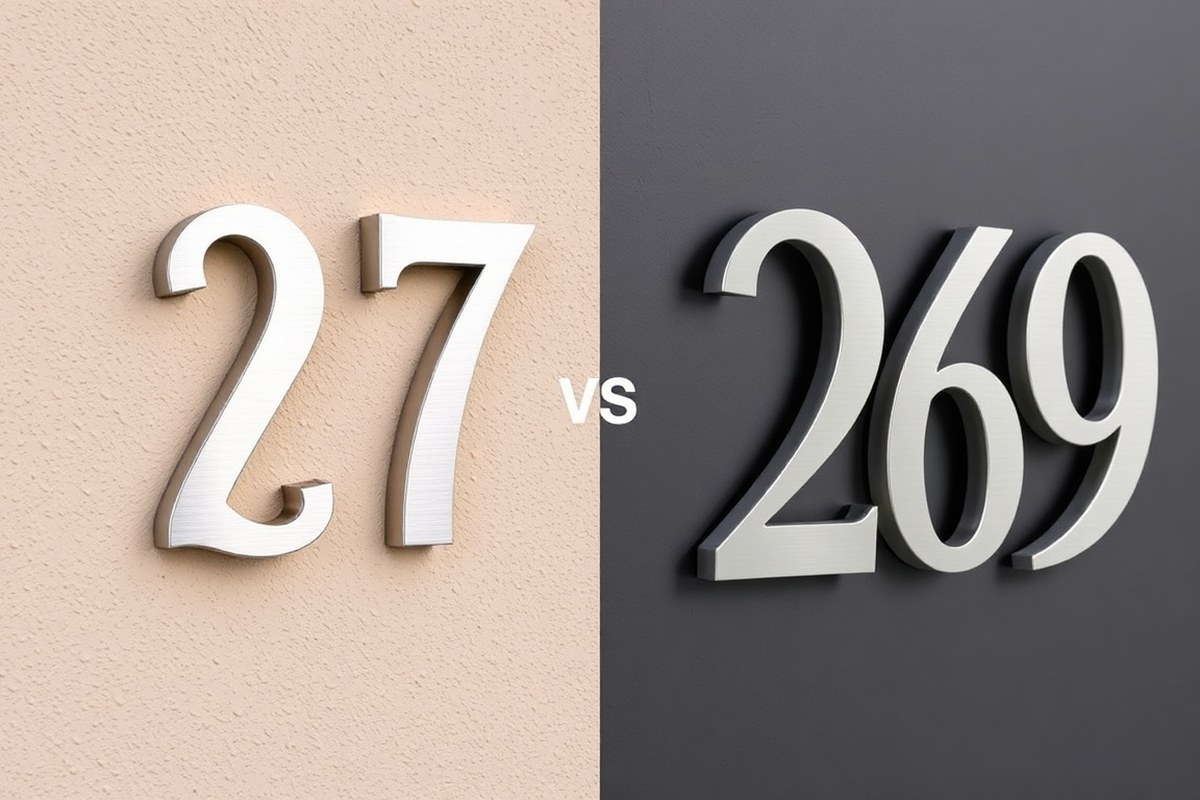
Aluminum and steel house numbers differ significantly in weight, corrosion resistance, durability, and style, making each metal suited for different home exterior applications. Aluminum is a lightweight metal that weighs roughly one-third as much as steel of the same size. This lighter weight makes aluminum numbers easier to install on a variety of surfaces without heavy-duty anchors. Steel, especially stainless steel, offers higher strength and is more rigid, which makes it less prone to bending or warping under physical impact.
| Property | Aluminum | Steel (Stainless) |
|---|---|---|
| Weight | Light (about 1/3 the weight of steel) | Heavy and rigid |
| Corrosion Resistance | Highly resistant; often anodized or powder-coated for extra protection | Excellent; resists rust and corrosion even in coastal or humid environments |
| Durability | Good; resists weather but softer and can dent easier | Very durable; impact resistant and maintains shape well |
| Finish Types | Painted, powder-coated, anodized in various colors | Brushed, polished, satin, or matte metallic finishes |
| Visual Style | Modern and versatile; often found in vibrant or matte colors | Sleek and contemporary; matches minimalist or industrial home designs |
| Typical Longevity | Up to 50+ years with proper finish and maintenance | 50+ years with minimal upkeep |
The corrosion resistance of aluminum comes from its natural oxide layer, which shields it from rust. Many aluminum numbers undergo anodizing or are powder-coated to further improve weather resistance and create durable colored finishes. These methods allow aluminum numbers to come in a wide range of hues, making it easier to coordinate with different exterior colour schemes. Steel numbers, especially those made from stainless steel, resist rust effectively without requiring extra coatings. They maintain a clean, metallic look that is well suited to contemporary and minimalist architectural styles.
Durability differences affect where each metal fits best. Aluminum’s lighter weight reduces the risk of damage during installation but makes it more susceptible to dents from heavy impacts or hail. Steel’s strength helps it stand up to harsh conditions and potential knocks without losing shape. Because steel is heavier, installation may require stronger mounting hardware, especially on softer surfaces like wood siding. For homes in coastal regions or high humidity, stainless steel offers unmatched resistance to corrosion, while aluminum with a high-quality finish is more affordable and still holds up well where salt air or moisture is less intense.
Choosing between aluminum and steel house numbers depends on balancing these factors: aluminum is ideal for homeowners who want a lively colour palette and lightweight numbers for easier mounting. Steel suits those seeking a metal with a modern, polished aesthetic that will hold up to tough weather and physical wear without much maintenance. Either choice offers longevity, but considering your home’s style, climate, and installation surface will guide the best fit.
How Weather and Environment Impact Metal Longevity
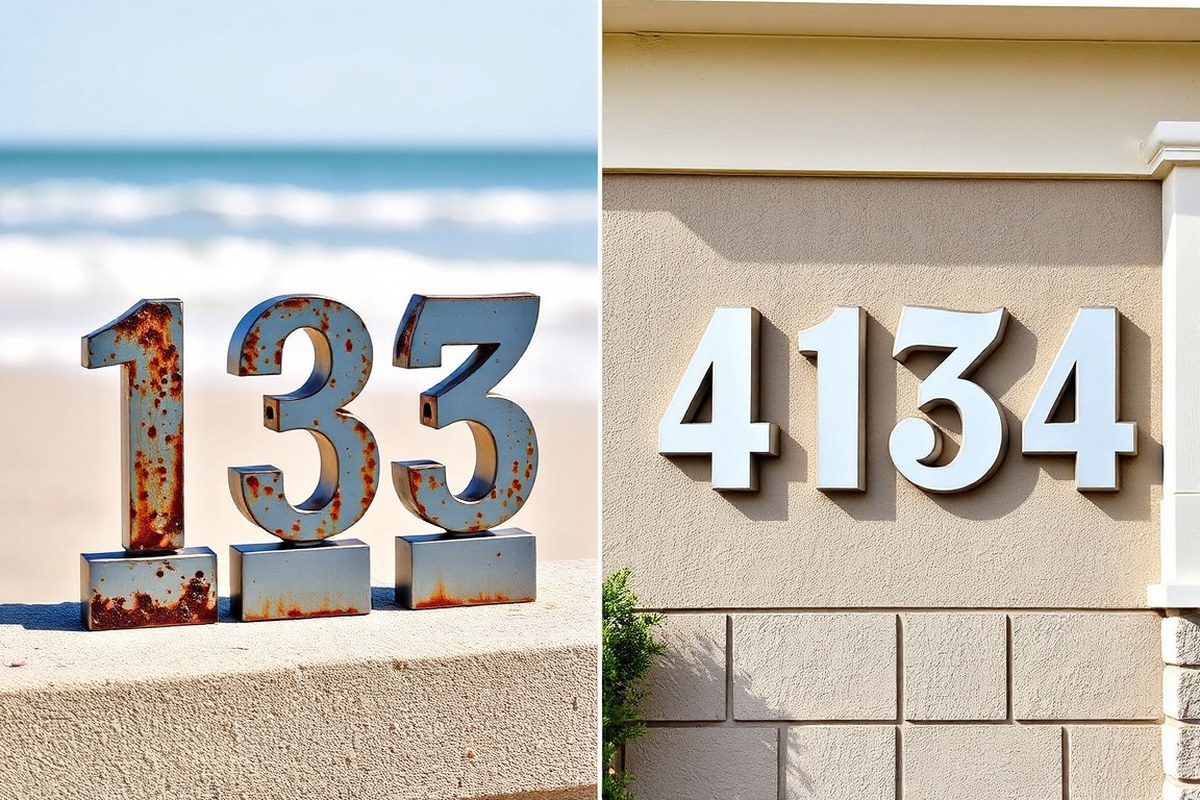
Both aluminum and steel house numbers stand up to rain, snow, and sun but in different ways. Aluminum resists rust well, making it a good choice for humid or rainy climates, while weather-resistant steel types, like marine-grade stainless steel, handle coastal salt spray better. Knowing how your local environment affects metal can help you pick the right house numbers to keep looking sharp for years.
Impact of Rain, Snow, and Sun on Metal Numbers
Rain and snow increase moisture exposure, a key factor in metal corrosion. Aluminum naturally forms a thin oxide layer that shields against rust, so it generally handles wet climates well without extra protective coatings. Steel, unless stainless or properly coated, risks rusting where moisture collects. Sunlight, especially strong UV waves, can fade painted finishes or cause powder coatings to crack over time on both metals, but aluminum’s lighter color often reflects heat better. That means in hot, sunny areas, aluminum may stay cooler and suffer less thermal expansion stress than steel.
Cold weather with freeze-thaw cycles can raise corrosion risks if water seeps into joint areas. Proper installation with sealed mounting can prevent water infiltration regardless of metal type.
Choosing Metals for Coastal and Humid Environments
Coastal environments notorious for salt spray present a harsh challenge to metal numbers. Salt accelerates corrosion by breaking down protective oxide layers. Standard aluminum performs well in humid zones but starts to pit and corrode near salty air over time. High-grade stainless steel, especially Type 316 with added molybdenum, offers superior resistance against chloride ions common in coastal salt spray. This steel alloy can last decades without rust showing, even on beachfront properties. Powder-coated finishes add further protection to both metals but expect coatings to require touch-ups every 5-10 years depending on UV exposure and salt presence.
Environmental Factors That Cause Metal Degradation
Several environmental conditions accelerate metal wear. Moisture presence from rain, dew, or humidity fuels rust in unprotected steel. Salt in air or water speeds corrosion by disrupting oxide layers. Temperature swings cause metal expansion and contraction, leading to cracks or loosening of fasteners over time. UV radiation degrades surface coatings and can cause discoloration. Air pollution, especially sulfur compounds in urban areas or around industrial sites, leads to acidic corrosion attacks.
Local climate details, such as average annual rainfall or proximity to saltwater, strongly influence which metal is best. In dry, inland locations, standard steel with corrosion-resistant paint may suffice. Coastal or very humid areas benefit from aluminum or stainless options for longer wear.
Practical Tips for Selecting Based on Regional Climate
In rainy or humid climates, such as the Pacific Northwest, choose aluminum house numbers or stainless steel with durable coatings. Aluminum offers rust-free durability without the weight or high cost of stainless steel. For homes near the ocean or salt lakes, marine-grade stainless steel (Type 316) is worth the investment, as it resists pitting and corrosion from salt air better than aluminum.
Areas with hot summers and intense sun exposure benefit from powder-coated aluminum to avoid rust plus reflect heat. Harsh winters with snow require careful installation with sealant on both metals to prevent moisture intrusion under numbers.
Pick marine-grade stainless steel for coastal homes and aluminum with UV-resistant powder coating for humid or inland properties to maximize lifespan and preserve appearance.
Installation Tips and Mounting Options for Aluminum and Steel
Installing aluminum and steel house numbers requires selecting the right fasteners and following a precise mounting process to ensure durability and compliance with local visibility requirements. Using appropriate hardware guards against weather damage while choosing the correct height and location improves number readability for visitors and emergency responders.
Choosing Fasteners for Aluminum vs Steel
Aluminum house numbers are lightweight, so you can use standard screws suitable for wood, stucco, or composite siding. Stainless steel screws with a corrosion-resistant coating help prevent rust and staining. Steel house numbers, being heavier, need stronger anchors like toggle bolts or masonry anchors for brick or concrete surfaces. Avoid using screws that might corrode quickly, especially in humid or coastal environments.
For aluminum, 1¼-inch #8 stainless steel screws typically provide secure attachment without the risk of bending the numbers. Steel numbers often require #10 or larger, 1½-inch to 2-inch screws with wall anchors, depending on the mounting surface. When hanging numbers on siding, use anchors designed for that material to ensure a firm hold. Concealed fasteners and mounting brackets can improve appearance and prevent tampering.
Step-by-Step Mounting Instructions
Follow these steps to mount your metal house numbers accurately and securely, whether aluminum or steel. Preparing and marking the mounting location first helps maintain level alignment and meet visibility codes.
- Measure the total width of the numbers and mark the mounting area on your chosen wall, centered horizontally near the main entrance or mailbox.
- Use a level to draw a light horizontal guide line at the height where the bottom of the numbers will sit.
- For each number or number plate, hold it in place and mark screw hole positions on the surface.
- If mounting on masonry, drill pilot holes for anchors using a masonry bit. For wood or composite siding, pilot holes matching the screw size prevent splitting.
- Insert wall anchors if needed and tap them fully flush with the surface.
- Align the numbers with the pilot holes and drive screws through the mounting holes firmly but without overtightening.
- Check for level and adjust before fully tightening screws.
- Clean the surface and numbers to remove any dust or marks after installation.
Optimal Placement and Height Guidelines
Visibility standards vary, but a common rule sets house numbers at 4 to 6 feet above the ground, measured from the bottom of the numbers. This range keeps numbers within the natural line of sight for drivers and pedestrians.
Set the numbers’ distance from the street based on the setback of your home. For homes closer than 25 feet from the street, mount numbers at about 4 feet high. For greater setbacks, increase the height to 5 or 6 feet to improve visibility over landscaping or other obstacles. Avoid placing numbers behind shrubs, porch columns, or other items that block the view.
Check local codes or homeowner association rules, which may specify the size and placement of house numbers. Many communities require numbers to be visible from the street, with minimum character height often between 4 and 6 inches.
Cost Comparison and Budget Considerations
Aluminum house numbers usually cost less upfront than steel options due to the lower material expense and ease of manufacturing. Steel house numbers tend to be priced higher because the steel alloy is denser and generally treated to resist rust, adding to the cost. Installation costs are similar for both materials since standard mounting hardware works well with either metal. Aluminum’s lighter weight, about 2.5 times less than steel, makes it simpler and faster to install, which may slightly reduce labor costs if you hire help.
| Size & Finish | Aluminum Price Range ($) | Steel Price Range ($) |
|---|---|---|
| 4-inch, Powder Coated Matte Black | 15 – 30 | 25 – 45 |
| 6-inch, Brushed Finish | 25 – 40 | 40 – 65 |
| 8-inch, Custom Handcrafted | 45 – 90 | 70 – 120 |
| 10-inch, Stainless Steel | N/A | 90 – 150 |
The initial cost difference between aluminum and steel house numbers often ranges from about 30 to 50 percent, depending on size and finish. Aluminum numbers priced between $15 and $90 cover most common sizes and styles, while steel can add $10 to $60 more. This difference reflects steel’s higher durability and heavier composition that may be preferred for areas needing more rugged wear resistance.
Long-term value favors aluminum for those prioritizing cost-effectiveness paired with good durability. Aluminum’s powder coating protects it from most typical weathering, with a lifespan exceeding 50 years under normal conditions. Since it requires minimal maintenance and is less prone to surface damage due to its lighter weight, aluminum can save money on upkeep and replacement over decades.
Steel numbers, especially stainless steel versions, offer superior resistance to corrosion and impact damage but at a higher initial price and heavier weight that may complicate installation. These benefits can justify the premium if you live in coastal or harsh environments. Assess your local conditions and home style when deciding between a lower upfront price and steel’s strong durability to maximize your investment.
Finishes, Styles, and Design Trends for Metal House Numbers
Aluminum and steel house numbers offer a variety of finishes that fit different home styles and personal preferences. Aluminum is often finished with anodizing, powder coating, or a brushed surface. Anodizing protects against corrosion and maintains a metallic look, making it ideal for contemporary homes. Powder coating adds a durable, colored layer that resists fading, with popular options including black, white, and bold hues. A brushed aluminum finish gives a soft sheen and minimal glare, complementing sleek, modern architectural designs. These finishes emphasize clean lines and a minimalist appearance that suits modern, mid-century, or industrial-style houses.
Steel numbers typically come in polished, brushed, or powder-coated finishes. Stainless steel, prized for its resistance to rust and staining, holds its shine well and works nicely on contemporary and transitional homes. Brushed steel has a muted shine that pairs with urban, modern, and even some traditional exterior designs where subtlety is key. Powder coating on steel offers a wide color palette and additional protection but requires care, as chips may expose the metal and lead to rust. Solid steel and galvanized options with a matte or satin finish fit well with industrial, farmhouse, or rustic home aesthetics.
Design trends favor matte and satin textures over high gloss. White and black powder-coated aluminum numbers remain popular for their bold contrast on light or dark house exteriors. Brushed or polished stainless steel corresponds to homes with metal accents or glass features, reinforcing a modern look. For traditional homes, dark bronze or solid brass with deep patinas outperform aluminum and steel by offering rich, warm tones and classic detailing. Although aluminum can take many colors and polished steel offers brightness, bronze and brass uniquely age to improve historic facades.
Color and texture differences impact curb appeal as well as maintenance. Aluminum’s light weight enables larger, thinner designs that resist warping. Steel supports thicker, more durable numbers that make a statement with heft, especially in bold serif or block fonts. Choosing the right finish involves balancing style with environment and upkeep, the protective coatings on powder-coated aluminum and stainless steel make these options both attractive and practical for coastal or humid regions. Matching the metal finish to your home’s architectural elements creates a cohesive look that improve overall exterior design.
For powder-coated steel numbers, avoid aggressive scrubbing or harsh chemicals to prevent peeling, which exposes the metal to rust and shortens lifespan.
Maintenance and Longevity: What to Expect over Time
Aluminum house numbers generally require less maintenance and have a longer lifespan outdoors than steel numbers, especially in moist or salty environments. This is because aluminum naturally resists rust and corrosion, whereas steel often needs protective coatings to avoid deterioration. Cleaning aluminum is easier and less frequent, while steel demands more regular upkeep and earlier refinishing to maintain its appearance and structural integrity.
Daily and Seasonal Cleaning Tips
Aluminum house numbers typically need cleaning once or twice a year, depending on your local environment. Use a soft cloth with mild soap and water to wipe away dirt, grime, and pollen. Avoid abrasive scrubbers that could scratch the metal or remove protective coatings. For steel numbers, cleaning every three to six months is advisable, especially if they have painted or powder-coated finishes prone to chipping.
Both metals benefit from rinsing with clean water after washing to prevent residue buildup. Seasonal inspections can help catch early signs of wear. Here’s a simple checklist for routine care:
- Wipe aluminum numbers with a damp, lint-free cloth and mild detergent annually
- Clean steel numbers twice a year with a soft brush and mild soap
- Rinse thoroughly to remove soap residue
- Inspect numbers for discoloration, rust spots, or chipped paint during cleaning
- Avoid using harsh chemicals or metal polishes unless specifically recommended for your finish
- Clear away any debris that can trap moisture, like leaves or dirt
Regular cleaning keeps your house numbers legible and protects their finish from environmental damage.
Handling Rust and Corrosion Issues
Rust rarely affects aluminum due to its natural oxidation layer, but corrosion can show as dullness or greenish patina over many years. Steel, on the other hand, is prone to rust if the paint or coating cracks or wears away. Address these problems promptly to extend your numbers’ life.
For steel, small rust spots need to be sanded lightly with fine-grit sandpaper before applying a rust-inhibitor primer and repainting with exterior-grade enamel or powder coating. If the rust is extensive or the steel is pitted, replacement might be necessary to avoid structural failure. To troubleshoot metal house number issues, follow these steps:
- Check for peeling paint or discoloration monthly in harsh weather seasons
- Lightly sand any rust spots on steel and apply rust treatment products as soon as detected
- Wash off any salt deposits promptly in coastal areas to prevent accelerated corrosion
- Seal aluminum with a special clear coat if you want an extra layer of protection and shine
- Replace steel numbers if corrosion compromises shape or legibility
Aluminum’s natural corrosion resistance makes it easier to maintain in environments with moisture or salt exposure.
When to Refinish or Replace Numbers
Aluminum numbers can last 20 to 40 years with little more than annual cleans, thanks to their corrosion resistance and durability. Refinishing is usually unnecessary unless you want a fresh look or your numbers suffer scratches or discoloration from dirt buildup.
Steel house numbers typically last 10 to 20 years outdoors but often require repainting every 3 to 5 years to protect against rust. Refinish steel numbers if paint fades, chips, or rust appears. Early refinishing avoids costly replacements by preventing deep metal damage. Replace numbers outright under these conditions:
- Steel numbers have deep rust, warping, or structural weakness
- Aluminum numbers become extensively scratched or dented beyond repair
- Numbers lose legibility due to fading, corrosion, or damage
- Your curb appeal or design preferences call for new styles or finishes
For repainting or refinishing steel, budget approximately $30 to $75 per set, depending on size and finish type. Aluminum refinishing is less common but may involve a similar cost if you use a professional clear coat or powder-coating service.
Visibility, Size, and Illumination Best Practices
The size of house numbers greatly influences their visibility from the street. For clear legibility at a distance of 20 to 30 feet, numbers between 4 and 6 inches tall are typically recommended. Larger numbers, around 6 to 8 inches, suit homes set further back from the road or those with longer driveways. Picking the right size helps first responders, delivery personnel, and visitors spot your address quickly.
Choosing metal color and finish affects contrast and visibility. Light-colored numbers look best against dark backgrounds, while dark numbers should be used on lighter surfaces. For both aluminum and steel, finishes range from matte to glossy. Matte finishes reduce glare, improving readability during daylight. Anodized aluminum numbers often maintain bright, vivid colors that resist fading. Steel numbers can be powder-coated to achieve similar effects but watch for rust spots if the coating gets damaged.
Illuminated house numbers add a layer of visibility and curb appeal, especially in low-light conditions. You can find backlit options where numbers are mounted on a panel that glows from behind, illuminating the numbers and adjacent information like street names, ideal for corner lots or long roads. Solar-lit numbers are a popular energy-saving alternative but need direct sunlight to charge effectively. LED illumination tends to be brighter and lasts longer than traditional bulbs but might increase upfront costs.
- Choose number height based on distance: 4-6 inches for 20-30 feet, 6-8 inches for longer distances
- Use high contrast colors: light colors on dark backgrounds, dark colors on light backgrounds
- Prefer matte finishes to reduce glare during the day
- Consider anodized aluminum for color durability and rust resistance
- Backlit panels with street names combine address and street info efficiently
- Solar lighting suits areas with strong sun exposure; LED offers consistent brightness and longevity
- Regularly check coatings on steel numbers to prevent rust affecting visibility
Installation height also matters for visibility. Numbers mounted 5 to 6 feet above ground near the driveway or front door are easiest to see. Avoid placing numbers where shadows or landscaping obscure them. A clean, contrasting background boosts your numbers’ impact, helping them stand out from siding or brick. Combining these factors ensures your aluminum or steel house numbers remain readable day and night without compromising your home’s exterior style.
Environmental and Sustainability Impact of Aluminum vs Steel
Aluminum generally has a lower environmental impact during production compared to steel, especially when recycled materials are used. Producing recycled aluminum generates 92% to 95% fewer carbon emissions than creating aluminum from raw ore, according to industry data. Steel production also emits a significant amount of carbon, but recycling steel reduces emissions by about 60% compared to primary production. Aluminum’s higher recycling efficiency and lower energy demand in recycling contribute to its reputation as a more sustainable material.
Both aluminum and steel house numbers are commonly available in recycled forms. Choosing recycled metal numbers can significantly reduce your carbon footprint while maintaining durability. For aluminum, this process uses only 5% to 8% of the energy needed to produce new metal from ore, making recycled aluminum an eco-friendly choice without sacrificing strength or appearance. Steel recycling is also widespread and supports a circular economy, but its production needs more energy relative to aluminum.
Durability plays an essential role in the sustainability of metal house numbers. Longer-lasting materials reduce waste and the need for replacements, which lowers the overall environmental footprint. Steel is typically stronger and more resistant to dents and deformation than aluminum, making it suitable for harsher environments. However, aluminum’s resistance to rust and corrosion means it will maintain its appearance longer in moist or coastal areas, reducing the chances of frequent replacement.
To select eco-friendly house numbers, start by verifying if the product uses recycled metal. Look for labels or ask suppliers about the percentage of recycled content and their sourcing practices. Consider your local climate because aluminum’s corrosion resistance might offer longer life in humid or salty air, while steel may last longer in drier regions if properly coated. Accept slightly higher upfront costs for recycled metal to benefit from lower lifetime environmental impact.
Expect eco-friendly house numbers made from recycled metals to cost roughly 10% to 30% more than non-recycled alternatives. This upfront investment pays off by reducing emissions and waste across the product’s lifespan. Avoid metals painted with non-recyclable coatings or finishes that degrade quickly, as these can complicate recycling at end-of-life. Select powder-coated or anodized finishes, which tend to last longer and have less environmental impact during disposal.
Select house numbers made from recycled aluminum or steel with durable finishes to reduce carbon emissions and extend product life, limiting environmental harm over time.
Step-by-Step Action Plan to Choose and Install Your Metal House Numbers
Follow these steps to pick the right metal for your house numbers and ensure they look great and last long.
- Day 1: Assess your local climate and exposure to elements. Choose aluminum if you want a rust-proof option for humid or coastal areas; pick steel if you prefer strength and don’t mind occasional maintenance.
- Day 2: Measure the spot where you want to mount your numbers, considering visibility from the street. Verify that the size fits well and is easy to read day and night.
- Day 3: Select a finish and style that complements your home’s exterior. Powder-coated aluminum resists fading well; stainless steel offers a sleek, modern look with strong corrosion resistance.
- Day 4: Set a budget based on material and finish costs, plus any installation expenses. Aluminum usually costs less upfront and maintains appearance longer with less effort.
- Day 5: Choose your mounting method: screws work well on wood or masonry, adhesive can be used on smooth surfaces but may shorten lifespan. Confirm the mounting feels secure and level.
- Day 6: Install the numbers, following manufacturer recommendations for spacing and alignment. Use a level to check straightness and tighten fasteners properly without damaging the metal.
- After 1 Month: Inspect your house numbers for signs of weathering or loosening. Address minor touch-ups or re-tighten fasteners to prolong durability.
Frequently Asked Questions
Are Aluminum House Numbers Easier to Cut or Shape Than Steel Ones?
Aluminum is generally easier to cut and shape due to its softness. This allows more intricate designs and simpler DIY customization compared to steel, which requires tougher tools and effort.
Can Steel House Numbers Be Repainted or Powder-Coated Effectively?
Yes, steel house numbers can be repainted or powder-coated for renewed appearance. Proper surface preparation is necessary to avoid peeling, making finishing a flexible option if you want to change color later.
Do Aluminum House Numbers Conduct Heat More Than Steel Ones?
Aluminum conducts heat more efficiently than steel, which could cause it to warm more in direct sunlight. This might affect surface temperature but rarely impacts longevity or visibility.
Are There Magnetic Attachment Options Suitable for Steel House Numbers?
Magnetic mounting can work only with steel numbers because aluminum is non-magnetic. This allows temporary or adjustable placement solutions for steel house numbers without drilling holes.
Do Steel House Numbers Make Louder Sounds in Windy Conditions Than Aluminum?
Steel numbers may produce more audible noise when rattling in wind due to their density and stiffness. Choosing secure mounting helps reduce any unwanted sound.
Are Stainless Steel and Carbon Steel House Numbers Significantly Different in Maintenance Needs?
Stainless steel house numbers require less maintenance as they resist rust better than carbon steel. Carbon steel might need periodic painting to prevent corrosion.
Key Points to Remember
Selecting aluminum or steel house numbers depends on your climate, budget, and style preferences. Aluminum works well if you want low maintenance and rust resistance, while steel offers durability with a modern look but may need more care. Take time to measure carefully and pick a finish that suits your home’s character. Start by checking your mounting area and buying your preferred metal numbers today to boost your home’s curb appeal and functionality.