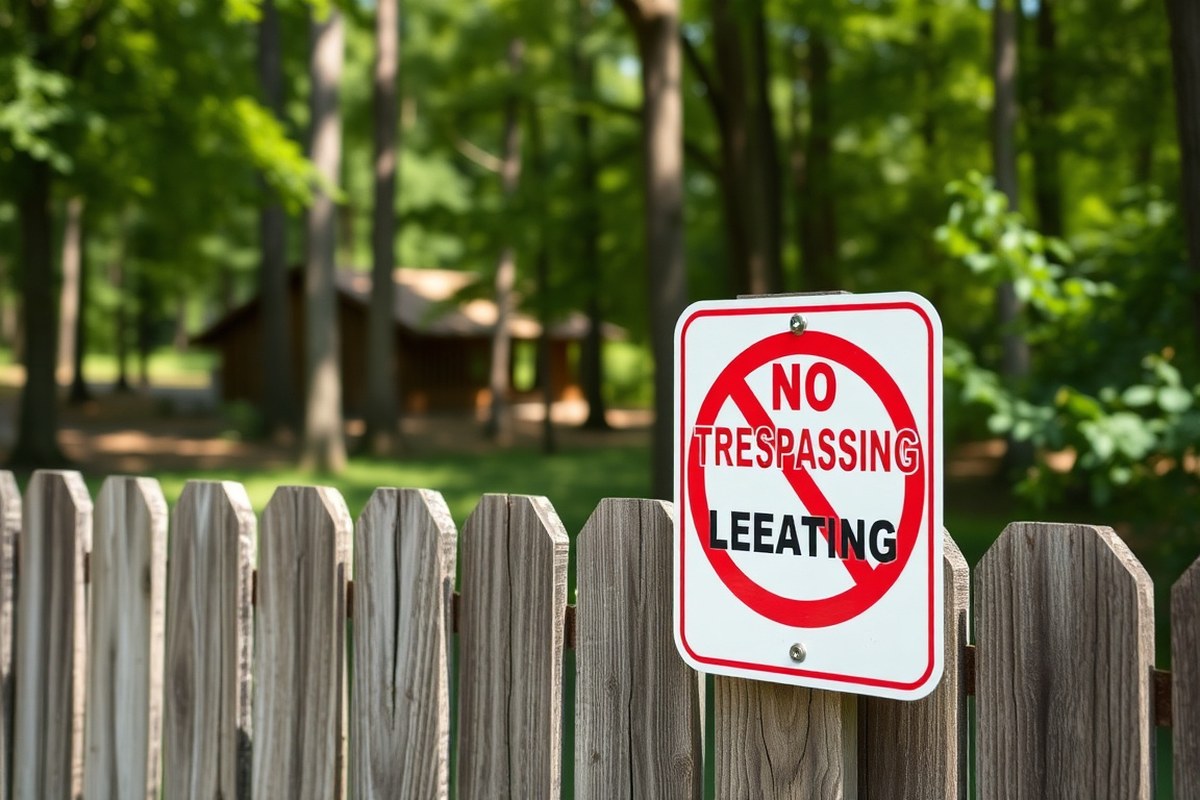
Are No Trespassing Signs Legal? A Complete Guide for Property Owners
Are no trespassing signs legal? Yes, these signs are legally enforceable when they meet state-specific requirements. Posting the signs clearly helps establish your property boundaries and notifies others that entry is prohibited without permission.
Start by placing signs at intervals specified by your state’s laws, often no more than 500 feet apart along property lines and at corners. Proper signage strengthens your ability to take legal action against trespassers.
Key Takeaways
- Place no trespassing signs at intervals of 300 to 500 feet along all property boundaries to meet legal standards.
- Signs must display “No Trespassing” and the owner’s or occupant’s name in letters at least 2 inches tall.
- Regularly check and maintain signs to ensure visibility and prevent bending or vandalism.
- Understand that state laws vary widely, affecting penalties for trespassing and the legality of signs.
- Posting signs provides legal notice that can support criminal or civil trespassing claims against intruders.
- Ignoring no trespassing signs can lead to arrest, fines, or jail time depending on state penalties.
Are No Trespassing Signs Legally Enforceable?
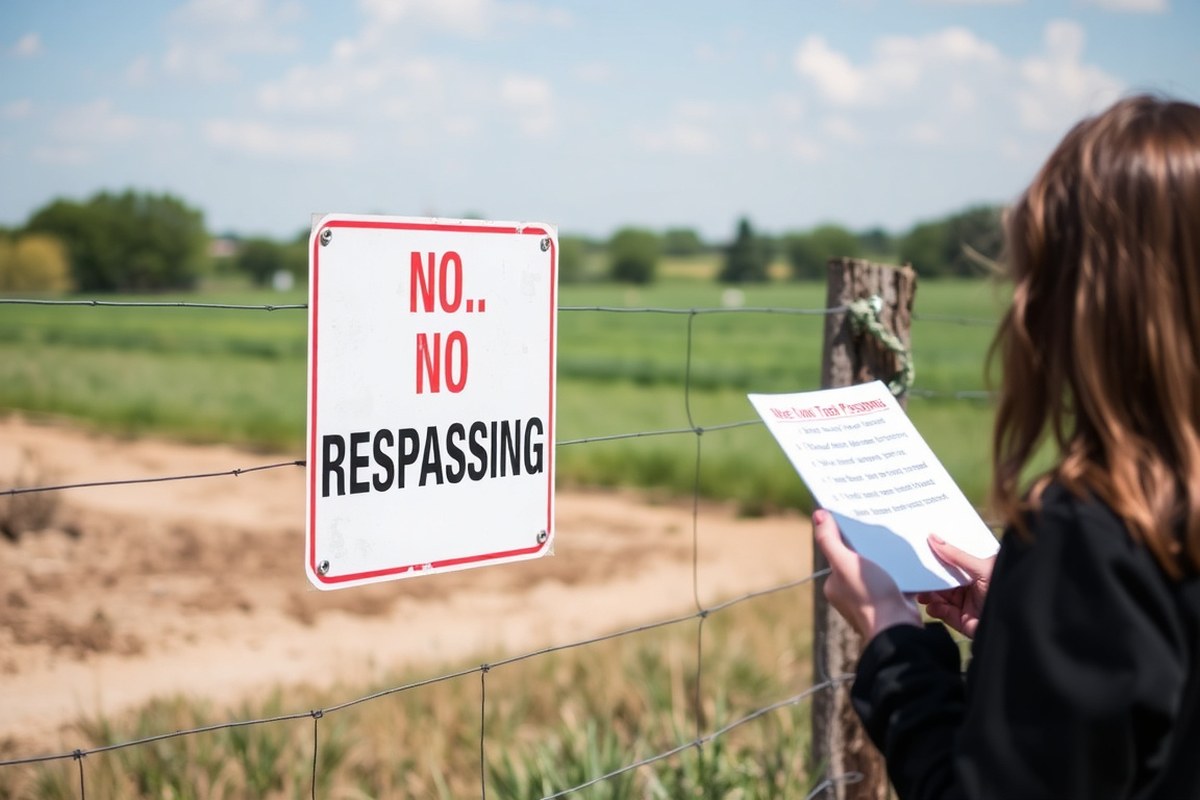
No trespassing signs are legally enforceable when they meet your state’s specific requirements for notice. These signs serve as formal legal notices that you, as the property owner, deny permission for anyone to enter. Their main legal effect is establishing clear notice, which the courts recognize as a valid basis for prosecuting trespassing if someone ignores them. This means that if someone enters your property despite the posted signs, you have a stronger legal claim to enforce your rights through law enforcement or civil action.
The court’s acceptance of no trespassing signs depends heavily on whether the signs comply with state laws, which can vary widely. Some states require signs to display particular language, such as “Private Property” or “No Trespassing,” and to include warnings about hunting or other recreational access when applicable. In states with specific hunting laws, posting no trespassing signs often defines the legal boundary for allowed entry, so your rights depend on following those precise posting rules. Failure to meet these conditions can weaken legal enforcement options.
To legally enforce no trespassing signs, place signs according to local regulations, which often specify size, wording, and how far apart signs must be, commonly no more than 500 feet along property lines and at corners. Using reflective-grade aluminum signs improves visibility, especially in low light or at night, which strengthens the claim that clear and adequate notice was given. The cost for these signs varies depending on material and design but expect to pay between $20 to $60 per sign for durable, regulation-compliant options.
Courts generally uphold trespassing charges when the signage clearly notifies potential trespassers. In Florida, for example, ignoring properly posted no trespassing signs can lead to a second-degree misdemeanor charge with penalties of up to 60 days in jail or a $500 fine. This legal backing shows that signs carry real consequences beyond simple warnings.
Signs also help define your property boundaries to law enforcement and the courts, making it easier to invoke trespassing laws. Absence of signs or signs that don’t meet legal standards might limit your ability to take action, as it could be argued trespassers were not given proper notice. Tenants should also be aware that their authority to post or enforce no trespassing signs may depend on local laws and landlord permission, so consulting an attorney or local ordinances is wise before posting signs.
Overall, no trespassing signs create enforceable legal notice when properly posted according to your state’s specifications. They work by making it clear you withhold permission to enter, which gives you a firm legal footing to stop unauthorized entry and pursue legal actions if needed. Without following local posting rules, the signs may fail to provide the notice courts require, reducing their legal impact.
What Legal Requirements Must No Trespassing Signs Meet?
Legally valid no trespassing signs must meet specific standards for language, size, lettering, and placement to effectively warn potential trespassers and support legal enforcement. These standards vary by state but generally require clear wording, minimum dimensions, and strategic placement. Following these requirements helps protect your property rights and gives you grounds to act if someone ignores the signs.
Minimum Sign Size and Letter Height
Many states require no trespassing signs to be at least 8 by 11 inches, which ensures they are large enough to be easily seen and read. The lettering on the signs typically must be at least 1 to 2 inches tall. Larger letters improve visibility and readability from a normal approach distance, making it harder for trespassers to claim they did not see the warning.
Signs that are too small or have faded letters may not hold up in court if you try to enforce trespassing laws. Getting signs with letters at least 2 inches tall is a common practice to meet legal thresholds in multiple states. Quality signs also resist weather damage so wording remains clear over time.
Mandatory Wording and Owner Identification
The phrase “No Trespassing” or “Posted” forms the core wording needed on the sign. Beyond that, some states require additional language to specify prohibited activities, such as hunting, fishing, or digging. Adding your name, the name of the lessee, or the occupant in lettering at least 2 inches tall can strengthen the sign’s legal standing.
Clear, direct language reduces ambiguity and ensures the message is unmistakable. When a sign explicitly states the prohibited actions and identifies the responsible party, courts are more likely to uphold trespassing claims.
Always ensure your signs use terms exactly as required by local laws to avoid legal challenges.
Placement at Boundaries and Entry Points
Signs must be posted at all main entry points and along property corners. Many states require signs to be spaced so that a person can see at least one sign at any point of entry. The interval between signs should not exceed 500 feet along boundary lines.
Signs should be mounted at eye level to make them obvious to anyone approaching the property. Posting at frequent intervals and all access points helps prevent claims of unintentional trespassing. Bright, contrasting colors improve visibility against natural backgrounds.
- Post at every driveway, trail, and property entrance
- Place signs on corners and along boundaries no more than 500 feet apart
- Mount signs at about 5 feet high for eye-level viewing
- Use weather-resistant materials and colors to maintain sign clarity
- Ensure signs are unobstructed by vegetation or objects
Proper placement combined with the right size and wording ensures your no trespassing signs meet legal standards and provide effective notice.
How Often and Where Must No Trespassing Signs Be Posted?
No trespassing signs must be posted at regular intervals along your property boundaries and at all access points to effectively warn people not to enter. Placement depends on the type of land and its features, like wooded areas or irregular shapes. Proper spacing and visible locations give you clear legal notice to protect your property rights.
Posting Intervals Along Borders
Generally, most states require no trespassing signs to be posted at intervals of 300 to 500 feet along your property line. In wooded or heavily forested areas, signs should be closer, usually about every 500 feet or less, to ensure visibility. Some regulations require posting signs every 100 feet and no farther than 200 yards apart, especially where boundaries are less obvious.
Clearly spaced signs help provide constructive notice to anyone approaching your property, reducing disputes about whether a visitor was informed of private ownership. Your property that stretches a mile or more needs at least three signs per mile placed evenly along the boundary.
Marking All Access and Entry Points
Posting signs only along the border is not enough. You must place no trespassing signs at every entry point, such as driveways, paths, gates, or road access to your land. This notices anyone approaching these common entry routes that permission to enter is required.
Signs at entrance points should be large enough to read easily, some states specify sizes around 120 to 144 square inches, and include the name and contact information of the person authorized to grant access. This information strengthens the sign’s legal effect by clarifying who controls entry.
Special Considerations for Fences and Natural Boundaries
For properties with fences, place signs on the fence at regular intervals, focusing on gates or openings. The fence line naturally marks your boundary, so signs placed here help reinforce that no entry is allowed.
Natural boundaries like streams, tree lines, or uneven terrain can make it harder to define where your property starts and ends. In these cases, signs should be positioned so they are clearly visible from outside the boundary, on trees or posts close enough to be noticed and understood as marking private land. Follow these steps to properly post no trespassing signs on your property:
- Measure the total length of your property boundary to determine how many signs are needed.
- Space signs approximately every 300 to 500 feet, reducing spacing to 100 to 200 feet in wooded or hard-to-see areas.
- Install signs at every entrance or access point, including driveways, gates, and paths.
- Mount signs at eye level on posts, fences, or trees so they are clearly visible to anyone approaching.
- Ensure each sign meets minimum size requirements, usually no less than 120 square inches, with readable lettering.
- Include your name and contact information or the name of the person authorized to allow entry on each sign.
- Inspect signs regularly to repair or replace any that become damaged, faded, or obscured by vegetation.
How Do State Laws Differ on No Trespassing Signs?
State regulations differ widely in controlling no trespassing warnings. In states such as Texas, Illinois, and Missouri, purple paint on trees or posts can legally replace standard signs. These paint marks need to fit specific size or location requirements set by state legislation. Other states impose strict standards on the size and text of no trespassing signs to guarantee clear communication to anyone approaching private property.
For example, many states require each sign to be at least 50 square inches. Some also specify the number of signs depending on the size of the property. Properties smaller than 3 acres typically require one sign, while properties between 3 and 10 acres might need at least two or three signs placed at strategic points for proper coverage. Local ordinances can add additional requirements or exceptions, making it important to check municipality rules as well. The table below compares common examples of posting requirements and permission related to trespassing law protections:
| Visitor Type | Permission Status | Legal Protection Level |
|---|---|---|
| Invitee | Explicit or implied welcome | Highest |
| Licensee | Implied permission | Moderate |
| Trespasser | No permission, sign posted | Lowest |
Sign location is also critical. Signs must be posted in places visible to individuals approaching the property, such as entrances, along the perimeter, or areas most likely to be accessed. Failure to place signs properly can weaken your legal defense and reduce the penalties you may claim if someone trespasses. Penalties for ignoring posted signs also differ; some states impose fines, others allow recovery of damages like crop loss plus legal fees, and some may press criminal charges.
Considering the differences, you should consult your specific state’s trespassing statutes to understand how to properly post no trespassing signs and what penalties your state enforces. Strict posting requirements can prevent unwanted entry and provide a solid legal foundation to enforce your property rights.
What Legal Protections Do Signs Provide Landowners?
Legal notice means clearly informing others that entering your property without permission is prohibited. No trespassing signs serve as this notice by making it obvious you do not allow unauthorized entry. Posting such signs helps establish that anyone who crosses into your land did so after being properly warned, which is essential for pursuing any legal claim against trespassers.
Signs improve your position in both criminal and civil trespass cases. In criminal trespassing, the state or prosecutor files charges against the trespasser, usually resulting in fines, jail time, or a criminal record. The presence of clear, legible signs proves the trespasser had notice, making it easier for police to justify arrest or prosecution. For example, in Texas, a person who enters fenced and posted property clearly marked “No Trespassing” can face up to a one-year jail sentence under Texas Penal Code Section 30.05.
Civil trespass claims are filed by you, the property owner, and can lead to money damages or court orders preventing further entry. Here, signs establish your property boundaries and your explicit refusal of consent for others to enter. This “constructive notice” means a trespasser cannot claim ignorance of the rules, strengthening your case if you sue for damages or seek an injunction.
These signs must be durable, clearly legible, and in English to meet typical legal requirements. Signs made with materials lasting 10 years or longer ensure your notice remains valid over time without needing frequent replacement. Proper placement ensures signs are visible at frequent intervals along the property perimeter, which courts often consider when evaluating if notice was adequate.
Supporting criminal and civil claims means the signs act as a foundation for both types of legal protections. They help police take trespassing complaints seriously, often speeding up enforcement action. Your legal actions against trespassers can also be more effective when you demonstrate you’ve taken reasonable steps to warn intruders beforehand through posting no trespassing signs.
Make sure your no trespassing signs are easy to see from all typical entry points to avoid any claim that the trespasser didn’t receive proper notice.
What Is the Difference Between Criminal and Civil Trespassing?
Trespassing falls into two main legal categories: criminal trespassing and civil trespassing. Criminal trespassing occurs when someone knowingly enters or remains on a property without permission, violating laws designed to protect property rights. Civil trespassing, on the other hand, involves unauthorized entry but is treated as a private dispute, often over property boundaries or access rights, and does not involve criminal charges.
The distinction matters because different authorities handle these cases, and the consequences vary significantly. Criminal trespassing involves public law enforcement. Local police or other government agencies prosecute these cases on behalf of the state or municipality. For example, in Maryland, criminal trespassing is considered a crime against property, and local police enforce these laws. The penalties can include fines, community service, or even jail time, depending on the severity and if other crimes occur concurrently.
Civil trespassing is pursued by the property owner through the civil court system, typically seeking damages or injunctions to stop the trespasser from continuing unauthorized entry. The owner files the case and bears the legal costs. Outcomes usually involve compensation for any harm done or court orders to keep the trespasser off the property permanently. The table below outlines how criminal and civil trespassing compare, detailing who acts in each case and what penalties or outcomes you might expect.
| Aspect | Criminal Trespassing | Civil Trespassing |
|---|---|---|
| Definition | Unlawful entry or remaining on property in violation of criminal laws | Unauthorized entry treated as a private dispute |
| Enforcement | Local police or government prosecution | Property owner files lawsuit in civil court |
| Penalties/Outcomes | Fines, community service, jail in some cases | Monetary damages, injunctions, court orders |
| Standard of Proof | Beyond a reasonable doubt (criminal) | Preponderance of the evidence (civil) |
| Reason to Pursue | Protect public order and deter illegal entry | Protect property rights and recover losses |
| Examples | Entering a fenced yard despite “No Trespassing” signs, loitering on private property | Walking across a neighbor’s land without permission, boundary disputes |
Understanding these differences helps you decide the best approach after someone enters your property without permission. Criminal charges may apply in cases involving clear law violations where public authorities will intervene. Civil claims work best when you want to settle property disputes or seek compensation for damages caused by trespassing.
Can You Be Arrested for Ignoring No Trespassing Signs?
You can be arrested for ignoring no trespassing signs, but it’s not automatic in every case. Arrest depends on several factors, including the clarity of the signage, the nature of the trespassing, and local laws. Law enforcement typically looks at whether the signs were properly posted and if you entered and remained on the property after being warned to leave.
Trespassing laws vary by state, but many classify entering land with posted no trespassing signs as a criminal offense. Signs serve as legal notice that you do not have permission to be on the property. Without this notice, authorities may have a tougher time proving trespassing if you contest the charges.
For an arrest to occur, the owner or law enforcement usually must make clear that entry is forbidden. That means signs must meet state requirements on size, placement, and language so they are easily visible and understandable. For example, some states require signs to include specific wording or be a minimum size, such as 11 by 14 inches, posted every 300 feet around the property.
The penalties for ignoring no trespassing signs vary widely. In many cases, first offenses are treated as misdemeanors, which could result in fines typically ranging from $100 to $1,000 and sometimes short jail time under 30 days. Repeat offenses or trespassing with aggravating factors, such as carrying a weapon or damaging property, might be charged as felonies, which carry heavier fines and longer jail terms.
Enforcement can also depend on the circumstances. For example, accidentally wandering onto posted land while hiking usually does not lead to arrest if you leave promptly. But knowingly entering after clear warnings can lead to immediate detainment. Landowners who clearly post no trespassing signs and notify local authorities often have stronger grounds for police to arrest trespassers.
For landowners, it matters how you post these signs. Signs should be installed at all common entry points and visible from public paths or roadways. Using durable, weather-resistant materials helps maintain visibility year-round. If you want to enforce trespassing laws strictly, documenting the posting with photos and dates supports any legal action.
You should also understand that merely removing or ignoring the signs may result in arrest, but lack of proper signs might weaken the case. In cases where signs are lacking, police may issue warnings first before arresting individuals. Some states require that trespassers be asked to leave before charges can be filed, giving a chance to avoid criminal penalties.
When Can Police Enter Posted Property Without Permission?
Your No Trespassing sign does not automatically stop police from entering your property. Officers have legal authority to enter without permission under specific conditions. Understanding these exceptions helps you know your rights and what to expect if law enforcement shows up on your land.
Police can enter your posted property lawfully in these main situations: with a valid warrant, with your or an agent’s consent, or during an emergency. A warrant must be authorized by a judge and specifically describe your property. Consent means you or someone with authority says yes. Emergencies include situations where immediate entry prevents serious harm to people or property.
Emergency exceptions allow officers to bypass usual requirements to protect life or safety. This might happen if they hear screams, suspect a fire, or chase a fleeing suspect who enters your property. In such cases, signing your land does not prevent them from entering without delay.
- Police can enter with a valid search or arrest warrant specifying your property.
- Officers may enter after you or your authorized agent gives explicit consent.
- Immediate entry is allowed in emergencies such as fire, medical crises, or pursuit of suspects.
- Stop police entry by clearly stating limits through proper No Trespassing signage (e.g., 8½×11 inches, visible placement).
- Signs reduce misunderstandings but do not replace legal requirements for warrants or consent.
- Police entry without permission or warrant in non-emergency settings may violate your rights.
- Consult a lawyer if you believe officers exceeded lawful entry limits on your land.
Make sure your No Trespassing signs are clearly visible and legally compliant to strengthen your position if an unauthorized entry occurs.
Knowing these entry rules matters because it balances your right to privacy with public safety needs. While you can refuse entry without warrant or consent, emergencies create exceptions designed to protect lives and property. Officers generally follow strict procedures to respect your rights. If their entry seems unjustified, documenting the event and seeking legal advice is a smart step.
What Are Best Practices for Posting No Trespassing Signs?
Choosing the right no trespassing signs and placing them properly ensures you provide clear, legal notice to anyone approaching your property. Signs must be durable, visible, and well maintained to hold up in court if needed. Taking these steps protects your rights and helps prevent unauthorized entry.
Selecting Weatherproof Materials
Use signs made from durable materials like heavy-duty aluminum or rigid plastic to withstand outdoor elements. A weatherproof sign resists fading, cracking, or warping from rain, sun, and temperature changes, keeping the message clear year-round. Avoid paper or thin cardboard signs that deteriorate quickly and lose legal notice value.
Look for signs with UV-resistant coatings and rust-proof finishes. Professionally printed signs with bold lettering in contrasting colors improve readability from a distance. Adding phrases specific to your property, such as “No Hunting or Trespassing,” clarifies the prohibited activity and strengthens legal enforcement.
Installing Signs at Required Intervals
Place signs at all entry points like driveways, gates, and paths leading onto your land. Position signs high enough to be easily seen, generally 5 to 6 feet above the ground. Spread signs evenly along property boundaries to avoid any blind spots where someone could unknowingly trespass.
Regular intervals depend on property size but generally recommend signs every 100 to 200 feet along fencing or natural boundaries. For areas with heavy shrubbery or uneven terrain, place signs closer together or on trees and posts for maximum visibility.
- Install signs securely using screws or heavy-duty staples on gates, fences, or posts
- Post signs facing likely access routes and foot traffic paths
- Keep signs free of obstructions like branches or tall grass
- Use locked gates with signs at entrance points for stronger notice
- Ensure signs contrast with their background to stand out visually
Well-spaced and well-positioned signs minimize any argument that trespassers lacked notice. Signs on locked gates provide the clearest message that entry is forbidden.
Regular Inspection and Replacement
Check your no trespassing signs at least twice a year for damage, fading, or vandalism. A faded or missing sign weakens your property rights and can lead to disputes if trespassing occurs. Replace signs immediately if the text becomes illegible or the sign itself is damaged.
Maintaining clean and visible signs requires occasional cleaning with mild soap and water, especially in dusty or wooded areas. Track weather events that may have impacted your signs and plan replacements before your state’s legal posting requirements are compromised.
- Inspect signs in spring and fall, or after severe weather
- Document sign condition with photos as part of property records
- Keep extra signs on hand for quick replacement
- Trim vegetation regularly to keep signs exposed
- Replace signs every 3 to 5 years depending on material durability
Consistent upkeep ensures your no trespassing signs remain a reliable legal tool to protect your property rights over time.
Common Mistakes When Using No Trespassing Signs
No trespassing signs must be clear, visible, and well-maintained to offer legal protection. Common mistakes like using vague wording or placing signs too far apart can weaken your claim that unauthorized entry is forbidden. For example, signs without the words “No Trespassing” or “Private Property” may not clearly communicate your intent, making enforcement difficult. Sign placement also matters; signs hidden behind vegetation or posted only at entrances instead of along the property boundary can leave parts of your land unmarked.
Maintaining signs is essential because damaged or missing signs remove evidence of your property rights. Signs deteriorate from weather or vandalism, which can lead to legal challenges if you try to stop trespassing without visible warnings. Check signs periodically, especially after storms or seasonal changes that affect visibility. Replace faded, broken, or stolen signs promptly to maintain legal clarity.
- Use specific wording like “No Trespassing,” “Private Property,” or “Authorized Personnel Only.”
- Post signs at regular intervals, about every 200 feet along your boundary, or as required by state law.
- Place signs at eye level near entry points, corners, and any paths or roads crossing your property.
- Use durable, weather-resistant materials like metal or heavy-duty plastic to prolong sign life.
- Inspect signs regularly, at least quarterly, and after severe weather events.
- Replace faded or damaged signs immediately to ensure visibility and legibility.
- Keep photographic records of signs and their placement as proof if legal disputes arise.
Ensuring your no trespassing signs meet these standards reduces ambiguity about your right to exclude others. Vague or poorly placed signs can lead to disputes over whether trespassers had notice. Keeping signs in good condition shows ongoing effort to mark your land clearly, which is essential if you need to involve law enforcement or take civil action. Although replacing signs has some cost, typically around $10 to $30 each for durable models, this expense helps protect your property rights and reduce trespassing risks.
How to Take Legal Action After Trespassing on Posted Property
After discovering someone has trespassed on your posted property, taking legal action requires careful documentation and following the right steps to protect your rights. Gathering clear evidence supports your case whether you report the trespass to law enforcement or pursue a civil lawsuit. Proper reporting also ensures authorities can act effectively.
Begin by collecting all relevant evidence of the trespassing event. Photos or videos of the trespasser on your land, especially showing no trespassing signs, can strengthen your case. Write down the time, date, and location of the incident with as much detail as possible.
Next, notify local law enforcement about the trespassing. Provide the evidence you collected and any witness statements. Police can issue warnings, citations, or even arrest individuals depending on the state’s trespassing laws and the severity of the incident.
If you decide to sue for damages or seek a court injunction to stop repeated trespassing, understand the legal process. Filing a lawsuit requires proof of harm, such as property damage, and showing you took reasonable steps to prevent trespassing by posting signs. Court costs typically range from a few hundred to a few thousand dollars, depending on the complexity and location of your claim. Follow these steps to document trespass and pursue legal recourse:
- Photograph and record: Capture clear images or video of the trespasser, the no trespassing signs, and the entry point. Note the exact date and time.
- Interview witnesses: Ask neighbors or visitors if they saw the trespasser. Record their statements with contact information for potential testimony.
- Preserve physical evidence: Save any items left behind or damage caused by the trespasser. Take photos before cleaning or repairs.
- Report to authorities: Contact local police or sheriff’s office to file a trespassing report. Provide all evidence and your contact details.
- Request a written report: Ask for an official incident or case number to keep track of law enforcement’s response.
- Consult an attorney: If the trespassing causes harm or continues, speak with a lawyer about filing a civil lawsuit or seeking a restraining order.
- Prepare legal documents: Gather your evidence, documentation of lost use or damage, and proof of proper posting of signs to support your claim.
- File suit or petition court: Submit your case at the appropriate county court if you pursue a civil claim. Follow court procedures and deadlines.
Keep a detailed log of all trespassing incidents, including dates and communication with authorities; this can be important if the problem escalates to legal action.
Step-by-Step Action Plan for Using No Trespassing Signs
Use this plan to post your signs correctly and protect your property rights effectively.
- Before you start: Research your state’s specific laws about no trespassing signs to ensure compliance. This prevents legal challenges later.
- Day 1: Buy signs that meet your state’s size, wording, and visibility requirements. Proper signs increase enforceability.
- Day 2: Post signs clearly at all property entrances and boundaries, spacing them according to local rules. Check that each sign is easily seen from all likely approach points.
- Day 3: Document your posting locations with photos and notes. This helps prove you gave proper notice if needed.
- Week 1: Walk your property regularly to ensure signs remain legible, secure, and visible. Replace any damaged or faded signs promptly.
- Week 2: Notify local law enforcement or your neighborhood association about your posted property boundaries, especially if trespassing is a recurring issue. This increases your legal support.
- Ongoing: Keep records of any trespassing incidents and your responses, including police reports or repair bills. These records will support legal actions if necessary.
Frequently Asked Questions
Are No Trespassing Signs Legal?
Yes, no trespassing signs are legal as long as they meet your state’s specific posting and wording requirements. They serve as formal notices that give clear warning to potential trespassers, helping you protect your property rights.
What’s the Difference Between Private Property and No Trespassing Signs?
Private property signs indicate ownership, while no trespassing signs explicitly prohibit entry without permission. A no trespassing sign adds a legal warning that sets clear boundaries to prevent unauthorized access.
What Does the Phrase “No Trespassing” Mean?
No trespassing” means you do not have permission to enter or remain on the property. It is a formal legal notice that establishes the landowner’s right to exclude others from their land.
What Are the Three Types of Trespass?
The three types of trespass are trespass to land, trespass to chattels (personal property), and trespass to the person (physical intrusion). Trespass to land relates directly to unauthorized entry on property.
What Is the Most Effective No Trespassing Sign?
The most effective no trespassing sign clearly states “No Trespassing,” meets size and placement legal standards, and is visible at all entry points. Including the relevant state code or penalty can also strengthen its deterrent effect.
Can No Trespassing Signs Be Ignored If No Police Are Called?
Ignoring no trespassing signs is still a legal violation even if police are not present. Landowners retain the right to take civil or criminal action after the fact if their posted property has been entered unlawfully.
Before You Go
No trespassing signs are legal tools that help you set clear boundaries and protect your property. Properly posted and maintained signs give you a stronger position if trespassing issues arise and support law enforcement involvement. The next step is to review your property’s layout today and make sure your signs meet local requirements for size, language, and placement.