Standard a Frame Sign Size Guide with Practical Tips and Size Comparison
A typical a-frame sign includes 24 by 36 inch graphic panels on each side, within a frame that is 46 inches tall, 25 inches wide, and 3 inches thick. This size offers a good mix of visibility and ease of transport, making it well-suited for uses like storefronts, restaurants, and open houses. Begin by checking your available space and how far away viewers will be to confirm this size meets your location and audience requirements.
Key Takeaways
- Choose a 24 x 36 inch panel for maximum visibility without blocking pedestrian traffic.
- Use an 18 x 24 inch insert for tighter spaces where a compact sign is necessary.
- Size letters so each inch of height corresponds to about 10 feet of readable distance.
- Select plastic frames for lightweight use, aluminum for moderate durability, or steel for harsh outdoor conditions.
- Take measurements for both the printed panel itself and the overall footprint of the open frame before placing the sign.
- Account for the frame’s footprint being wider and deeper than the folded size when opened.
What Is the Standard A-Frame Sign Size and Dimensions?

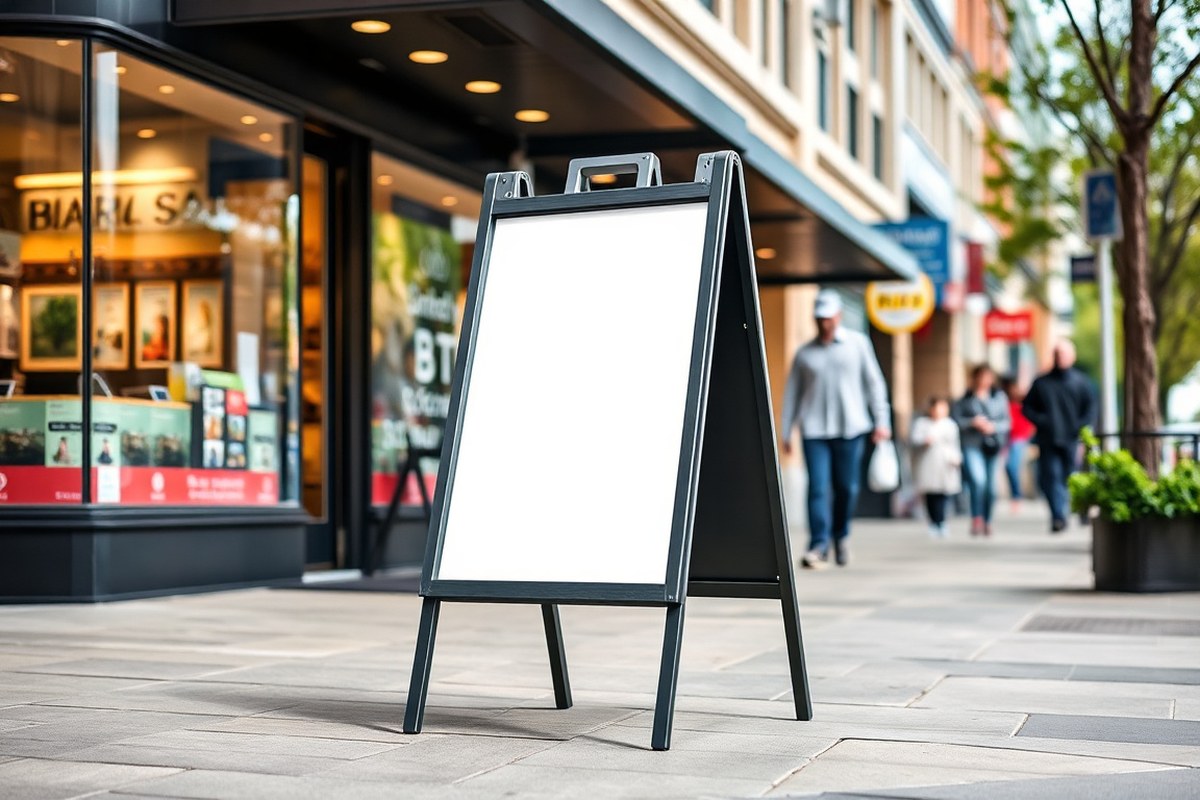
A standard A-frame sign panel typically measures 24 inches wide and 36 inches tall. This size delivers a large enough area on each side for clear headlines and graphics visible from afar. Including the frame with its edges and legs, the total height reaches around 46 inches, while the width extends to about 25 inches. The frame’s depth, meaning how far it stretches front to back, is close to 3 inches when folded, widening to offer support once opened.
The panel size specifically refers to the visible printed graphic area on each side of the sign. This is the part where you place your message or artwork. The frame footprint, on the other hand, is the total space the sign takes up on the ground, including the frame edges and the legs that support the A-shape. Typically, the frame width is a couple of inches wider than the panel to accommodate these structural parts, and the height exceeds the panel to allow for hinges and a solid base.
Weight plays a role in portability and stability. Standard frames for the common 24 by 36 inch panel weigh about 19 pounds. This weight balances ease of carrying with enough mass to resist wind or accidental knocks. Depth matters too; a frame measuring around 3 inches deep when folded can be stored easily behind counters or carried by hand. When opened, the legs usually splay to around 20 to 24 inches deep to hold the sign securely on uneven outdoor surfaces like sidewalks or parking lots.
Here’s a comparison to highlight key measurements and their importance: a 24 by 36 inch panel typically results in a total frame footprint about 25 inches wide, nearly 46 inches tall, and approximately 20 to 24 inches deep when open. This allows for a readable headline size of about 4 inches in height, which is visible from up to 40 feet away. Smaller sizes, such as 18 by 24 inches, have a narrower footprint and shorter height, suitable for tighter locations, but they offer less visibility range.
When selecting an A-frame sign, understanding the difference between panel size and frame footprint ensures you pick a sign that fits your display location and visibility needs. You want to measure your intended space carefully, considering both the printed area needed for your message and the full floor space the frame will occupy when open. This way, your sign stands steady and communicates effectively without obstructing foot traffic or cluttering your venue.
Common Standard A-Frame Sizes and Their Uses

A-frame signs come in several standard sizes beyond the popular 24 by 36 inches to accommodate different spaces and visibility needs. Smaller sizes like 16 by 24 or 18 by 24 inches fit tight or indoor spots, while larger formats such as 25 by 45 or 27 by 47 inches work well in open areas requiring maximum impact. Choosing the right size ensures your sign attracts attention without crowding the space or overwhelming viewers.
Compact Options for Tight Spaces
Smaller A-frame signs commonly use 16 by 24 or 18 by 24 inch panels, which suit narrow walkways, store aisles, or cafe doorways. An 18 by 24 inch panel keeps the sign footprint light and prevents blocking foot traffic. These sizes are ideal for businesses with limited sidewalk space or indoor areas where a larger sign might be intrusive.
Because these compact signs have less surface area, keep messages simple and focused to maintain readability. Use short headlines and bold fonts sized for clear viewing at close range, typically within 10 feet.
- 16×24 inches: Smallest popular size, subtle but noticeable
- 18×24 inches: Compact yet offers slightly more space for messaging
- Ideal for narrow storefronts and indoor use
- Prevents crowding or blocking entrances
- Lightweight and easier to move or store
A compact sign should never obstruct doorways or emergency access; prioritize safety over size in tight spaces.
These sizes are less suited for locations requiring visibility from the street but function well for pedestrian traffic directly in front of your business.
Standard Sizes for Sidewalk and Street Visibility
The 24 by 36 inch panel remains the standard choice for general sidewalk or street-level visibility because it balances space for information with a size that fits most sidewalks. Some businesses also use the 22 by 28 inch size, which offers a slightly narrower profile while still providing substantial display area.
This size range is effective for catching attention from both pedestrians and drivers within about 15 feet. The larger surface supports more detailed graphics, calls to action, or multiple lines of text. Use letter heights that match your typical viewing distance, approximately 1 inch of letter height for every 10 feet of distance.
- 24×36 inches: Most popular size for upfront messaging
- 22×28 inches: Slightly narrower, fits tighter sidewalks
- Attractive to both foot traffic and passing vehicles
- Supports detailed text or multiple graphics
- Common choice for outdoor storefront signage
Make sure to keep the sign anchored or weighted to prevent tipping in windy conditions, especially with larger panels outdoors.
This range waits between compact indoor size and large outdoor signs, offering flexible versatility for many typical retail environments.
Large Format Signs for Maximum Reach
For expansive spaces or high-traffic outdoor locations, larger sizes like 25 by 45 or 27 by 47 inches deliver high impact and long-distance readability. White plastic Signicade signs often measure about 25 by 45 inches and feature two 24 by 36 inch graphic panels. Aluminum and metal frames may vary slightly, with dimensions like 26 by 44.5 inches or 27.75 by 31.5 inches around their respective panels.
These large-format signs work best where visibility must extend 20 feet or more, such as on busy sidewalks, shopping centers, parking lots, or outdoor events. Designs should use large fonts and bright colors to maximize legibility from a distance. These signs are heavier and more durable but may require more storage space and a sturdier frame.
- 25×45 inches: Common for heavy-duty, weather-resistant signage
- 27×47 inches: Larger metal frames for maximum poster area
- Ideal for outdoor, open spaces with high foot or vehicle traffic
- Supports detailed branding, product info, and promotions
- Requires careful placement to avoid obstructing walkways
Large A-frames need stable footing or weights to prevent accidents and comply with local sidewalk regulations.
These powerful sizes attract attention effectively but suit businesses with space to spare and the ability to maintain or store the sign securely.
| Size (Panel Inches) | Typical Use | Foot Traffic Distance | Space Required |
|---|---|---|---|
| 16 x 24 | Tight indoor walkways, small storefronts | Up to 10 ft | Very compact |
| 18 x 24 | Narrow sidewalks, café doors, light outdoor use | 10-15 ft | Compact |
| 22 x 28 | Sidewalks, moderate space storefronts | 15-20 ft | Moderate |
| 24 x 36 | General storefronts, high traffic sidewalks | 15-20 ft | Moderate |
| 25 x 45 | Outdoor events, open sidewalks, parking lots | 20+ ft | Large |
| 27 x 47 | High-impact outdoor signage, durable frames | 20+ ft | Large |
How to Match A-Frame Sign Size to Location and Viewing Distance
Selecting the right A-frame sign size depends mainly on how far away your message needs to be readable. Use the rule of thumb that each inch of letter height corresponds to about 10 feet of viewing distance. Consider the location where you’ll place the sign, whether it’s near heavy foot traffic, indoors, or by a busy street, to decide the exact dimensions that will work best.
Readable Distance and Letter Height Rule
A good rule for making signs easy to read suggests using one inch of uppercase letter height for every 10 feet you want the sign visible from. To illustrate, letters in the main headline should be around 3 inches tall to be clear at 30 feet away. A typical A-frame sign size of 24 by 36 inches usually allows 2 to 3-inch letters, which are readable at distances between 20 and 30 feet.
Smaller signs with letter heights around 1 to 1.5 inches suit reading distances under 15 feet, such as indoor aisles or near a reception desk. Larger signs with letter heights of 4 inches or more fit well for busy streets or parks, where your target audience is farther away, sometimes 40 feet or more. Adjusting letter size within these frame dimensions ensures your message stands out and stays readable.
Adjusting Size for Venue Type
Sidewalk signs usually sit close to pedestrians, so smaller frames around 16 inches by 24 inches or 22 inches by 28 inches work well. They fit narrow sidewalks and keep foot traffic flowing without blocking paths. On a busy street with vehicle traffic or across parking areas, open spaces let you use larger frames like 24 inches by 36 inches or even bigger options to ensure drivers or passing pedestrians can read your sign clearly.
Indoor venues such as shopping mall aisles or office lobbies require careful sizing as well. Choose smaller signs for tight spaces to avoid crowding and maintain accessibility. In contrast, large retail entrances or storefronts benefit from bigger frames to attract attention from a farther distance. The balance comes from matching the sign size to both traffic flow and viewing distance in your specific setting.
How to Measure Your Site Space
Measure the width and depth of the area where you plan to place the A-frame sign before ordering. Check sidewalk widths, doorways, or aisle space to ensure the sign fits without obstructing movement. Leave enough room for foot traffic to pass comfortably, ideally allowing at least 3 to 4 feet of clearance on either side when possible.
Check the dimensions of the A-frame by noting its height and width. Usually, the graphic panel stays the same size as the frame; for instance, a 24 by 36 inch frame takes a matching 24 by 36 inch printed panel. Make sure this size works within your available space and matches the letter height needed for your viewing distance.
Following these measurement steps helps you avoid ordering a sign that’s too large to place or too small to read. It ensures your message is both visible and accessible, maximizing the return on your investment.
Frame Materials and Their Impact on Size and Durability
Choosing the right frame material for your A-frame sign affects weight, size options, cost, and durability, especially outdoors. Common frame materials include plastic, aluminum, and steel. Plastic frames tend to be lightweight and portable, usually weighing under 5 pounds for standard sizes like 22″ x 28″. This makes plastic ideal if you need to move the sign frequently or use it indoors. However, plastic is less stable in windy or rainy outdoor conditions and may fade or crack over time.
Aluminum frames offer a middle ground. These frames usually weigh around 8 to 10 pounds for medium sizes such as 25″ x 45″. Aluminum is durable and rust-resistant, particularly if powder coated, allowing it to withstand rain and sun exposure better than plastic. It provides a clean, professional look and holds larger panels without bending or warping. If your sign will sit outdoors most of the time and you want moderate portability, aluminum is a smart choice.
Steel frames are the heaviest, often exceeding 10 pounds for comparable dimensions. They excel in harsh weather due to their strength and stability, reducing the chance of tipping in wind. Steel is common for larger signs like the 27″ x 47″ sizes you see near busy streets. These heavy frames cost more and are less portable, so they suit permanent or semi-permanent outdoor setups. Rust resistance depends on coatings, so powder-coated steel is best for longevity.
Material choice also affects the overall frame size and sign design. Thicker frames add to the sign’s footprint and can limit available space for detailed messaging. For example, plastic frames might have slimmer edges, giving you more room for advertising. Aluminum and steel frames are bulkier but support larger, heavier panels better. When selecting material, check the exact frame dimensions to ensure your artwork fits precisely.
In terms of cost, plastic frames generally start under $50 for standard sizes, aluminum frames range from $70 to $150 depending on size and finish, and steel frames can exceed $150, factoring in extra protective coatings. Consider your budget alongside location needs: a busy outdoor sidewalk with variable weather calls for sturdier aluminum or steel, while indoor or short-term events can use plastic for convenience.
For windy or rainy conditions, aim for a sign weighing 8 to 10 pounds or more and featuring a sturdy base or weighted option to prevent tipping. Bringing the sign indoors during extreme weather is a good practice regardless of material. For portability combined with decent weather resistance, choose aluminum with powder-coating. To maximise visibility with heavier, more durable frames, upsize your sign panel to 25″ x 45″ or larger, balancing weight and stability.
Design Considerations for Standard A-Frame Sizes
Designing artwork for standard A-frame signs requires precise sizing to avoid clipping and ensure message clarity. Use a 0.125 inch bleed and keep all critical text at least 1 inch inside the panel edges due to the frame lip coverage. Headlines should be large enough to attract viewers from typical distances related to the panel size, while balancing boldness with legibility.
Setting Up Artwork with Bleed and Safe Zones
Building your artwork exactly to the panel size with a 0.125 inch bleed on all sides is essential. This bleed extends beyond the panel edge to allow for trimming variation, preventing unprinted edges after installation. Equally important is the safe margin, typically a full 1 inch inside the panel edge, which protects your text and key graphics from being obscured by the frame lip, typically half an inch deep on all sides.
For example, if your panel dimensions are 24 by 36 inches, set your canvas to the exact size, then include 0.125 inch bleed on all sides. All text and important logos should stay inside a 1 inch margin from the edge, ensuring they remain fully visible after installation.
- Artwork size equals exact panel size (e.g., 24″ x 36″)
- Include 0.125 inch bleed on all four edges
- Keep text and logos at least 1 inch inside panel edges for safe margin
- Use CMYK color mode and print-ready PDF format
- Fonts outlined and logos in vector format to avoid printing issues
Surround your artwork with the correct bleed and safe zones to prevent your message from being cut off or hidden behind the frame.
Headline and Font Size Recommendations
Headline size must be large enough to be read comfortably from 10 to 15 feet, the typical viewing distance for sidewalk and outdoor A-frame signs. A minimum letter height of 2 to 2.5 inches is recommended on a 24 by 36 inch panel to ensure legibility without overwhelming the design. Smaller panels, like 22 by 28 inches, call for proportionally smaller but still readable text sizes.
Use bold, sans-serif fonts to optimize readability at a glance. Avoid overly thin or intricate fonts that lose clarity on outdoor signs. Reserve the largest font sizes for your headline or key message, subheadings and secondary details can be smaller but should remain clear within the safe margins.
Balancing Text and Graphics on the Panel
Maximize your sign’s impact by balancing text and images without overcrowding. Limit the message to three or fewer lines of text and avoid placing essential elements near the panel edges due to potential obstruction. Using contrast, such as dark text on a light background, will improve visibility in various lighting conditions.
Place logos or graphics to complement rather than overpower the text, maintaining at least 1 inch of space around them. The top inch of the panel tends to be harder to read since the top edge usually tilts away from the viewer, so keep the primary message centered or slightly lower.
- Use no more than three lines of text for clarity
- Ensure 1 inch margin from all edges to prevent cropping
- Keep top 1 inch less cluttered for easy reading
- Balance graphics with text; logos should not compete with headlines
- Choose high-contrast colors for visibility in daylight
Overcrowding your panel dilutes your message; clean, well-spaced design delivers the best results.
Ordering Standard A-Frame Signs: Steps and Pricing Factors
Ordering a standard A-frame sign starts with choosing the right size and understanding how that choice affects the price and customization options. Most small businesses buy from local sign shops or online retailers specializing in retail signage. Prices for a standard A-frame sign usually start around $185, which typically includes the durable frame and a basic printed insert. This price makes it affordable since you only buy the frame once and can update the inserts whenever your message changes. Buying a standard size helps you keep replacement inserts inexpensive and ready for quick swaps.
Custom sizing can be necessary if your storefront or event space demands a unique shape or larger display than standard models offer. Custom A-frame signs usually cost more, sometimes 20% to 50% above standard prices, because they require special frames and print runs. This option works well if your branding needs unusual proportions or if visibility requirements exceed what standard sizes cover. Custom orders take longer to produce and may impact your reorder speed and cost. Follow these steps to order your standard A-frame sign with attention to size, cost, and upgrade flexibility:
- Identify your signage location and size needs. Measure the space where your sign will stand and consider the average viewing distance. Select a standard size that fits without overcrowding walkways or being too small to read at a distance.
- Research suppliers in your area or online. Look for retailers offering standard A-frame sign packages with easy insert replacements. Check for reviews and turnaround times.
- Request pricing for the standard sizes you’re considering. Compare quotes that include frame and at least one printed panel. Note if the price includes weather-resistant materials, important for outdoor use.
- Choose a frame material based on durability and budget. Common options include plastic or metal frames; metal often costs more but lasts longer, affecting the total price and value.
- Select your standard sign size to keep future insert replacements affordable. Matching your inserts to stock sizes avoids custom print fees for every update.
- Design or provide your graphics for the initial insert. Confirm the print resolution and file format requirements with your supplier to avoid delays.
- Place your order including the frame and initial printed insert. Ask about turnaround times and shipping costs, as this can affect your schedule and total spend.
- Plan for future insert reorders. Keep a template file or saved artwork and verify with the supplier how to reorder inserts easily and cost-effectively.
Common Sizing Mistakes and How to Avoid Them
Choosing the wrong A-frame sign size often leads to two main problems. Buyers either pick a sign too small to capture attention from a distance or one too large that blocks walkways or doorways. Both mistakes waste money and reduce the effectiveness of your sign in directing customers or delivering your message.
Signs that measure around 24 x 36 inches (about 600 × 900 mm) tend to hit the sweet spot between visibility and space without creating obstacles. This size provides ample room for detailed text or visuals, especially useful in busy outdoor retail areas. However, even this standard size can create issues if placed in cramped spots or heavy foot traffic zones. To avoid these errors, consider a checklist before ordering your A-frame sign:
- Measure the width of sidewalks or doorways to ensure at least 36 inches of clear path remains around the sign.
- Estimate the distance customers will typically view the sign to pick a size that suits that range, larger signs for more distance, smaller for close-up viewing.
- Check local regulations or property rules to confirm size limits in specific locations.
- Evaluate your message complexity; if it requires fine print, opt for a larger sign.
- Test with a cardboard mockup of the proposed size to see how much space it occupies in your intended setting.
- Consider weather-resistant materials that complement the size to prevent damage or instability outdoors.
Signs placed too close to narrow entrances or heavy pedestrian zones can create hazards and reduce customer flow. You need to reconsider your size choice if customers regularly have to step into streets or wait to pass by. Shrinking the sign or relocating it to a less congested area may solve these problems. Also, a smaller sign might be better for indoor locations with limited space, while larger signs make more sense in open plazas or parking lots.
Buying the right size saves you from having to reorder new signs, which can cost between $50 to over $200 depending on size and materials. Taking time to measure and evaluate your space upfront prevents these delays and extra costs. The right size ensures your sign communicates clearly, stays stable in weather, and doesn’t get in anyone’s way.
When Should You Consider Custom A-Frame Sizes?
Choosing a custom A-frame sign size makes sense when your display area, message content, or design elements don’t fit well within standard dimensions like 22 by 28 inches or 24 by 28 inches. For example, you may have a narrow sidewalk that can only accommodate a slimmer sign or want to include a larger logo or graphic that demands more space to remain clear and readable from the desired viewing distance. Custom sizes let you tailor the sign to your exact spatial constraints or branding needs, which can improve visibility and effectiveness.
Before ordering custom, evaluate if standard sizes meet your needs by measuring the intended placement spot and estimating how much text or imagery you plan to include. Consider the typical sight lines of your target audience. Standard dimensions typically align with common design templates and use stock materials, which helps keep costs down and turnaround times faster. Your message fits well within these sizes without crowding, so standard signs may be the better choice.
Custom framing involves tradeoffs. Benefits include matching your specific space and design without compromise, offering a distinctive look, and avoiding design cuts or scaling that affect legibility. However, custom sizes usually increase price, sometimes by 20 to 50 percent or more, depending on materials and complexity. Lead times may also stretch by several days or weeks due to special ordering and fabrication requirements. Also, you should confirm your manufacturer can produce the size and style you want.
Use a decision checklist to weigh your options: check spatial allowance, calculate content size needs, review visibility requirements, and compare standard sizes against your custom ideas. Ask if standard templates can be adapted before pursuing custom. Choosing custom means preparing detailed specifications, including exact height, width, and panel thickness. Communicate clearly with the sign maker by providing sketches or digital files that show dimensions and layout. Clarify whether the sign is double-sided, which materials you prefer, and any branding elements that must fit.
Provide manufacturers with precise measurements and digital mockups to avoid delays and costly revisions when ordering custom sizes.
Choosing between standard and custom A-frame sizes depends on your site restrictions, budget, and design requirements. Standard sizes work best when you need a cost-effective, ready-made solution with quick turnaround. Custom sizes suit situations where space is unusual or your signage demands exceed standard template limits. Confirm custom size options and pricing upfront with suppliers like Tyco Printing, PrintPlace, or 48HourPrint, who all offer custom fabrication but vary in their offerings and lead times.
A simple pros and cons comparison clarifies the decision. Custom sizing offers full design freedom (pro) but generally costs more and takes longer to produce (cons). Standard sizes are less expensive and faster to get (pros) but could limit your design if you have unusual content or space (cons). Think of your priorities, speed, budget, or perfect fit, when choosing your path.
Your Quick-Start Plan for Choosing the Right A-Frame Sign Size
Follow these steps to select and order an A-frame sign size that fits your space and marketing goals.
- Before you order: Measure the location where you plan to place the sign and note the distance viewers will be from it. This ensures the sign size provides clear visibility.
- Day 1: Decide the primary message type and length. Short, bold messages need smaller signs; detailed info may require larger sizes to remain readable.
- Day 2: Choose a frame material suited to your environment, plastic for indoor use, metal or wood for outdoor durability. Verify material impact on size and weight.
- Week 1: Compare standard A-frame sizes using your measurements and message requirements. Select one that balances visibility and space constraints.
- Week 2: Finalize your sign design, using fonts and colors optimized for the chosen sign size to maximize readability at intended distances.
- Week 3: Contact suppliers to get pricing on your selected size and material, asking about bulk discounts or shipping times to fit your schedule.
- After delivery: Install your sign and observe customer engagement and visibility. Adjust future sign sizes or placements based on real-world performance.
Frequently Asked Questions
What Weight Does the Standard A-Frame Sign Typically Have?
The standard A-frame sign weighs about 19 pounds, making it sturdy yet portable enough for easy setup and relocation at your retail location or event.
How Do Weather Conditions Influence the Ideal A-Frame Sign Size?
Harsh weather may require more durable frames like steel, which can be heavier and affect size choices for stability.
Can I Use the Same Size A-Frame Sign Indoors and Outdoors?
Yes, but consider smaller, lighter signs indoors for tighter spaces and larger ones outdoors for visibility.
What Legal Restrictions Might Affect A-Frame Sign Dimensions?
Local ordinances often set limits on sidewalk obstruction and maximum size, so check your city’s rules before ordering.
How Does Font Size Relate to A-Frame Sign Readability?
A good rule is 1 inch of letter height equals about 10 feet of viewing distance, helping customers read your message clearly.
Are Double-Sided A-Frame Signs Standard, or Do I Need Custom?
Most A-frame signs are double-sided by default, so you typically don’t need custom work for two faces.
Final Thoughts
Choosing the right A-frame sign size starts with clear measurements and understanding how far your message needs to reach. Prioritize material and visibility to make an impact while fitting your location. Once you identify a size that works, order a sample or a single unit before scaling up to confirm it attracts the attention you want.