Garage Sign Ideas: 12 Best Designs to Personalize Your Space
Garage sign ideas help transform your space by combining style and personality with clear, functional decoration. Choose bold designs like neon “Route 66” scripts or vintage tin signs to create an eye-catching focal point. Start by selecting a sign that matches your automotive interests while fitting your garage’s scale and layout.
Key Takeaways
- Pick sign styles that reflect your automotive passion, such as custom racing numbers or classic road signs.
- Use durable materials like metal or weather-resistant acrylic to ensure your garage sign lasts for years.
- Select a size at least 24 inches on the longest side for visibility without violating local rules.
- Match sign colors with your garage’s theme to maintain a cohesive and attractive look.
- Place signs at eye level near your workbench or entry points for maximum impact.
- Consider LED or neon lighting to improve visibility and emphasize your sign’s design.
Best Garage Sign Styles for Automotive Enthusiasts
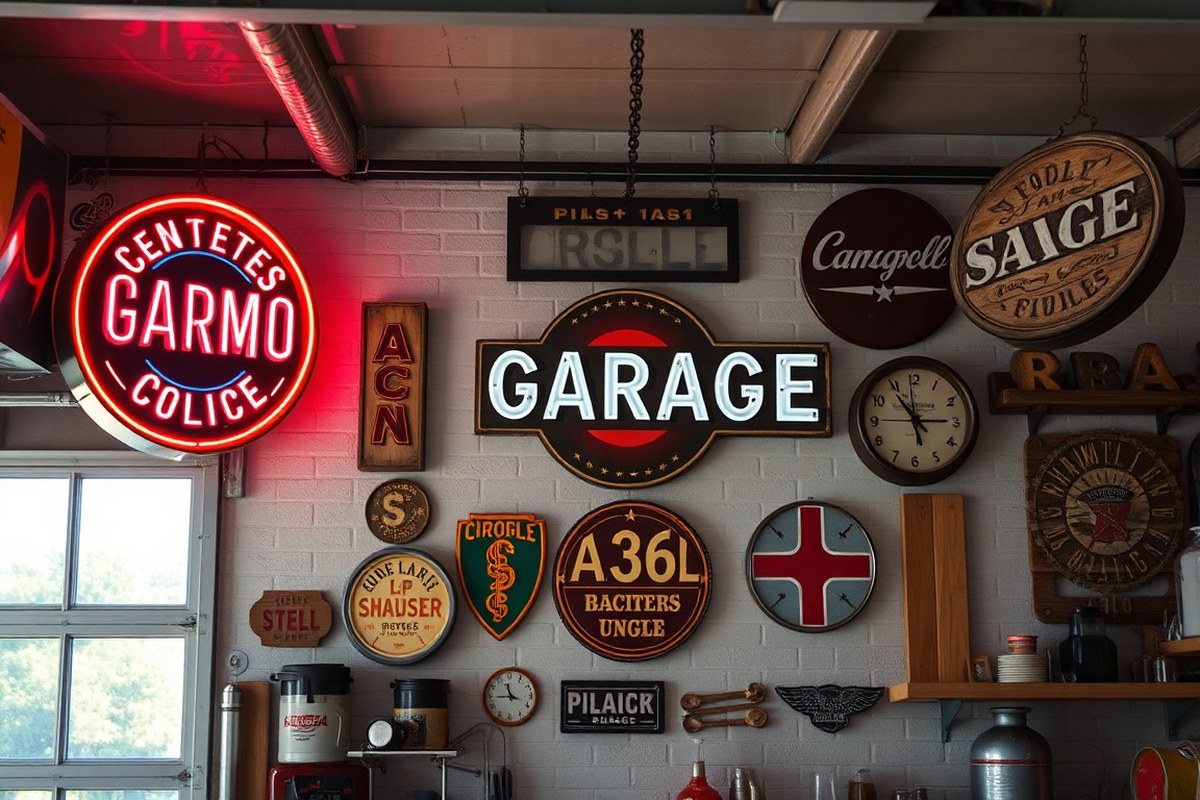
Garage signs for automotive enthusiasts come in several popular styles, each creating a distinct atmosphere while reflecting your passion for cars and mechanics. The most effective signs include neon light designs, metal industrial signs, and wooden vintage or rustic styles. Neon signs such as “Rev Up Your Engines” or “Gearhead Garage” stand out because they add vibrant color and instantly draw attention. Their glow improve the workshop vibe and makes your space feel exciting and active. Expect to spend between $50 and $200 for quality LED neon signs, depending on size and complexity. They require a nearby power source and minimal installation time, usually under an hour.
Metal signs often feature classic car logos like Chevrolet or Ford, or carry industrial and vintage aesthetics. These signs typically cost $30 to $100 and usually come pre-drilled for easy wall mounting with bolts or screws. Metal signs create an authentic garage atmosphere. Their rigid construction works well in workshops where durability matters, and the signs don’t need electricity. However, metal signs can feel colder and less personal than neon or wooden options, so pairing them with warmer decor elements works best.
Wooden signs fit garages that benefit from a cozy, welcoming feel. Rustic wooden “Welcome” signs or those with carved classic car motifs add charm and character. Prices start around $40 and can reach $150 for intricate designs or custom work. Wood signs are lightweight and easy to hang with simple hooks or nails. They absorb sound better than metal or neon and contribute to a quieter, more relaxed space. Keep in mind, wood requires occasional maintenance to avoid warping or fading in garages with high humidity or temperature swings.
Choosing the right style depends on how you want your garage to feel. Neon signs amplify energy and excitement, metal brings authenticity and toughness, and wood offers warmth and personality. Mixing materials can also work well, such as pairing a metal sign with neon accents or featuring a wooden sign above a metal workbench. For workshop users, durable metal signs with clear automotive themes support a focused environment, while decorative wooden or neon signs add style and motivation.
When selecting and installing your sign, measure the available wall space carefully. Signs that are 18 to 24 inches wide fit most garage walls without overcrowding. Choose designs with bold lettering or familiar automotive logos to ensure they are easily readable from across the room. Installation can vary from simple nail or screw mounting for metal and wood signs to plugging in neon signs to a grounded outlet. Avoid hanging signs too low to prevent damage from vehicles or tools. Keep power cords secure and away from walkways to reduce tripping hazards.
How to Personalize Your Garage Sign Design
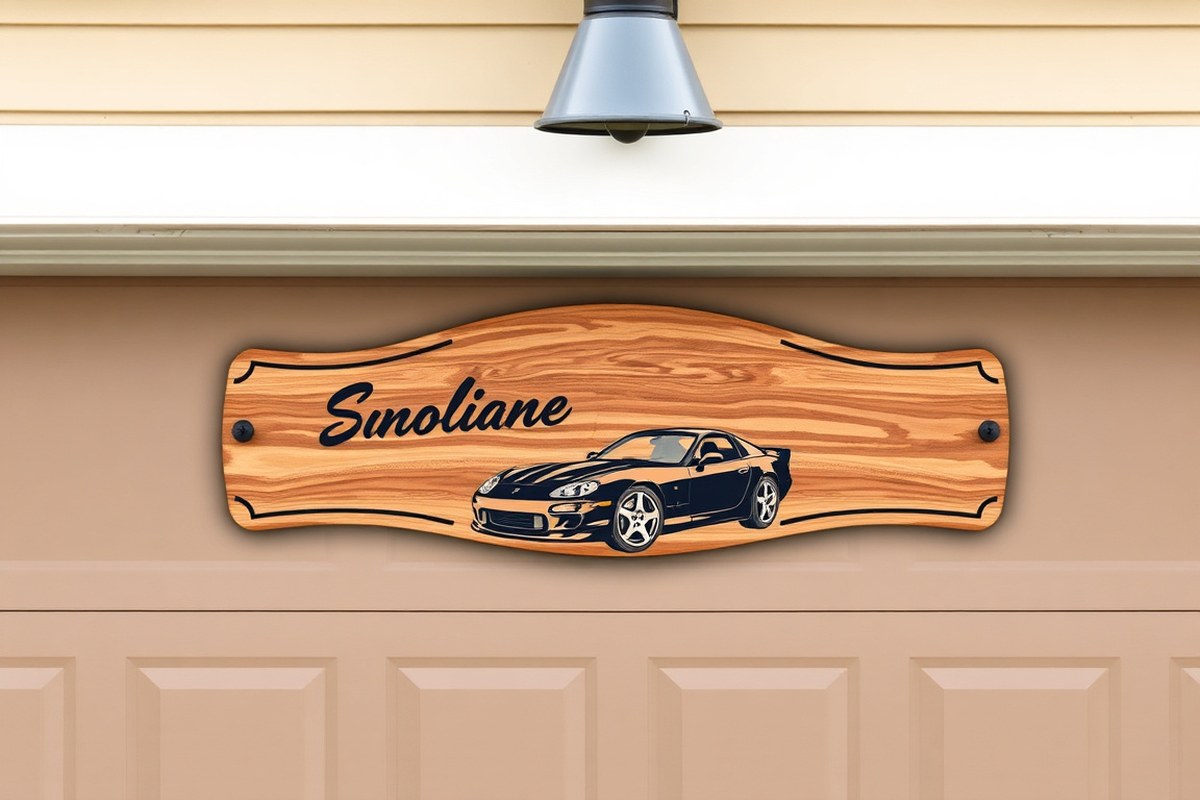
Personalizing your garage sign lets you showcase your identity and automotive passion clearly. Adding your name, car make, or favorite slogan creates a unique focal point that feels welcoming and reflects your style. Combining logos, colors, and themes tailored to your taste turns a simple sign into a statement piece for your garage.
Choosing Names and Logos
Start by deciding what name or phrase you want prominently displayed on the sign. Popular choices include your first name, a nickname, or combinations like “Jake’s Garage” or “Mike’s Workshop.” Incorporating your car’s make or model, such as “Home of the Camaro SS,” connects the sign directly to your automotive interest.
Adding logos, like a car brand emblem or a custom graphic of your favorite vehicle, improve recognition and personal relevance. You can find licensed logos or commission custom illustrations to accompany your name. Place the logo beside or above the text for clear visibility.
Good name and logo choices give your garage sign a recognizable identity and create a sense of pride in your space. A personalized name sign not only makes the area feel yours but also invites visitors to connect with your automotive enthusiasm.
Selecting Theme and Colors
Choose a theme that matches the atmosphere you want. Popular themes include vintage racing, classic muscle cars, or modern tuning culture. Slogans can reinforce these themes, such as:
- “Speed Freak” for a neon-lit high-energy vibe
- “Built Not Bought” for a DIY passion statement
- “Garage of the Gearhead” as a welcoming, all-encompassing phrase
- “Home of the Camaro SS” to highlight a specific car model
- “Pit Stop” for a casual, friendly feel
Match colors to your car’s palette or your overall garage decor. Bright reds, blacks, and chrome finishes suit muscle car themes. Wood tones or muted greens and blues fit vintage or rustic styles. Contrasting colors help text and logos stand out, improving readability from across the garage.
Consistency between the sign and your garage decor keeps the space coordinated. For example, a wooden carved sign complements exposed wood beams or tool chests, while a neon or LED-lit sign pairs well with industrial-style garages.
Ordering Custom Signs vs DIY
Ordering a custom-made sign offers professional quality and design precision. It typically costs $100 to $300 depending on materials, size, and lighting options. This path suits those wanting a polished, durable look or complex artwork like logos.
DIY sign-making can cost much less, sometimes under $50 if using chalkboards, stencils, and paints. It allows complete creative control but requires time, tools, and some skill in lettering and design. DIY signs can be updated regularly with new projects or slogans, making them versatile. To personalize your sign, whether ordering or DIY, follow this checklist:
- Choose a clear name or phrase that reflects your garage identity
- Select car logos or graphics relevant to your passion
- Pick a theme and matching slogan that fits your style
- Decide on colors that coordinate with your garage decor and improve visibility
- Measure the space to determine appropriate sign size
- Choose the material type based on durability and theme (wood, metal, LED, etc.)
- For DIY, gather tools and materials before starting your design
Ensure your chosen text size and colors offer good contrast to keep your sign legible in various lighting conditions.
Durable Materials for Lasting Garage Signs
Garage signs need to handle temperature fluctuations, humidity, and occasional grease or dust exposure. Metal signs, especially powder-coated options, offer strong durability and resist rust and fading, making them ideal for lasting use without much upkeep. They often work well with LED backlighting, giving a sleek, modern vintage look that suits automotive themes. However, scratched metal can show marks, and some finishes might dull over years.
Wooden signs bring a rustic character that fits cozy or vintage-themed garages. They usually require sealing with varnish or polyurethane to protect against moisture and warping. Expect to reseal every 1 to 2 years if your garage isn’t climate-controlled. Wood can fade or develop cracks in high humidity, so it’s less durable without care but more budget-friendly and customizable.
Neon signs supply bright visibility with their classic glowing tubes, perfect for catching attention and adding charm. They’re more fragile due to glass tubes and require proper wiring and occasional professional maintenance. Neon consumes more power and tends to cost more upfront, with installation near $150 to $300 depending on size and design. They evoke nostalgia but may not fit every budget.
LED signs, including LED neon light strips, combine brightness with energy efficiency. LEDs tend to last longer and need less maintenance compared to traditional neon. They withstand garage conditions well and cost less to run. Installation can be straightforward with adhesive backing and plug-in power kits, but wiring to a power source might need an electrician if permanent setup is desired. This material is flexible for various shapes and styles while staying functional and easy to maintain.
| Material | Durability in Garage Conditions | Maintenance | Typical Cost | Style Examples |
|---|---|---|---|---|
| Powder-Coated Metal | Very durable, resists rust and scratches | Wipe clean; touch up paint if scratched | Moderate ($50, $150+) | Retro parking signs, LED backlit metal |
| Wood (Sealed) | Moderate; prone to moisture damage without seal | Reseal every 1, 2 years; keep dry | Budget-friendly ($20, $75) | Distressed wooden wall signs |
| Neon (Glass Tubes) | Fragile; bright but glass can break | Professional reinstall or repairs; dust carefully | High ($150, $300+ for installation) | Classic muscle, “Born to Ride” neon signs |
| LED Neon Light Strips | Highly durable; good for humid, cool garages | Occasional dusting; check wiring | Moderate to high ($40, $120+) | “Full Throttle” LED strips, glowing logos |
Maintaining wooden signs means keeping them sealed and avoiding water exposure. Use a damp cloth to clean metal and LED signs, avoiding harsh chemicals that might degrade finishes. Neon signs benefit from gentle dusting and professional servicing when flickering or dimming occurs. Position signs away from direct water sprays and extreme heat to help materials last longer.
Choosing the Right Size and Color for Garage Signs
Choosing the right size for your garage sign depends on where you plan to place it and how far away viewers will be. A good rule of thumb for visibility is to have a letter height of about 2 inches for every 10 feet of viewing distance. For example, if your sign will be read from 30 feet away, aim for letters at least 6 inches tall. This ensures readability without overwhelming the space. Avoid signs that are the size of a sheet of paper; they’re too small to catch attention and hard to read from a distance, especially in a garage setting where lighting may vary.
Color choice plays a major role in how noticeable your sign will be. High contrast between background and text colors improves visibility. Classic combinations like black text on a bright yellow background or white letters on a red background stand out well. Bright colors such as neon green, hot pink, and bright yellow attract attention but work best when paired with a contrasting color to keep the message clear. Avoid using similar shades together, like blue on purple, as they can blend and reduce legibility.
Consider your garage’s lighting when selecting colors and size. Dim or uneven lighting can make subtle color differences hard to see. Neon signs add vibrant light and energy, improving visibility even in darker corners. If neon or LED is not an option, choose colors that remain bold and clear under fluorescent or incandescent light commonly found in garages. Matte finishes reduce glare, which can help keep your sign legible when light reflects off shiny surfaces.
To decide on size and color, first measure the viewing distance where the sign will be mainly noticed, then select letter height and thickness accordingly. Next, pick a color scheme with strong contrast and test it under your garage’s typical lighting. Use samples or mock-ups to see how it looks at different times of the day. This approach helps avoid signs that blend into the background or are too small to read.
Quality materials and bold color application might slightly increase costs compared to simple prints, but these investments pay off with longer-lasting impact and fewer replacements. Signs that are too small or use poor color contrast often end up ignored, wasting time and money. Adjust size and color choices depending on your garage’s unique environment and the message you want to convey.
Where and How to Display Garage Signs Effectively
Choosing the best locations inside your garage for signs depends on visibility, function, and safety. Place signs near entry points, such as the garage door or side doors, to create a welcoming impression or announce the garage’s theme. Mount signs above tool benches or workstations where you spend most of your time to keep the environment motivating and visually appealing. Avoid placing signs where they might block storage areas, machinery, or garage door mechanisms to prevent accidents and maintain smooth operation.
Safe and aesthetic mounting methods are key to protecting both your walls and signs. Use wall anchors or toggle bolts for drywall to hold heavier signs securely. For lighter signs, heavy-duty double-sided mounting tape or adhesive strips work well and keep installation easy. If you’re mounting on concrete or brick walls, masonry screws with proper anchors provide the needed strength. Magnetic mounts offer flexibility if signs have magnetic backs and you prefer not to damage painted surfaces.
- Locate signs at eye level, typically 60 to 66 inches from the floor, for easy viewing.
- Use a level during installation to keep signs straight and professionally displayed.
- Leave at least 12 to 18 inches of clearance around garage door mechanisms and storage racks.
- Choose mounting hardware rated for the sign’s weight; check packaging or product details.
- Consider weather resistance if your garage is partially exposed to the elements.
Follow these steps for a straightforward mounting process: first, measure and mark your wall where the sign will go, using a pencil and level. Next, select mounting hardware suited to your wall type and sign weight. Drill pilot holes if needed, insert anchors, then attach screws, leaving them protruding slightly for the sign to hang securely. Finally, hang the sign and adjust as needed for balance and alignment. This approach minimizes holes and makes sure the sign stays firmly in place.
Always test mounting hardware on a small hidden area to ensure it will not damage your wall or sign surface before full installation.
Avoid damage by steering clear of mounting signs directly on insulation panels or behind garage door tracks. Plan your layout by mapping out where large or heavy items already occupy wall space. For garages with limited wall room, consider ceiling-mounted sign brackets or freestanding display stands to prevent clutter. Adding spacers or bumpers behind signs can protect walls from scratches and offer a polished look. These strategies help maintain a neat, functional workspace where your signs improve rather than obstruct.
DIY Garage Signs: Tools, Materials, and Steps
Creating a personalized garage sign at home lets you add character and style to your space while showcasing your automotive passion. You can craft a sign using common tools and materials, tailored exactly to your design preferences. A simple process involves choosing materials, designing the layout, painting, and finishing with protective or lighting options.
Gathering Materials and Tools
Start by collecting the right supplies to make the project smooth and successful. Common materials for garage signs include plywood or medium-density fiberboard (MDF) for the base, acrylic or metal sheets for a sleek finish, and quality outdoor paint. Tools such as a jigsaw or handsaw, sandpaper, paintbrushes or rollers, stencils or vinyl letters, and a drill for mounting are essential.
If you want lighting, neon or LED strips designed for signage can be sourced online or at hardware stores. Expect to spend around $20 to $50 on materials for a basic sign, more if you add lighting. Choosing weather-resistant paint and sealant helps your sign last longer, especially in garages with occasional moisture or temperature swings.
Designing and Stenciling the Sign
Planning your design carefully ensures clear, attractive results. Use graph paper or a computer program to sketch your design to scale. Keep text minimal and fonts bold for readability from a distance. Transfer your design to the sign surface using stencils or printable vinyl letters. Tape your stencil firmly to avoid paint bleed.
Before painting, lightly sand the surface to remove rough spots and wipe clean. Practice painting thinner layers and allow them to dry between coats to prevent runs or drips. Choosing contrasting colors, such as white text on dark backgrounds, improves visibility.
Painting, Sealing, and Optional Lighting
Apply outdoor acrylic or enamel paint using a brush or roller, starting with background colors. Allow at least 4 hours to dry between coats and apply two to three layers for solid coverage. After paint fully cures (usually 24 to 48 hours), seal the surface with a clear polyurethane sealant to protect against scratches and moisture.
For lighting, attach LED strips or a neon sign frame behind or around the sign edges as a finishing touch. Secure wiring safely along walls or posts. Battery-powered LED options offer easier installation without electrical work. Properly sealed and illuminated signs can remain vibrant and inviting for years.
- Choose and cut your base material to desired size, about 18 by 24 inches is common.
- Sand the edges and surface lightly and clean off dust.
- Design your graphic or text layout on paper or digitally.
- Apply stencils or vinyl letters to the sign securely.
- Paint the background color first, let dry thoroughly.
- Fill in lettering and details with smaller brushes.
- After all paint dries, apply a clear sealant coat on top.
- Add lighting strips or attach a neon sign outline as desired, securing all wiring safely.
Popular Themes and Messages for Garage Signs
Garage signs with an automotive theme often showcase popular car brand logos, well-known racing competitions, and other symbols connected to car culture. Featuring badges like Chevrolet’s bowtie, Ford’s blue oval, or Dodge’s ram head can give your garage a strong connection to automotive history. Adding neon lighting to these signs can bring energy to the space, appealing to fans who value classic marques and automotive legacy.
Adding humor through mechanic or car-related quotes lightens the mood and makes the garage feel more personal. Signs with messages such as “Mechanic on Duty, Bring Beer” inject fun without overdoing it. This approach invites guests or fellow hobbyists to share a laugh and creates a relaxed, welcoming environment.
Inspirational quotes boost motivation during long repair or restoration projects. Phrases like “Keep Calm and Fix On” or “Drive Your Dreams” encourage focus and passion for working in the garage. Choosing a font that complements the garage style, bold for industrial looks or script for vintage vibes, helps reinforce the message’s tone.
- Car brand logos: Chevrolet Bowtie, Ford Blue Oval, Dodge Ram’s Head
- Famous races: “Welcome to the Finish Line” or “Daytona Speed Shop”
- Funny mechanic quotes: “Mechanic on Duty, Bring Beer” or “Torque is My Therapy”
- Motivational slogans: “Keep Calm and Fix On,” “Drive Your Dreams”
- Classic phrases: “Garage: Where the Magic Happens,” “Fuel, Wrenches & Guts”
- Vintage car culture: “Hot Rod Garage” or “Old Speed, New Tricks”
- Neon signs celebrating brand loyalty or car models
Choosing the right theme depends on your garage persona. For a gearhead focused on professional repairs, signs highlighting mechanic humor or workshop slogans improve the working vibe. Vintage car lovers might prefer classic style fonts and references to old motor clubs or restored cars. Those who simply enjoy the ambiance might opt for neon signs featuring favorite brands or racing legends to create a bold visual statement.
Using clear, memorable slogans increases the sign’s impact. These messages can be printed or hand-painted on metal, wood, or acrylic, with prices ranging from $30 to $150 depending on size and material. Neon signs tend to cost more, often $100 to $250, but offer greater visual appeal, especially in dimly lit garages. Good results include signs that match your garage’s personality, improve the atmosphere, and spark conversation. Avoid cluttering the space with too many signs, which can dilute the message and create visual noise.
Lighting Options: Neon, LED, and More for Garage Signs
Choosing the right lighting for your garage sign affects both its style and how it draws attention. Neon signs offer a warm, vintage glow that fits classic automotive themes, while LED signs provide energy-efficient, bright illumination with more color options. Proper installation ensures safety and the best visual impact, whether you opt for neon or LED.
Neon Signs: Classic Glow
Neon signs use glowing neon gas within glass tubes to create that iconic warm and inviting light. This style suits automotive enthusiasts aiming for a retro look, reminiscent of vintage diners and Route 66 service stations. The gentle glow adds character but does require careful handling during installation since glass tubes are fragile. Neon lighting can generate some heat, so mounting the sign on a non-flammable surface with at least 2 inches of clearance helps prevent damage or fire risk.
Installing neon signs usually means plugging them directly into an electrical outlet. Make sure to use a sign with a UL-certified transformer to ensure it meets safety standards. Because neon signs operate at high voltage, installing a dedicated outlet with a ground fault circuit interrupter (GFCI) is recommended for garages, where moisture or dust could be present. Neon signs tend to cost more upfront, often between $150 and $500 depending on size and complexity, and may use more electricity than LED alternatives.
LED Signs: Energy Efficient and Versatile
LED signs use light-emitting diodes to provide bright, vibrant colors with less energy consumption. These signs work well for you if you want options like color changing or programmable patterns to match your garage’s theme. LED signs stay cooler than neon, reducing fire risks, and typically last 30,000 to 50,000 hours, which can be 5 to 10 years of continuous use.
They are lighter and more durable than neon signs, making installation easier and safer. You can mount LED signs with screws or adhesive to prevent damage to the wall or sign. Depending on the model, LEDs range from under $50 for basic designs to $300 or more for complex or custom signs. The brightness and color temperature of LEDs can also influence the mood; warm white or amber hues create a cozy feel, while cool white and blue tones offer a modern, energetic atmosphere.
Battery vs Plug-In Options
Both neon and LED signs come in battery-powered and plug-in varieties, but their suitability depends on your garage setup. Plug-in signs provide consistent power and are better for displays meant to be on for long hours. You’ll want to place these signs near outlets with proper wiring and consider using extension cords rated for indoor use only. Ensure all cable runs avoid high-traffic areas to prevent tripping or damage.
Battery-powered LED signs offer more flexibility with placement and are easier to install without wiring. Expect to replace or recharge batteries every few days to weeks based on usage and battery type. Battery versions generally cannot support neon due to the higher power demands and voltage requirements, so neon signs are almost always plug-in only. Consider the tradeoff between mobility and run time when selecting battery-powered options for your garage.
| Lighting Type | Pros | Cons | Typical Cost | Installation |
|---|---|---|---|---|
| Neon | Warm retro glow, iconic style | Fragile glass tubes, higher power use, heat | $150-$500 | Plug-in with UL-certified transformer, GFCI outlet recommended |
| LED | Energy efficient, cooler, durable, many colors | Less classic feel, battery needs replacement | $50-$300+ | Plug-in or battery; easy mounting with screws or adhesive |
| Battery Powered LED | Portable, no wiring | Limited run time, not for neon | $50-$150 | Mount anywhere; maintain batteries |
Always use a ground fault circuit interrupter (GFCI) outlet when plugging in garage signs to prevent electric shock, especially if your garage is damp or dusty.
Safety and Legal Considerations When Installing Signs
Before mounting any garage sign, check your local regulations on sign size and placement. Many areas require signs to be at least 24 inches on the longest side, but some neighborhoods or homeowner associations may limit size or restrict outdoor signs to avoid visual clutter. Contact your city planning or zoning office for specific rules to ensure your sign complies. Following regulations avoids fines and keeps the look of your garage neighborhood-friendly.
Securely installing your garage sign is important for safety and durability. Use proper mounting hardware designed for the surface type, masonry anchors for brick or concrete, heavy-duty screws for wood, and toggle bolts for drywall. Measure carefully to position the sign straight and at a practical height, typically between 5 and 7 feet from the floor for easy visibility. Drill pilot holes before inserting screws to prevent material splitting.
- Wear safety glasses and gloves during installation
- Use a stud finder to ensure strong wall mounting
- Check the area behind the mounting spot for pipes or wiring
- Use a level to keep signs straight
- For heavier signs, get assistance during installation
- Securely anchor signs to withstand wind or accidental impact
Illuminated signs require extra caution. Electrical work should follow National Electrical Code (NEC) guidelines and local ordinances. Ensure the power source is grounded and use weatherproof, outdoor-rated LED or neon sign kits to prevent shocks or shorts. If the sign is near water or outdoors, install a ground-fault circuit interrupter (GFCI) outlet for added safety. Turn off power at the circuit breaker before wiring and, unless you are qualified, hire a licensed electrician to do the installation. Proper wiring avoids fire hazards and keeps your garage safe.
Maintaining and Cleaning Your Garage Signs
Keeping your garage signs looking fresh and functional requires regular cleaning and preventive care tailored to the materials and exposure conditions. Signs made from metal, wood, or plastic respond differently to cleaning methods, so understanding these nuances helps maintain their appearance and durability.
Metal signs benefit from gentle cleaning to avoid scratches and corrosion. Use a soft cloth dampened with a mild detergent mixed in warm water, typically about a teaspoon of dish soap per quart of water. Wipe the sign gently, then dry it with a clean, dry cloth to prevent water spots and rust. Avoid abrasive pads or harsh chemicals that can damage paint or protective coatings.
Wooden signs need special care because moisture and humidity can cause warping or fading. Dust them weekly with a dry microfiber cloth to keep dirt from settling. For deeper cleaning, use a slightly damp cloth with a gentle wood cleaner designed for finished surfaces. After cleaning, check for any peeling paint or scratches that could expose the wood, and apply a clear polyurethane or sealant once a year to protect against humidity and temperature swings typical in garages.
Plastic signs require a mild approach as well. Use a soft cloth and a soap-and-water solution similar to that for metal signs. Avoid solvents like acetone, which can cause discoloration or brittleness. Plastic signs can build up static, attracting dust; using an antistatic spray designed for plastics after cleaning can reduce this issue.
Cleaning frequency depends on your garage’s environment. Signs in dry, controlled garages can be cleaned every three to six months, while those exposed to dust, oil residue, or humidity might need monthly attention. Regular inspections for signs of wear, such as fading, rust, or cracks, let you catch damage early and extend the life of your signs.
Humidity and temperature changes also affect signs. To manage these factors, consider placing signs away from direct sources of moisture, such as water heaters or areas prone to condensation. Using climate control like dehumidifiers helps in damp garages. If signs do show signs of moisture damage, quickly dry them and treat affected areas. Metal signs may require rust treatment; wood might need sanding and refinishing.
Maintaining your signs involves a simple checklist: dust or wipe down the surface regularly, clean deeply with suitable cleaners every few months, inspect for damage, and apply protective coatings annually for vulnerable materials. Applying these steps costs little in time or money, mild soap and a cloth usually suffice, while sealants or rust treatments run $10 to $20 per container and last a season or more.
Good maintenance keeps your garage signs vibrant and legible, preserving their role as both decorative elements and functional markers. Neglect can lead to fading, peeling, or surface damage that dulls their appearance and requires costly repairs or replacements. Caring for your signs ensures they continue to improve the ambiance and utility of your garage over time.
Creative and Unique Garage Sign Ideas That Stand Out
Choosing sign shapes inspired by tools can instantly catch the eye. For example, a sign cut in the shape of a wrench or gear lever creates an immediate connection to your garage’s function. You can order custom metal or wood signs shaped like your favourite tool, painted in bold colors like chrome silver or matte black to mimic real hardware. Prices for a custom tool-shaped wooden sign typically start around $60 and go up depending on size and detail.
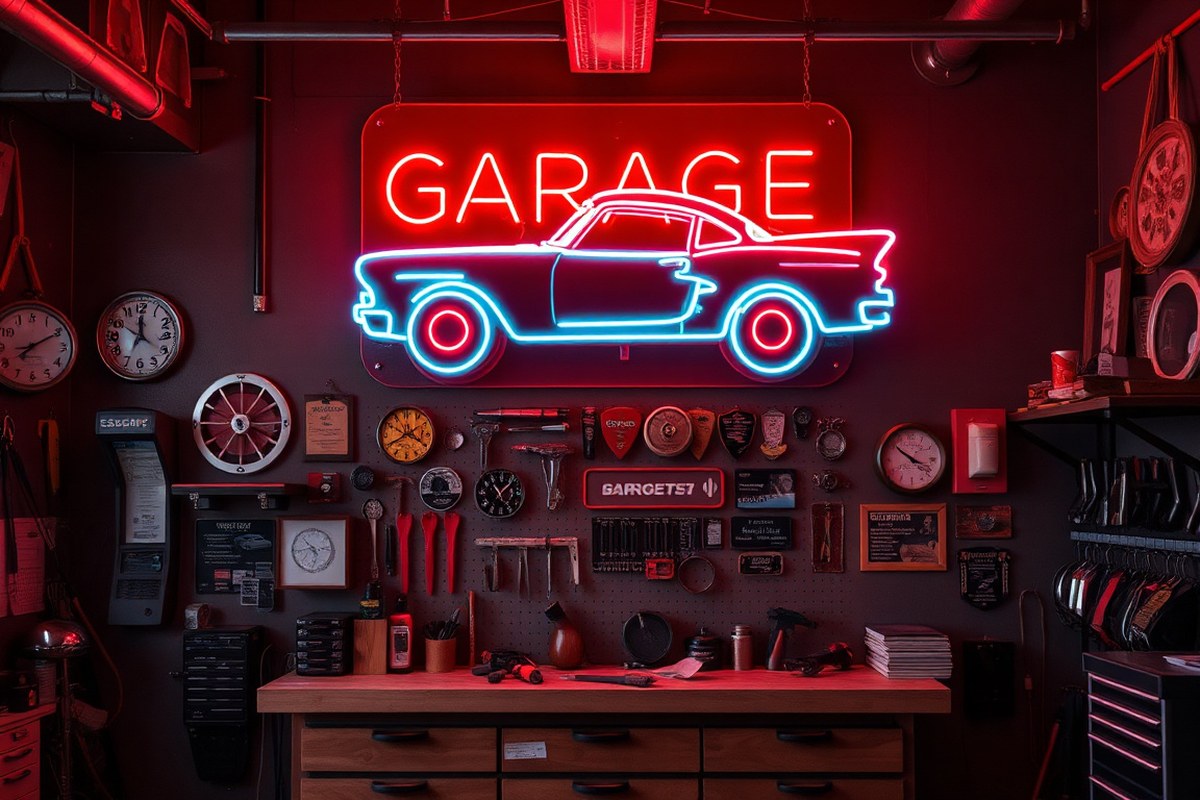
Car culture references offer plenty of creative signage ideas that resonate with automotive enthusiasts. Think of a neon-lit sign featuring a classic muscle car silhouette or a vintage license plate wall art display. These options not only add personality but also evoke nostalgia for the golden age of automobiles, tying your garage to a timeless theme. For instance, a vintage car neon wall light costs approximately $70 to $150 and sets the mood with authentic retro vibes. Combining multiple license plates from your car’s history into a framed collage turns your sign into a meaningful art piece that also tells your story.
Mixing materials is an excellent way to craft a garage sign that stands out. Start by combining metal and wood to add texture and depth. A metal car emblem mounted on a reclaimed wooden plank creates a rugged, eye-catching contrast. Alternatively, embedding LED strip lights around a painted wooden sign brings modern brightness without losing style. Materials like weatherproof metal, hardwood, and acrylic require different tools and treatment: wood should be sealed to prevent moisture damage, while metal might need anti-rust coating. These elements can increase sign cost by 20, 40% but can greatly boost longevity and appeal.
- Tool-shaped metal signs painted with automotive enamel for durability
- Neon muscle car silhouette signs for a retro look
- License plate collages mounted on wooden boards for personalized wall art
- Mixed media signs using wood, metal, and acrylic with integrated LED strips
- Repurposed car parts, like hubcaps or grill pieces, incorporated into the sign frame
- 3D embossed lettering combining metal and painted wood for tactile interest
Combining artistic design with functional elements results in unique garage signs that serve more than just decoration. For example, a sign shaped like a license plate that doubles as a key holder or hooks for tools integrates utility with style. Welded metal signs can incorporate bottle openers alongside personalized lettering, blending automotive enthusiasm with hospitality. You can create these multi-purpose signs by mounting small brackets or hooks securely to the back of a sturdy metal or wood base, keeping utility practical without compromising aesthetics. Expect to spend two to three hours crafting these if you have basic tools and materials on hand.
Always seal wooden signs and treat metal surfaces to protect your sign from garage humidity and temperature fluctuations, ensuring long-lasting display quality.
Matching Garage Signs to Different Garage Types and Functions
Selecting garage signs that fit your garage’s primary function helps you create a space that feels intentional and useful. For a professional workshop garage, choose signs with clear, functional messages such as “Authorized Personnel Only,” “Safety First,” or ones displaying workshop rules. Industrial-style metal signs add durability and a professional vibe, with prices generally ranging from $25 to $60 depending on size and customization options. These signs typically measure 12 by 18 inches, big enough to catch attention without overwhelming the wall. Use sign holders designed for metal signage to ensure they stay securely mounted even in busy work areas. Signs that communicate safety and organization support workflow and create a professional atmosphere that mechanics and clients appreciate.
A garage converted into a social hangout, like a man cave or lounge, benefits from signs that invite relaxation and reflect personal hobbies or interests. Signs with classic automotive logos, vintage gas station brands, or cheeky automotive humor work well here. Neon or LED backlit options, costing between $50 and $150, add ambiance and emphasize the theme. For example, a neon sign spelling out “Garage Hangout” or featuring a favorite car brand highlights the space as a gathering spot. Size can vary but aim for around 16 by 24 inches to serve as a focal point without dominating the room. Combine these with cozy lighting and comfortable seating to complete the mood.
Organization-focused garages require signs that promote order and workflow efficiency. Items like “Tool Zone,” “Parts Inventory,” or “Clean Up After Use” in contrasting colors help improve space management. Use durable materials like acrylic or aluminum that resist dirt and oil, common in automotive workspaces. Clear labels near storage areas reduce time spent searching for tools or parts. Cost-effective options include vinyl decals or magnetic labels for adjustable placement, typically under $20 each. When choosing the style, pick fonts that are simple to read at a glance, Avoid decorative scripts that slow comprehension.
To decide on the right sign, first clarify your garage’s primary purpose: workshop, social space, or organization hub. In professional shops, functionality and safety come first, so go for standard sizes and durable finishes. Hangout areas allow more creativity with mood lighting and personalized themes, so budget for bright, eye-catching pieces. Organization benefits from clear, readable signs close to relevant zones for efficiency; opt for interchangeable labels if your setup changes often. Avoid mixing too many styles or messages as this can confuse the space’s theme.
Good results look like a garage where signs improve daily use, mechanics find tools quicker, visitors enjoy the vibe, and the garage feels both inviting and orderly. Problems often arise when signs are too small, hard to read, or placed where they don’t support the garage’s main activities. Thinking through exact uses and picking signs accordingly assures your garage signage serves both style and function effectively.
Step-by-Step Action Plan for Installing Your Ideal Garage Sign
Follow these steps to create and display a garage sign that fits your style and space perfectly.
- Day 1: Measure your garage wall or area to determine the best size for your sign. Confirm the size fits without overpowering the space.
- Day 3: Choose the sign material based on your garage environment (metal for durability, wood for rustic looks, acrylic for modern designs). Ensure the material suits your maintenance preference.
- Day 5: Select a style and theme that reflects your automotive interests, such as vintage car logos or racing symbols. Verify it matches your garage’s function and décor.
- Week 2: Personalize your sign with your name, garage nickname, or favorite car brand. Check that the customization stands out clearly.
- Week 3: Decide on lighting options like LED backlighting or neon tubes. Test the lighting for visibility and ambiance during evening hours.
- Week 4: Install the sign securely, following safety guidelines and local regulations. Confirm it is firmly mounted and poses no hazards.
- After 6 weeks: Perform regular cleaning and inspect the sign for damages or wear. Keep it looking fresh to maintain its impact.
Frequently Asked Questions
What Are Some Creative Garage Sign Ideas Beyond Common Themes?
Consider using humor or personal car references for unique signs. Adding quirky phrases or inside jokes can make your garage sign truly one-of-a-kind and personal to your automotive interests.
How Can I Integrate Lighting into My Garage Sign for Better Visibility?
Neon and LED lights improve visibility and add style. They improve readability at night and bring an energetic vibe to your automotive space.
What Materials Resist Fading and Damage in a Garage Environment?
Aluminum and acrylic are good for durability in garages. These materials handle temperature changes and humidity better than wood or paper.
Can Garage Sale Signs Increase Traffic to My Event?
Yes, well-designed garage sale signs attract more buyers. Bold lettering and clear information help passersby quickly understand and remember your sale details.
How Do I Measure the Ideal Size for a Garage Sign Without Overcrowding the Space?
Match sign size to wall area and viewing distance. Choose a size that’s readable from the street yet proportionate to your garage’s dimensions.
What Legal Rules Apply to Placing Garage Signs Outside My Home?
Follow local ordinances on size and placement. Some municipalities restrict signs on public property or streets, so check local rules first.
The Bottom Line
Your garage sign is more than decoration, it expresses your passion and defines your space. Start with the size and material that suit your garage, then add personal touches and proper lighting. Taking these steps will ensure your garage sign captures attention and lasts for years. Begin with measuring your space today to set your project in motion.