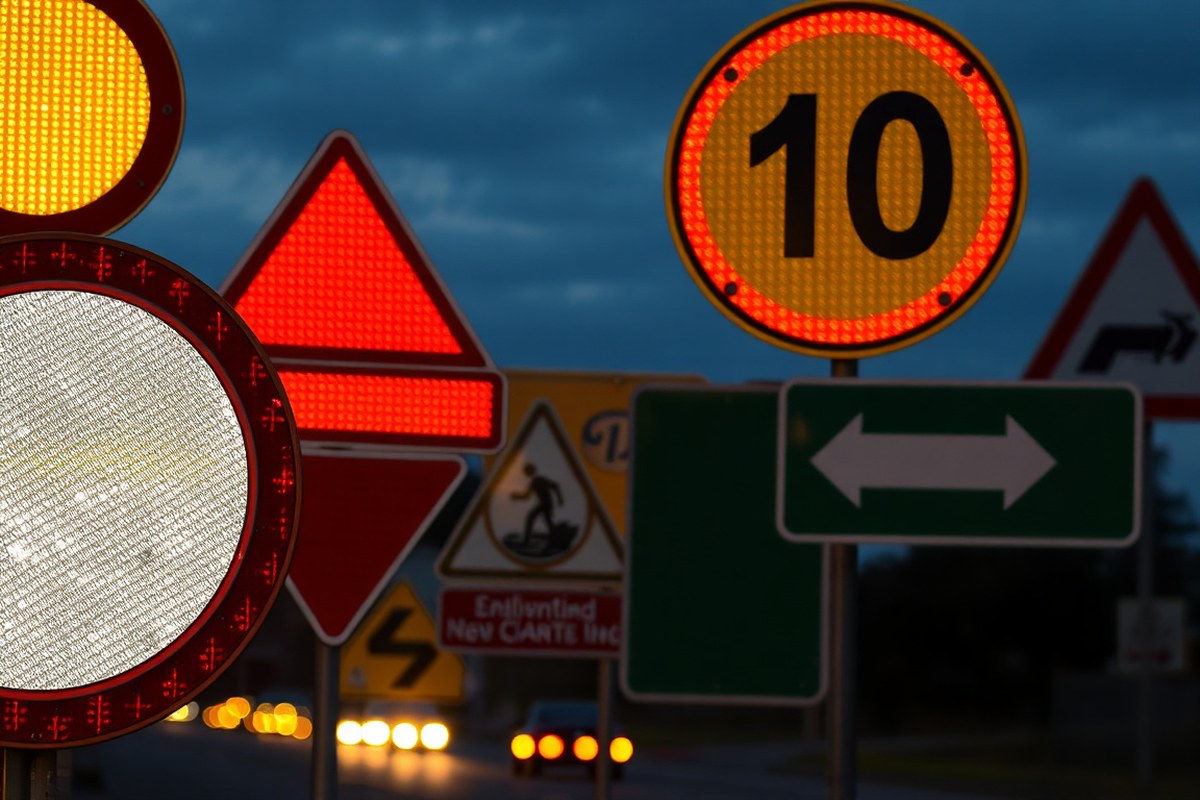
What Is Reflective Sheeting Grade: A Complete Guide to Types, Standards & Uses
What is reflective sheeting grade? It’s a classification that indicates the performance level of reflective materials used on traffic signs, based on factors like brightness, durability, and intended application. Understanding the grade helps ensure signs meet visibility requirements and safety standards for specific road conditions. Start by identifying your traffic environment to select a sheeting grade that offers the right balance of reflectivity and lifespan.
Key Takeaways
- Engineer grade sheeting (ASTM D4956 Type I) offers basic reflectivity suitable for low-speed urban roads with about 7 years durability.
- High Intensity Prismatic (HIP) sheeting emits stronger reflection, lasts 10, 12 years, and produces significantly fewer VOC emissions.
- Diamond Grade Reflective Sheeting returns nearly 60% of available light, doubling the visibility of HIP sheeting for high-speed or critical signs.
- Match sheeting grade using ASTM D4956 (Type I to XI) or EN 12899 classification (RA1, RA2, RA3) to ensure compliance and safety.
- Different grades vary in construction, from glass beads in engineer grade to full cube prismatic designs in diamond grade for maximum reflection.
- Verify quality by confirming that sheeting meets recognized standards like ASTM or EN before procurement to avoid substandard products.
What Exactly Is Reflective Sheeting Grade?
Reflective sheeting grade refers to the classification of reflective film based on its brightness, durability, and intended use in traffic signage and safety applications. These grades determine how much light the sheeting returns to drivers’ eyes, which directly impacts visibility and safety on roads. Different grades provide varying levels of reflectivity and longevity to match specific environmental and regulatory needs.
Grades exist because traffic signs demand different levels of reflectivity depending on the road type, lighting conditions, and expected sign lifespan. For example, engineering grade reflective sheeting, meeting ASTM D4956 Type I standards, uses glass bead technology to offer basic reflectivity suitable for rural roads and general traffic signs. It typically lasts about seven years and is the most cost-effective option. Conversely, diamond grade reflective sheeting delivers dramatically higher reflectivity, returning almost 60% of available light to drivers, which is roughly double that of high-intensity prismatic (HIP) sheeting. This grade supports expressways and high-speed traffic environments where improve visibility and safety are critical.
Choosing the right reflective sheeting grade involves matching the product’s performance and durability to the specific application. You must verify that the sheeting complies with standards such as ASTM D4956 or China’s GB/T 18833-2012, which categorize sheeting from engineering grade to diamond grade. Each grade uses different materials and manufacturing methods; for instance, HIP sheeting’s prismatic technology offers better reflectivity than engineering grade but costs around 20% to 30% more per square meter. Diamond grade, the most advanced, requires precise application techniques like hand rolling or mechanical laminating on aluminum substrates, ensuring secure attachment and optimal reflectivity.
Correct specification prevents common problems like insufficient brightness or premature wear. Poor-grade sheeting on high-speed roads can reduce sign visibility at night, increasing accident risks. On the other hand, specifying higher grades unnecessarily raises costs, since diamond grade sheeting can cost several times more than engineering grade. Also, the environmental impact varies; HIP sheeting produces significantly fewer volatile organic compound emissions and uses less energy than engineering grade during manufacture, an important factor for sustainable procurement policies.
Types of Reflective Sheeting Grades and Their Features

Reflective sheeting grades differ primarily in their materials and retroreflective efficiency, impacting their visibility and durability on traffic signs. The main types include Engineer Grade, High Intensity Prismatic (HIP), and Diamond Grade sheeting. Each grade uses distinct materials and construction methods that affect brightness, viewing distance, and lifespan.
Engineer Grade Reflective Sheeting
Engineer Grade sheeting, classified as ASTM D4956 Type II, generally uses retro-reflective glass bead technology embedded in a PVC vinyl layer. This grade offers basic retroreflectivity suitable for short to medium viewing distances. It typically has lower brightness and narrower viewing angles compared to prismatic sheeting but comes at a lower cost, making it common for less critical signs.
Variations in Engineer Grade sheeting focus on color options and adhesive types to suit different substrates and environments. This grade often lasts around 7 years under typical outdoor exposure but can degrade faster in harsh climates. It’s best for low-speed, low-traffic areas where maximum visibility is less critical.
High Intensity Prismatic (HIP) Sheeting
High Intensity Prismatic sheeting, meeting ASTM D4956 Type III and Type IV standards, uses microprismatic lens construction rather than glass beads. This allows it to produce 2 to 3 times more brightness than Engineer Grade sheeting, significantly increasing visibility on highways. The prismatic elements reflect light efficiently at wider viewing angles, making them effective for regulatory and warning signs on roads with higher speeds.
HIP sheeting stands out with improved durability and scratch resistance thanks to its topcoat. It typically lasts 10 to 12 years, reducing maintenance frequency. Colors range from white, yellow, red, orange, blue, green, to brown, covering most traffic sign requirements. Manufacturing HIP sheeting also involves fewer volatile organic compounds (VOCs) and lower energy use compared to Engineer Grade, offering environmental benefits.
Diamond Grade Reflective Sheeting (DG3)
Diamond Grade sheeting surpasses other grades in brightness and reflectivity with its full-cube microprismatic design, complying with ASTM Type XI standards. It delivers 2 to 4 times higher retroreflectivity than HIP sheeting, maintaining strong visibility at extreme entrance angles and long distances. This makes it essential for overhead signs, large-format signs, and locations requiring maximum attention like high-speed zones and critical intersections.
The superior retroreflective qualities of Diamond Grade come with a higher price, typically 2 to 3 times the cost per square meter of HIP sheeting, and specialized installation requirements. It offers improve durability, and its wide-angle brightness retention ensures signs remain readable under diverse lighting and weather conditions, improving overall traffic safety.
Choose Diamond Grade sheeting for high-speed or complex road environments where sign visibility is critical; using lower grades in these settings can reduce safety margins significantly.
How ASTM D4956 and EN 12899 Standards Define Sheeting Grades
ASTM D4956 and EN 12899 are key standards that define how reflective sheeting is graded for traffic safety signs. These standards provide classification systems based on retroreflective performance, durability, and intended applications. Understanding these classifications helps you select the right sheeting to meet visibility, regulatory, and environmental needs for your project.
ASTM D4956 Classification System
ASTM D4956 is a US standard categorizing reflective sheeting into types I through XI, each with defined minimum values for brightness, durability, and colorimetric performance. For example, Type I (Engineer Grade) is typically used for non-highway signs in low-speed areas like residential streets and parking lots. Type III (High-Intensity) and Type IV (Prismatic) offer higher brightness and durability, commonly used for expressway and high-speed road signs. Type IX and above correspond to even greater retroreflective performance and are suitable for high-speed highway applications. The standard also specifies testing angles and environmental conditions to ensure consistent sheeting performance over time.
The ASTM types specify minimum retroreflectivity measured in candelas per lux per square meter (cd/lx/m²) at specified observation and entrance angles, ensuring uniform visibility. These minimums guide manufacturers and buyers in matching sheeting to application needs. More reflective types cost more due to the materials and precision involved but provide longer visibility distances, essential for safety at higher speeds.
European EN 12899 RA Grades
EN 12899-1 classifies reflective sheeting in Europe by retroreflective classes RA1 and RA2, with RA1 roughly corresponding to ASTM Type I and RA2 representing a higher-performance category similar to ASTM Type III. RA1 sheeting suits supplementary or low-speed road signs, with minimum retroreflectivity adequate for close-range visibility. RA2 is about 2.5 to 3 times brighter at night, making it preferred for major roads and highways where reading signs from greater distances improves safety.
The standard sets minimum brightness in cd/lx/m² at standardized observation and entrance angles like 0.2°/−4° to replicate driver sightlines. These grades also include criteria for ageing, colour stability, and adhesion. When a product claims EN 12899 certification, it must meet these strict requirements, ensuring reliable performance in European traffic environments.
Matching ASTM and EN Grade Equivalents
While ASTM D4956 and EN 12899 serve similar purposes, their classifications do not perfectly overlap. RA1 corresponds closely to ASTM Type I, suitable for low-speed and supplementary signs. RA2 provides about 2.5 to 3 times the brightness of RA1, comparable in retroreflectivity to ASTM Type III or IV. However, an ASTM D4956 Type III product may not meet all EN 12899 RA2 criteria, especially concerning reflectivity angles. This difference means you should not assume a direct equivalence without verifying each product’s certification reports.
Other regional classifications, like Class 1 and Class 2 in Australia and parts of Asia, align more with ASTM Type IX or XI for Class 1, representing high-performance sheeting, and lower grades for Class 2. Selecting the right standard depends on project location and local regulations. To ensure compliance and optimal safety, compare the minimum retroreflectivity values and test conditions specified in the project scope with those from ASTM D4956 or EN 12899. Documentation from manufacturers will state exactly which types or classes their sheeting meets, allowing you to match grade choices precisely.
Comparing Reflectivity, Visibility, and Durability of Sheeting Grades
Reflective sheeting grades vary in brightness, visibility distance, and outdoor durability, which influence their application in different traffic environments. Higher grades offer greater brightness, making them suitable for high-speed roads where drivers need to see signs from farther away. Durability hinges on environmental factors such as UV exposure, temperature variations, and moisture, affecting the sheeting’s lifespan and maintenance needs.
The brightness of reflective sheeting is measured by its retroreflective coefficient, which determines how much light vehicle headlights bounce back towards the driver. For critical road signs on expressways and highways, the highest-grade sheeting provides superior reflectivity, improving nighttime visibility at longer distances. Lower grades meet requirements for slower speed zones like rural roads or local streets.
| Sheeting Grade | Typical Brightness (cd/lx/m²) | Visibility Distance | Typical Outdoor Durability | Common Use Cases |
|---|---|---|---|---|
| High Grade (e.g., 3M High-Intensity) | 700, 1200 | Up to 1000 ft (305 m) | 7+ years | Expressway directional signs, high-speed roads |
| Medium Grade | 400, 700 | 600, 900 ft (183, 275 m) | 5, 7 years | Rural roads, general traffic signage |
| Standard Grade | 150, 400 | 300, 600 ft (91, 183 m) | 3, 5 years | Local streets, commercial signs |
Outdoor durability often depends on the installation climate. Significantly hot or cold regions may require grades with UV stabilizers or thicker protective layers to resist cracking and fading. The typical lifespan around 7 years applies mostly to medium and high-grade sheeting under moderate climates. Signs exposed to harsher environments may need more frequent replacement or specialized sheeting designed for extreme conditions.
Reflective sheeting rolls usually come in 1.22 meters wide by 45 meters long, allowing flexibility in sign size and shape. For printed reflective graphics, such as logos requiring bright colors and reflectivity, printable sheeting faces like the APR100 in the APM series offer durable performance with a thickness around 190 microns and published outdoor ratings that meet many traffic standards.
Choosing the right reflective sheeting grade involves balancing required visibility distances for road speeds against budget and environmental demands. Using too low a grade on high-speed highways can reduce driver reaction times, while over-specifying grades on low-speed roads raises costs without significant benefit. Regular inspections help identify signs losing reflectivity before visibility deteriorates significantly.
Practical Applications of Different Reflective Sheeting Grades
Engineer Grade reflective sheeting works best for standard street signs and traffic control that do not require extreme brightness or wide viewing angles. It offers adequate reflectivity for typical city streets and suburban roads where drivers encounter signs at moderate speeds and distances. Using Engineer Grade keeps costs lower while delivering reliable daytime visibility and nighttime reflection for regulatory, warning, and guide signs installed on aluminum plates.
High-Intensity Prismatic (HIP) and Diamond Grade sheeting suit situations with challenging visibility demands. HIP sheeting applies well to more permanent traffic signs and construction zone devices. It’s available in multiple colors such as white, yellow, and orange, which meet color requirements for different warning and regulatory signs. HIP sheeting’s non-metalized microprismatic lens improve brightness and durability, making it ideal for long-term outdoor use in places where signs need to stand out clearly under varying weather and lighting conditions.
Always confirm that vehicle conspicuity tape complies with FMVSS 108 or ECE R104 regulations to ensure legal and effective marking.
Diamond Grade sheeting, using full cube microprismatic technology, is the choice for overhead and large signs on highways and freeways. It is 6 to 10 times brighter than Engineer Grade, with superior visibility at oblique angles. This grade works well where extra reflectivity and wide-angle performance improve safety in high-speed traffic environments. Emergency vehicle markings and trailers that require maximum conspicuity also benefit from Diamond Grade.
For vehicle markings and construction zones, reflective sheeting serves specific needs. Vehicle conspicuity tape must meet strict regulations in the US (FMVSS 108) and Europe (ECE R104) to ensure they are sufficiently visible to prevent collisions. Work zone devices like barricades, cones, and barrels commonly use HIP reflective sheeting because of its color versatility and improve brightness. This sheeting improves worker safety by making equipment visible during day and night.
- Standard street signs use Engineer Grade for cost-effective visibility
- Permanent road signs and construction devices benefit from HIP sheeting’s brightness and color options
- Diamond Grade suits large overhead or freeway signs needing maximum reflectivity
- Trucks and trailers require certificated conspicuity tape for legal road marking
- Work zone cones and barricades use HIP sheeting for durable, high-visibility warning
Choosing the right reflective sheeting grade depends on application specifics like traffic speed, viewing distance, environmental exposure, and legal requirements. Proper installation on aluminum backing and correct positioning maximize the effectiveness of the selected grade. Costs vary, with Engineer Grade being the least expensive and Diamond Grade the highest, reflecting performance differences that directly impact safety outcomes.
Understanding Class 1, Class 2, RA1, and RA2 Sign Differences
Class 1 and Class 2 signs differ mainly in brightness and intended placement, while RA1 and RA2 grades describe specific types of reflective sheeting with distinct retroreflective properties. Class 1 signs are designed for locations with less demanding visibility needs, while Class 2 signs offer higher brightness to improve visibility on higher-speed roads or lower-light environments. RA1 and RA2 reflectivity ratings correspond to particular brightness levels within those classes, affecting how well signs perform at night.
Class 1 vs Class 2 Sign Criteria
Class 1 signs are typically used in urban or suburban areas where vehicle speeds are lower. They provide moderate brightness sufficient for drivers to see the sign clearly under normal nighttime conditions. Class 2 signs, in contrast, must deliver at least twice the minimum reflectivity of Class 1 signs, making them suitable for highways and other locations where vehicles travel faster and require earlier recognition of signs.
The main difference lies in the minimum reflective brightness, measured in candelas per lux per square meter (cd/lx/m²). Class 1 signs have a minimum brightness around 100 cd/lx/m², while Class 2 signs start at about 200 cd/lx/m². Many state departments of transportation specify Class 2 as the minimum grade for regulatory and warning signs on state highways due to these brightness requirements.
RA1 vs RA2 Reflective Sheeting Explained
RA1 and RA2 refer to specific ASTM D4956 Type I and Type II sheeting classifications that correlate closely with Class 1 and Class 2 sign brightness. RA1 sheeting corresponds roughly to Class 1, offering a minimum brightness suited for low-speed roads and typical urban conditions. RA2 sheeting matches Class 2 requirements by providing about twice the brightness of RA1, useful for high-speed roads where longer recognition distance is critical.
The distinguishing factor is how retroreflective elements within the sheeting are engineered. RA1 sheets use a less dense microprismatic or glass bead array, delivering sufficient reflectivity at shorter distances or lower observation angles. RA2 sheeting includes higher-quality prismatic elements or more densely packed retroreflective beads, intensifying brightness and improving visibility across a broader range of conditions.
Practical Impact on Nighttime Visibility
Higher brightness levels in Class 2 signs with RA2 sheeting extend the visible range, allowing drivers to detect and interpret signs earlier, which is important on high-speed roads. This earlier recognition reduces reaction times and improves safety. The reflectivity difference between Class 1/RA1 and Class 2/RA2 is most noticeable at night and in adverse weather conditions where illumination is limited.
Choosing the correct class and sheeting grade depends on the specific roadway environment and traffic speed. For signs installed in urban settings with lower speeds and more street lighting, Class 1 with RA1 sheeting is often sufficient and more cost-effective. Class 2 with RA2 sheeting entails higher upfront costs, sometimes 20 to 30 percent more, but provides critical benefits for highways, where driver safety justifies the investment.
Poorly matched grades can cause visibility problems. Using Class 1 signs with RA1 sheeting on high-speed roads may result in signs that appear dim or hard to read at night, increasing crash risk. Conversely, over-specifying grade can inflate expenses without significant safety gains in low-speed areas. Departments of transportation usually set minimum grade standards tailored to these conditions to balance safety and budget considerations.
How to Verify Quality and Suitability Before Buying Reflective Sheeting
Verifying the quality and suitability of reflective sheeting before purchase involves several critical steps. Start by checking the product’s data sheet for ASTM D4956 or EN 12899 type designations. These standards confirm the sheeting meets minimum retroreflective and durability requirements and specify the grade, such as RA1 or RA2. Knowing the exact classification ensures you choose a product suitable for your application and environmental conditions.
Next, request third-party retroreflectivity test results performed at standard observation conditions: an observation angle of 0.2° and an entrance angle of −4°. These measurements gauge how effectively the sheeting reflects light back to drivers, indicating visibility. Look for consistent values that meet or exceed the requirements for the grade you need. Products lacking this data or showing low reflectivity can compromise safety.
Durability is essential for long-term performance. Ask for accelerated weathering data, which simulates sunlight, temperature, and moisture exposure over years within a few months. Typical tests involve 1000 hours or more of UV exposure at temperatures around 60 to 75 °C. Confirm the sheeting retains key properties like brightness, color, and adhesive strength after weathering. Lower-quality sheeting may degrade in reflectivity or peel prematurely, raising replacement costs.
Adhesion testing should mimic your sign substrates. Conduct a peel test by applying a sample piece to the actual surface and letting it cure 24 to 48 hours under recommended conditions, usually at 70 to 80 °F with controlled humidity. Then peel at a steady speed and force; it should resist peeling and leave no residue. Weak adhesion or bubbling signals incompatibility or preparation issues. Field tests under realistic conditions offer the best assurance of durability on your signs.
- Confirm ASTM or EN type on product data sheet
- Request third-party retroreflectivity test results at 0.2° observation and −4° entrance angles
- Obtain accelerated weathering test data showing sustained performance after 1000+ hours UV exposure
- Perform adhesion peel tests on your exact sign substrates after 24, 48 hours curing
- Inspect for uniform colour, consistent thickness, and absence of surface defects
- Verify manufacturer reputation and warranty terms
Checking for visible defects and consistency in colour and thickness can also reveal manufacturing flaws before purchase. Brands with extensive industry experience and third-party certifications often provide more reliable products. Overall, demand detailed, relevant test data and conduct practical adhesion trials to ensure the sheeting matches your performance and longevity requirements. Spending time on these checks helps avoid costly failures in the field and supports safer road sign installation.
Cost, Environmental Impact, and Installation Considerations by Grade
Reflective sheeting grades vary widely in cost, environmental impact, and installation complexity, directly affecting project budgets and timelines. Lower grades like ASTM Type I or EN Class 1 typically cost less, around $10 to $20 per square foot, as they use simpler materials and manufacturing processes. Higher grades such as Type IV or EN Class 3, which offer superior reflectivity and durability, can rise to $40 or more per square foot. You pay more for longer lifespan and better visibility, which can reduce maintenance costs and replacement frequency on roads with heavy traffic.
Manufacturing processes also affect environmental impact. Lower-grade sheeting often uses more basic glass bead technology, consuming less energy during production, resulting in a slightly smaller carbon footprint. Higher-grade microprismatic sheeting demands cleaner raw materials and advanced manufacturing controls, which may increase energy input but often uses fewer toxic chemicals. Some manufacturers now employ green practices like solvent-free adhesives and recycled content to reduce pollution and waste. For procurement, ask suppliers about certifications or eco-labels that document sustainable manufacturing.
Installation challenges grow with the sheet’s complexity. Basic grades are more forgiving and easier to cut and fit, requiring standard tools and adhesives with typical cure times of 24 hours at 70°F. Premium reflective sheeting often needs precise temperature and humidity control during installation to ensure adhesion and avoid bubbling or peeling. Specialized primers or heat application may be necessary. For projects in cold climates, allow extra drying time or use heated adhesive systems to maintain performance. Installation mistakes on high-grade materials can lead to costly rework and reduced sign life. A comparison table clarifies tradeoffs:
| Grade | Cost per sq ft | Environmental Impact | Installation Complexity |
|---|---|---|---|
| Type I / Class 1 | $10 – $20 | Lower energy use, basic materials | Simple, standard tools |
| Type III / Class 2 | $20 – $30 | Moderate energy, some advanced chemicals | Requires controlled environment |
| Type IV / Class 3 | $30 – $40+ | Higher energy, cleaner tech possible | Special adhesives, precise conditions |
Choose lower grades for temporary signs, low-speed local roads, or tight budgets. Invest in mid to high grades for highways, critical safety zones, or long-term infrastructure where durability and retroreflectivity reduce future costs. Plan installation for proper environmental conditions and allocate extra labor resources for premium sheeting. These steps prevent common issues like adhesion failure, fading, or cracking, which degrade sign visibility and safety.
Allow reflective sheeting to acclimate in the installation environment for at least 24 hours before application to avoid defects caused by temperature and humidity changes.
Step-by-Step Action Plan for Selecting the Right Reflective Sheeting Grade
Follow this plan to choose and verify the best reflective sheeting grade for your traffic safety project with confidence.
- Before you start: Review your project’s visibility needs and local regulations to narrow down suitable sheeting grades. Confirm which standards apply to your location.
- Day 1: Request sample sheets from manufacturers for Class 1, Class 2, RA1, and RA2 to directly compare reflectivity and durability under expected conditions.
- Week 1: Test samples on-site using a retroreflectometer if available or arrange a professional inspection to verify compliance with ASTM D4956 or EN 12899.
- Week 2: Evaluate installation requirements for each grade, considering environmental impact and material handling instructions to plan your workflow effectively.
- Week 3: Compare costs against lifespan and expected maintenance intervals to select a grade that balances budget and performance.
- After purchase: Inspect received materials for quality marks and batch consistency before installation begins.
- Post-installation: Schedule periodic inspections to monitor retroreflective performance and plan for replacement ahead of performance decline.
Frequently Asked Questions
What Is Reflective Sheeting Grade?
Reflective sheeting grade classifies traffic sign materials by brightness, durability, and intended use. Grades help you select the right sheeting based on visibility needs and longevity requirements in different environments.
What Is the Difference Between EGP and HIP Reflective Sheeting?
EGP uses glass beads and meets Type I standards, offering about 7 years durability. HIP uses prismatic tech, reflecting more light, lasting around 10 years with better scratch resistance. HIP also has a greener manufacturing process with fewer VOC emissions.
What Is Retro Reflective Sheeting?
Retro reflective sheeting returns light back toward the source, improving nighttime visibility of signs and markings. This property is important for traffic safety because it improve driver response under low-light conditions.
What Are Some Good Reflective Materials?
Common good materials include Engineering Grade, High Intensity Prismatic, Super High Intensity, and Diamond Grade sheeting. Each offers different brightness and durability levels suited to various traffic control needs.
What Is the Difference Between Class 1 and Class 2 Reflective Signs?
Class 1 signs typically use Engineer Grade sheeting for lower-speed, rural areas, while Class 2 signs use High Intensity Prismatic materials suited for higher-speed, urban roads, offering increased reflectivity and lifespan.
How Much Light Does Diamond Grade Reflective Sheeting Reflect Compared to HIP?
Diamond Grade Reflective Sheeting can return almost 60% of available light, roughly twice the reflectivity of HIP sheeting, making it ideal for high visibility needs on expressways and critical signage.
Wrapping Up
Choosing the proper reflective sheeting grade ensures your traffic safety signs remain visible and durable throughout their intended lifespan. Verify quality against recognized standards before buying, and match your selection to specific project needs for best results. Start by requesting samples and reviewing your local requirements to make an informed choice today.