Purple Paint No Trespassing Law Explained: Complete Guide with State Rules & Penalties
Purple paint laws let landowners mark their property limits using a distinct color instead of traditional no trespassing signs. Purple is an effective choice since it does not commonly occur in nature, making it clearly visible and helping keep people from unknowingly entering private land. To comply, you must paint vertical marks at least 8 inches tall and 1 inch wide on trees or posts around your property’s edges.
Key Takeaways
- Use vertical purple paint lines at least 8 inches by 1 inch on trees or posts to mark your property legally.
- Space paint marks no more than 100 feet apart, or as your state law requires, to ensure clear boundary visibility.
- Renew purple paint markings regularly, such as every 12 months in Illinois, to keep your no trespassing notice valid.
- More than 20 states accept purple paint as an official marker for no trespassing, providing a legal alternative that often performs as well as traditional signage.
- Choose purple paint marking in areas where signs are likely to fade, get torn down, or be overlooked.
- In open land with few trees, some states allow wider spacing of up to 1,000 feet between paint marks.
What Is the Purple Paint No Trespassing Law?
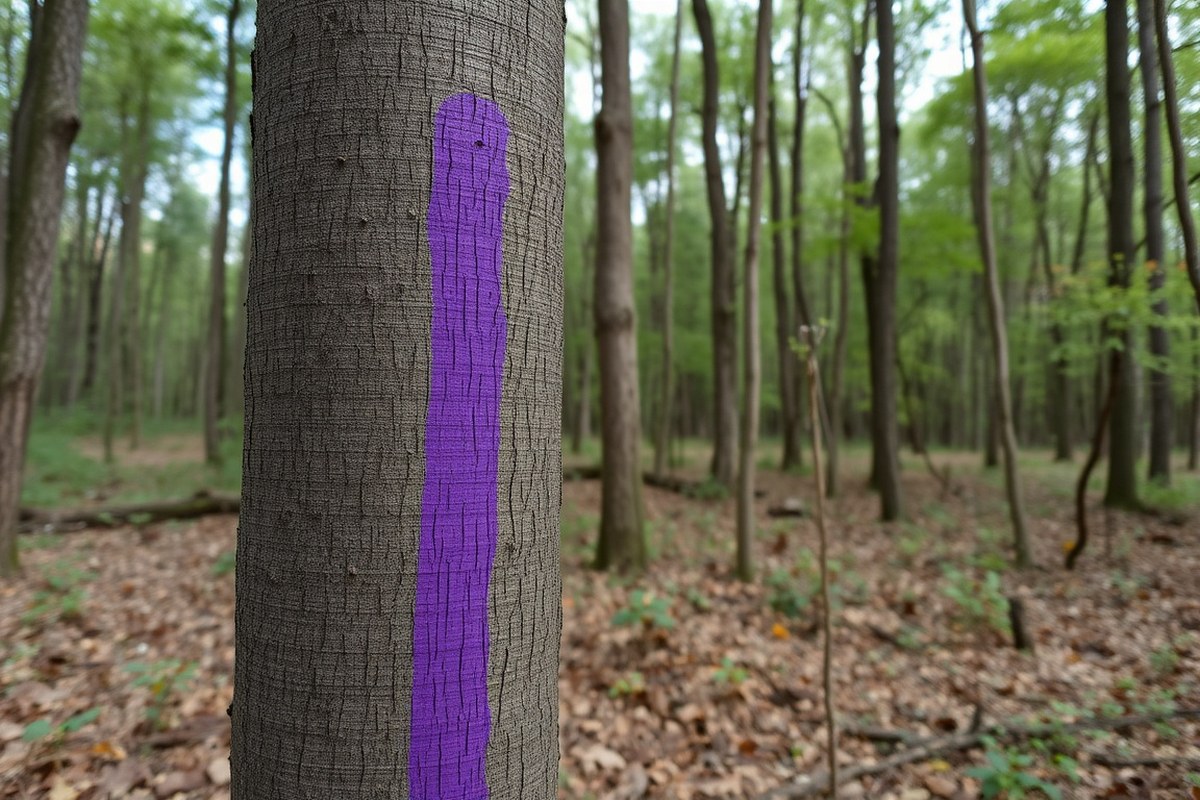
The purple paint no trespassing law allows landowners in certain states to mark their property boundaries with vertical stripes of purple paint as legal notice that trespassing is prohibited. These purple marks on trees or fence posts act as a substitute for traditional “No Trespassing” signs, which can be damaged, removed, or overlooked. By applying these distinctive purple paint marks, property owners provide clear, visible warning to anyone approaching their land that entry without permission is forbidden.
Texas was among the first to propose this method nearly 30 years ago in response to common problems with conventional signs. Signs often fade, get torn down by weather or vandals, or simply go unnoticed, making enforcement challenging. Purple paint was chosen because it is a rare color in natural settings and remains visible over time. Even people who have color blindness can typically recognize the unique purple hue, which improve its effectiveness as a boundary marker.
The law requires landowners to apply vertical stripes of purple paint that are approximately 8 inches long and 1 inch wide, positioned between 3 and 5 feet above ground level. These marks must be spaced no more than 100 feet apart along the property line to provide continuous and conspicuous evidence of the boundary. By following these specifications, the paint marks serve as a legally recognized signal equivalent to written “No Trespassing” signs.
Replacing traditional signs with purple paint can reduce maintenance and costs for landowners. Unlike signs, paint cannot be easily stolen or blown away during storms. Applying the paint typically requires purchasing outdoor-rated purple paint, which costs roughly $10 to $20 per quart depending on brand and durability. A quart covers a large number of marks, so this method becomes economical for large or wooded properties where many signs would be needed.
In states that recognize the purple paint law, currently about 22, including Alabama, Arkansas, Florida, North Carolina, and Texas, these purple stripes have the same legal weight as posted “No Trespassing” signs. Trespassing on property marked with purple paint can lead to enforcement actions or legal penalties. However, in states without such laws, purple paint alone may not provide adequate legal notice, and property owners should still rely on conventional signage or fencing.
By using purple paint, landowners benefit from a simple, durable, and legally enforceable way to communicate property boundaries. The paint marks stay visible year-round, require less upkeep than signs, and help deter unwanted visitors effectively. For hunters, hikers, and others navigating rural areas, spotting purple paint on nearby trees or fence posts indicates a clear boundary where permission is required to enter.
How Purple Paint Laws Work to Mark Property Boundaries
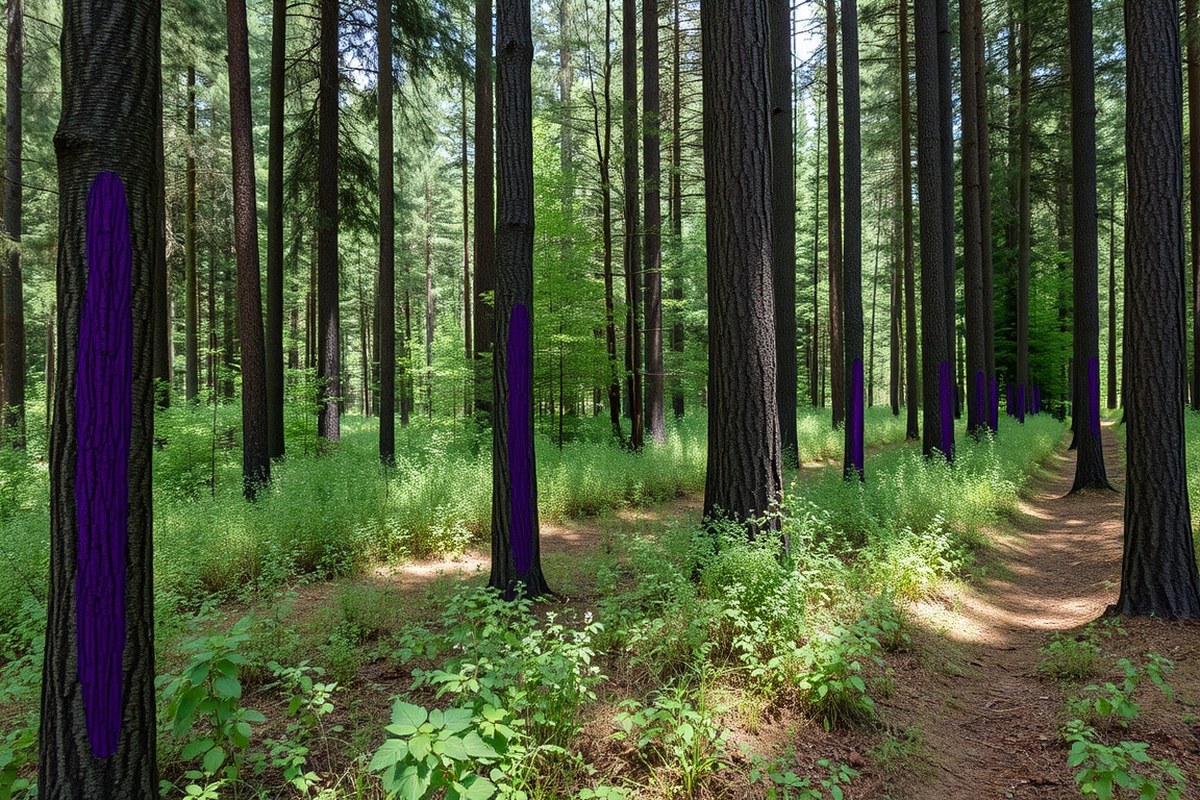
Proper use of purple paint marks involves applying vertical lines on trees or posts at specific dimensions, heights, and intervals to clearly indicate property boundaries. The paint acts as a legal no trespassing notice when maintained according to state rules. Landowners must follow exact measurements and placement rules to ensure the marks are valid and effective.
Required Paint Mark Dimensions
Most laws about purple paint mandate vertical lines that measure at least eight inches tall and one inch wide. Such sizes help make sure anyone near the land can clearly see the marks. The paint must form a solid patch instead of a narrow stripe to stay visible longer.
Using high-quality exterior paint designed to withstand weather helps keep the marks crisp and legible. Applying the paint in one continuous stroke or closely spaced strokes will produce a uniform mark with the proper width. Avoid splattering or uneven lines that may look like graffiti or accidental markings.
Authorized Placement and Spacing
Paint marks must be placed at about chest height, usually between 4 and 5 feet off the ground, on trees or posts that border the property. This height ensures visibility to walkers or drivers and prevents marks from being obscured by low brush or snow. Trees and posts should be part of the property line and spaced to cover the boundary clearly.
Spacing requirements vary by state but generally, paint marks should be no more than 100 feet apart, with some states requiring intervals closer than 25 yards (75 feet). Keeping consistent spacing prevents gaps that could confuse trespassers or reduce the warning’s legal validity.
- Paint marks: vertical lines at least 8 inches long, 1 inch wide
- Height: roughly 4 to 5 feet from ground level
- Placement: on trees or posts exactly on property boundary
- Spacing: no more than 100 feet apart, often closer
- Use weather-resistant purple exterior paint
- Apply marks clearly and uniformly in one stroke
Proper placement and spacing create a continuous visual barrier along your property, legally signaling no trespassing in purple paint law states.
Maintenance and Renewal Guidelines
Keeping purple paint marks visible requires regular inspection and touch-ups. Exposure to sun, rain, snow, and wind will cause fading or peeling over time, especially in harsh climates. Ideally, check the boundary paint before and after winter seasons.
Repainting every 1 to 2 years is common to ensure compliance and maintain strong visibility. For heavily trafficked boundaries or places with rough terrain, more frequent touch-ups may be necessary. Neglecting paint marks could weaken legal protections if the notices become unreadable or disappear.
Check legal requirements for repainting intervals in your state and document maintenance to support enforcement if trespassing occurs.
Which States Recognize Purple Paint as Legal No Trespassing Notice?
More than 20 states have enacted laws recognizing purple paint as a legal no trespassing marker. These laws allow landowners to mark their property boundaries with specific purple paint markings instead of traditional no trespassing signs. Each state has its own rules governing the size, placement, and meaning of these marks.
States with Official Purple Paint Laws
States like Arkansas, Arizona, Florida, Illinois, Kansas, Maine, Minnesota, Missouri, Montana, North Carolina, Oklahoma, Tennessee, Texas, and Washington have passed laws allowing purple paint to indicate no trespassing areas. Texas was the pioneer in 1993, with many states adopting similar rules since. In these regions, purple paint applied to a tree, fence, or post communicates restrictions equivalent to no trespassing signs, often banning hunting, solicitation, and other unauthorized activities. Landowners in these states must follow specific regulations to ensure the paint marks are legally enforceable, reflecting the state’s interpretation of trespass laws related to purple paint.
Variations in Paint Color Across States
While purple is the most common designated color for marking no trespassing boundaries, some states use slight variations in shade or include additional colors alongside purple. The emphasis on purple paint derives from its high visibility and distinctiveness, reducing confusion with natural tree colors or other paint markings used for forestry or mapping purposes. States that recognize paint marks as trespassing notices typically limit the legal protection to purple paint only, while other paint colors like red or white often do not carry the same legal weight for no trespassing purposes unless specified by state law.
Key Differences in State Requirements
Although most purple paint laws share the core idea of using a colored stripe or mark to signal private property boundaries, state requirements vary on specific details such as the dimensions and spacing of marks and whether additional signage is required. For example, many states require paint marks to be vertical rectangles between 8 to 12 inches in height, placed 3 to 5 feet above ground level on trees or posts.
Some states mandate maintaining the paint marks at intervals of 100 to 200 feet along the property boundary to provide continuous notice, while others specify a minimum number of marks depending on the length of the boundary. Failure to comply with these specifications can lead to challenges in enforcing trespassing laws based on the purple paint marks. Costs for implementing purple paint marking are generally low, consisting mainly of the expense for durable exterior paint and periodic repainting every few years to maintain visibility.
| State | Year Law Enacted | Mark Size (inches) | Height Above Ground (feet) | Mark Interval (feet) | Additional Sign Required |
|---|---|---|---|---|---|
| Texas | 1993 | 8 to 12 vertical | 3 to 5 | 100 | No |
| Arkansas | 2016 | 8 vertical | 3 to 5 | 200 | No |
| North Carolina | 2008 | 8 to 10 vertical | 3.5 to 5 | 100 | Optional |
| Florida | 2019 | 8 vertical | 3 to 5 | 200 | No |
| Maine | 2010 | 10 vertical | 4 to 6 | 150 | No |
The variations in these requirements reflect local priorities and landscape challenges. Landowners should review their state’s specific guidelines to apply purple paint markings correctly and maintain them as required to ensure the markings remain effective legal boundaries.
Legal Consequences of Violating Purple Paint Boundaries
Violating purple paint boundaries typically leads to legal penalties including fines, possible jail time, and civil liability. These consequences vary by state but generally arise from trespassing laws that recognize purple paint markings as a legally valid notice that you are entering private property. The law treats such markings much like a “no trespassing” sign, so crossing into purple-painted areas without permission can be considered criminal trespassing.
Fines for purple paint trespassing depend on the state and circumstances but can range from several hundred to thousands of dollars. Some states impose misdemeanor charges that include jail time, especially if the violation happens repeatedly or involves other illegal actions such as hunting, fishing, vandalism, or theft on the marked property. For instance, Texas law equates purple paint markings with official “no hunting, fishing, or trapping” notices, so entering without authorization can lead to both criminal penalties and restrictions on those activities.
Criminal trespassing charges apply when crossing a property clearly marked with purple paint signals landowners’ intent to keep trespassers out. However, the consequences are not only criminal. Civil liability may arise if damage is caused while trespassing, allowing landowners to seek monetary compensation in court. This means you could face separate legal action beyond criminal fines or imprisonment.
Understanding that purple paint boundaries indicate restricted access is important, especially for hunters, hikers, or anyone moving through rural or wooded areas. The law does not just stop unauthorized entry; it often prohibits hunting, fishing, or trapping on those lands without permission. Violating these hunting restrictions can increase penalties significantly, sometimes leading to stiffer fines and longer jail terms. Being unaware of the purple paint’s legal meaning is not a valid defense, so you should always observe these markings and respect private property rights.
Penalties may escalate if violators damage property or ignore repeated warnings. In states with combined purple paint and trespassing laws, law enforcement takes violations seriously. In some cases, a first offense results in a warning or fine, while subsequent offenses lead to harsher penalties. Always seek explicit permission before crossing property marked with purple paint. Walking across without that consent risks criminal charges and civil consequences that could involve court appearances, legal fees, and substantial financial costs.
Differences Between Purple Paint and Other Trespassing Marking Methods
Using purple paint to mark no trespassing areas offers a simple and cost-effective alternative to traditional signs. Purple paint marks are generally vertical lines at least eight inches long, applied between three and five feet above ground level on trees or posts. This marking method is designed for visibility while reducing the risk of vandalism or theft that signs can face. Traditional signs often cost $10 to $15 each, require installation hardware, and may need replacement due to weather damage or theft. Paint marks require minimal materials and no hardware, making them less expensive and easier to maintain over time.
While purple paint is common in states like Missouri and Oklahoma, other states use different colors or require signs in specific conditions. Some states adhere only to signs or combine paint with signs to meet legal requirements. For example, Maryland allows posting against trespassing with either visible signs or qualified paint marks. The paint must meet specific size and placement rules to be valid. In many cases, paint alone is sufficient, but if the terrain is open or the boundary line lacks trees or posts to paint, signs become necessary to ensure the boundary is clearly marked.
Several states have adopted purple paint laws to streamline property posting. Others rely on traditional sign posting, with various paint colors sometimes used informally but without the same legal weight. The table below compares states where purple paint is recognized as legal no trespassing notice with those using other posting conventions.
| State | Legal Posting Method | Paint Color Used |
|---|---|---|
| Missouri | Purple paint or signs | Purple |
| Oklahoma | Purple paint or signs | Purple |
| Maine | Purple paint or signs | Purple |
| North Carolina | Purple paint or signs | Purple |
| Maryland | Visible signs or qualifying paint marks | Not specified (paint must be qualified) |
| Arizona | Purple paint or signs | Purple |
| Illinois | Purple paint or signs | Purple |
| South Carolina | Purple paint or signs | Purple |
Consistency and visibility of the marking method matter most. Paint works best where trees or posts are strategically positioned along the property line. In open areas or where vegetation is sparse, clear no trespassing signs remain necessary. Mixing both methods can improve boundary clarity, reducing disputes and misunderstandings. Proper application includes painting vertical lines at least eight inches tall, placed between three and five feet above ground, in locations easily seen from the approach side. This precise method is often specified in state regulations to ensure legal recognition.
Make sure purple paint marks are spaced consistently and placed where they are easily visible from common access points to avoid disputes over trespassing.
Best Practices for Landowners Using Purple Paint to Post Property
Applying purple paint to mark your property boundaries requires careful attention to your state’s legal requirements and proper application techniques. You need the right paint, the correct tools, and a clear plan for where to place the marks. Regular maintenance is essential to keep the markings visible and legally valid.
Choosing the Right Paint and Tools
Select paint specifically labeled for outdoor use and designed to withstand weather conditions where you live. The paint must be a shade of purple compliant with your state’s specification, often described as a bright or royal purple that contrasts well with natural backgrounds. Use paint suitable for rough surfaces like tree bark or wooden posts.
Typical equipment includes a paint pad or brush for making vertical stripes, gloves to protect your hands, and clean water or a solvent to wash up afterward. Using a measuring tape or ruler helps you create marks that are the proper size, usually no shorter than 8 inches in length and at least 1 inch in width.
Applying Marks According to State Law
Proper application is critical for the marks to serve as an official no trespassing notice. Most laws require vertical lines painted on trees or posts with clear dimensions and specific spacing between marks. Marks must be visible from common entry points such as trails, paths, or bordering roads.
The standard dimensions call for lines at least 8 inches tall and 1 inch wide. Placement should be between 3 and 5 feet above the ground for easy visibility. Spacing between marks typically ranges from 100 to 200 feet along the boundary, but check your state’s code for exact distances.
- Inspect your property lines using a survey map or professional survey to identify where marks are needed.
- Gather required supplies: purple outdoor paint, brush or paint pad, measuring tape, gloves.
- Clear dirt, moss, or loose bark from trees or posts to ensure paint adheres well.
- Use the measuring tape to mark the height for painting between 3 and 5 feet above ground level.
- Paint vertical purple stripes at every marker tree or post, ensuring each stripe measures at least 8 inches tall and 1 inch wide.
- Maintain consistent spacing, typically every 100 to 200 feet along the boundary line.
- Allow paint to dry fully before exposure to weather or handling.
- Document the marked boundaries with photos or GPS coordinates to support legal compliance.
Maintaining and Documenting Marks Annually
Over time, weather, sun exposure, and vegetation growth can fade or obscure purple paint marks. Inspect your property lines at least once a year, preferably in early spring or after winter snow melts when marks are more likely to be damaged or covered.
Touch up faded lines by repainting with fresh purple paint following the initial size and spacing rules. Remove branches or brush that block visibility. Keep a log of inspection dates and photo evidence showing the condition of your marks to document compliance. This can be useful if boundary disputes arise or for proof during legal proceedings.
Common Mistakes and How to Avoid Them with Purple Paint Marks
Landowners often underestimate the importance of proper placement and upkeep when using purple paint to mark no trespassing boundaries. Incorrect spacing of paint marks can cause confusion and weaken the legal standing of the boundary. Marks that are too far apart or inconsistently applied may not clearly indicate where the property line runs, allowing potential trespassers to argue they were not properly warned.
Visibility is another frequent issue. Faded or weather-worn purple paint loses its effectiveness, making it harder for passersby to see and respect the boundaries. Depending on environmental conditions, paint can fade within one to three years. Sunlight, rain, and temperature changes near 0°F or above 90°F accelerate this process. Leaving marks without regular inspection and refreshment risks invalidating the notice.
Maintenance affects both safety and compliance. Overgrown vegetation, damaged trees, or snow and debris covering marks reduce their visibility and legal validity. Landowners who neglect clearing brushing or removing obstacles that obscure the paint undermine their protection. Also, painting on unsuitable surfaces, like smooth metal or unstable bark, can cause the paint to peel or wash off prematurely.
- Apply paint marks on trees or posts at eye level, between 3 and 5 feet high.
- Space each purple mark between 50 to 100 feet apart, depending on land use and public access.
- Inspect paint marks annually and repaint within 1 to 3 years, or sooner if fading is noticeable.
- Clear brush and debris around marks at least once a year to ensure visibility.
- Use quality exterior-grade purple paint designed for outdoor forestry or fence marking.
- Avoid painting on surfaces prone to rapid wear, such as smooth metal, thin bark, or rotting wood.
- Document your marking efforts, including dates and locations, to support legal enforcement if needed.
Consistent placement following these spacing and height guidelines ensures the paint functions as a clear legal signal. Regular maintenance preserves the paint’s visibility through changing seasons and weather patterns. Using durable, outdoor-grade paint costs about $15 to $30 per quart but lasts longer than cheaper options, offsetting the investment over time. Proper documentation adds an extra layer of protection, showing you actively maintain the boundary warnings.
Failing to take these steps can result in disputes and weaken your ability to enforce your property rights. Landowners must commit to a routine schedule for checking purple paint marks, fixing gaps, covering missed spots, and repainting faded lines. This approach prevents ambiguity and upholds the no trespassing notice conveyed by the purple paint law.
How Weather and Environment Affect Purple Paint Visibility and Validity
States like Mississippi, Montana, and Tennessee emphasize environmental sensitivity alongside marking property boundaries. Purple paint supports sustainable land use by sparing the need for intrusive fencing, which can disrupt wildlife corridors and visual landscapes. Since painting is less expensive than installing signs or fences, homeowners and land managers can maintain compliance without heavy material investment. Costs typically involve a few gallons of paint at $25 to $40 each, plus time for application. Check paint marks seasonally and touch them up before they become faded enough to cause confusion or legal challenges.
Step-by-Step Action Plan for Using Purple Paint to Mark Your Property
Follow these steps to apply purple paint marks that legally signal no trespassing on your land and protect your property.
- Before you start: Check state laws to confirm purple paint marks are recognized in your area, ensuring your boundary marks are legally valid.
- Day 1: Select the boundary lines where visitors might enter your property. Focus on noticeable spots like trails or road crossings to maximize visibility.
- Day 2: Clean tree trunks or posts at eye level along your boundary to help the paint adhere properly. You’ll know it worked if the surface looks free of dirt and loose bark.
- Day 3: Apply two to three coats of purple paint in vertical strips 8 to 12 inches long and 1 to 3 inches wide on each marked tree or post. The paint should contrast clearly with the background.
- Week 1: Walk the boundary to confirm paint visibility from common approach directions. Marks should be easy to see from 100 feet away, even under low light.
- Month 1: Inspect your paint marks monthly, especially after bad weather. Reapply as needed to maintain brightness and legal notice requirements.
- Ongoing: Keep a simple map and photos of the marked boundaries for your records and in case of disputes.
Frequently Asked Questions
Can Purple Paint Markings Be Used on Any Type of Tree or Fence Post?
Yes, you can use purple paint on most trees and fence posts for boundary marking. Use a visible, durable surface to ensure the mark remains clear and legally valid over time.
How Often Must a Landowner Repaint Purple Marks to Keep Them Effective?
Landowners should repaint purple marks every few years to maintain visibility. Weather and environment often fade paint, so regular inspection helps avoid legal challenges and keeps boundaries clear.
Are There Size or Height Requirements for the Purple Paint Stripes?
Typically, purple paint stripes must be at least 8 inches long and placed between 3 and 5 feet above the ground. Check local regulations, as some states specify exact dimensions for legal compliance.
Can Purple Paint Marks Be Challenged in Court as Insufficient Notice?
Purple paint marks are generally accepted as legal notice if they meet state guidelines. However, unclear or poorly maintained markings may weaken your case, so proper application is important for enforcement.
Does the Purple Paint Law Apply to Public Lands Adjacent to Private Property?
The purple paint law applies only to private property, not public lands. Marks on private boundaries warn of trespassing, but they don’t extend ownership or control over public land areas nearby.
What Should a Visitor Do If They See Purple Paint Marks on Property Boundaries?
Visitors should avoid entering areas marked with purple paint, as these indicate no trespassing zones. Respecting these marks helps you avoid legal trouble and respects landowner rights.
Wrapping Up
Using purple paint to mark your property boundaries serves as a clear and legally recognised no trespassing notice in several states. Applying paint correctly and maintaining its visibility helps uphold your rights as a landowner and avoids potential legal issues. Start by confirming your state’s rules and marking the most vulnerable access points on your land.